
La Guajira
North coast desert
Extreme landscape
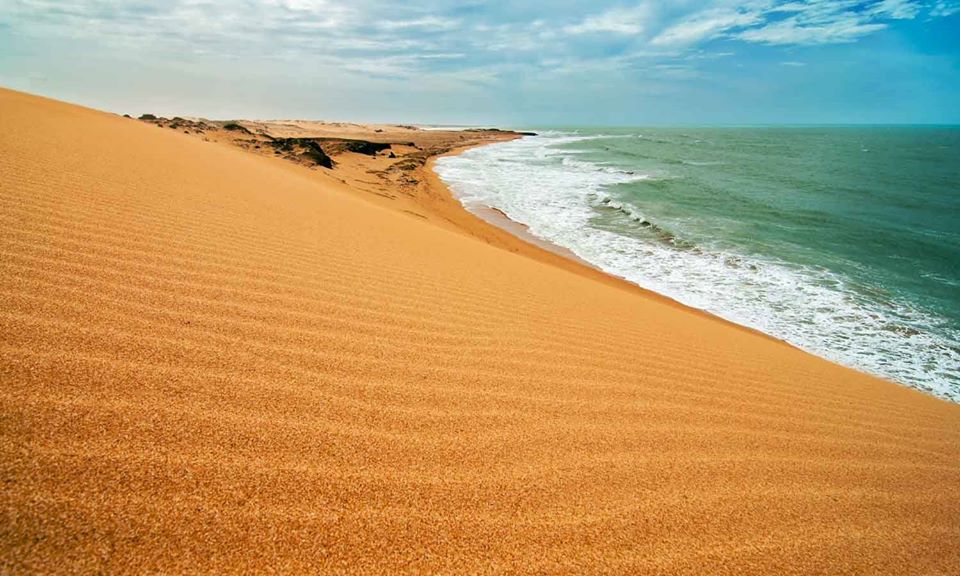
La Guajira is the northernmost region of Colombia. Capital is Riohacha, a city of about 300,000 inhabitants, 175 km from Santa Marta and 92 km from Palomino. Riohacha is the gateway to “Alta Guajira, a sparsely populated, isolated and extremely arid area. The landscape consists of desert-like plains, deserted beaches and high sand dunes.
The Wayuu community
La Guajira is habitat for the Wayuu, the largest group of Indians in Colombia. This is one of the poorest and least visited areas of Colombia. The Wayuu have survived in the extremely dry area for hundreds of years, including by fishing and raising goats. As a traveler, you can learn about Wayuu culture by spending the night in a Rancheria, an authentic Wayuu accommodation. Despite La Guajira being one of the least visited areas of Colombia, the area is becoming increasingly popular with travelers, attracted by its extraordinary nature and Wayuu culture.
Off the beaten track adventure
If you go to La Guajira, you are truly going on an adventure. It is an off the beaten track destination with little infrastructure. Driving is off-road and you sleep in hammocks or simple huts, often without running water and with limited electricity. You have the beaches in la Guajira largely to yourself. You can kitesurf in Cabo de la Vela, “sandboard” in the Tarao dunes and bird watch in Parque Nacional Natural Macuira, La Guajira’s “wettest” area. If you travel to Punta Gallinas, you can do this with an organized tour from Cabo de la Vela or from Riohacha. Going to Punta Gallinas with a tour is absolutely a must, given the limited infrastructure. Plus, with a guide, you get an insider’s look at the Wayuu culture. Check out the different options here.
Safety in La Guajira
It is important for travelers to be well-prepared, as the safety situation in this region differs from other tourist areas in Colombia.
1. Underdeveloped region
La Guajira is one of the least developed regions of Colombia. Due to poverty, limited government presence, and insufficient infrastructure, certain areas can be unsafe, especially for individual travelers.
2. Crime
In urban areas such as Riohacha, safety is comparable to other Colombian cities, but it remains important to stay alert for petty crime such as pickpocketing.
3. Traveling to remote areas
Areas like Uribia, Cabo de la Vela, and Punta Gallinas are safe to visit, but only in the company of a local guide or tour company. Driving on your own is strongly discouraged, mainly due to poor road conditions, lack of signage, and potential risks such as informal roadblocks or theft.
4. Wayuu territories
The indigenous population lives mainly in the north of La Guajira. While the Wayuu are generally hospitable, some communities are not accustomed to tourism. Respect—such as asking permission before taking photos—is important.
5. Tips for safe travel in La Guajira
-
Book an organized tour to remote areas like Punta Gallinas through certified tour operators.
-
Do not travel at night in this region.
-
Bring enough cash; ATMs are scarce outside major cities.
-
Use sun protection, drink plenty of water, and prepare for high temperatures.
#ColombiaMyWay tips
Buy an original Wayuu mochila (shoulder bag) or Chinchorro (original Wayuu hammock). It takes the Wayuu ladies about a week to make a mochila and 2 to 3 months for a Chinchorro. Tourism is a welcome, important source of income for the Wayuu, so your pesos are certainly money well spent here.
Check our travel guide Santa Marta and our other travelguides if you’re continuing your round trip along the Caribbean coast.