
Cartagena makes this decision feel bigger than it is. The historic streets, rooftop bars, and colonial hotels of the walled city are a world away from Bocagrande’s high-rise skyline and urban beach. For most first-time visitors asking Bocagrande vs Old City: where is better to stay in Cartagena?, the Old City is the better base. Choose Bocagrande instead if a beach, larger hotel, pool, and more modern apartment-style comfort matter more than being able to walk to Cartagena’s major sights.
The quick answer: which area is best?
Stay in the Old City – usually meaning Centro, San Diego, and Santo Domingo within the walls – if you have two to four nights, want to explore largely on foot, and see Cartagena for its history, food, architecture, and evening atmosphere. It is the most convenient choice for independent travelers who want to step outside and be near plazas, museums, restaurants, and bars.
Stay in Bocagrande if you prefer a contemporary hotel district with a beach directly across the road, high-rise views, chain-hotel facilities, and easy access to pharmacies, supermarkets, and casual restaurants. It works especially well for families, travelers booking a resort-style stay, and visitors who plan to spend more time by the pool than walking through colonial streets.
Neither neighborhood is quiet everywhere, cheap, or a substitute for a Caribbean island beach. The better choice depends on the trip you actually want, not just the hotel rate you find first.
Bocagrande vs Old City: atmosphere and location
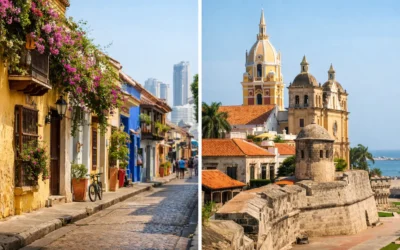
The Old City is Cartagena’s historic center inside the defensive walls. Centro is the busiest core, with the Clock Tower, Plaza de los Coches, the Cathedral, and many of the city’s landmark restaurants. San Diego, in the northeastern part of the walls, feels a little more residential and has a calmer rhythm, although it is still very much a visitor area. Santo Domingo is central and elegant, with some of the city’s priciest hotels and dining.
This is where Cartagena feels most distinctive. You can walk from Plaza Santo Domingo to Las Bóvedas in about 20 minutes, stopping for coffee, a museum, or a shaded plaza along the way. The trade-off is that the streets are narrow, cars are restricted in places, and traffic noise, music, and horse-drawn carriage activity can reach rooms facing the street.
Bocagrande sits on a narrow peninsula southwest of the walled city. It has the visual language of a Latin American beach city: tall apartment towers, international hotel brands, shopping centers, traffic, and a long strip of sand. The neighborhood is not ugly or inconvenient, but it does not deliver the historic character many visitors picture when they book Cartagena.
From central Bocagrande to the Clock Tower, expect roughly 10 to 20 minutes by taxi or ride-hailing car, depending on traffic. At busy times, especially late afternoon and weekend evenings, the short distance can take longer. Walking is possible but not particularly pleasant in Cartagena’s heat, and it takes around 35 to 45 minutes.
Hotels and prices: what your budget buys
The Old City has Cartagena’s most memorable accommodations, from restored colonial mansions to small guesthouses. It is also where room prices can climb sharply during December through January, Easter week, and Colombian holiday weekends.
For a high-end stay, Sofitel Legend Santa Clara in San Diego is a landmark property with a large pool and polished service. Casa San Agustín, near Plaza de los Estudiantes, is another boutique luxury choice known for its intimate scale and excellent central position. Expect luxury rooms in the walled city to commonly start around COP 1,200,000 per night and rise considerably in peak periods.
Travelers seeking better value can look at smaller hotels such as Casa India Catalina or Hotel Don Pedro de Heredia. A well-reviewed midrange double room in or near the walls often falls around COP 350,000 to COP 800,000 per night, though rates vary significantly by date, room size, and included breakfast. Budget travelers should also compare nearby Getsemaní, where hostels and simple guesthouses are more plentiful. Getsemaní is not technically the Old City, but it is only a short walk from the Clock Tower and is often the smartest compromise.
Bocagrande generally offers more rooms with pools, gyms, elevators, larger lobbies, and sea-facing balconies. Hyatt Regency Cartagena and Hotel Almirante Cartagena are established options in the area, while InterContinental Cartagena sits just beyond central Bocagrande toward El Laguito. These hotels suit travelers who value full-service facilities over colonial charm.
A comfortable midrange to upscale Bocagrande hotel commonly costs about COP 400,000 to COP 900,000 per night. Apartments can be competitive for families or groups, but check whether the building allows short-term guests, whether the pool is open, and whether the quoted total includes cleaning and service fees. A lower nightly rate is not always a better deal once transport to the historic center is added.
Beaches: the key reason to choose Bocagrande
Bocagrande wins on immediate beach access. You can leave your hotel and be on the sand within minutes, which is useful if you want a quick swim, a morning walk, or an easy beach day without arranging a boat. The water is warm, and the shoreline is convenient.
Still, manage expectations. Bocagrande Beach is an urban beach, not a quiet postcard cove. It can be crowded, the water is often less clear than on the islands, and vendors offering chairs, drinks, massages, and souvenirs are part of the experience. Agree on prices before accepting any service, including a beach chair or food order.
The Old City has no beach. If your priority is sand and sea, you will need a taxi to Bocagrande or a day trip by boat to places such as Isla Barú or the Rosario Islands. Boats for many island excursions leave from the docks near La Bodeguita, just outside the Clock Tower, making the Old City particularly convenient for early departures. Shared day trips vary widely in quality and price, but COP 250,000 to COP 500,000 per person is a realistic broad planning range once transport, lunch, and optional fees are considered.
Food, nightlife, and daily convenience
The Old City is better for a food-focused trip. Cartagena’s more ambitious restaurants, cocktail bars, coffee shops, galleries, and rooftop venues cluster inside or close to the walls. You can have dinner in San Diego, walk through Plaza de la Trinidad in Getsemaní, and return without relying on transport for every stop.
It is also expensive in the most tourist-oriented blocks. A cocktail at a rooftop bar can cost COP 35,000 to COP 60,000 or more, and dinner at an upscale restaurant will cost far more than a casual neighborhood meal. Walk a few blocks away from the most photographed plazas for better value, and use menus with clearly displayed prices.
Bocagrande is easier for practical errands. You will find supermarkets, shopping malls, chain pharmacies, banks, and informal meal options close together. Restaurant quality is uneven, but it is convenient for breakfast, groceries, and a straightforward dinner after a day in the sun. For nightlife with more character, most visitors still head to the Old City or Getsemaní.
Safety and getting around at night
Both areas receive many visitors and have visible security, but normal city awareness matters. In the Old City, stay alert in crowded plazas, keep phones out of sight when you are not using them, and avoid poorly lit stretches outside the walls late at night. In Bocagrande, the main avenues and hotel zone are generally active, but avoid isolated areas of the beach after dark and do not leave belongings unattended on the sand.
For late-night trips between neighborhoods, use a hotel-arranged taxi or a ride-hailing app rather than walking. Cartagena’s Rafael Núñez International Airport is usually about 15 to 25 minutes from the Old City and 20 to 35 minutes from Bocagrande, traffic permitting. Airport taxi pricing varies by destination and time, but budgeting roughly COP 25,000 to COP 45,000 is sensible. Confirm the fare before leaving.
Who should stay where?
Pick the Old City if this is your first Cartagena visit, you are staying only a few nights, or you want to experience the city before breakfast and after dinner, when day-trippers have gone. San Diego is often the best fit for travelers seeking a quieter historic stay, while Centro puts you closest to the action.
Pick Bocagrande if you are traveling with children, want a pool and beach within easy reach, have mobility concerns that make cobblestones difficult, or simply prefer a modern hotel room with ocean views. It can also be a good place to end a longer Colombia itinerary with a few slower days.
If you are torn, book the Old City for the first part of your stay and add one or two Bocagrande nights only if beach time is a real priority. Cartagena is most rewarding when your hotel puts you close to the version of the city you came to experience.


0 Comments