
If you are asking, “Do I need Spanish in Colombia?” the honest answer is no – but even a small amount will make your trip easier, richer, and more independent. You can visit Colombia without speaking Spanish, especially if you stay on well-traveled routes and prepare a few practical tools. But English is not widely spoken once you move beyond major hotels, popular tours, and the most international parts of Bogotá, Medellín, and Cartagena.
For independent travel, Spanish is less about having perfect conversations and more about handling everyday moments confidently: ordering lunch at a neighborhood restaurant, checking which bus is leaving, confirming an address with a driver, or explaining that you need help. A few phrases, patience, and a translation app go a long way.
Do I Need Spanish in Colombia for a Short Trip?
For a one- or two-week itinerary covering Bogotá, Medellín, Cartagena, Salento, and perhaps Santa Marta, you can manage with little or no Spanish. Staff at many midrange and upscale hotels, airport counters, coworking spaces, and established tour operators may speak some English. Younger Colombians in larger cities are also more likely to understand basic English, particularly in tourism, hospitality, and university areas.
That does not mean you can expect English everywhere. A café server may know the menu but not be able to discuss ingredients. A taxi driver may recognize your destination on a map but not understand a spoken street name in English. At local bus terminals, small guesthouses, markets, pharmacies, and family-run restaurants, Spanish is usually the working language.
Think of English as a helpful bonus rather than a plan. If your itinerary is concentrated in major destinations, you will be comfortable with preparation. If you want to travel spontaneously, use public transportation, or spend time in smaller towns, basic Spanish becomes far more valuable.
Where English Is Most and Least Common
English availability changes sharply by place and travel style. In Cartagena’s walled city, Medellín’s El Poblado, and Bogotá neighborhoods popular with international visitors, it is relatively easy to find English-speaking staff. You may also find English on menus, hotel information sheets, and organized day tours.
In the coffee region, English is common at popular fincas, hostels, and visitor-focused activities, but it drops off quickly in local restaurants and transport hubs. In beach destinations such as Santa Marta, Palomino, and parts of the Rosario Islands, tourism workers may know enough English for bookings and basic questions. Still, Spanish is useful when plans change, transport is delayed, or you are outside the main visitor area.
Smaller places reward travelers who can communicate in Spanish. Think of villages in Antioquia, Boyacá, Santander, or the coffee region beyond the headline destinations. The same applies to local buses, shared vans, neighborhood food stalls, and rural accommodations. These are often some of the most memorable parts of a Colombia itinerary, and they are easier to enjoy when you can ask simple questions.
Why a Little Spanish Changes the Experience
Spanish helps with logistics, but its biggest benefit is connection. Colombia is a sociable country, and people often appreciate a visitor who opens with a greeting, says thank you, and makes an effort to communicate. You do not need advanced grammar. A warm “buenos días,” “muchas gracias,” and “qué recomienda?” can change the tone of an interaction.
It also gives you more control. You can confirm the price before a taxi ride, ask whether a dish contains meat, understand a bus platform announcement, or tell your hotel that you will arrive late. These are small things until they matter.
There is a trade-off, of course. Trying to conduct a complicated conversation with only a phrasebook can be tiring, and it is perfectly reasonable to use technology. The goal is not to prove that you can travel without help. It is to avoid turning every practical task into a stressful guessing game.
The Spanish You Actually Need in Colombia
Before you arrive, focus on useful travel language rather than long vocabulary lists. Learn numbers, greetings, directions, food basics, transport words, and polite questions. Colombian Spanish is often considered relatively clear to learners, particularly in Bogotá and Medellín, but accents and regional expressions vary. People may speak quickly in casual conversation, so do not be shy about asking them to repeat themselves.
These phrases cover a surprising number of situations:
- “Hola, buenos días” – Hello, good morning.
- “Por favor” and “gracias” – Please and thank you.
- “¿Cuánto cuesta?” – How much does it cost?
- “¿Me puede ayudar?” – Can you help me?
- “¿Dónde queda…?” – Where is…?
- “¿A qué hora sale?” – What time does it leave?
- “La cuenta, por favor” – The bill, please.
- “No entiendo” – I do not understand.
- “¿Puede hablar más despacio?” – Can you speak more slowly?
- “Sin carne / sin lácteos / soy alérgico(a) a…” – No meat / no dairy / I am allergic to…
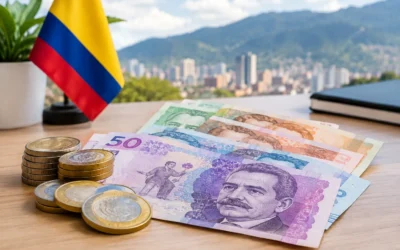
For Colombian pesos, numbers matter. Learn how to recognize common amounts such as diez mil, veinte mil, cincuenta mil, and cien mil. Prices are frequently stated in thousands, and getting comfortable with them makes purchases, taxi rides, and restaurant bills less confusing.
Practical Tools If You Do Not Speak Spanish
A smartphone makes non-Spanish travel much more realistic, but only if you set it up before leaving Wi-Fi. Download Spanish for offline use in a translation app, save the addresses of your hotels, and screenshot important booking details. Showing a driver a written address is often more reliable than attempting to pronounce it.
For public transportation, keep your destination name and accommodation address available in Spanish. When traveling by bus, confirm the destination, departure time, and whether the bus is direct. Colombian transport can be flexible, which is part of its charm, but it is not always explained in English.
A local SIM or eSIM is particularly useful for maps, messaging accommodations, and translating on the move. It can also help when arranging rides through an app, which removes the need to negotiate a destination verbally. Do not depend on a translation app for emergencies, medical details, or legal matters, though. Keep your travel insurance information and any essential medical information written clearly in Spanish.
When Spanish Matters Most
Spanish becomes especially important if you have dietary restrictions, medical needs, or plans to travel far from the main tourism circuit. In an emergency, clear communication is more than a convenience. Learn the words for your allergies, medications, and any conditions that could affect treatment. Carry them in writing as well.
It also matters when you want to understand local context. Colombia’s history, regional identities, food traditions, and daily rhythms are far more accessible when you can go beyond a transaction. A guide may offer an English tour, but a conversation with the person serving your coffee in Salento or selling fruit in a Medellín market will usually happen in Spanish.
If you have a few weeks before departure, even a beginner course can make a noticeable difference. Practice listening as well as reading. Short videos, audio lessons, and simple role-play for ordering food or taking a taxi are more useful than memorizing isolated words.
Can You Travel Colombia Independently Without Spanish?
Yes. Plenty of travelers do, and Colombia My Way is built around making independent trip planning feel possible rather than intimidating. Book your first nights in advance, download offline maps and translation tools, keep key addresses accessible, and leave extra time for transport days. Those habits matter as much as language ability.
But Spanish gives you flexibility. It makes it easier to choose the smaller restaurant instead of the English-menu option, take the local bus instead of a private transfer, and stay calm when the plan changes. You do not need fluency to travel well in Colombia. Bring curiosity, a few essential phrases, and the confidence to smile, gesture, and ask for help when you need it. That is often enough to turn a trip from manageable into genuinely personal.


0 Comments