Landing in Colombia with only one payment method is the kind of mistake that feels small until your card fails at a bus terminal, a neighborhood café only takes cash, or an ATM decides it is out of service. If you are wondering how to use money in Colombia, the short answer is this: plan to use a mix of cash, cards, and a little backup strategy.
For most independent travelers, Colombia is straightforward once you know the basics. Card acceptance has improved a lot in cities, but cash still matters. The local currency is the Colombian peso, prices can look high because of the extra zeros, and payment habits vary depending on where you are. Bogotá, Medellín, Cartagena, and larger towns tend to be easier for card payments. Small villages, local markets, buses, and family-run businesses often still work best with cash.
How to use money in Colombia without stress
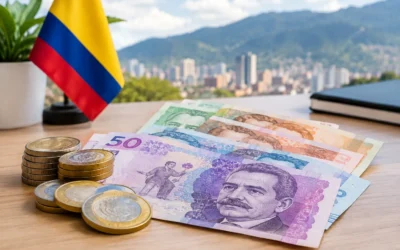
The Colombian peso is written as COP, though you will often just see a dollar sign used locally. That can be confusing at first. On a menu, $25,000 means 25,000 Colombian pesos, not US dollars. Once you get used to reading prices in thousands, it becomes second nature.
Bills commonly come in 2,000, 5,000, 10,000, 20,000, 50,000, and 100,000 peso notes. Coins exist too, but many travelers barely pay attention to them at first. You should. Small change is genuinely useful for city buses, snacks, coffee, tips, and quick purchases where handing over a large bill can be awkward.
A good rule is to break larger notes whenever you can at supermarkets, chain stores, or bigger cafés. Trying to pay for a bottle of water with a 100,000 peso bill in a small shop is possible, but not always appreciated.
Cash vs card in Colombia
If you are deciding how much cash to carry, the answer depends on your route. In major cities and more established tourist areas, you can often pay by card in hotels, many restaurants, supermarkets, pharmacies, and mid-range to upscale cafés. Contactless payment is increasingly common, but not universal.
Cash is still essential for plenty of everyday travel moments. Think local buses, small-town restaurants, fruit stalls, street food, market shopping, taxis in some areas, and independently run guesthouses. Even where cards are accepted, there can be occasional issues with terminals, connectivity, or card networks.
That is why the smartest approach is not choosing one over the other. It is carrying enough cash for the day while keeping a working debit or credit card for larger expenses and ATM withdrawals.
When cards work well
Cards are most reliable in cities such as Medellín, Bogotá, Cartagena, Cali, and larger regional hubs. They are also useful for hotels, nicer restaurants, and transport bookings made online in advance. Visa and Mastercard are usually the safest bet. American Express is less widely accepted.
Sometimes businesses ask whether you want to pay one installment or more. If you are using a foreign card, just say one installment. This is standard and does not mean you are doing anything wrong.
When cash works better
Cash is the better option in smaller towns, rural areas, local transport, and low-cost daily spending. If you are heading to places where tourism infrastructure is lighter, assume card access will be less consistent. That does not mean it is difficult – it just means you should withdraw enough money before you go.
Using ATMs in Colombia
For many travelers, ATMs are the easiest way to get pesos. In cities, they are widely available in shopping centers, banks, airports, and commercial neighborhoods. In smaller destinations, you may find only one or two machines, and they may be out of cash or temporarily offline.
Withdraw money in larger towns before traveling onward, especially if your next stop is a small village, a coffee region town, or a remote Caribbean or Pacific destination. This matters even more on weekends and holidays, when bank-related services can be less predictable.
ATM fees vary. Your home bank may charge international withdrawal fees, and the Colombian bank may add its own fee as well. Withdrawal limits also differ from one bank to another. Sometimes the machine offers a low limit that forces multiple withdrawals, which means more fees.
If an ATM gives you the option of being charged in US dollars or your home currency instead of pesos, decline that option and choose the local currency. This avoids dynamic currency conversion, which often comes with a worse exchange rate.
As for safety, use ATMs inside malls, supermarkets, or bank vestibules rather than isolated street machines, especially at night. It is a simple habit that reduces risk.
Exchanging cash in Colombia
Bringing some US dollars or euros can work as a backup, but for most travelers, cash exchange is less convenient than using ATMs. Exchange houses are easy enough to find in larger cities and tourist zones, but rates and commissions vary.
If you do exchange cash, use official exchange offices rather than informal street offers. Airports are convenient for a small amount if you need immediate pesos, but the rate is usually less favorable. Many travelers exchange only a little on arrival, then use ATMs later in the city.
Crisp, undamaged bills are more likely to be accepted if you are changing foreign currency. Old, torn, or marked notes can cause problems.
Everyday payments: transport, restaurants, and tips
Money habits in Colombia make more sense once you picture real travel situations rather than just bank terms.
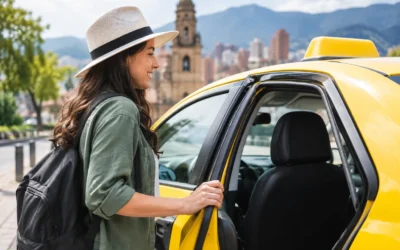
For city transport, you will often need a transit card in major cities, not just cash or a bank card. For taxis, payment rules vary by city and by whether you are using an app. App-based rides often allow card payment through the app, while street taxis may prefer cash. It is worth checking before the ride starts rather than assuming.
In restaurants, card payment is common in urban areas, but you may still be asked if you want to add the voluntary service charge. In Colombia this is often called the propina and is usually around 10 percent in restaurants where table service is provided. It is normal to accept it if service has been good, but it is voluntary.
For smaller purchases such as bakery stops, local lunches, market snacks, or bus tickets, cash keeps things easier. Having a mix of smaller bills saves time and avoids the familiar back-and-forth of a vendor searching for change.
Common mistakes travelers make with money in Colombia
The biggest one is underestimating how much cash still matters. Colombia is not cash-only, but it is also not a place where you should depend entirely on tapping your phone everywhere.
The second is getting confused by zeros. A coffee for 4,000 pesos can look expensive until your brain adjusts. The same goes for hotel rates, bus fares, and restaurant bills. Take a day or two to recalibrate and you will stop mentally converting every number.
Another common mistake is carrying too much cash at once. You need enough for flexibility, not your entire trip budget in your day bag. Split your money between your wallet, accommodation safe when available, and a backup card kept separately.
The last one is waiting too long to withdraw cash before going somewhere remote. This catches people out all the time in smaller destinations.
A practical money setup for most travelers
If you want the simplest answer to how to use money in Colombia, it is this: arrive with at least two cards, withdraw pesos from ATMs in larger towns, carry daily cash in small and medium denominations, and keep one backup option separate from your main wallet.
That setup works well because it covers the country as it really is. Colombia has modern shopping districts and card-friendly restaurants, but it also has small transport hubs, mountain towns, island boats, and neighborhood spots where cash is still the default. Independent travel here is much easier when your payment habits are flexible.
You do not need to overthink every purchase. You just need to avoid being too dependent on one method. Once you settle into that rhythm, paying your way around Colombia feels far less complicated than it looks on day one.
The best travel days here often happen far from the polished parts of the itinerary – in a village bakery, on a shared jeep route, at a family-run lunch spot, or in a small guesthouse that still prefers cash. Having the right money strategy lets you say yes to those moments without hesitation.

0 Comments