Travel Guide Bogotá
Bogotá does not have one obvious best neighborhood for visitors. The city is large, traffic can reshape even short journeys, and the atmosphere changes dramatically from one district to the next. For travelers asking, “La Candelaria vs Chapinero: where should you stay in Bogotá?”, the short answer is this: stay in La Candelaria for colonial character and easy access to major sights; choose Chapinero for better restaurants, nightlife, and a more comfortable base after dark.
For many first-time independent travelers, Chapinero – especially Chapinero Alto, Quinta Camacho, or the Zona G area – is the more convenient all-round choice. La Candelaria is the right call if Bogotá’s history is central to your trip and you are happy to take a car or taxi back after evening plans.
La Candelaria vs Chapinero: the key differences
La Candelaria is Bogotá’s historic center, a compact area of steep streets, colonial facades, student life, government buildings, museums, and murals. It is where you can walk to Plaza de Bolívar, the Museo del Oro, Museo Botero, and the lower station for the Monserrate funicular or cable car. If you have only one or two full days in Bogotá and want to spend them sightseeing, this location saves time.
Chapinero sits north of the historic center and covers a broad stretch of the city rather than one uniform neighborhood. The most appealing places for visitors are generally Chapinero Alto, Quinta Camacho, Zona G, and the streets around Parque Lourdes or Calle 63, depending on budget. This is a more lived-in, modern Bogotá: coffee shops, independent restaurants, bars, grocery stores, and easy access to neighborhoods such as Zona Rosa and Parque 93.
The trade-off is straightforward. La Candelaria gives you atmosphere and landmarks outside your door, but fewer dependable evening options within a short walk. Chapinero offers more of the city’s contemporary food and social scene, but you will need transport to reach the old center.
Stay in La Candelaria if history is your priority
La Candelaria works particularly well for travelers who enjoy architecture, museums, walking tours, and a sense of place. Start the morning at the Museo del Oro, stroll through the colonial lanes around Calle 10, have lunch near Chorro de Quevedo, then visit Museo Botero or the Banco de la República art collections. You can do much of this on foot, which is a genuine advantage in a city where road traffic is often slow.
It is also a practical choice for budget travelers. Hostels and simple guesthouses are common here, and dorm beds often cost roughly COP 50,000-90,000 per night, depending on season and room type. Private rooms in well-reviewed hostels and small hotels commonly start around COP 180,000 and can rise to COP 350,000 or more on busy dates.
Masaya Bogotá is a popular hostel-style option near the heart of La Candelaria, with private rooms as well as dorms, social spaces, and a location that suits short sightseeing stays. Hotel de la Opera, close to Plaza de Bolívar, is a more upscale choice in a historic building, suited to travelers who value character and want facilities such as a restaurant and spa. Hotel bh Bicentenario, on the edge of the historic center, is a practical modern alternative for those who prefer a conventional hotel setup. Rates vary substantially by weekday, season, and events, so treat these as general price bands rather than fixed prices.
The downside of La Candelaria at night
La Candelaria is not a neighborhood to treat casually after dark. Some streets remain active around restaurants and hostels, but the area empties quickly once offices, universities, and museums close. The risk is mostly opportunistic theft and street robbery rather than anything travelers need to panic about, but it does affect how you plan evenings.
Use a ride-hailing app or an authorized taxi for dinner outside the immediate area, particularly after dark. Avoid walking alone through quiet streets with your phone out, camera hanging visibly, or valuables in an easy-to-reach pocket. If you want late dinners, bars, or a lively neighborhood right outside your hotel, Chapinero is generally the easier choice.
Stay in Chapinero for food, nightlife, and a longer visit
Chapinero makes sense if Bogotá is more than a museum stop on a Colombia itinerary. It has better access to restaurants, specialty coffee, bars, gyms, supermarkets, and the city’s northern neighborhoods. It is also a useful midpoint for travelers planning day trips or meetings across different parts of Bogotá, although traffic still matters.
For the most pleasant stay, do not book solely because a hotel says “Chapinero.” The district is extensive. Quinta Camacho and the streets around Zona G are especially attractive for travelers who want attractive architecture, excellent restaurants, and a calmer residential feel. Chapinero Alto has a more bohemian character, with hillside streets, cafes, and access to good dining. The area around Calle 57 and Avenida Caracas is more functional and better connected by TransMilenio, but it can feel busier and less relaxed for walking.
Expect higher accommodation prices than in La Candelaria. A comfortable midrange double room often falls around COP 280,000-550,000 per night, while boutique properties and larger international-style hotels can cost COP 600,000 or more. Lower-priced guesthouses and hostels exist, but availability is more limited in the most desirable parts of Chapinero.
HAB Hotel in Quinta Camacho is a good boutique-style option for couples and design-minded travelers who want a quiet, central base. Casa Legado, also in Quinta Camacho, is more intimate and suited to travelers looking for personal service and a residential atmosphere. Hotel Vilar América is a useful midrange option near Chapinero Alto, while Hotel Estelar Suites Jones can suit travelers who prefer larger rooms and traditional hotel amenities. Check the precise address before booking, as a few blocks can make a real difference to noise, walkability, and restaurant access.
Food and evenings in Chapinero
This is where Chapinero pulls ahead. Zona G, roughly centered around Calle 65 and Carrera 7, is one of Bogotá’s strongest restaurant areas. You can find Colombian tasting menus, casual neighborhood spots, bakeries, and international food without needing to arrange a car for every meal. Chapinero Alto and nearby Zona Rosa add cocktail bars, live music, and more nightlife options.
Prices are varied. A simple lunch such as a menú del día may cost COP 20,000-35,000. Expect roughly COP 45,000-80,000 per person for a casual dinner without many drinks, while higher-end restaurants can cost considerably more. Bogotá’s coffee culture is also easier to enjoy here, with good espresso or filter coffee commonly around COP 8,000-15,000.
Safety and getting around from each area
Neither neighborhood removes the need for normal Bogotá street awareness. Keep your phone away when walking near busy roads, use a cross-body bag or zipped pocket, and avoid displaying watches, jewelry, or cameras. Ask your hotel which streets to avoid after dark, because conditions can change block by block.
Chapinero generally feels more active in the evening, especially around Zona G, Quinta Camacho, and restaurant corridors. That does not mean every street is equally safe. La Candelaria is usually fine for daytime sightseeing when you stay alert, but it deserves more caution at night.
From El Dorado International Airport, a car ride to either neighborhood usually takes 30 to 60 minutes, longer in rush hour. The airport taxi system and ride-hailing apps are the simplest choices with luggage. Fares vary with traffic and demand, but budget around COP 35,000-70,000 for a typical ride. Confirm that your accommodation can receive late arrivals and arrange pickup if you are landing very late.
To travel between Chapinero and La Candelaria, a ride-hailing car is often the simplest option and may take 20 to 45 minutes depending on traffic. TransMilenio is cheaper and fast on some corridors, but stations can be crowded and it is not ideal with bags or visible valuables. Use it during the day once you understand the routes, rather than making it your default airport transfer.
Which area is best for your Bogotá trip?
Choose La Candelaria if you are staying one or two nights, love history, want to walk to Bogotá’s signature museums, or are traveling on a tighter budget. It is also the better fit for early starts at Monserrate and guided historic-center walks.
Choose Chapinero if you are staying three nights or more, care about restaurants and coffee, want a broader range of hotels, or prefer to return to a lively neighborhood in the evening. It is especially good for couples, solo travelers who want a polished hotel base, and travelers combining sightseeing with work or remote working.
A smart compromise for a longer stay is to split your time: spend one or two nights in La Candelaria for the historic center, then move north to Chapinero for food, nightlife, and a slower final few days. Bogotá rewards that kind of practical planning – and choosing the neighborhood that fits how you actually travel makes the city far easier to enjoy.
Travel Guide Bogotá, Villages in Colombia
The best day trips from Bogotá: Zipaquirá, Guatavita, Villa de Leyva & more are very different experiences, from an underground cathedral to high-altitude lakes and colonial plazas. The key is not trying to treat them all alike. Zipaquirá is an easy independent outing, Guatavita needs more transport planning, and Villa de Leyva is beautiful but usually works better as an overnight trip.
Bogotá sits on a high plateau with excellent access to Cundinamarca and Boyacá, but traffic, mountain roads, and long distances can turn an optimistic plan into a rushed day. For most independent travelers, choose one destination, leave early, and build in time for the return journey.
Best day trips from Bogotá: which one should you choose?
Choose Zipaquirá if this is your first trip outside Bogotá and you want the simplest public-transport option. Visit Guatavita if you are more interested in landscapes, Muisca history, and a quieter small-town setting. Choose Villa de Leyva only for a very long day or, preferably, one or two nights. It deserves time after the day-trippers have left.
For a nature-focused alternative close to the city, consider La Chorrera Waterfall, Chicaque Natural Park, or Suesca. These are better choices than another colonial town if your Bogotá itinerary has been heavy on museums and urban sightseeing.
Zipaquirá and the Salt Cathedral
Zipaquirá is the most practical classic day trip from Bogotá. The town is north of the capital, and its main attraction, the Salt Cathedral of Zipaquirá, lies inside the tunnels of a working salt mine. It is not a centuries-old cathedral in the conventional sense. The current underground complex was inaugurated in the 1990s, but the scale, lighting, Stations of the Cross, and enormous carved cross make it an unusual and memorable visit.
How do you get to Zipaquirá?
The most straightforward independent route is an intercity bus from Bogotá’s Terminal del Norte. Buses toward Zipaquirá run regularly during the day, and the journey generally takes 1.5 to 2 hours, depending heavily on traffic leaving Bogotá. Expect to pay roughly COP 10,000-18,000 each way, with fares subject to change.
From Zipaquirá’s transport terminal, take a short taxi to the cathedral or walk around 25 minutes uphill from the historic center. A taxi should be inexpensive, but agree on the fare or ensure the meter is used before departing. You can also book a day tour from Bogotá if you value hotel pickup and want to avoid working out the bus terminal, though it is not necessary for most confident independent travelers.
Allow around two hours inside the Salt Cathedral. Admission for international visitors is commonly around COP 100,000-130,000, depending on the ticket type and current pricing. Audio guides and additional attractions may cost extra. Check the official opening hours before leaving Bogotá, especially on holidays and Sundays.
Is Zipaquirá worth it?
Yes, particularly if you have only a few days in Bogotá and want one easy excursion. Pair the cathedral with lunch and a walk around Parque de los Comuneros, Zipaquirá’s central square. The town itself is pleasant rather than spectacular, so do not expect Villa de Leyva-level colonial architecture. The cathedral is the reason to go.
Leave Bogotá by 8 a.m. if possible. That gives you time for a relaxed visit, lunch, and a return before evening traffic becomes punishing.
Guatavita: lake, legend, and a very different town
Guatavita often appears on day-trip itineraries because of the legend of El Dorado. But travelers should know there are two separate places involved: the modern town of Guatavita and Laguna de Guatavita, the sacred crater lake associated with Muisca ceremonies. They are not next to each other, and visiting both independently in one day requires patience or a hired car.
The original town was flooded during construction of the Tominé Reservoir in the 1960s. The present-day town was rebuilt nearby in a deliberately colonial style, with whitewashed buildings, red-tile roofs, craft shops, and restaurants. It is attractive, compact, and pleasant for lunch, though it is not an untouched colonial settlement.
How do you get to Guatavita and the lagoon?
Buses to Guatavita leave from the north of Bogotá, including Terminal del Norte and nearby northern transport points, depending on the operator and route. Travel time to town is generally 2 to 3 hours. Fares are often in the COP 15,000-25,000 range each way. Ask specifically whether the bus goes to Guatavita pueblo and where it drops passengers.
Reaching Laguna de Guatavita is the tricky part. The lake is outside town, and public transport connections are limited. A taxi arranged in Guatavita can work, but return availability may be poor, particularly late in the afternoon. For that reason, a small-group tour or a private driver is often the better value for travelers determined to visit the lagoon. It reduces the risk of spending more time negotiating transport than enjoying the site.
The lake visit includes a guided walk on a high-altitude trail. It is not technically difficult, but the altitude and uneven paths can feel demanding if you have just arrived in Bogotá. Bring a rain layer, water, sunscreen, and cash. Entry fees and access rules change, so confirm them directly before travel; expect a separate admission charge in addition to transport.
Should you visit the town or the lagoon?
If you have a full day and want the cultural significance behind the El Dorado story, prioritize the lagoon. If you prefer an easy scenic day with a good lunch, reservoir views, and less logistical friction, visit Guatavita town. Trying to squeeze in the lagoon, town, and nearby attractions such as the Tominé Reservoir is possible with a driver but rarely relaxing by public bus.
Villa de Leyva: the day trip that should be an overnight
Villa de Leyva is one of Colombia’s most rewarding small towns: a vast cobbled Plaza Mayor, whitewashed houses, good restaurants, museums, and dramatic dry landscapes around town. It is also much farther from Bogotá than many first-time visitors realize.
By bus, expect roughly 4 to 5 hours each way once you include the journey to the terminal, traffic, and a connection through Tunja or another Boyacá hub. Services leave from Bogotá’s main bus terminal, Terminal Salitre, and schedules can vary by day. Budget approximately COP 35,000-55,000 each way, depending on routing and operator. Advance booking is useful on Friday afternoons, weekends, and Colombian holiday periods.
A private car can cut down some waiting time, but the road journey is still long. A same-day trip means leaving Bogotá before dawn and returning late, with little time to appreciate the town beyond the square. It can make sense if your schedule is fixed and Villa de Leyva is a non-negotiable priority. Otherwise, stay at least one night.
For a practical overnight, book a property within a 10-minute walk of Plaza Mayor. Midrange guesthouses and small hotels commonly start around COP 180,000-350,000 per night for a double room, while boutique properties can cost considerably more on weekends. Prices rise sharply during long weekends and the December-January holiday season.
With an overnight stay, you can enjoy the square after dark, then choose one nearby outing the following day: Casa Terracota, the Paleontological Museum, the Monasterio del Santo Ecce Homo, or the clay landscapes around Ráquira. Ráquira is especially worthwhile for ceramics, but it is better treated as part of a Boyacá overnight route than a rushed Bogotá day trip.
More worthwhile escapes from Bogotá
If you want fresh air without a long intercity journey, La Chorrera Waterfall is a strong option. The hike leads to Colombia’s highest waterfall and usually takes most of a day once transport and walking time are included. Conditions can be muddy and cool, so this is for travelers with suitable footwear rather than casual city sneakers.
Chicaque Natural Park is another good choice for cloud forest, birdlife, and hiking. It is south of Bogotá and can be reached independently, but the final connection from the highway can be inconvenient. A pre-arranged transfer or organized outing is often easier, especially if you are short on time.
Suesca, northeast of Bogotá, is best known for rock climbing but also offers riverside walks, dramatic rock formations, and a quieter rural atmosphere. It is a better match for active travelers than for those seeking museums or polished colonial streets.
Practical tips for independent day trips
Bogotá’s altitude is already about 8,660 feet, and many surrounding destinations are similarly high. Take the first day or two of your Colombia trip slowly before attempting a strenuous hike. Weather can shift quickly, so bring layers even when Bogotá starts the morning sunny.
For buses, carry small-denomination Colombian pesos and arrive with time to find the correct platform. Staff at terminals can point you toward the right company, but Spanish helps. Keep your valuables close in crowded terminals and avoid arriving back at an unfamiliar drop-off point very late at night. These are standard city precautions, not a reason to avoid public transport.
Most importantly, do not confuse a short distance on a map with a short journey in the Andes. Zipaquirá rewards a simple independent day, Guatavita rewards careful planning, and Villa de Leyva rewards giving it the evening it deserves.
Travel Guide Bogotá, Travel Guide Medellin
Medellín versus Bogotá digital nomads is not a simple choice between a warmer city and a cooler one. Medellín is easier to settle into quickly, with a compact expat-friendly center around El Poblado and Laureles. Bogotá offers more professional opportunities, cultural depth, and neighborhood variety, but demands more patience with traffic, altitude, and its sheer size. For most first-time remote workers in Colombia, Medellín is the more comfortable base. For people who prefer a major capital with serious city energy, Bogotá can be the better fit.
Medellín or Bogotá: which is better for remote work?
Choose Medellín if you want a social, outdoors-oriented routine, springlike temperatures, and a city that is relatively easy to navigate without a car. Its Metro is clean, useful, and connects central neighborhoods with cable cars and surrounding districts. The trade-off is that El Poblado can feel like an international nomad bubble, and long-term rentals in its most popular areas are no longer cheap by Colombian standards.
Choose Bogotá if you want museums, concerts, excellent restaurants, business networks, and the feeling of living in a true Latin American capital. It has more coworking choices, more flights, and a deeper pool of Spanish-language professional contacts. But Bogotá sits at about 8,660 feet, and the combination of chilly rain, traffic, and longer daily journeys can make the first weeks feel tiring.
A useful rule: pick Medellín for lifestyle first, Bogotá for city life and work connections first. If you have enough time, spend a month in each rather than trying to decide from photos of a rooftop view.
Weather, altitude, and daily rhythm
Medellín sits in the Aburrá Valley at roughly 4,900 feet. Daytime temperatures are commonly in the low to mid-70s F, though rain is frequent and evenings can be cooler than visitors expect. You can work from a café in a T-shirt most days, then need a light layer after sunset. The climate makes it easier to build an active weekday routine around walks, gyms, and nearby hikes.
Bogotá is much higher and commonly feels like a damp fall day, with daytime temperatures often around the low to mid-60s F. Bring a warm layer, rain jacket, and shoes that can handle wet sidewalks. New arrivals should also give themselves a few quiet days for the altitude, especially before hiking at Monserrate or taking a demanding workout class.
The difference affects more than packing. Medellín’s weather encourages people to work from terraces and meet outside. Bogotá has a more indoor rhythm: cafés, galleries, restaurants, live music, and long lunches in neighborhoods such as Chapinero Alto or Quinta Camacho.
Where to stay in Medellín as a digital nomad
El Poblado is the convenient starting point, particularly Manila, Provenza, and the quieter streets away from Parque Lleras. It has the widest choice of furnished apartments, cafés, gyms, restaurants, and English-speaking services. A private room or simple hotel room generally starts around COP 180,000 to 350,000 per night in a good location, depending on season and booking lead time. Los Patios Hostel, near Manila, is a practical choice for solo travelers who want coworking-style common areas and an immediate social scene.
However, El Poblado is not automatically the best long-stay neighborhood. Laureles is flatter, more residential, and better for people who want to walk to local bakeries, sports facilities, and everyday restaurants without living beside Medellín’s main nightlife zone. Around Segundo Parque, La 70, and Avenida Nutibara, you will hear more Spanish and encounter fewer short-term visitors. It is also well positioned for Estadio and the Metro. Nightlife around La 70 can be loud, so inspect the exact street before committing to an apartment.
Envigado, just south of Medellín, suits nomads staying a month or more. It feels more local and family-oriented, with good dining around Parque de Envigado and a calmer evening atmosphere. It is less convenient for frequent trips to central Medellín, although the Metro makes it manageable.
For a furnished one-bedroom apartment, budget roughly COP 3 million to 5.5 million monthly in popular parts of El Poblado or Laureles for a flexible short stay. Prices can be lower in Envigado or for longer contracts, but confirm whether utilities, cleaning, building fees, and internet are included.
Where to stay in Bogotá as a digital nomad
Chapinero Alto is one of Bogotá’s strongest bases for independent travelers who work remotely. It has coffee shops, restaurants, nightlife, and access to both the historic center and northern districts. The hills make some streets steep, and not every block feels equally comfortable after dark, so choose accommodation close to the areas you expect to use daily.
Quinta Camacho and Zona G are better for a quieter, polished stay. They are central, attractive, and surrounded by some of the city’s best restaurants. Zona Rosa and Parque 93 offer more hotels, shopping, and nightlife, but usually cost more and can feel less connected to everyday Bogotá.
For a social short stay, Selina Chapinero has traditionally attracted remote workers and travelers, while Hotel 574 near Zona Rosa is a useful hotel-style option for those who prefer a private room. Availability and rates change frequently, but expect approximately COP 170,000 to 350,000 per night for a comfortable, well-located private room. A furnished one-bedroom apartment in Chapinero, Quinta Camacho, or the north commonly falls around COP 3 million to 6 million monthly, with wide variation by building quality and lease terms.
Avoid choosing La Candelaria solely because it is close to the museums. It is excellent for daytime sightseeing, but it is quieter at night and less convenient for a longer remote-work routine than Chapinero or the northern neighborhoods.
Coworking, internet, and working hours
Both cities have dependable fiber internet in modern buildings, but never assume the listing’s “fast Wi-Fi” claim is enough for video calls. Ask for a recent speed test, confirm whether the connection is private or shared, and check if the apartment has a backup option during outages. Colombia’s mobile networks can be a useful fallback, particularly with a local Claro, Movistar, or WOM data plan.
Bogotá has the edge for formal coworking. WeWork locations, independent shared offices, and business-oriented cafés are spread across Chapinero, Zona Rosa, and the north. Medellín has good options too, especially around El Poblado, but many nomads find it easier to work from their apartment and use a coworking day pass when they need focused time. Buy a day pass before committing to a monthly membership, especially if you take calls and need a truly quiet environment.
US and Canadian workers should remember the time-zone advantage. Colombia remains on Colombia Time year-round, which aligns well with Eastern Time for much of the year and makes collaboration with North American teams straightforward. For European schedules, early starts are usually necessary.
Cost of living: Medellín versus Bogotá
Neither city is a bargain if you want a modern furnished apartment in the most international neighborhood, regular coworking, imported groceries, and frequent restaurant meals. Medellín’s reputation for being cheap often reflects prices from several years ago. Bogotá can be similarly priced or more expensive in its affluent northern districts.
For a realistic monthly working budget, excluding flights, plan around COP 6 million to 10 million in either city for a comfortable solo lifestyle with short-term housing. That includes rent, utilities, groceries, local transport, meals out, and occasional social activities. A simple local lunch can cost COP 18,000 to 30,000, while dinner at a stylish neighborhood restaurant can easily run COP 50,000 to 100,000 per person before drinks.
Medellín usually feels better value if you use the Metro and live in Laureles or Envigado. Bogotá can deliver better value if cultural events, food, and professional networking are priorities worth paying for. In both cities, short-term rental prices vary sharply by season, so compare a monthly rate against booking night by night.
Safety and getting around
The practical safety message is the same in both cities: do not display your phone on the street, use app-based or authorized transport at night, and avoid walking alone after nightlife, especially in unfamiliar areas. In Medellín, Parque Lleras and Provenza deserve extra caution because visitors can be targeted for theft and dating-app scams. Keep first dates in busy public venues, watch drinks closely, and do not let a stranger direct you to an apartment or isolated location.
Bogotá requires more attention to route planning. Traffic is heavy, and walking a few blocks can feel very different depending on the neighborhood and time of day. Use the TransMilenio system during daylight if it suits your route, but guard bags and phones carefully in crowded stations. For late-night trips, a ride-hailing app or hotel-arranged car is the simpler option.
Medellín’s Metro is generally the more pleasant everyday transit system. Bogotá’s advantage is air connectivity: El Dorado International Airport has far more domestic and international connections. If you need to move between the cities, flying takes about an hour, but allow four to six hours door to door once airport transfers and check-in are included. The bus from Bogotá’s Terminal Salitre to Medellín’s Terminal del Norte usually takes around nine to eleven hours and can cost roughly COP 90,000 to 150,000, depending on the operator and service. Advance booking is sensible on weekends and holidays.
A practical final choice
Start in Medellín if you are new to Colombia, want an easy landing, and value a walkable routine over big-city intensity. Choose Bogotá if you are comfortable with capitals, want more culture and connections, and do not mind trading sunshine for scale. Whichever city you choose, book only your first week or two, test the commute and internet yourself, and let the neighborhood decide whether it feels like a place to work rather than just a place to visit.
Travel Guide Bogotá
Home 9 Category: Travel Guide Bogotá
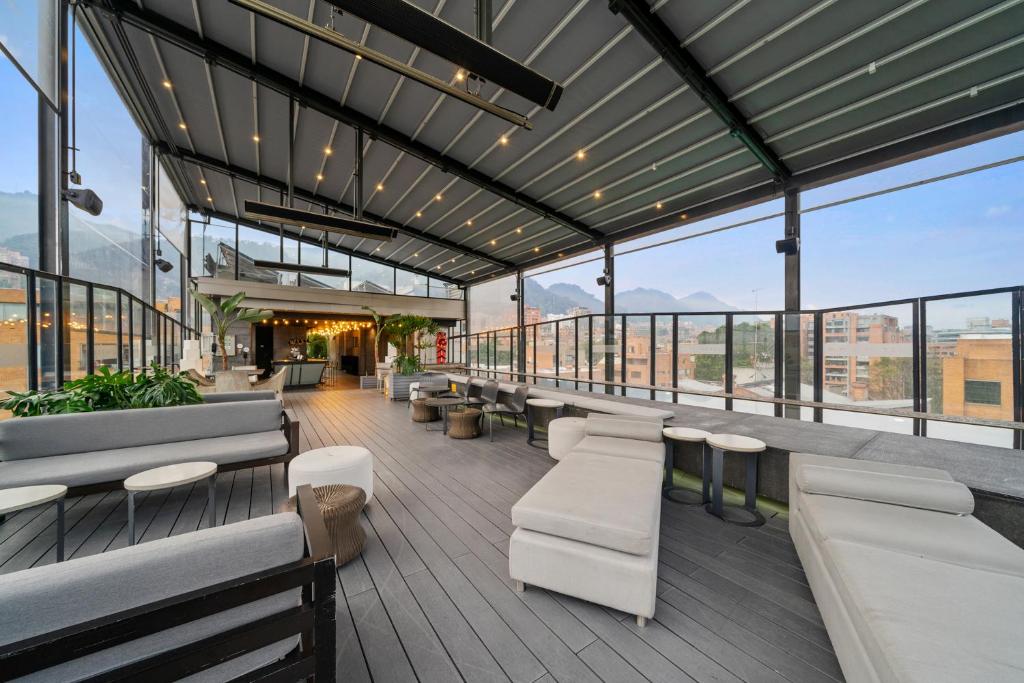
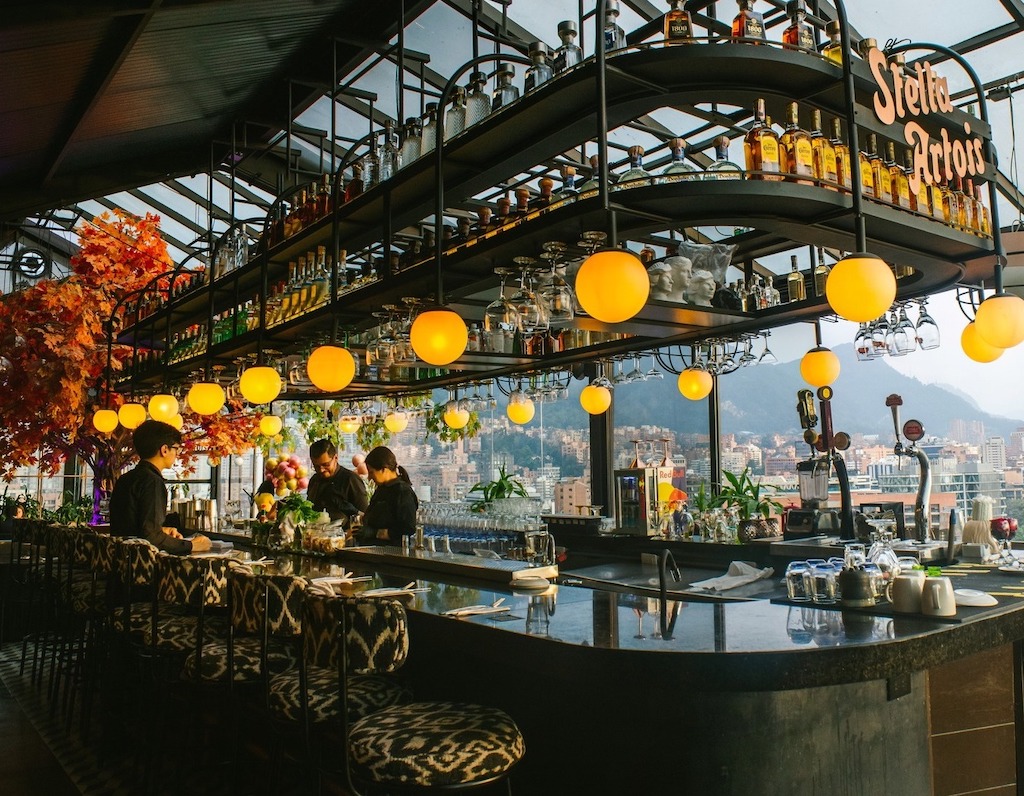
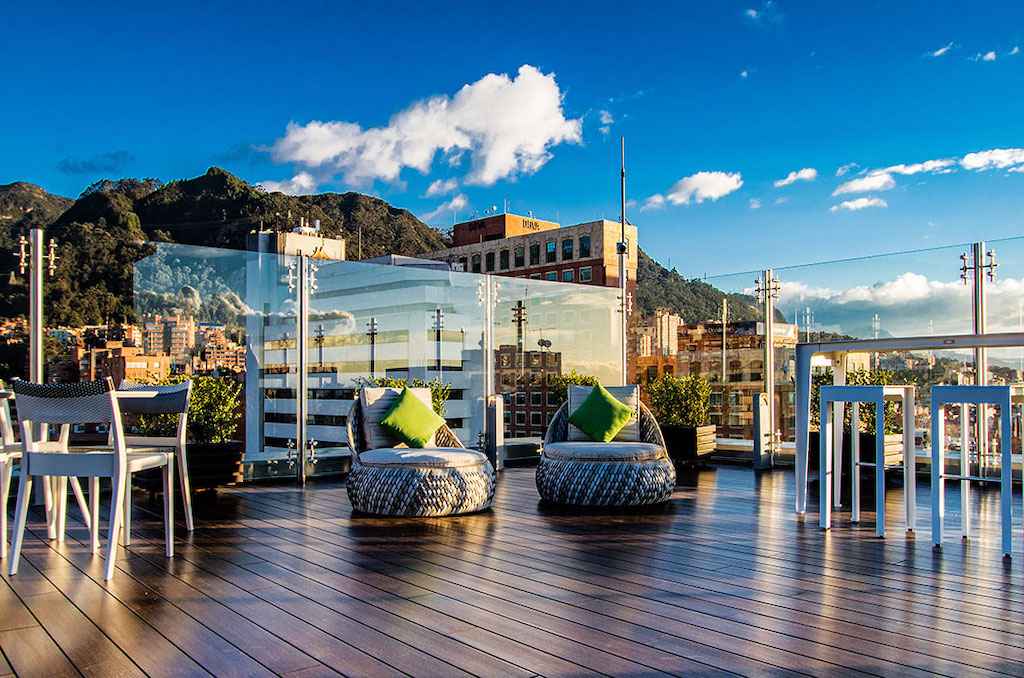
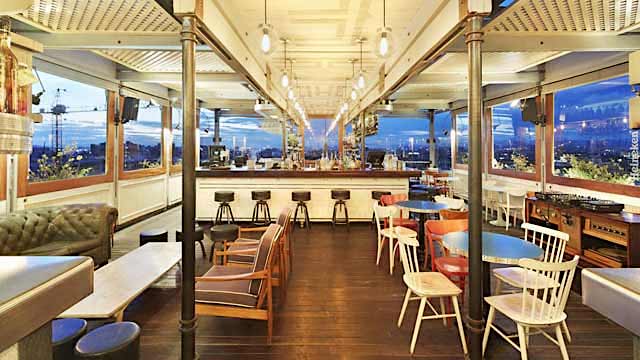
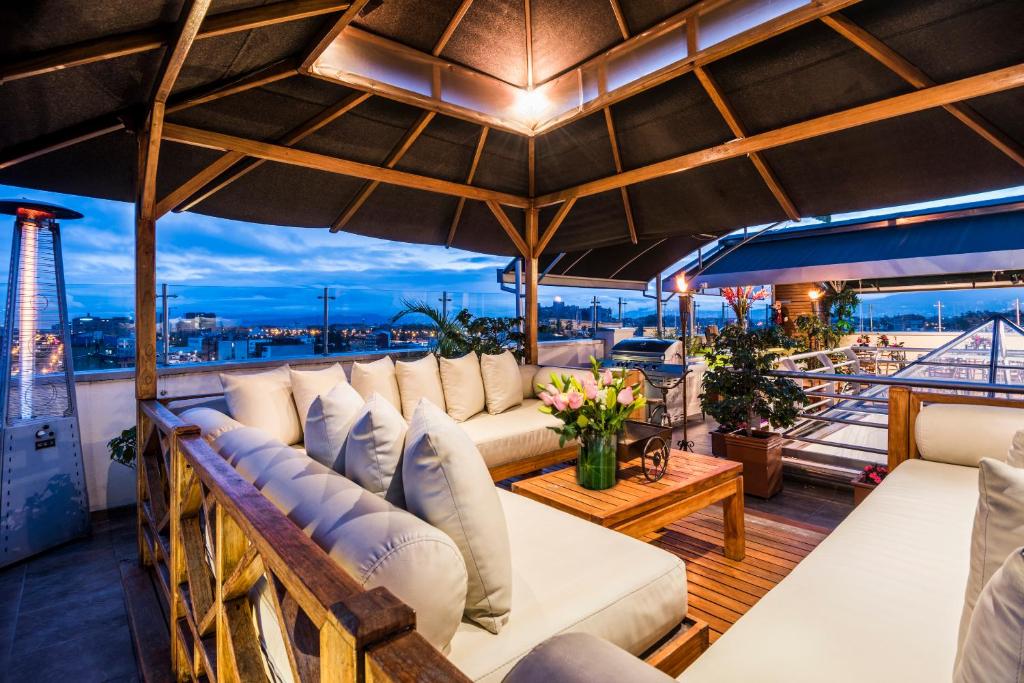
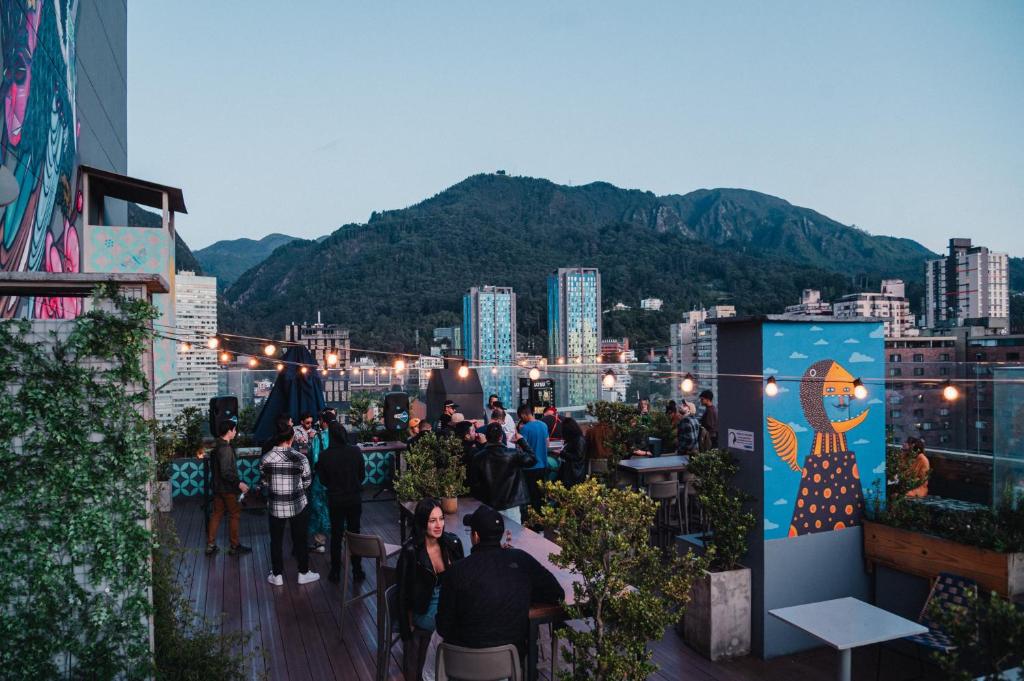
After a full day of sightseeing in Bogotá — from the historic streets of La Candelaria to Parque 93 and Zona T — there’s nothing better than ending the day with a cocktail in hand while watching the sun set behind the mountains. Colombia’s capital is home to a growing number of stylish hotels with rooftop bars, where you can enjoy live music, tasty bites, and spectacular sunsets.
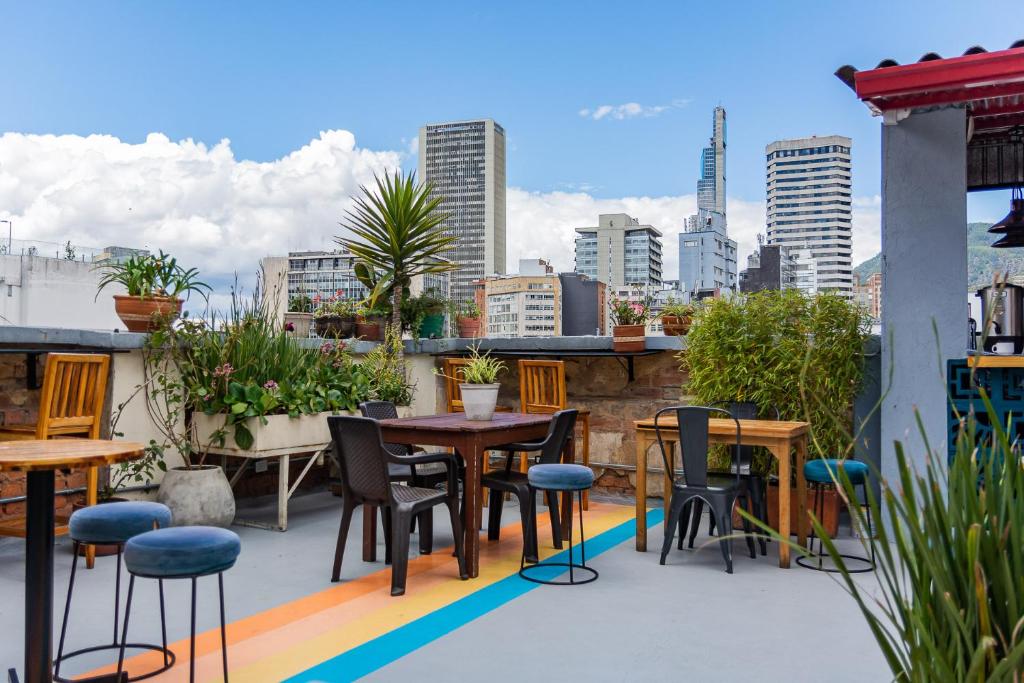
And the good news? You don’t have to spend a fortune to enjoy a great view. Alongside luxury hotels, Bogotá also has some excellent hostels with rooftop bars and terraces, perfect for relaxing and meeting other travelers.
So why not stay at one of Bogotá’s rooftop hotels or hostels and have great views and a lively atmosphere right at your doorstep?
Below, you’ll find some of the best hotels and hostels with rooftop bars in Bogotá, ranging from exclusive and sophisticated to trendy and affordable.
Luxury Hotels with Rooftop Bars in Bogotá
1. B.O.G. Hotel
Design & skyline view
📍 Location: Zona T / Chicó Norte
💰 Price range: starting at $180 per night
🌇 Atmosphere: stylish, modern, exclusive
The five-star B.O.G. Hotel is an icon of design and elegance in Bogotá. On the rooftop, you’ll find a heated pool and a luxurious rooftop lounge with panoramic 360° views of the city and the surrounding mountains.
The atmosphere is relaxed yet exclusive—perfect for a sundowner with a glass of wine or a tropical cocktail. Although the rooftop bar is primarily intended for hotel guests, events are regularly organized that are also open to visitors.
👉 Perfect for travelers who love style, comfort, and tranquility right in the heart of the city.
2. AC Hotel by Marriott Bogotá Zona T
Astoria Rooftop
📍 Location: Zona T
💰 Price range: starting at $160 per night
🍸 Atmosphere: elegant, international, cosmopolitan
The Astoria Rooftop is located on the 15th floor of the AC Hotel by Marriott Bogotá Zona T. Here, you can enjoy a stylish blend of modern design, impressive views, and the ambiance of a chic lounge.
The menu features international dishes, creative signature cocktails, and an extensive selection of wines and premium beverages.
👉 Ideal for travelers who love a cosmopolitan atmosphere and high-quality drinks.
3. Hilton Bogotá
Sky 15 Rooftop Bar
📍 Location: Chapinero
💰 Price range: starting at €150 per night
🎶 Atmosphere: urban chic, lively, popular with locals
The Sky 15 Rooftop Bar at the Hilton Bogotá is one of the most popular spots in the city.
With panoramic views of Chapinero, you can enjoy signature cocktails, wine, and refined dishes here, often accompanied by live music or a DJ on the weekends.
👉 Perfect for travelers who love signature cocktails and live music.
Hippe & trendy rooftop hotels in Bogotá
Click Clack Hotel–
Apache Rooftop Bar
📍 Location: Parque 93
💰 Price range: starting at €120 per night
🎶 Atmosphere: young, creative, trendy
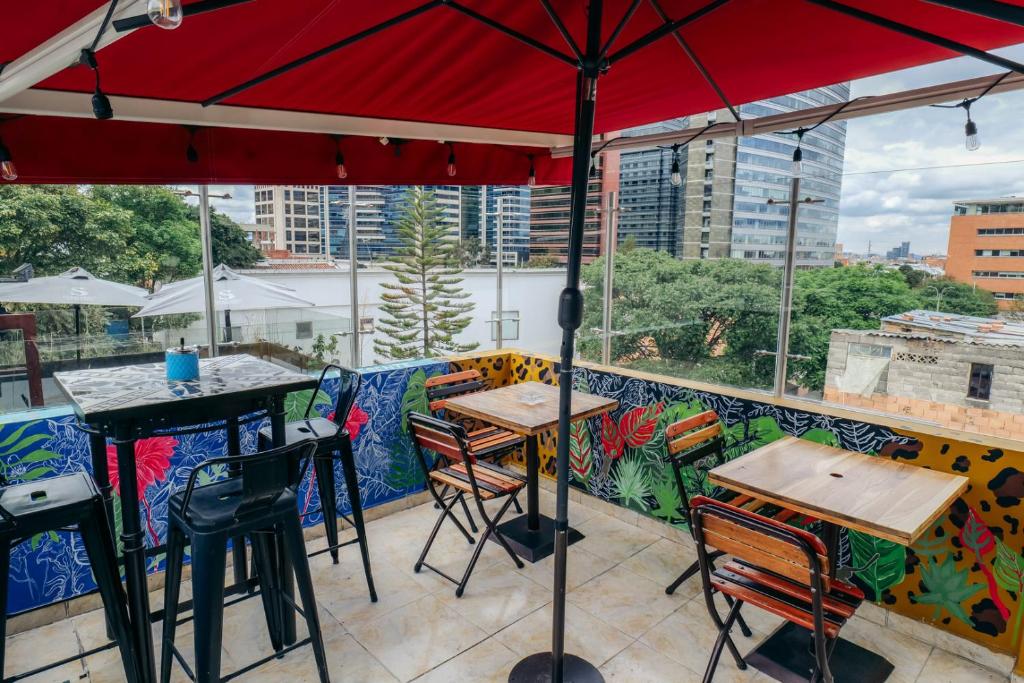
The Apache Rooftop Bar at the Click Clack Hotel Bogotá is the place to be for locals and travelers alike.
From the terrace, you’ll have a fantastic view of Parque 93 and can enjoy creative cocktails, street food bites, and a lively atmosphere. In the evening, the bar transforms into a cozy lounge with fire pits, string lights, and DJs.
👉 Ideal for travelers who love a hip, casual atmosphere with a view.
5. Salvio Parque 93
Vista Corona Bogotá
📍 Location: Parque 93
💰 Price range: starting at $130 per night
🌴 Atmosphere: tropical, relaxed, urban jungle
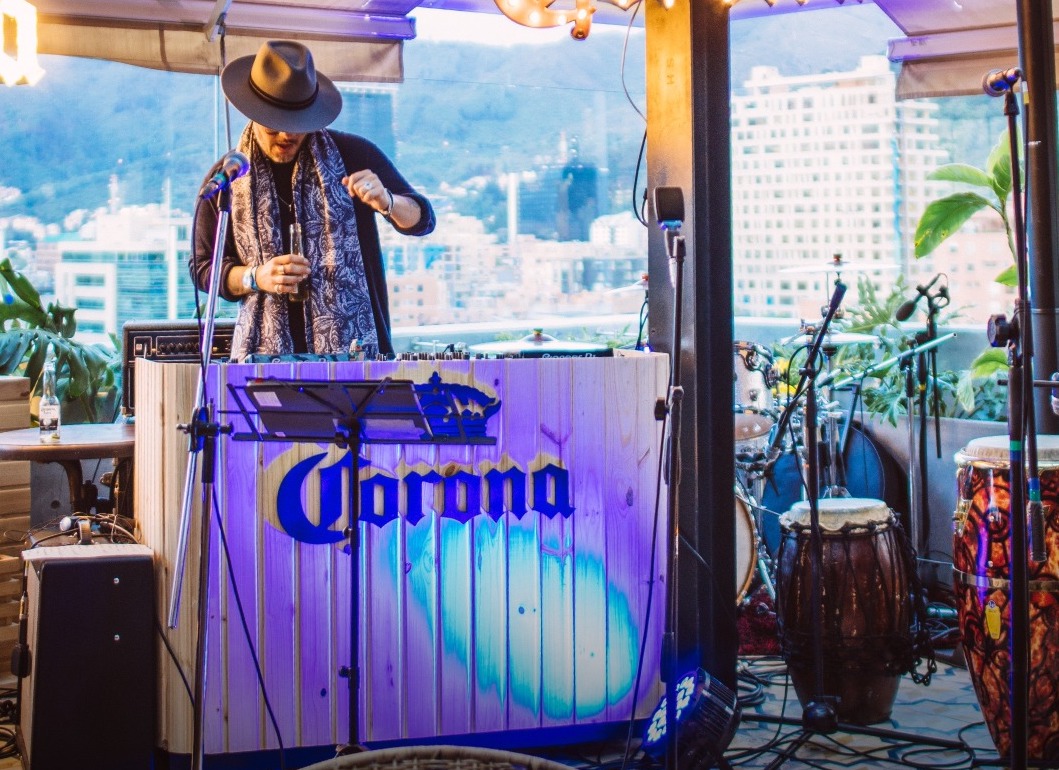
Perched atop the Salvio Parque 93 aparthotel is the Vista Corona Rooftop, one of Bogotá’s coziest rooftop terraces. It combines indoor and outdoor spaces filled with greenery and natural accents—a true oasis in the city!
As the name suggests, the bar is inspired by the Mexican beer brand Corona, but it also offers craft cocktails, wines, and Mexican bites like tacos and nachos.
👉 Perfect for travelers looking for a casual evening with a tropical vibe.
Affordable Hotels & Hostels with Views or Rooftop Terraces
It’s not just travelers who love luxury who can enjoy Bogotá’s rooftop terraces. There are also affordable hotels with rooftop bars or terraces where you can have breakfast, enjoy a drink, and socialize with other travelers while taking in the view of the city.
6. Hotel Platinum Suite Bogotá
📍 Location: Teusaquillo
💰 Price range: starting at €60–€80 per night
🌅 Atmosphere: comfortable, quiet, rooftop terrace with city views
Hotel Platinum Suite is a mid-range option with a pleasant rooftop terrace offering views of Bogotá. You can enjoy breakfast on the terrace, and the hotel is located in a central yet quiet spot in Teusaquillo.
👉 Perfect for travelers who want comfort and a view without the price tag of a luxury hotel.
📍 Location: Santa Fe / La Candelaria
💰 Price range: starting at €25–€40 per night
🎉 Atmosphere: social, modern, rooftop with a pool
Spotty Hostel Bogotá combines a modern, social vibe with city views. The hostel features a rooftop terrace with a pool, barbecue area, and lounge—perfect for meeting other travelers or relaxing with a drink.
👉 Perfect for backpackers and solo travelers looking for affordable comfort with a rooftop vibe.
📍 Location: La Candelaria (historic center)
💰 Price range: starting at €20–€35 per night
☕ Atmosphere: central, cozy, authentic
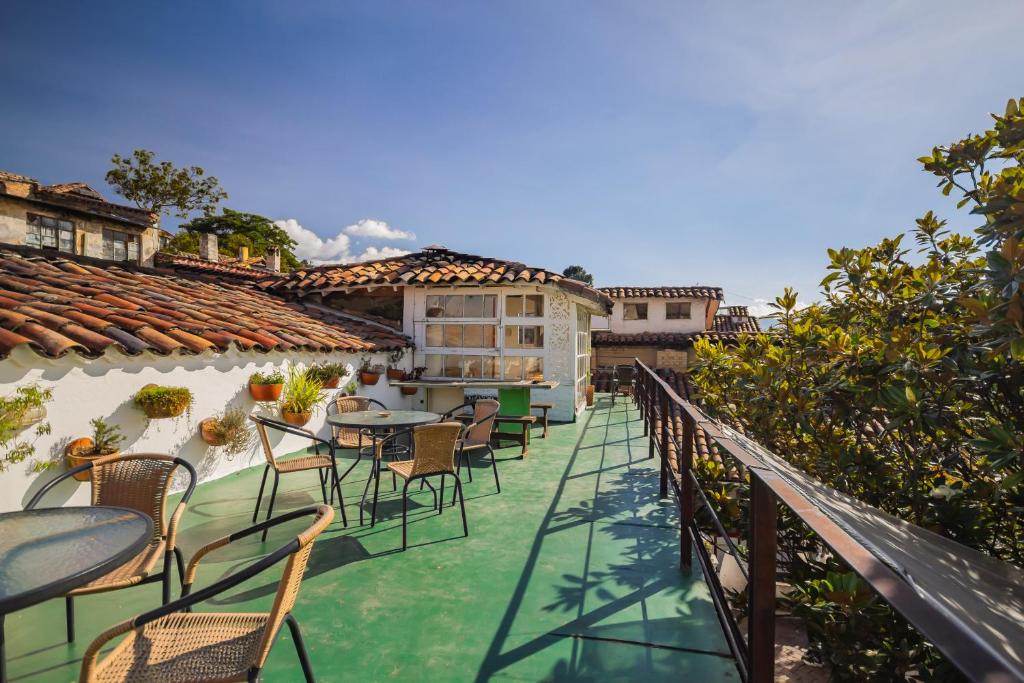
Hostal R10 is located in the heart of La Candelaria and features a cozy rooftop terrace where guests can enjoy breakfast or relax while taking in views of the old town.
👉 Ideal for travelers who want to combine culture and atmosphere with affordable accommodations.
📍 Location: Bogotá’s historic center
💰 Price range: starting at $20–$35 per night
🌿 Atmosphere: green, peaceful, with a terrace and garden
Botanico Hostel offers a relaxed atmosphere with a sun terrace, bar, and garden. It’s a peaceful spot in the historic center, ideal for travelers who want to combine nature and city life.
👉 Perfect for those traveling on a tight budget who still want to enjoy outdoor space and views.
10. Usaquén Station Hostel
📍 Location: Usaquén, Bogotá
💰 Price range: starting at $25 per night
🏡 Atmosphere: quiet, charming, terrace
Usaquén Station Hostel is located in the northern, lively part of the city. The hostel features a terrace with a view of the neighborhood—not a huge rooftop bar, but a nice outdoor spot to relax.
👉 Ideal for travelers seeking peace and quiet who still want to stay connected to the lively Usaquén neighborhood.
Practical Tips for Rooftop Bars in Bogotá
- Go around sunset (5:30–6:30 PM): this is when the views are at their best.
- Check the opening hours: some rooftop bars and terraces at smaller hotels or hostels are not open all evening or may be closed for private events.
- Bring a jacket or sweater: Bogotá sits at an altitude of around 2,600 meters (8,530 ft), so evenings can be chilly.
- Make a reservation in advance: popular rooftop bars can fill up quickly, especially on Friday and Saturday evenings.
- Happy Hour: many bars offer 2-for-1 cocktails between 5:00 and 7:00 PM.
- Dress code: casual chic is usually fine; sportswear is best avoided.
- Planning to stay at a hotel or hostel with a rooftop in Bogotá? Book early and take advantage of Early Deals, as well as other special deals!
The best hostels and hotels with rooftop bars in Bogotá combine comfort, atmosphere, and great views. Whether you choose the elegant B.O.G. Hotel, the trendy Click Clack Hotel, or the budget-friendly Spotty Hostel, each offers a unique experience high above Colombia’s vibrant capital.
Also Read:
Travel Guide Bogotá, Travel Guide Medellin
A flight into Bogotá can leave you reaching for a jacket at 8,660 feet. An hour later, Medellín may greet you with springlike warmth, palms, and outdoor cafés. That contrast gets to the heart of Medellín vs Bogotá: these are not interchangeable city stops. Both deserve a place on an independent Colombia itinerary, but they offer very different rhythms, landscapes, and practical considerations.
Bogotá is Colombia’s vast, high-altitude capital: busy, creative, intense, and full of museums, markets, and neighborhoods with distinct personalities. Medellín sits in a green Andean valley and feels more compact, relaxed, and outdoors-oriented, even though it remains a major city. The right choice depends on what you want from your first days in Colombia, how much time you have, and whether you prefer urban culture or an easier city break.
Medellín vs Bogotá at a glance
Choose Bogotá if you are drawn to big-city energy, excellent museums, serious food, coffee culture, street art, and a deeper view of Colombia’s political and cultural life. It is also the more practical base for destinations in the central Andes, including Villa de Leyva, Zipaquirá, and the coffee-growing region by air.
Choose Medellín if you want pleasant daytime temperatures, scenic viewpoints, walkable nightlife districts, and an introduction to Colombia that feels less overwhelming. It works especially well for travelers continuing to Guatapé, Jardín, Santa Fe de Antioquia, or the coffee region overland.
If your itinerary allows it, visit both. A short domestic flight makes the connection simple, and seeing the two cities side by side gives much more context to Colombia’s diversity. If you must pick one, do not simply follow the more popular name on social media. Match the city to your travel style.
Atmosphere: capital-city intensity or valley-city ease?
Bogotá is enormous. Its scale is immediately noticeable in the traffic, the long avenues, and the distance between attractions. That can be tiring, but it is also what makes the city compelling. Spend a morning in La Candelaria, an afternoon at a major art museum, and dinner in Chapinero or Zona G, and you will see several versions of the capital in one day.
Medellín has its own traffic and urban sprawl, but visitors tend to experience it more easily. The Metro is clean and useful, the valley setting is visible from many neighborhoods, and popular areas such as El Poblado, Laureles, and Envigado are better suited to slow afternoons between meals, coffee, and local walks. Medellín is not a small town, nor should it be treated as one, but its visitor experience is generally more intuitive.
For a first-time visitor who wants time to settle in, Medellín often feels friendlier. For travelers who enjoy cities that reveal themselves gradually, Bogotá offers more layers.
Weather and altitude can change your plans
The weather difference is one of the clearest factors in Medellín vs Bogotá. Medellín is known as the City of Eternal Spring. Daytime temperatures are usually warm but comfortable, while evenings can be mild. Rain is possible throughout the year, often arriving in short, heavy bursts, so a light rain jacket is more useful than an umbrella you will forget in a café.
Bogotá is cooler year-round because of its altitude. Expect layers, a waterproof outer layer, and temperatures that can feel surprisingly chilly after sunset or during rain. The high elevation may also affect you during the first day or two. Take it easy after arrival, drink water, and avoid planning your most active day immediately.
Neither city has a perfect dry season guarantee. Colombia’s weather is regional and changeable, so check the forecast close to departure. Still, travelers who dislike cool weather will usually prefer Medellín, while those who enjoy crisp air and do not mind packing a sweater may feel right at home in Bogotá.
Neighborhoods: where you stay matters more than usual
In both cities, your neighborhood shapes the trip. Choosing accommodation solely because it is cheap can create long rides and an unnecessarily stressful experience.
In Medellín, El Poblado is the easiest base for many first-time visitors. It has a wide range of hotels, restaurants, cafés, and nightlife, though it can feel polished and more expensive than other parts of the city. Laureles is flatter, more residential, and often preferred by travelers who want a local neighborhood atmosphere with plenty of dining options. Envigado, just south of Medellín, is another appealing choice for a calmer stay.
In Bogotá, Chapinero is a strong all-around base, with restaurants, bars, cafés, and good access to several parts of the city. Zona G is particularly convenient for food-focused travelers, while Parque 93 and the surrounding area offer a more upscale, orderly feel. La Candelaria puts you near historic sights, but it is less practical for late-night wandering and requires more awareness after dark.
Book a place near the experiences you value most. In Bogotá, trying to cross the city twice a day can consume a surprising amount of vacation time. In Medellín, staying near a Metro station can make independent exploration much easier.
Food, culture, and the best use of your time
Bogotá wins on cultural depth and variety. Its museums, galleries, historic center, and restaurant scene can easily fill three or four days. You can explore pre-Columbian gold, contemporary Colombian art, traditional markets, specialty coffee, and regional cuisine without leaving the city. Sunday is especially enjoyable when parts of the city open up for cyclists and pedestrians during Ciclovía.
Medellín’s strongest experiences blend city life with social history and landscape. Ride the MetroCable for valley views, visit Comuna 13 with a knowledgeable local guide, and make time for public art around Plaza Botero. The city’s transformation story is meaningful, but it should not be reduced to a quick photo stop. Approach neighborhoods with respect for the people who live there rather than treating difficult history as entertainment.
Food in Medellín can be excellent, particularly in its newer restaurant districts, but Bogotá has more range. Medellín is better for lingering over a casual meal outdoors; Bogotá is better for planning a serious restaurant reservation or eating your way through a market.
Cost, transportation, and getting around
Neither city is Colombia’s cheapest destination, especially in the most visitor-oriented neighborhoods. Medellín can be expensive in El Poblado, while Bogotá’s upscale northern zones also command higher hotel and restaurant prices. Elsewhere, both cities offer good value compared with many large North American cities.
Medellín’s Metro is a genuine advantage. It connects many useful areas and integrates with cable cars, making it a practical part of the sightseeing experience. Use registered taxis or ride-hailing apps for trips that are not convenient by Metro, especially at night.
Bogotá relies more heavily on taxis, ride-hailing apps, and TransMilenio buses. TransMilenio is fast on some routes but can be crowded and confusing for newcomers. Traffic is the larger issue: build extra time into every cross-city plan. Walking is enjoyable within the right neighborhoods, but Bogotá is not a city to navigate on foot without paying attention to your route and the time of day.
For safety in either city, use the same smart habits you would in any large Latin American city. Keep your phone out of sight when it is not needed, avoid displaying valuables, use trusted transportation at night, and ask your hotel or host about streets to avoid. Medellín’s welcoming reputation does not eliminate risk, and Bogotá’s reputation for being hectic does not mean travelers cannot enjoy it safely with sensible planning.
Which city works best with your Colombia itinerary?
Medellín is the natural choice if you have a week or less and want to combine one city with Guatapé. Two or three nights in Medellín plus one night near Guatapé creates a balanced, low-stress route. It also pairs well with a longer journey south toward the coffee region.
Bogotá is a better fit if you are flying internationally into Colombia, have an interest in history and museums, or plan to visit the Salt Cathedral of Zipaquirá and Villa de Leyva. Give the capital at least two full days rather than treating it as a transit stop. One rushed afternoon rarely shows why Bogotá matters.
Travelers who arrive in Bogotá but prefer Medellín’s climate do not need to choose immediately. Spend a night near your arrival airport or in a convenient neighborhood, then take a domestic flight the following day. That simple adjustment can make your first day far more comfortable.
The best city is the one that leaves room for the Colombia you came to experience. Choose Bogotá when you want urban scale, culture, and edge. Choose Medellín when you want a gentler pace, warm weather, and an easy connection to Antioquia’s landscapes. Then leave a little unplanned time in either place: that is often when the neighborhood bakery, hillside view, or long coffee conversation becomes the part of the trip you remember most.
Travel Guide Bogotá
Bogotá is a huge, energetic capital where a great trip often comes down to one practical skill: knowing where you are, what time it is, and how you plan to get home. Searches for areas tourists should avoid in Bogotá can make the city sound more threatening than it feels on the ground. The more useful reality is that Bogotá has excellent visitor neighborhoods, areas that require more care, and a few districts with little reason for most travelers to visit independently.
This is not about labeling entire communities as unsafe. Bogotá is home to more than eight million people, and its working-class southern and western districts are full of everyday life, local businesses, and residents who know their neighborhoods well. But independent visitors have less local context, may be visibly unfamiliar with the city, and are more likely to be targeted for opportunistic theft. Plan your movements accordingly and Bogotá is very manageable.
Areas tourists should avoid in Bogotá
For most visitors, the clearest advice is to avoid wandering through the far south and far southwest of the city, particularly in parts of Ciudad Bolívar, Bosa, Usme, San Cristóbal, and Kennedy. These are vast residential localities, not visitor attractions. Safety varies block by block, but some sectors experience higher rates of robbery and gang-related crime, especially after dark. There is rarely a sightseeing reason to explore them on foot without a trusted local host or a specific organized plan.
The same applies to isolated edges of the city, where urban development meets the hills or less populated industrial areas. If a map suggests a shortcut through an unfamiliar neighborhood, do not assume it is a sensible walking route. Bogotá’s scale can be deceptive: two points may look close together but be separated by steep terrain, heavy traffic, poorly lit streets, or neighborhoods that are not designed for visitors.
San Bernardo and parts of central Bogotá
San Bernardo, just south of the historic center, is the central area most travelers should skip. It has long faced serious social and security problems, and while redevelopment efforts continue in parts of central Bogotá, conditions can change quickly from one block to the next. Do not walk south from La Candelaria toward this area out of curiosity, especially in the evening.
Some sections around Santa Fe and the broader downtown corridor also demand more awareness at night. Santa Fe is a large neighborhood with offices, cultural institutions, residential blocks, nightlife, and a well-known adult-entertainment zone. It is not uniformly off-limits, but it is not a place to wander aimlessly after dark. If you are visiting a restaurant, hotel, venue, or museum nearby, take a car directly to the address and arrange your return rather than walking several blocks to look for transportation.
La Candelaria: visit by day, plan your evening
La Candelaria is Bogotá’s historic heart and absolutely worth visiting. Its colonial streets, museums, cafés, street art, and universities make it one of the city’s essential stops. Yet it is also one of the places where visitors let their guard down because it feels tourist-friendly.
During the day, stay alert around crowded plazas, busy museum entrances, and streets where people may approach with distractions. After dark, the number of pedestrians drops sharply on many side streets. Stick to active restaurant areas, use a reputable ride service for dinner or drinks, and avoid walking back to Chapinero, Zona Rosa, or Parque 93. Those neighborhoods may seem reachable on a map, but Bogotá is not a city where long cross-town walks make sense at night.
Places that are not “avoid” zones, but need a plan
A blanket list misses the real trade-off. Several popular areas are generally good bases for visitors, but they still require city-smart habits.
Chapinero, Zona G, Zona Rosa, Parque 93, and Usaquén are among the easiest places to stay, eat, and go out. They have more hotels, restaurants, security, and regular foot traffic than much of the city. Even there, avoid empty side streets late at night, do not leave a phone visible on an outdoor table, and do not walk alone after a night out simply because the area looks upscale.
The nightlife corridors of Chapinero and Zona Rosa deserve particular attention after midnight. Pickpocketing, phone snatching, and drink spiking can happen in busy bars as well as quieter streets. Keep an eye on your drink, avoid accepting drinks from strangers, and make sure your phone has enough battery to order a ride home. If someone becomes unusually insistent, whether they are offering help, a party, or an invitation to another venue, trust your instincts and leave.
Monserrate is another good example. The hilltop church and city views are among Bogotá’s signature experiences, and the cable car or funicular is the sensible way to visit. Go in daylight, use the official access points, and do not hike informal paths through the eastern hills on your own. The hills are beautiful, but remoteness changes the risk calculation quickly.
How to move around Bogotá safely
In Bogotá, transportation choices matter as much as neighborhood choices. For airport transfers, evenings out, and trips across town, use a well-known ride-hailing app or ask your hotel or restaurant to arrange a registered car. Confirm the vehicle details before getting in, and wait indoors or close to the entrance rather than standing on an empty street with your phone in hand.
Taxis are common, but hailing one directly from the street is less predictable than ordering through an app or having a venue call one for you. Public transportation, including TransMilenio, can be efficient during the day on busy routes, but it is notorious for crowding and theft. If you use it, keep valuables in a zipped front pocket or hidden crossbody bag, avoid displaying your phone near doors, and do not board nearly empty cars late at night.
Walking is ideal within compact areas such as Usaquén on a weekend afternoon, La Candelaria during museum hours, or the restaurant streets around Zona G. It is less practical between neighborhoods. Bogotá is high altitude, congested, and sprawling. A 20-minute drive can become a much longer ride in traffic, but that still does not automatically make walking the safer or more enjoyable alternative.
Reduce the chance of becoming a target
The most common problem visitors face is theft, not violent crime. The local phrase “no dar papaya” is useful here. It means not making yourself an easy opportunity. It does not blame victims. It is simply a realistic approach to moving through a large city where a visible phone, expensive watch, open bag, or distracted tourist can attract attention.
Carry only what you need for the day, and keep a backup card and passport secured at your accommodation. Use a modest phone case, avoid wearing flashy jewelry, and take photos before putting your phone away rather than walking with it out. On restaurant patios, keep bags on your lap or looped around a chair leg, not hanging behind you.
If you are robbed, do not resist over a phone or wallet. Report the incident when it is safe, cancel cards, and contact your insurer or embassy if necessary. But the better strategy is prevention: ask your hotel which blocks to avoid near your address, book late-night rides before you go out, and change plans if a street feels unusually empty or tense.
Bogotá rewards travelers who plan with confidence rather than fear. Base yourself in a convenient neighborhood, use direct transportation after dark, and save your walking for lively areas where you actually want to spend time. That leaves more room for what you came for: long lunches, mountain views, excellent coffee, and a capital that reveals far more when you move through it thoughtfully.