Travel Guide Bogotá, Villages in Colombia
The best day trips from Bogotá: Zipaquirá, Guatavita, Villa de Leyva & more are very different experiences, from an underground cathedral to high-altitude lakes and colonial plazas. The key is not trying to treat them all alike. Zipaquirá is an easy independent outing, Guatavita needs more transport planning, and Villa de Leyva is beautiful but usually works better as an overnight trip.
Bogotá sits on a high plateau with excellent access to Cundinamarca and Boyacá, but traffic, mountain roads, and long distances can turn an optimistic plan into a rushed day. For most independent travelers, choose one destination, leave early, and build in time for the return journey.
Best day trips from Bogotá: which one should you choose?
Choose Zipaquirá if this is your first trip outside Bogotá and you want the simplest public-transport option. Visit Guatavita if you are more interested in landscapes, Muisca history, and a quieter small-town setting. Choose Villa de Leyva only for a very long day or, preferably, one or two nights. It deserves time after the day-trippers have left.
For a nature-focused alternative close to the city, consider La Chorrera Waterfall, Chicaque Natural Park, or Suesca. These are better choices than another colonial town if your Bogotá itinerary has been heavy on museums and urban sightseeing.
Zipaquirá and the Salt Cathedral
Zipaquirá is the most practical classic day trip from Bogotá. The town is north of the capital, and its main attraction, the Salt Cathedral of Zipaquirá, lies inside the tunnels of a working salt mine. It is not a centuries-old cathedral in the conventional sense. The current underground complex was inaugurated in the 1990s, but the scale, lighting, Stations of the Cross, and enormous carved cross make it an unusual and memorable visit.
How do you get to Zipaquirá?
The most straightforward independent route is an intercity bus from Bogotá’s Terminal del Norte. Buses toward Zipaquirá run regularly during the day, and the journey generally takes 1.5 to 2 hours, depending heavily on traffic leaving Bogotá. Expect to pay roughly COP 10,000-18,000 each way, with fares subject to change.
From Zipaquirá’s transport terminal, take a short taxi to the cathedral or walk around 25 minutes uphill from the historic center. A taxi should be inexpensive, but agree on the fare or ensure the meter is used before departing. You can also book a day tour from Bogotá if you value hotel pickup and want to avoid working out the bus terminal, though it is not necessary for most confident independent travelers.
Allow around two hours inside the Salt Cathedral. Admission for international visitors is commonly around COP 100,000-130,000, depending on the ticket type and current pricing. Audio guides and additional attractions may cost extra. Check the official opening hours before leaving Bogotá, especially on holidays and Sundays.
Is Zipaquirá worth it?
Yes, particularly if you have only a few days in Bogotá and want one easy excursion. Pair the cathedral with lunch and a walk around Parque de los Comuneros, Zipaquirá’s central square. The town itself is pleasant rather than spectacular, so do not expect Villa de Leyva-level colonial architecture. The cathedral is the reason to go.
Leave Bogotá by 8 a.m. if possible. That gives you time for a relaxed visit, lunch, and a return before evening traffic becomes punishing.
Guatavita: lake, legend, and a very different town
Guatavita often appears on day-trip itineraries because of the legend of El Dorado. But travelers should know there are two separate places involved: the modern town of Guatavita and Laguna de Guatavita, the sacred crater lake associated with Muisca ceremonies. They are not next to each other, and visiting both independently in one day requires patience or a hired car.
The original town was flooded during construction of the Tominé Reservoir in the 1960s. The present-day town was rebuilt nearby in a deliberately colonial style, with whitewashed buildings, red-tile roofs, craft shops, and restaurants. It is attractive, compact, and pleasant for lunch, though it is not an untouched colonial settlement.
How do you get to Guatavita and the lagoon?
Buses to Guatavita leave from the north of Bogotá, including Terminal del Norte and nearby northern transport points, depending on the operator and route. Travel time to town is generally 2 to 3 hours. Fares are often in the COP 15,000-25,000 range each way. Ask specifically whether the bus goes to Guatavita pueblo and where it drops passengers.
Reaching Laguna de Guatavita is the tricky part. The lake is outside town, and public transport connections are limited. A taxi arranged in Guatavita can work, but return availability may be poor, particularly late in the afternoon. For that reason, a small-group tour or a private driver is often the better value for travelers determined to visit the lagoon. It reduces the risk of spending more time negotiating transport than enjoying the site.
The lake visit includes a guided walk on a high-altitude trail. It is not technically difficult, but the altitude and uneven paths can feel demanding if you have just arrived in Bogotá. Bring a rain layer, water, sunscreen, and cash. Entry fees and access rules change, so confirm them directly before travel; expect a separate admission charge in addition to transport.
Should you visit the town or the lagoon?
If you have a full day and want the cultural significance behind the El Dorado story, prioritize the lagoon. If you prefer an easy scenic day with a good lunch, reservoir views, and less logistical friction, visit Guatavita town. Trying to squeeze in the lagoon, town, and nearby attractions such as the Tominé Reservoir is possible with a driver but rarely relaxing by public bus.
Villa de Leyva: the day trip that should be an overnight
Villa de Leyva is one of Colombia’s most rewarding small towns: a vast cobbled Plaza Mayor, whitewashed houses, good restaurants, museums, and dramatic dry landscapes around town. It is also much farther from Bogotá than many first-time visitors realize.
By bus, expect roughly 4 to 5 hours each way once you include the journey to the terminal, traffic, and a connection through Tunja or another Boyacá hub. Services leave from Bogotá’s main bus terminal, Terminal Salitre, and schedules can vary by day. Budget approximately COP 35,000-55,000 each way, depending on routing and operator. Advance booking is useful on Friday afternoons, weekends, and Colombian holiday periods.
A private car can cut down some waiting time, but the road journey is still long. A same-day trip means leaving Bogotá before dawn and returning late, with little time to appreciate the town beyond the square. It can make sense if your schedule is fixed and Villa de Leyva is a non-negotiable priority. Otherwise, stay at least one night.
For a practical overnight, book a property within a 10-minute walk of Plaza Mayor. Midrange guesthouses and small hotels commonly start around COP 180,000-350,000 per night for a double room, while boutique properties can cost considerably more on weekends. Prices rise sharply during long weekends and the December-January holiday season.
With an overnight stay, you can enjoy the square after dark, then choose one nearby outing the following day: Casa Terracota, the Paleontological Museum, the Monasterio del Santo Ecce Homo, or the clay landscapes around Ráquira. Ráquira is especially worthwhile for ceramics, but it is better treated as part of a Boyacá overnight route than a rushed Bogotá day trip.
More worthwhile escapes from Bogotá
If you want fresh air without a long intercity journey, La Chorrera Waterfall is a strong option. The hike leads to Colombia’s highest waterfall and usually takes most of a day once transport and walking time are included. Conditions can be muddy and cool, so this is for travelers with suitable footwear rather than casual city sneakers.
Chicaque Natural Park is another good choice for cloud forest, birdlife, and hiking. It is south of Bogotá and can be reached independently, but the final connection from the highway can be inconvenient. A pre-arranged transfer or organized outing is often easier, especially if you are short on time.
Suesca, northeast of Bogotá, is best known for rock climbing but also offers riverside walks, dramatic rock formations, and a quieter rural atmosphere. It is a better match for active travelers than for those seeking museums or polished colonial streets.
Practical tips for independent day trips
Bogotá’s altitude is already about 8,660 feet, and many surrounding destinations are similarly high. Take the first day or two of your Colombia trip slowly before attempting a strenuous hike. Weather can shift quickly, so bring layers even when Bogotá starts the morning sunny.
For buses, carry small-denomination Colombian pesos and arrive with time to find the correct platform. Staff at terminals can point you toward the right company, but Spanish helps. Keep your valuables close in crowded terminals and avoid arriving back at an unfamiliar drop-off point very late at night. These are standard city precautions, not a reason to avoid public transport.
Most importantly, do not confuse a short distance on a map with a short journey in the Andes. Zipaquirá rewards a simple independent day, Guatavita rewards careful planning, and Villa de Leyva rewards giving it the evening it deserves.
Travel guide Coffee Triangle, Villages in Colombia
The most reliable answer to where to see the Andean cock-of-the-rock in Colombia is Jardín, Antioquia. This handsome, bright-red bird has a regularly visited display site close to town, making Jardín the best choice for travelers who want a realistic chance of seeing one without committing to a specialist birding expedition. For more remote rainforest experiences, the Sierra Nevada near Minca and Tatamá National Natural Park are excellent alternatives.
The male Andean cock-of-the-rock is difficult to mistake: a vivid scarlet-orange body, black-and-white wings, and an oversized fan-shaped crest. But the real reason to seek it out is its behavior. Males gather at a lek, a traditional display area in the forest, where they call, bow, jump, and compete for the attention of females. These gatherings are most active around dawn and, sometimes, late afternoon.
Jardín: the easiest place to see the Andean cock-of-the-rock in Colombia
Jardín is a beautiful coffee-region town about 80 miles south of Medellín, and it is the most practical destination for independent travelers. The local Reserva Natural Jardín de Rocas protects a known cock-of-the-rock lek in forest just outside the town center. Visits are normally accompanied by a local guide or reserve representative, which is exactly how it should be: birds at a lek are sensitive to noise, crowding, and people leaving the designated viewing area.
Plan to go early. A pre-breakfast visit gives you the best chance of hearing the males calling and watching their displays from a respectful distance. Sightings are never guaranteed – weather, disturbance, and the birds’ own breeding cycle all matter – but Jardín offers a far better chance than simply walking Colombia’s cloud-forest trails and hoping for the best.
Entry and guiding arrangements can change, but budget roughly COP 30,000 to COP 60,000 per person for a reserve visit or locally arranged birding outing. Confirm the current time and price after arriving in Jardín, ideally the day before you want to go. Small reserves may limit visitor numbers or adjust access after heavy rain.
How to get to Jardín from Medellín
Buses to Jardín leave from Medellín’s Terminal del Sur. Companies serving the route can include Rápido Ochoa and Transportes Suroeste Antioqueño. The journey usually takes about four to five hours, depending on traffic and road conditions, and fares are commonly in the range of COP 40,000 to COP 60,000 each way. Buy your ticket a day ahead for weekends, Colombian holidays, and the busy December-January period.
Once in Jardín, stay in or near the compact historic center. It is walkable, atmospheric, and convenient for arranging an early reserve visit. Hotel Valdivia Plaza is a straightforward central option, while Casa Passiflora Hotel Boutique suits travelers looking for a more polished stay. Simple guesthouses and hostels are also easy to find around the plaza. Expect basic rooms to start around COP 120,000 per night, with boutique properties costing more on weekends and holidays.
Jardín is best for travelers who have two nights to spare and want to combine birding with a highly enjoyable small-town stop. You can spend the rest of the day riding the cable car, visiting La Cueva del Esplendor with a local operator, or simply lingering in the main square. Do not try to make this a rushed Medellín day trip. The early start required for the birds makes an overnight stay the sensible option.
Minca and El Dorado Reserve: a rainforest birding option
The Sierra Nevada de Santa Marta is another important area for seeing the Andean cock-of-the-rock. The species occurs in humid foothill and montane forest, and the most serious birding base in this region is Reserva Natural El Dorado, above Minca. It is a much more dedicated birding destination than Jardín, with the added appeal of many birds found only in the Santa Marta mountains.
El Dorado is not the budget choice, and it is not somewhere to arrive unannounced expecting a casual walk-in visit. Accommodation, meals, guides, and transportation are usually organized directly with the reserve. Rates vary by season and room type, but this is generally a premium overnight birding stay rather than a low-cost Minca excursion. Ask specifically whether recent cock-of-the-rock activity has been reported before building your itinerary around it.
From Santa Marta, travel first to Minca – shared transport from the city is generally quick and inexpensive – then arrange a 4×4 transfer to the reserve. The road into the mountains is steep and conditions can change after rain, so using the reserve’s recommended transport is usually safer and more efficient than trying to rent a vehicle.
Minca itself has hostels, cafés, waterfalls, and an easygoing backpacker atmosphere, but it is not automatically the best base for this bird. Stay in Minca if you want a broader Sierra Nevada trip, then book a guided early-morning outing or an overnight stay higher up. Choose El Dorado if birds are a central reason for visiting. The trade-off is simple: Jardín is easier and less expensive; El Dorado offers a deeper birding experience in a far more remote setting.
Tatamá National Natural Park: best for committed birders
For travelers who are happy with rougher logistics in exchange for exceptionally rich forest, Tatamá National Natural Park is one of Colombia’s standout birding regions. Access is commonly arranged through Pueblo Rico in Risaralda, with birders continuing by 4×4 toward the Montezuma sector. Montezuma Rainforest Ecolodge is a well-known base for guided birding in the area.
Andean cock-of-the-rock can be encountered in the lower and middle-elevation forests around Tatamá, alongside a remarkable range of tanagers, toucans, hummingbirds, and, with luck, the highly sought-after black-and-gold tanager. This is not a destination for a quick, self-guided tick. Roads can be slow, rain is frequent, and early starts are unavoidable.
Plan at least two nights, and preferably three, if Tatamá is your main birding stop. Costs depend heavily on whether you arrange transport, lodging, meals, and guiding as a package. It is worth asking for the full cost before leaving Pereira or Pueblo Rico, because the 4×4 transfers are a meaningful part of the expense. This is a better fit for keen birders and photographers than for travelers with a tight Colombia itinerary.
When should you go?
Cock-of-the-rock displays can take place across much of the year, so there is no single short season that guarantees a sighting. The more useful planning rule is to visit a known lek at the right time of day. Be in position before sunrise, stay quiet, and give the birds time. A second visit near late afternoon can be worthwhile if your schedule allows.
Rain is common in all three regions. A wet morning does not necessarily end the possibility of seeing the birds, but intense rain can reduce activity and make access harder. Bring a waterproof layer, shoes with grip, and binoculars. A camera with a long lens is helpful, but do not use flash, playback calls, drones, or any behavior that pressures the birds to leave their display area.
Do you need a guide?
For Jardín, use a guide or the reserve’s own visit arrangement. At a lek, the guide’s value is not just finding the trail: they know where visitors can stand without interfering with the birds, and they can explain what you are hearing before the male becomes visible.
In Minca and Tatamá, a guide becomes even more valuable because habitat is more extensive and the logistics are harder. If cock-of-the-rock is your priority, tell the guide that clearly when booking. A general waterfall or coffee-farm tour is not designed around dawn bird activity.
A few practical birding tips
Arrive quietly and avoid bright clothing. The birds are often heard before they are seen, so pause when you hear loud, strange croaks or calls from the forest understory. Keep expectations realistic: females are brownish and less conspicuous, while the famous scarlet males may appear only briefly through leaves.
For safety, Jardín is the simplest setting, but still avoid walking isolated rural paths alone in darkness. In Tatamá and the Sierra Nevada, follow local transport and guide advice, especially during wet weather. Mobile signal can be unreliable outside towns, another good reason to confirm transport back to your accommodation before setting off.
If you have limited time, build your plan around Jardín and give yourself two mornings rather than chasing the bird across the country. The first may bring only calls and quick movement in the canopy. The second could be the moment a red-crested male steps into view and turns an ordinary early start into one of Colombia’s great wildlife memories.
Villages in Colombia
At 5 p.m., when the heat eases and residents reclaim the plazas, Colombia’s towns show their best side: children on bicycles, coffee being poured behind open doors, and mountains or church towers framing the view. The most beautiful towns in Colombia are not interchangeable colonial backdrops. Each has its own landscape, pace, food traditions, and practical considerations – which matters when you are building an itinerary independently.
Some are easy additions to a route between major cities; others reward travelers willing to take a longer bus ride or stay two nights rather than one. This selection balances visual appeal with the kind of experience that makes a town worth the journey.
The most beautiful towns in Colombia for independent travelers
Barichara, Santander
Barichara is the classic answer for travelers drawn to stone streets, whitewashed walls, and red-tile roofs. Its historic center is exceptionally well preserved, but it does not feel like an open-air museum. Local life still unfolds around the cathedral and Parque Principal, especially in the late afternoon.
Walk the Camino Real to nearby Guane for wide canyon views and a quieter village setting. Barichara is best reached from San Gil, making it a natural stop for travelers combining colonial scenery with Santander’s outdoor activities. Stay at least two nights if you want time to enjoy it after day-trippers have left.
Villa de Leyva, Boyacá
Villa de Leyva has one of South America’s most striking main squares – a vast, cobbled expanse surrounded by low colonial buildings and mountain light. The town is polished, popular, and more expensive than many small Colombian destinations, but its setting earns the attention.
It works especially well for travelers coming from Bogotá who want a slower first stop. Beyond the center, the dry highland landscape holds fossils, vineyards, artisan workshops, and small rural roads. Visit during the week if possible; weekends and holidays bring heavy domestic tourism.
Jardín, Antioquia
Jardín is color at full volume. Balconies spill with flowers, facades are painted in bright greens, blues, and yellows, and the handsome plaza is lined with outdoor tables. It is one of the most visually rewarding towns in Colombia, with steep green hills rising immediately beyond its streets.
The journey from Medellín takes time, so Jardín suits a two- or three-night stay rather than a rushed excursion. Ride the cable car for views, look for the yellow-eared parrot in the surrounding countryside, and leave room for an unhurried coffee in the square. The town’s charm is in its rhythm as much as its architecture.
Salento, Quindío
Salento is the best-known base in Colombia’s Coffee Region, and its colorful Calle Real remains genuinely photogenic despite the crowds. Its real advantage is location: from here, independent travelers can access the Cocora Valley, hike among wax palms, visit coffee farms, and continue through the region by local transport.
The trade-off is popularity. Salento can feel busy and commercial on weekends, particularly around the main street. For a quieter coffee-country experience, pair it with nearby Filandia or stay outside the center. Still, for a first visit to the region, Salento is convenient and deservedly memorable.
Filandia, Quindío
Filandia has much of Salento’s colorful architecture but a less frantic feel. Its central streets are compact, easy to explore on foot, and filled with traditional houses whose carved doors and balcony details reward a slow wander.
It is also a good choice for travelers who value food and comfortable small-town stays. The surrounding countryside is lush, and the viewpoint outside town offers broad views over the coffee landscape. Filandia is close enough to use as an alternative base for the region, though Salento remains more convenient for the Cocora Valley.
Guatapé, Antioquia
Guatapé is not subtle, and that is exactly the point. Nearly every building in its historic center has brightly painted zócalos – decorative lower panels depicting animals, trades, plants, or family stories. The effect is cheerful, distinctive, and unlike any other Colombian town.
Most visitors come from Medellín to climb El Peñol and see the reservoir from above. You can do that in a long day, but an overnight stay lets you enjoy Guatapé before the crowds arrive and after they depart. The waterfront and colorful streets are far more pleasant in the quieter hours.
Monguí, Boyacá
Small Monguí feels made for travelers who prefer calm over a packed sightseeing schedule. Stone houses, a graceful basilica, and a historic bridge create a beautiful colonial core, while the cold, green Boyacá highlands give the town a distinctly different atmosphere from warmer destinations such as Barichara.
Monguí is known for handmade soccer balls, and its location makes it a compelling stop for travelers exploring the páramo landscapes around Parque Nacional Natural El Cocuy. Bring layers: evenings are cold, and rain is possible year-round.
Pijao, Quindío
Pijao is an excellent counterpoint to the busier Coffee Region circuit. It has colorful homes, a relaxed plaza, and a strong local identity, but it has not been shaped around mass tourism in the same way as Salento. This is a place to slow down rather than tick off attractions.
Coffee farms, rural walks, and conversations over a local cup are the draw. Accommodation and restaurant choices are more limited, so it suits flexible travelers who appreciate simplicity. In return, Pijao offers a more everyday view of coffee-country life.
Santa Fe de Antioquia, Antioquia
Santa Fe de Antioquia is warm, elegant, and easy to reach from Medellín. Its white facades, wooden balconies, leafy courtyards, and brick churches make it one of Colombia’s most attractive colonial towns. The climate is dramatically hotter than Medellín’s, so plan sightseeing for early morning or late afternoon.
The town can be visited on a day trip, but staying overnight is more rewarding. You can walk to the Puente de Occidente, a historic suspension bridge over the Cauca River, and enjoy the center when weekend visitors are not filling the streets.
Mompox, Bolívar
Mompox sits beside a branch of the Magdalena River, far from Colombia’s fastest travel routes. That relative isolation has preserved its atmospheric colonial center: fading pastel facades, riverside promenades, wrought-iron details, and large churches that seem built for a grander era.
Getting there takes planning, which is why Mompox is best treated as a destination rather than a quick detour from Cartagena. Go for three nights if your schedule allows. The river, the heat, and the town’s famous filigree jewelry give it a personality entirely separate from the Andean towns.
Jericó, Antioquia
Jericó combines a beautiful, walkable center with views over deeply folded green mountains. Its streets are filled with colorful homes, and its religious heritage is visible in its churches and quiet devotional spaces. Yet the town also has a creative, coffee-growing character that keeps it from feeling overly formal.
From Medellín, Jericó is a longer journey than Santa Fe de Antioquia, but the scenery and slower pace make the effort worthwhile. It is particularly good for travelers who want a mountain town with enough cafés, guesthouses, and local activity to stay interesting for several days.
Honda, Tolima
Honda has a different kind of beauty: sun-bleached, river-worn, and steeped in history. Once an important port on the Magdalena River, it has narrow streets, old bridges, balconies, and a hot lowland climate that gives it a Caribbean-like intensity despite being inland.
It is a strong stop between Bogotá and Medellín for travelers interested in Colombia’s river history and colonial architecture. Do not expect the manicured look of Villa de Leyva. Honda’s appeal is more textured and lived-in, especially around its old bridges and historic center.
How to choose the right town for your route
If your time is limited, choose towns that connect naturally to where you are already going. Villa de Leyva fits easily after Bogotá; Guatapé, Jardín, Jericó, and Santa Fe de Antioquia connect well with Medellín; Salento, Filandia, and Pijao belong on a Coffee Region route. Mompox deserves its own transport plan, while Barichara pairs logically with San Gil.
Also consider altitude and pace. Villa de Leyva and Monguí bring cool nights, while Santa Fe de Antioquia, Honda, and Mompox can be intensely hot. Salento and Guatapé offer more established visitor infrastructure, which is helpful for first-time visitors. Pijao, Monguí, and Jericó are better when you are happy with fewer English-language services and a quieter experience.
A beautiful town is rarely improved by trying to see it in two rushed hours. Build in an evening, a morning walk, and enough time to sit in the plaza without an agenda. That is often when Colombia’s smaller places stop being a photo stop and become part of the trip you remember.
Travel guide Coffee Triangle, Villages in Colombia
The first thing Buenavista gives you is perspective. From its hillside streets in southern Quindío, the landscape falls away into a vast sweep of green coffee country, with ridges and changing clouds stretching toward Colombia’s western mountains. That setting is a big part of why Buenavista is Colombia’s most underrated coffee town: it delivers the coffee-region views travelers come looking for, but without the crowds, inflated menus, or polished tourist circuit of better-known stops.
This is not a destination for checking off attractions from morning to night. Buenavista is for travelers who want to slow down in a real Colombian town, drink excellent local coffee, walk a few quiet streets, and understand what makes the Coffee Cultural Landscape more than a pretty backdrop. It works especially well as a one- or two-night stop between Armenia, Salento, Pijao, and the wider coffee region.
Why Buenavista Is Colombia’s Most Underrated Coffee Town
Buenavista is small, but it has something many larger coffee-region destinations have gradually lost: a clear sense of everyday life. The central square is a place for conversations, errands, school runs, and an unhurried coffee, not a stage set built for visitors. You may hear more Spanish than English, and you are far more likely to share a sidewalk with local families than with tour groups.
That does not mean Buenavista is undiscovered. Colombian visitors, cyclists, and travelers in the know have long appreciated it. But international tourism remains light compared with Salento and Filandia. For independent travelers, that balance is appealing. There is enough infrastructure to visit comfortably, yet the town still feels like a place that exists for its residents first.
The views are also unusually immediate. Buenavista sits at roughly 4,800 feet above sea level on a slope above coffee farms and deep valleys. You do not need a strenuous hike or a viewpoint ticket to see the region’s scale. Walk a few blocks from the square, find an open terrace or roadside overlook, and the landscape does the work.
On clear mornings, the patchwork of coffee, plantain, forest, and pasture seems to continue forever. In the afternoon, mist often rolls over the hills, changing the scene within minutes. Bring a light rain jacket, even during drier periods, and plan outdoor walks early if wide views are a priority.
It Is a Coffee Town, Not Just a Coffee Theme
Coffee is central to Buenavista, but it is not presented as a souvenir-friendly performance. Farms around town are working agricultural properties, and the rhythms of harvesting, drying, sorting, and transporting coffee are part of the local economy. That makes a visit more meaningful when you approach it with curiosity rather than expecting a perfectly scripted tasting experience.
A farm visit can be one of the best things to do here, particularly if you have already visited a more established coffee tour near Salento or Armenia. In Buenavista, the scale is often smaller and the conversation can feel more personal. You may learn how altitude, rainfall, shade, and processing affect a cup of coffee, but you will also see the practical realities behind specialty coffee: labor shortages, unpredictable weather, and the financial pressure farmers face when prices fluctuate.
Book farm visits ahead where possible. Not every finca receives visitors every day, and farms should not be treated as open-access attractions. A locally arranged visit through your accommodation or a trusted contact is usually the easiest approach. If your Spanish is limited, confirm whether an English-speaking guide is available rather than assuming it will be.
Coffee lovers should also keep expectations realistic. Buenavista is not packed with minimalist specialty cafés. Its appeal is proximity to the source. Order a tinto at a simple local café, ask whether they serve beans from nearby farms, and enjoy the fact that coffee here is woven into daily life rather than marketed as a lifestyle product.
The Best Reasons to Stay Overnight
Many travelers visit Buenavista as a quick detour, take photos of the valley, and leave. Staying overnight reveals the town’s best hours. Mornings are cool and clear before the day warms up. Late afternoon brings softer light over the mountains, while evenings settle into a quiet routine around the square.
Accommodation is modest compared with Salento. You will find small hotels, guesthouses, and rural stays rather than a wide choice of design hotels or hostels with nightly events. That is a trade-off, not a flaw. Choose Buenavista if you value calm, personal hospitality, and a local setting. Choose Salento if you want a larger restaurant scene, more tour options, and an easier place to meet other travelers.
The town is also a good base for a slower coffee-region itinerary. Instead of trying to see every colorful village in two days, pair Buenavista with Pijao, another quieter Quindío town with a similarly relaxed pace. Add Salento separately if you want access to the Cocora Valley. This creates a more balanced trip: one famous destination for landmark scenery, and one or two smaller towns where you can actually linger.
How to Get to Buenavista Independently
Buenavista is in the department of Quindío, southeast of Armenia. Armenia is the most practical transport hub, with bus connections from major Colombian cities and an airport serving domestic routes. From Armenia, local bus services connect toward Buenavista, though schedules can be limited and may change on weekends or holidays.
For travelers using public transportation, confirm the latest departure times at the Armenia bus terminal or with your accommodation before setting out. It is wise to arrive in Buenavista during daylight, especially if you are unfamiliar with rural Colombian roads. The ride is part of the experience, winding through small settlements, steep hillsides, and agricultural land, but it can feel slow compared with the map distance.
A rental car offers more flexibility if you want to combine Buenavista with Pijao, Córdoba, or rural coffee farms. Roads in this part of Quindío are generally scenic but can be narrow, steep, and affected by heavy rain. Drive conservatively, avoid relying only on a phone signal for navigation, and do not plan a tightly timed itinerary around mountain-road travel.
Private drivers are another sensible option for small groups or travelers carrying luggage. They cost more than local buses, but they can make sense when you want to stop at viewpoints or connect several towns in one day.
What to Do Beyond Drinking Coffee
Buenavista rewards simple plans. Start with a walk around the central square and nearby streets, then follow the town’s slopes toward open views of the valley. There are small viewpoints around town, but the pleasure is often in wandering rather than chasing a single landmark.
If you enjoy photography, be ready early and stay flexible. Clouds can hide the distant mountains one moment and reveal them the next. The best images are often not the largest panoramas, but the details: coffee beans drying in the sun, brightly painted doors, a jeep climbing a steep road, or low cloud caught in a patchwork of farms.
Rural walks are possible, but treat the countryside with care. Much of the land is private and used for agriculture. Ask locally about appropriate routes, avoid entering farms without permission, and wear shoes with grip. Trails and roads can become muddy after rain, while strong sun can make exposed stretches hotter than the cool town air suggests.
Food is straightforward, regional, and best enjoyed without expecting an extensive international dining scene. Look for a local lunch of soup, rice, beans, meat or trout, plantain, and fresh juice. For a special meal, ask your host where residents eat rather than choosing only the most visible place near the square.
A Better Fit for Some Travelers Than Others
Buenavista will not suit everyone. If this is your only stop in Colombia’s coffee region and you have limited time, Salento may be more convenient because it has more accommodation, restaurants, tours, and transport connections. If you want nightlife, a busy hostel atmosphere, or a highly structured list of activities, Buenavista may feel too quiet.
But for travelers who have room to move at a slower pace, its quietness is precisely the point. Buenavista offers an antidote to the idea that every worthwhile place must be heavily developed for tourism. You can have a memorable coffee-region experience here without a packed schedule, a queue for a viewpoint, or a sense that the town is performing for your camera.
Give Buenavista an evening, a clear morning if luck allows, and enough time to sit with a cup of local coffee while the valley changes color below you. That is often all it takes to understand why this little Quindío town deserves more than a passing glance.
Travel Guide Medellin, Villages in Colombia
Home 9 Category: Villages in Colombia
Traditional coffee village “from the movies”
When the farmers ride their horses to the village square on Sundays to enjoy a cup of coffee (or something stronger, like aguardiente), you can really imagine yourself in a movie…for a moment the modern life seems very far away! Therefore, our favorite thing to do in Jardín is to have a cup of coffee on the cozy square, the best place to get a good look at the village life.
Until a few years ago, Jardín was mainly known to Colombian tourists, but that has changed a lot. Other travelers are also finding their way to the laid-back coffee village, 128km -about 4 hours by bus- from Medellín. Visitors not only visit Jardín for the laid back atmosphere, but also for the gorgeous nature around the village. In the surrounding area (which is oh so green!) you can do some great hiking to viewpoints, waterfalls, caves, do some horseback riding and visit coffee plantations.
In this guide, you find detailed information about the best hikes around Jardín, the best bird spotting spots, hotel tips and how to get to Jardín. Want to visit Jardín on a guided tour, then Check out the different tours in Jardín here.
(Updated August 2025)
Activities:
1) Visit Reserva Natural Jardín de Rocas, also known as the Gallito de la Roca Preserve, is located just outside the town of Jardín. It is a nice and easy activity, due to it’s location on only 400 meters from Jardín’s main square. The private nature reserve that is situated in the canyon of the Río Volcanes. The reserve offers a unique birdwatching experience, especially in the breeding periods, when 10-25 male Andean cock-of-the-rock may gather in the late afternoon. The reserve also hosts numerous other species such as tanagers, hummingbirds, Colombian chachalacas, green jays, and more.

Opening Times & Admission Fees
Open daily with sightseeing sessions from 3:00 pm to 5:30 pm (sometimes listed as 4:00‑6:00 pm). Sightings usually last about **1 hour
Price: COP 15,000 per person
Facilities: Gentle walking trails and observation points; no guided tours by default (guides can be arranged upon request)
Tip: another excellent place for birdwatching is the ProAves reserve Reserva Natural de las Aves Loro Orejiamarillo. Here you can spot the protected Yellow eared parrot.
2) Take a ride on La Garrucha
Until 2018, Jardín had a gondola known as the “Cable Aéreo de Jardín,” which led to the viewpoint at Alto de las Flores (Cristo Rey). This cable car has been closed indefinitely, but it is still possible to take a ride on the iconic La Garrucha.
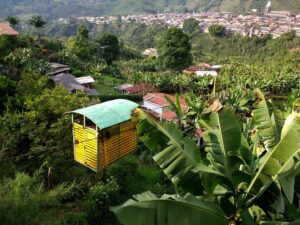
This rustic wooden cable car is a small wooden “box” that glides across a deep ravine via two steel cables, connecting the town of Jardín with nearby coffee and banana plantations. The ride costs approximately COP 5,000 (around $1.25) per one-way trip. It lasts just a few minutes and offers spectacular views of the valley, the town, and the surrounding fincas (rural farms).
3) Make a trip to La Cueva del Esplendor (Cave of Splendor)
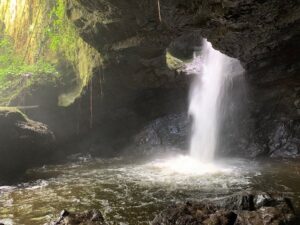
Cueva del Esplendor is a natural waterfall‑carved cave nestled in the mountains above Jardín, around 2,300 m elevation, inside a private reserve near the rural vereda La Linda, about 10 km from Jardín’s town center.
How to get there:
Option 1: Guided Tour (Jeep + Hike)
Tours start at Jardín’s central square and include transport by jeep up the mountain, followed by a short 15–20 minute downhill walk to the cave. The standard tour fare is about COP 60,000 per person, including snacks and water.
Option 2: Tuk‑tuk + Hike
1. From the town, take a tuk‑tuk ride (COP 25,000–30,000) to where the dirt trail begins (approx. 6 km uphill)
2. Hike for 1 to 2 hours to reach the entrance house. At the house, you pay COP 20,000 per person entrance fee and can hire a local guide (recommended) to reach the cave safely via a steep and slippery trail with rope sections
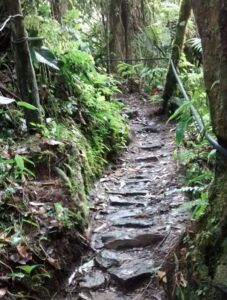
Option 3: Full Hike
1. Walk the entire route (approx.3 hours one way, 16 miles round trip). It’s challenging and not well marked, not recommended unless you have hiking experience and offline maps (e.g. Maps.Me)
2. The final descent to the cave takes about 20 minutes from the owner’s house; expect slippery paths with ropes for supp-ort.
3. At the cave: a spectacular 40 meter waterfall pours through a cave opening into a natural pool. Swimming is possible but water is very cold.
Tips for visiting:
1. Guided option recommended due to unclear paths and safety considerations.
2. Wear sturdy trail shoes, long pants, and bring sunscreen.
3. Bring a swimsuit if you plan to dip in the cave’s pool.
4. Ensure you bring cash in COP, as this is needed for entrance fees and transport.
4) Hike the trails around Jardín
Here you find the different trails, with difficulty level, duration, the highlights alond the way, how to get there and tips for your visit.
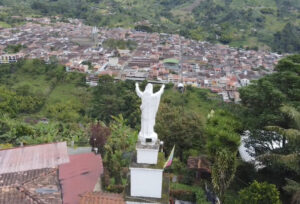
1. Cristo Rey viewpoint
Difficulty: moderate
Distance & duration: approx. 1 hour round-trip on a steep, sometimes muddy trail.
What to see: panoramic views of Jardín from the hilltop statue of Christ.
How to get there: start from Calle 11 and Carrera 2, or via the Salada trail for a longer 1.5-hour hike.
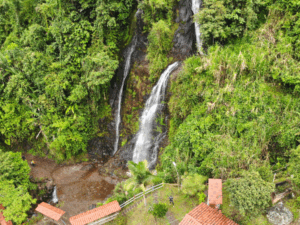
2. Cascada la Escalera
Difficulty: Easy to moderate — well-maintained trail
Distance & duration: 6.4 km round-trip, around 2 hours
What to see: Cascada la Escalera is a stunning, powerfull waterfall approx. 60 meters tall.
The trail offers lush landscapes, opportunities to wade in shallow waters, and the chance to cool off under the cascade.
How to get there: Cascada la Escalera is located about 3.2 km north of Jardín’s town center. From Jardín’s Plaza, walk northeast via Calle 13 and follow road signage to the waterfall. Alternatively, you can take a quick and inexpensive tuk-tuk from the main square who can drop you at the trailhead. You can also get there by horse. Roads can get muddy during the rainy season, making transport especially handy.
Tips for visiting:
1. Although swimming isn’t feasible in the deep areas, you can comfortably wade and cool off near the cascade’s base
2. Waterproof shoes are recommended, you need to cross a small river to get there
3. The waterfall creates a refreshing “mist”during rainy seasons, though the dry months are best for comfortable visits and avoiding slippery terrain
3. Combination of Christo Rey-Cascada la Escalera+Café Jardín
Trail 1 and 2 can easily be combined into a half day scenic loop, adding the Café Jardín.
Difficulty: moderate (some steep sections and uneven paths)
Total Distance: 7 to 8 km
Duration: around 4 hours, depending on pace and breaks
How to get there: This is a loop: you start and end in Jardín’s town center
The route step-by-step:
1. Start: Jardín Town Center
Begin your hike at Plaza del Libertador. From here, head northeast** along Calle 13 toward the trail leading to Cascada La Escalera.
2. Visit: Cascada La Escalera
Trail time: 1 hour round-trip from town
Enjoy the peaceful forest path and relax at the waterfall.
Optional: take a break and dip your feet in the stream.
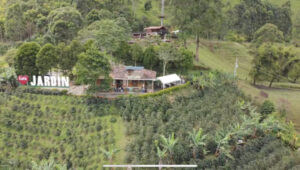
3. Continue uphill to Café Jardín
From La Escalera, walk uphill via a trail or small road that connects with Café Jardín.
*The ascent takes 20–30 minutes and is a bit steep but manageable.
At Café Jardín enjoy:
* Amazing panoramic views over Jardín
* Local coffee and snacks
* Cute photo spots like the “I 💚 Jardín” sign and swing with a view
4. Final Stretch to Cristo Rey viewpoint
Just 5–10 minutes uphill from Café Jardín is the Cristo Rey statue.
From the viewpoint, you’ll have:
*Sweeping views over Jardín’s colorful rooftops
* A great place for sunset if hiking later in the afternoon
5. Descent Back to Jardín**
Take the main trail or the road downhill back to town (20–30 minutes)
Take a tuk-tuk or mototaxi if you’re tired.
Optional stops along the loop:
* Chorros de Tapartó: Further out (approx. 10 km), can be added by advanced hikers or via moto-tour.
* Mirador de la Garrucha**: Cross to the opposite side of town for a different view via cable car (adds 1–2 hours more).
4. Cascada del Amor & Charco Corazón loop
Difficulty: Easy to moderate
Distance & duration: around 5 km; 1.5 hours total if including La Garrucha descent
What to see: A beautiful waterfall, a natural pool (Charco Corazón), coffee and banana farms, and a cable car descent option
How to get there: From Plaza del Libertador, follow signs near Dulces de Jardín, walk or return via La Garrucha.
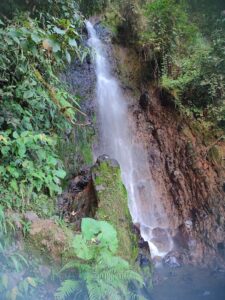
5. Waterfalls + La Garrucha Loop (Waterfalls and Cable car Loop)
The loop includes multiple waterfalls and finishes with a descent via the cable car.
Difficulty: easy to moderate, the trail is well-trodden through farms and forest, with minor elevation changes and manageable terrain.
Distance & duration: 6.7 km circular route; around 1.5-2 hours, depending on pace and breaks.
What to see: multiple small waterfalls, lush jungle paths, and scenic overlooks.
* La Garrucha cable car: a homemade cable car (wooden box style), originally built for farmers, now a quirky highlight ideal for descending back into town.
* Birdwatching**: Expect bird life along the route — from turquise hummingbirds to green jays and tanagers.
How to get there:
1. Start at Jardín’s Plaza (Plaza del Libertador) and head toward the yellow bridge.
2. Cross the bridge, but don’t go straight. Turn right and follow the downhill path (unmarked).
3. Continue walking along a soft path that transitions into rural trails through farmland. The waterfall loop will begin just past this area.
4. After completing the loop, you’ll return near the town’s edge where La Garrucha cable car awaits for a scenic descent (fare COP 5,000 one way).
Tips for visiting:
* Time your walk to return before dusk, as cable car hours may be limited
* Combining a **coffee break at Café Jardín** or a detour to **Cristo Rey Viewpoint** makes for a rich half-day loop.
6. Los Siete Cascadas / Cueva de los Guácharos Trail
Difficulty: very challenging, suitable for experienced hikers
Distance & duration: full loop: approx. 7–8 hours, can include up to 7 waterfall stops
What to see: multiple waterfalls including Dragon Falls, and scenic country side and hills.
How to get there: The trail sarts near Cascada La Escalera and passes through farmland and rural paths. Guided options recommended due to poor signage.
Essential tips for hiking
1. Use clear GPS (Maps.Me recommended) 2. unmarked trails are common.
3. Hire a guide for challenging hikes like Cueva del Esplendor or Seven Waterfalls.
4. Wear proper hiking shoes and water shoes and prepare for slippery trails and river crossings
5. Bring water, snacks, sunscreen, insect repellent and bathing suit for swimming under waterfalls
6. Bring rain coat, especially during wet months
7. Combine jeep rides or tuk-tuks with hikes to make difficult trails more manageable.

ColombiaMyWay Tips
#How to get from Medellín to Jardín (updated August 2025)
Jardín has very good bus connections with the city of Medellín. The distance is approximately 128 km and the bus trip takes around 3-4 hours.
Schedules and prices:
- The main operator on this route is Rapido Ochoa, known for regular and reliable departures.
- Buses generally depart from Terminal del Norte in Medellín and arrive at Jardín’s bus terminal near the town plaza.
- Common departure times include 04:45, 08:50, 11:00, 13:00, 15:00, 16:25, and 18:45.
- Tickets cost around USD 11-13 (Busbud) for a one way trip
Booking and travel tips:
- Book in advance via platforms like Busbud or RedBus to secure seats and better fares.
- Arrive at the terminal at least 20 minutes before departure.
- Buses often include air conditioning and power outlets for a comfortable ride.
#Where to stay in Jardín:
Tip #1
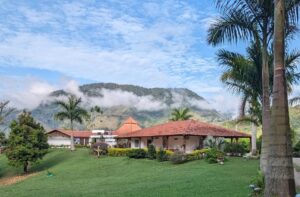
Stay overnight in a finca
We think that staying overnight in a finca hotel is the most relaxing way to get acquainted with Jardín. Some of the fincas are working farms with various animals on the property; others have their own coffee plantation and you can enjoy a fresh brew every day. Not having a rental car, is not a problem most of the times as there are cheap “tuk-tuks” who can bring you from the farm to the center if it’s too far out to walk. Patio Bonito is one of those beautiful finca hotels, smack in the middle of nature.
Tip #2
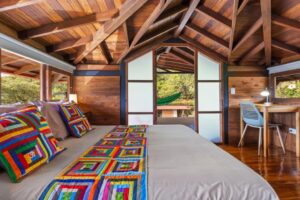
Chill in a hotel with jacuzzi
If you prefer something more luxurious but still want to stay in the middle of nature, then the Gulupa ecolodge is a must. From the lodge you have a beautiful view of the surroundings and after an active day you can relax in the jacuzzi. You can get action for sure at the Gulupa ecolodge, as there are several activities you can do, such as ziplining. Café Jardin is almost next door, so also for a good cup of coffee with or without goodies, this is the perfect spot.
Here you can book other hotels and hostels in Jardin
Tip#3
Book a hotel close to the center of Jardín
Would you like to spend the night close to the center of town, while being surrounded by nature? The the hotel Plantación might be your thing. With its location on a 5 minute walk from town, you can have the best of both worlds.

Tip #4
Continue your trip to the village of Jericó and spend a few nights
If you’re feeling adventurous and want to see a less well known village in Antioquia, you can take a (long) chiva ride to the village of Jericó, famous for its many churches and an excellent place to do paragliding. The ride by chiva bus is long and winding, but it’s an adventure in itself. You will be traveling with locals and the trip can be full of surprises.
#Tips for the best food in Jardín:
Jardín has quite some nice places to soak in the village “ambiente” while enjoying delicious drinks and food. These are some of our favorites:
*Cafe Macanas
The place to go for a coffee (hot or iced) with something sweet, or a good breakfast. The cafe has a patio and is easy to find due to its location next to the church. It’s a cozy cafe with a beautiful, colorful interior.

*Dulces de Jardín: a cozy place with lots of plants. A populare place to buy caramels “to go”
*Doña Hilda: for local food
*La Parilla de mi pueblo: for grilled meat
*Oleo restaurante: with it’s specialty Posta negra beef
Travel Guide Medellin, Villages in Colombia
Home 9 Category: Villages in Colombia
About Santa Fe de Antioquia
Santa Fe de Antioquia is beautiful colonial town 58 km north of Medellín, making it a good place to visit on a side trip.
Santa Fe de Antioquia is the oldest settlement in the region (1541) and used to be the capital of Antioquia. The city with about 25,000 inhabitants has been declared a national monument because of its beautiful architecture. You will find atmospheric narrow streets, white houses and the Plaza Mayor Simón Bolívar.
1. Savor the colonial atmosphere
Stroll around the adorable streets, admire the Iglesia de Santa Bárbara and visit the free museum Juan del Corral. This museum about the history of the region, is located in a beautiful colonial building and worth a visit. Old crafts are also still practiced, so you can see silversmiths at work in their small studios and buy a beautiful piece of silver jewelry.
2. Walk across the Puente de Occidente
This 291-meter-long hanging bridge over the Cauca River, is located 5km outside the city. You get there with a ride by mono cab (tuk-tuk). From the bridge, you have a beautiful view of the surrounding area. The bridge was built in 1895 and named a national monument. Fun detail: designer of the bridge, José Maria Villa, was also involved in the design of the Brooklyn Bridge in New York.
3. Explore the area on horseback
Even if you stay in Santa Fe de Antioquia a bit longer, you won’t have to get bored. Among other things, you can go horseback riding, rafting and paragliding in the area.
Photo: Paseos a Caballo Santa Fe de Antioquia-Carlos Lopez
From Medellín, it’s about a 1.5-hour drive to Santa Fe de Antioquia (terminal del Norte). You can also take a tour including transportation book a tour operator. From the Andes you travel to the lower town of Santa Fe de Antioquia, while passing coffee and banana plantations.
Climate and best time to go
Climate
Santa Fe de Antioquia is located at an altitude of 550 meters. The climate is tropical and it is very warm compared to cool, high altitude Medellín. You can visit Santa Fe de Antioquia year-round.
Events
*Fiesta de los Diablitos
This festival with lots of music, dancing and parades is the oldest and most popular celebration in Antioquia, having originated in 1653. The festival commemorates the day of rest given to slaves at the time; one (!) day on December 28 each year. To celebrate their freedom on this day of rest, the slaves dressed up as their “masters”, were drinking and partying late into the night. The festival is held during the last week of the year.
*Easter celebration
The Easter celebration during Semana Santa (Easter week) is one of the biggest happenings in Santa Fe de Antioquia. The celebration attracts many spectators. Semana Santa is a popular travel period for Colombians, so if you want to experience the Easter celebration, book your hotel early. (Photo: RCN radio)

$ price range up to $25
$$price range $25 – $75
$$$price range above $75
#ColombiaMyWay tips
# Tip 1
Take a look inside the colonial hotel Mariscal Robledo
The hotel on Parque de la Chinca oozes history and is the 4th oldest hotel in Colombia. The cozy hotel is decorated with many antiques and has its own library. Nice to see, even if you’re not going to spend the night there.
# Tip 2
Taste the local specialty, the Pulpa de tamarindo
The pulp of the tamarind fruit has a sour taste and is sweetened with sugar. This is then made into sweets, the Dulce de tamarindo which you can buy at the stalls on the Plaza Mayor, among other places.