Travel Guide La Guajira
La Guajira without tour is possible, but it is not the same as arriving in Cartagena, opening a rideshare app, and following a saved map. Colombia’s northernmost department is vast, dry, and shaped by Wayuu territory, unpaved roads, changing conditions, and limited services. The reward for planning it yourself is real freedom: more time in Riohacha, a quiet hammock night in Cabo de la Vela, or a route that does not rush you through the desert for a photo stop.
The key is knowing where independent travel works well and where a local driver is the sensible choice. You do not need a packaged multi-day tour to experience La Guajira, but you do need a flexible itinerary, cash, patience, and respect for the communities whose land you are visiting.
What “La Guajira without tour” realistically means
For most independent travelers, the simplest self-planned route is Riohacha to Uribia to Cabo de la Vela, then back the same way. You can organize each leg yourself using shared transport and arrange your own accommodation once you arrive. This is independent travel in the useful sense: you control your timing, budget, and overnight stops without committing to a fixed group itinerary.
Punta Gallinas is different. The route beyond Cabo de la Vela is remote, sandy, and poorly suited to inexperienced drivers. Reaching it generally requires a high-clearance 4×4 and someone who knows the tracks, tides, and local conditions. Hiring a Wayuu driver for that section does not mean you have failed at independent travel. It means you have chosen local knowledge where it matters.
Trying to rent a standard car and drive all the way to Punta Gallinas is rarely a good trade-off. Road conditions can change quickly, navigation is unreliable off the main tracks, and a breakdown can become expensive and time-consuming. Save your independence for itinerary design, not for proving you can drive across the desert alone.
Start in Riohacha and build in a buffer
Riohacha is the practical gateway to Alta Guajira. It has a wider choice of hotels, ATMs, pharmacies, food, and transport than the destinations farther north. Arrive with enough daylight to withdraw cash, buy water and snacks, and confirm the next morning’s departure to Uribia.
A night here is especially worthwhile if you are flying in from Bogotá or connecting from Santa Marta. Delays, weather, and the simple rhythm of shared transport can affect plans. Starting your desert journey tired and late in the day is not the best introduction to the region.
Riohacha also gives the trip cultural context. The city sits on the Caribbean coast but looks north toward the peninsula, where Wayuu communities maintain a distinct language, traditions, and social structure. La Guajira is not an empty desert playground. Travelers who understand that usually have a much better experience.
Getting to Cabo de la Vela independently
The journey normally happens in two stages. First, take shared transport from Riohacha to Uribia. From Uribia, shared 4×4 vehicles continue toward Cabo de la Vela when there are enough passengers or at established departure times. Ask locally where vehicles are leaving that day and confirm the fare before getting in.
Schedules are fluid, particularly outside busier travel periods. Go early, carry small bills, and do not plan a tightly timed connection. If a vehicle leaves later than expected, the practical solution may be to spend the night in Uribia rather than pay a high private-transfer price or travel after dark.
The ride from Uribia to Cabo de la Vela is part of the experience, not just transportation. Pavement gives way to sand, scrubland, goats, and open horizons. It can be bumpy and hot. Keep your main bag protected from dust, and have water within reach rather than packed at the bottom of your luggage.
Staying in Cabo de la Vela
Cabo de la Vela has simple posadas, many with hammocks or basic rooms, along with meals that tend to be uncomplicated and filling. Expect a remote beach settlement rather than a polished resort. Electricity, Wi-Fi, and running water may be intermittent, and comfort levels vary widely.
That is precisely why staying at least two nights often works better than a rushed overnight visit. You have time for Playa del Pilón de Azúcar, nearby beaches, a sunset at the lighthouse, and the slower pace that makes Cabo memorable. A one-night stop can work if your itinerary is short, but it leaves little room for transport delays or a windy afternoon when swimming is less appealing.
Ask your accommodation about current conditions before heading to more distant beaches. They can arrange a local motorcycle taxi or vehicle when appropriate, explain where swimming is safe, and tell you whether a route is currently passable.
When to hire a driver to Punta Gallinas
Punta Gallinas is famous for its enormous dunes, remote bays, and the feeling of reaching the edge of the continent. It is also the point where independent logistics become substantially harder. Most travelers arrange a private or shared 4×4 with a local driver from Cabo de la Vela or Uribia, usually including stops, basic meals, and sleeping arrangements.
Before agreeing to anything, clarify what the price covers. Ask about the number of nights, meals, water, accommodation type, entrance or community fees, fuel, and the return destination. A lower quote can be fair, but it may exclude items another driver includes. Clear expectations matter more than negotiating every last peso.
If you are traveling solo, ask around Cabo de la Vela for other travelers who may want to share a vehicle. This can reduce the cost, although it also means compromising on departure time and stops. Couples or small groups may find a private vehicle worthwhile for the flexibility alone.
There are no guarantees of comfort at Punta Gallinas. Accommodation is typically basic, nights can be windy, and the heat can be intense. Go because you want a genuinely remote experience, not because it is a box to check on a Colombia itinerary.
Practical planning for the desert
La Guajira rewards travelers who pack lightly but deliberately. Mobile signal can disappear, card payments are not dependable outside the main towns, and buying essentials becomes harder the farther north you go. Bring a refillable water bottle, but do not assume refills will always be available. Carry extra drinking water for long road days.
For a self-planned trip, these six items make a noticeable difference:
- Enough Colombian pesos for transport, meals, accommodation, tips, and unexpected changes.
- Sun protection that you will actually reapply: hat, sunglasses, sunscreen, and a light long-sleeve layer.
- A small flashlight or headlamp, plus a charged power bank.
- A bandana or scarf for dust during 4×4 rides.
- Basic medication, including treatment for stomach upset and any personal prescriptions.
- Downloaded offline maps, accommodation details, and screenshots of agreed transport arrangements.
Avoid driving or taking informal transport after dark. This is less about alarm and more about common sense: road hazards are harder to see, services are limited, and routes become more confusing after sunset. Tell your accommodation where you are going and when you expect to return, especially if you arrange a private driver.
Respectful travel in Wayuu territory
Much of the route through Alta Guajira crosses Wayuu land. Roadside payment requests may be encountered on some routes, often linked to local communities. Treat these interactions calmly and respectfully. Your driver will generally know the customary process and can handle communication.
Always ask before photographing people, homes, or children. A distant desert landscape may look empty to a visitor, but it is home, work, and community land to the people who live there. Buy crafts only when you genuinely want them, pay agreed prices without pressure, and remember that a woven mochila can represent many days of skilled work.
Spanish is useful throughout the trip, but a friendly greeting and patience go a long way when language differences arise. The Wayuu language, Wayuunaiki, remains central to local identity.
A route that gives you freedom without unnecessary stress
If you have four to five days from Riohacha, spend one night in Riohacha, two nights in Cabo de la Vela, and return via Uribia. This is the best choice for travelers who want the desert, beaches, and a strong sense of place without adding difficult logistics.
With six to seven days, add Punta Gallinas with a locally arranged 4×4 journey and at least one overnight stay. Keep your final night in Riohacha if you have an onward flight or bus connection. That buffer protects the rest of your Colombia trip from a delayed return vehicle or changing road conditions.
The best La Guajira trip is not necessarily the one that reaches the farthest point. It is the one planned with enough time to watch the light change over Cabo de la Vela, accept that the schedule may shift, and let the peninsula set a slower pace than the rest of your journey.
Travel Guide La Guajira
The road into Cabo de la Vela does not feel like a normal road trip. After Uribia, pavement gives way to pale sand, tire tracks, and a wide-open desert where goats, cactus, and the Caribbean horizon share the view. This Cabo de la Vela travel guide is for travelers who want to make the journey independently, while understanding where flexibility, local knowledge, and a little patience are essential.
Cabo de la Vela is a small Wayuu community on Colombia’s remote Guajira Peninsula. It is known for its wind-shaped beaches, dramatic sunsets, kitesurfing, and a landscape that feels strikingly different from the rest of Colombia. It is not a polished beach resort, and that is part of its appeal. Services are simple, water is precious, electricity can be limited, and plans occasionally change with road conditions and weather.
When to visit Cabo de la Vela
Cabo de la Vela is hot and dry for much of the year, with daytime temperatures commonly above 90°F. The trade winds are strongest from roughly December through April, which makes this a popular period for kitesurfers and gives the coast its distinctive, breezy character. The wind can also make evenings surprisingly cool, especially if you are sleeping in a hammock.
Rain is more likely later in the year, particularly around October and November. A little rain can make the desert briefly greener, but heavy showers can affect sandy tracks and make transport less predictable. For most independent travelers, December through April offers the easiest conditions, provided you are prepared for wind, sun, and dry heat.
Try to arrive with enough daylight left to settle in. The final approach is scenic, but it is much more comfortable when your driver can clearly read the tracks and you can see where you are going.
How to get to Cabo de la Vela independently
The usual gateway is Riohacha, the capital of La Guajira. From there, shared vehicles and buses run to Uribia, a frontier-style town about two to three hours away. Uribia is where you arrange the final 4×4 journey to Cabo de la Vela.
This last section is not a route for a regular rental car. The terrain is sandy, navigation is informal, and experienced local drivers know which paths are passable. Shared 4×4 vehicles typically leave when they have enough passengers, so departure times are flexible rather than fixed. If your itinerary is tight, paying for a private vehicle gives you more control, though it costs considerably more.
Many travelers arrange the full transfer from Riohacha through their accommodation or a local transport contact. This can be simpler than piecing together every leg in Uribia, particularly if you arrive late or do not speak much Spanish. Still, ask what is included before agreeing to a price: confirm whether it covers the Riohacha-Uribia leg, the 4×4 transfer, luggage, and any stopovers.
The journey from Riohacha to Cabo de la Vela commonly takes four to six hours in total, depending on waiting time, road conditions, and the number of passenger pickups. It is wise to treat travel day as your main activity rather than scheduling anything ambitious afterward.
Should you go with a tour or on your own?
Independent travel works well in Cabo de la Vela if you are comfortable with basic transport arrangements and rustic lodging. You do not need a packaged tour simply to visit the town. Once there, you can arrange short trips to nearby viewpoints and beaches with local drivers or through your guesthouse.
A tour can make sense if you plan to continue directly to Punta Gallinas, have only a few days in La Guajira, or prefer one person to coordinate transport, meals, and overnight stops. The trade-off is less flexibility. Cabo de la Vela rewards slowing down, and a rushed itinerary can turn a memorable desert stay into a series of long rides in a 4×4.
Where to stay in Cabo de la Vela
Accommodation is mostly made up of simple posadas and beachfront camps run by local families. Rooms are basic, and many travelers choose a hammock or a bed in a shared sleeping area. Private rooms may be available, but do not expect hotel-style finishes, reliable air conditioning, or unlimited hot water.
Sleeping in a hammock is part of the experience for many visitors. It is inexpensive, cooler than an enclosed room, and often comes with the sound of the wind and waves. Bring or request a blanket, however. The combination of strong wind and nighttime desert temperatures can feel chilly.
Book ahead during Colombian holiday periods, Christmas through early January, Easter week, and busy kitesurfing months. Outside those periods, you can often choose on arrival, but calling ahead remains helpful because the community is small and transport can arrive in waves.
Water and power deserve special attention. Fresh water is scarce in La Guajira, and electricity may depend on generators or solar power. Use water carefully, carry a refillable bottle, and bring a power bank for your phone and camera. It is also smart to keep a headlamp in your daypack.
The best things to do around Cabo de la Vela
The town itself is quiet, so the best experiences lie along the coast and on the low hills surrounding it. Most can be visited in a half-day outing by 4×4 or motorbike, depending on conditions.
Watch sunset from Pilón de Azúcar
Pilón de Azúcar is the iconic rocky hill near Cabo de la Vela. A short climb leads to a broad view over the desert and the Caribbean, with the coastline fading into shades of gold and blue near sunset. It is one of the best places to understand why this corner of Colombia feels so remote.
Near the hill, Playa Dorada offers clear water and a welcome swim after the dusty drive. Currents and wind can vary, so follow local advice before going far from shore.
Visit El Faro and Playa del Pilón
The lighthouse area west of town is another classic sunset stop. The landscape is less about swimming and more about the scale of the coast: sand, scrubland, wind, and sea with almost nothing built between them. Go with enough time to linger rather than arriving just as the sun drops.
Try kitesurfing or simply watch the bay
Cabo de la Vela has consistent wind and a sheltered bay, making it one of Colombia’s best-known kitesurfing spots. Beginners can find lessons and equipment rentals locally, though conditions are best suited to people who are comfortable learning in wind. If you do not want a lesson, the late-afternoon view of kites crossing the water is reason enough to sit by the shore with a cold drink.
Slow down in town
Do not underestimate the pleasure of doing very little here. Walk the beach early before the heat builds, eat fried fish with coconut rice, watch Wayuu artisans at work, and let the pace reset. Cabo de la Vela is a place where an unplanned afternoon can be as rewarding as a checklist of sights.
Money, food, and what to pack
Bring enough Colombian pesos in cash for your whole stay, plus a buffer. ATMs are not dependable in Cabo de la Vela, card acceptance is limited, and transport drivers, small restaurants, and community toll points generally expect cash. Prices can be higher than in Riohacha because supplies must travel across the desert.
Meals are straightforward: fish or chicken, rice, patacones, arepas, and simple soups are common. Vegetarian options may be possible with advance notice, but choice is limited. Bring snacks if you have dietary restrictions, and carry more drinking water than you think you will need.
Pack light, but pack deliberately. Sun protection is nonnegotiable: a hat, sunglasses, high-SPF sunscreen, and a long-sleeve layer will make the heat far more manageable. Closed shoes are useful for climbing Pilón de Azúcar, while sandals work for town and the beach. Add a light jacket, headlamp, power bank, reusable water bottle, basic first-aid supplies, and cash stored in separate places.
Respectful and safe travel in Wayuu territory
La Guajira is the ancestral territory of the Wayuu people, whose culture, language, and trading traditions are central to the region. You are not entering an empty wilderness. You are traveling through living communities, and local rules matter.
On desert routes, drivers may stop at informal community checkpoints where a small payment is requested. These payments are a normal part of travel in the area, so keep small bills accessible and let your driver handle the interaction. Always ask before photographing people, homes, children, or artisans. Buying a handwoven mochila or other craft directly from its maker can be meaningful, but bargain respectfully and remember the work involved.
Cabo de la Vela is generally visited without problems, but remoteness changes the usual travel equation. Avoid walking alone far outside town after dark, do not swim when conditions look rough, and tell your accommodation if you are heading out with a driver. Mobile signal can be patchy, so download maps and save key Spanish phrases before leaving Riohacha.
Most of all, leave room in your Colombia itinerary for the journey itself. Cabo de la Vela is not the destination to squeeze between flights or treat as a quick beach stop. Give it two nights if you can, accept that the desert sets its own rhythm, and you will leave with a far stronger sense of La Guajira than any rushed visit could offer.
Travel Guide La Guajira
The moment you leave Riohacha and the pavement starts giving way to dust, your La Guajira travel itinerary stops feeling like a normal Colombia trip. This is a region of desert roads, salt flats, wind, and long distances, where timing matters more than you might expect and comfort levels vary a lot from one stop to the next.
That is exactly why La Guajira deserves a plan before you go. It is one of the most memorable regions in Colombia, but it is also one of the easiest to get wrong if you treat it like a casual beach detour. Transport is slower, infrastructure is basic in many places, and some of the best-known highlights are only accessible with a 4×4 and local driver.
For most independent travelers, the sweet spot is a 3 to 5 day trip. That gives you enough time to see the southern highlights at your own pace or go all the way to Punta Gallinas without turning the trip into a rushed endurance test.
How to build a La Guajira travel itinerary
The first decision is simple: are you staying in the south of La Guajira, or are you going deep into the peninsula?
If you want easier logistics, better comfort, and more flexibility, focus on Riohacha, Palomino, and Cabo de la Vela. This works well if you are traveling independently and want a mix of beach time, culture, and desert landscapes without committing to a very rugged route.
If Punta Gallinas is the goal, your itinerary becomes more expedition-like. It is absolutely worth it for some travelers, but it comes with trade-offs. Expect long drives, basic accommodations, shared transport in many cases, and weather-related unpredictability. If you love remote places, it can be a highlight of Colombia. If you prefer smoother travel days and private space, you may enjoy the southern section more.
A 3-day La Guajira travel itinerary
This version is best for travelers short on time who still want to experience the distinct landscape of the peninsula.
Day 1: Arrive in Riohacha
Riohacha is usually the starting point. You can fly in from major Colombian cities or arrive overland from Santa Marta or Palomino. It is not the most atmospheric city in Colombia, but it is practical, and that matters here.
Use your first day to get organized. Confirm onward transportation, withdraw cash, buy water and sunscreen, and avoid assuming you can sort everything out later in smaller settlements. In La Guajira, basic planning saves time fast.
If you have energy, walk the waterfront in the late afternoon and try a simple seafood dinner. Riohacha is also a good place to start understanding the Wayuu presence in the region, which shapes daily life, local commerce, and the cultural identity of La Guajira far more than many first-time visitors realize.
Day 2: Riohacha to Cabo de la Vela
Cabo de la Vela is where the scenery starts to feel properly otherworldly. The route typically involves shared transport or a pre-arranged 4×4, usually via Uribia. The journey can take several hours, even though the map may not look dramatic.
Once you arrive, the appeal is not luxury or a packed sightseeing schedule. It is the stark beauty of the coastline, the dry light, and the feeling of being at the edge of something. Spend the afternoon visiting Pilon de Azucar, watching the sea from the cliffs, or simply slowing down.
Accommodations are basic but atmospheric. Expect hammocks, simple rooms, limited amenities, and occasional electricity restrictions depending on where you stay. For some travelers that is part of the charm. For others, one night is enough.
Day 3: Return to Riohacha or continue onward
On the last day, return to Riohacha and connect onward to Santa Marta, Palomino, or your next destination. If your schedule allows, you can also shift toward Palomino for a softer landing after the desert. That combination works surprisingly well: rugged Guajira first, greener Caribbean coast after.
A 4 to 5 day La Guajira travel itinerary
If you have more time, this is the more complete and rewarding route. It gives you space to include Punta Gallinas, which is the northernmost point of South America and the reason many travelers make the journey in the first place.
Day 1: Riohacha
Keep the same approach as the shorter itinerary. Arrive, organize, sleep well, and avoid starting a deep-peninsula route tired. That sounds obvious, but long off-road days are much easier when you are rested and stocked with essentials.
Day 2: Riohacha to Cabo de la Vela
Travel to Cabo de la Vela and spend the night there. This breaks up the route well and lets you actually enjoy the place instead of treating it as a transport stop.
Sunset is one of the best parts of being here. The combination of orange light, low hills, and sea makes Cabo feel very different from Colombia’s greener Caribbean destinations.
Day 3: Cabo de la Vela to Punta Gallinas
This is usually the roughest and most remote day. Roads can be sandy, journey times can stretch, and comfort depends heavily on your driver, vehicle, and weather conditions. If you are joining a shared excursion, expect a fixed schedule. If you arrange a private driver, you gain flexibility but spend more.
Punta Gallinas is less about checking off one exact point on a map and more about the wider landscape around it. The dunes at Taroa are a standout, especially where the sand drops toward the sea. This is one of those rare places in Colombia that still feels genuinely isolated.
You will most likely sleep in a very simple posada. Do not expect polished boutique standards. Think basic beds or hammocks, limited water, and functional meals. Go in with the right expectations and it can be a memorable night.
Day 4: Punta Gallinas to Riohacha
The return is long. In practice, this is mostly a transport day, although stops may include viewpoints or short breaks depending on the route. Build in patience. Distances in La Guajira are deceptive because road conditions shape the pace.
If you arrive back in Riohacha with enough daylight, stay the night rather than pushing immediately onward. The extra night helps a lot after two demanding travel days.
Day 5: Buffer day or onward travel
Use this day in one of two ways. Either keep it as a buffer in case transport shifts or weather affects your route, or use it to continue to Palomino, Santa Marta, or elsewhere on the Caribbean coast. In this region, a little schedule flexibility is more useful than cramming in one more stop.
Should you do La Guajira independently or with a tour?
This is where nuance matters. You can absolutely plan parts of La Guajira independently, especially Riohacha and the trip toward Cabo de la Vela if you are comfortable with Spanish, changing transport, and basic conditions.
But Punta Gallinas is different. Most travelers reach it with an organized multi-day trip or a privately arranged 4×4 and driver. That is not because independent travel is impossible in theory. It is because the route is logistically awkward, the roads are demanding, and local knowledge genuinely helps.
If your goal is maximum autonomy, the best compromise is often to independently reach Riohacha, choose your accommodation yourself, and then join a local excursion into the peninsula. That still gives you control over most of the trip while avoiding the hardest transport complications.
What to expect on the ground
La Guajira is not a polished destination, and that is part of why it stays with people. You should expect heat, dust, limited shade, patchy connectivity, and simple infrastructure. Bring cash, sun protection, a scarf or buff for wind and dust, and more water than you think you need.
Respect matters too. Much of the region is home to Wayuu communities, and travelers are moving through living territory, not an empty landscape. Be considerate with photography, ask before taking portraits, and treat checkpoints or local road arrangements calmly and respectfully.
Costs vary depending on how you travel. Shared trips are cheaper but less flexible. Private transport costs more but can make a big difference if you value pacing and comfort. In general, La Guajira is not the place to optimize every dollar if that means creating fragile logistics.
When this itinerary works best
Dry conditions usually make travel easier, but La Guajira can be windy year-round and conditions change. The best itinerary is the one that matches your tolerance for rough roads and basic stays.
If you are already traveling through northern Colombia, pairing La Guajira with Palomino and Santa Marta works especially well. If you only have a few days in the country, though, think carefully before committing to Punta Gallinas. It is impressive, but it also consumes time and energy that could go elsewhere.
A good La Guajira trip is not about seeing everything. It is about choosing the version of the peninsula that fits your travel style, then giving it enough time to feel real.
Travel Guide La Guajira
Home 9 Category: Travel Guide La Guajira
Extreme landscape
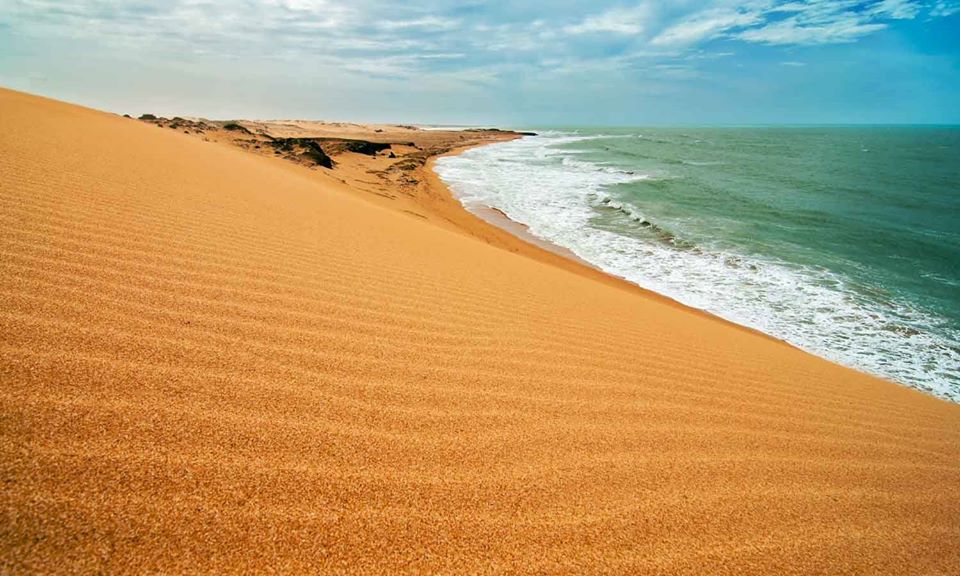
La Guajira is the northernmost region of Colombia. Capital is Riohacha, a city of about 300,000 inhabitants, 175 km from Santa Marta and 92 km from Palomino. Riohacha is the gateway to “Alta Guajira, a sparsely populated, isolated and extremely arid area. The landscape consists of desert-like plains, deserted beaches and high sand dunes.
The Wayuu community
La Guajira is habitat for the Wayuu, the largest group of Indians in Colombia. This is one of the poorest and least visited areas of Colombia. The Wayuu have survived in the extremely dry area for hundreds of years, including by fishing and raising goats. As a traveler, you can learn about Wayuu culture by spending the night in a Rancheria, an authentic Wayuu accommodation. Despite La Guajira being one of the least visited areas of Colombia, the area is becoming increasingly popular with travelers, attracted by its extraordinary nature and Wayuu culture.
Off the beaten track adventure
If you go to La Guajira, you are truly going on an adventure. It is an off the beaten track destination with little infrastructure. Driving is off-road and you sleep in hammocks or simple huts, often without running water and with limited electricity. You have the beaches in la Guajira largely to yourself. You can kitesurf in Cabo de la Vela, “sandboard” in the Tarao dunes and bird watch in Parque Nacional Natural Macuira, La Guajira’s “wettest” area. If you travel to Punta Gallinas, you can do this with an organized tour from Cabo de la Vela or from Riohacha. Going to Punta Gallinas with a tour is absolutely a must, given the limited infrastructure. Plus, with a guide, you get an insider’s look at the Wayuu culture. Check out the different options here.
Safety in La Guajira
It is important for travelers to be well-prepared, as the safety situation in this region differs from other tourist areas in Colombia.
1. Underdeveloped region
La Guajira is one of the least developed regions of Colombia. Due to poverty, limited government presence, and insufficient infrastructure, certain areas can be unsafe, especially for individual travelers.
2. Crime
In urban areas such as Riohacha, safety is comparable to other Colombian cities, but it remains important to stay alert for petty crime such as pickpocketing.
3. Traveling to remote areas
Areas like Uribia, Cabo de la Vela, and Punta Gallinas are safe to visit, but only in the company of a local guide or tour company. Driving on your own is strongly discouraged, mainly due to poor road conditions, lack of signage, and potential risks such as informal roadblocks or theft.
4. Wayuu territories
The indigenous population lives mainly in the north of La Guajira. While the Wayuu are generally hospitable, some communities are not accustomed to tourism. Respect—such as asking permission before taking photos—is important.
5. Tips for safe travel in La Guajira
-
Book an organized tour to remote areas like Punta Gallinas through certified tour operators.
-
Do not travel at night in this region.
-
Bring enough cash; ATMs are scarce outside major cities.
-
Use sun protection, drink plenty of water, and prepare for high temperatures.
#ColombiaMyWay tips
Buy an original Wayuu mochila (shoulder bag) or Chinchorro (original Wayuu hammock). It takes the Wayuu ladies about a week to make a mochila and 2 to 3 months for a Chinchorro. Tourism is a welcome, important source of income for the Wayuu, so your pesos are certainly money well spent here.
Check our travel guide Santa Marta and our other travelguides if you’re continuing your round trip along the Caribbean coast.
Travel Guide La Guajira, Travel Stories
Home 9 Category: Travel Guide La Guajira
During our trip along Colombia’s northern coast, we traveled -through the “desert”- to the village of Cabo de la Vela in La Guajira.
Through the desert to the “middle of nowhere”
As we slowly wake up, a little boy around 8 years old with an intellectual disability approaches us shyly. He sits down a few chairs away from us but slowly seeks contact by occasionally moving up a chair.
That Colombia has much to offer is widely known. However, what we did not expect was that Colombia also has a desert area: La Guajira. Before our trip we never thought we would make this trip, but as always everything turns out differently than planned in advance 😉
Bumpy ride
We left Santa Marta for a few days to the northernmost part of Colombia. From Santa Marta we took a bus to Cuatro Vías (COP25.000) and then changed to a bus to Uribia (COP8.000). The last part of the trip we drove on dirt roads in a jeep (with very hard seats) to our final destination Cabo de la Vela (COP15,000). Cabo de la Vela is a small village located on the coast, with a few huts and restaurants. Many people come to Cabo de la Vela as a stopover to Punta Gallinas in the desert area. However, we didn’t.
Being in Cabo de la Vela feels like going back in time. There is not much to do and experience in this small village with three streets, yet it made a big impression on us.
Minimalist bars
After the long trek, we decided to treat ourselves to a drink at one of the minimalist bars in the village. Soon we started talking to the owner of the bar. He said that if we could teach him some English, he would brush up our Spanish in the evening. As everywhere in Colombia, everyone is incredibly friendly and helpful, but in a village where there is fairly little to do and you rely more on each other, it creates more of a bond.
Want to dance?
After the necessary drinks, he asked if we wanted to join him at a pub to do dance. As we felt like dancing and were very curious where we would end up to dance in this small village, we accepted the offer. A hundred meters away was then THE pub: a container with some disco lights and a CD player with no one on the dance floor. So, who wants to dance?
Special meeting
The next morning, we woke up with a slight headache. We realized that we had a bit too much too drink and that the alcohol didn’t quite leave our bodies yet. As we slowly woke up, a little boy of around 8 years old with a mental disability approached us carefully. He sat down a few chairs away from us, but was slowly seeking contact by occasionally moving up a chair. He started pointing to my camera that was on the table and i asked him to come closer.
A beautiful smile from ear to ear appeared on his face. I took pictures of him which I then showed him, he started blushing and giggling. I give my camera to him and showed him how to take pictures of us. He jumped for joy and for an hour we took pictures of each other, showing them to each other, while communicating with gestures and smiles.
These are the encounters that make travelinf so incredibly special! How a visit to a simple village turned into a trip with special memories for us……
Written by Mellijn
Travel date December 2017, updated September 2025
Would you like to go on an organized tour to Cabo de la Vela (and Punta Gallinas), check out the options here. Look here if you want to know more about la Guajira.
We do not accept direct payments from touroperators or hotels for our reviews and we pay for our own stay and tours. Every recommendation is based solely on our own experiences and honest opinions. However, some of our links are affiliate links, which means we earn a small commission if you book through them. This commission comes at no extra cost to you and helps us maintain our website.
Writers and Travelers, Colombia My Way