Travel Guide-Tayrona-National-Park
The first sight of Tayrona can feel almost improbable: jungle-covered mountains tumble toward giant granite boulders, and the Caribbean flashes through the palms. But is Tayrona National Park worth visiting? For many independent travelers, absolutely. It is one of Colombia’s most memorable natural landscapes. Still, it is not a polished beach resort, and that difference matters when you are deciding how to spend limited vacation time.
Tayrona rewards travelers who are comfortable walking in heat, planning ahead, and accepting a little inconvenience for a spectacular setting. If your ideal beach day means easy access, calm water, a lounge chair, and plenty of shade, you may prefer another stop on Colombia’s Caribbean coast. If you want a rawer experience where the journey is part of the day, Tayrona is a strong choice.
Is Tayrona National Park Worth Visiting for You?
The short answer depends on what you want from Colombia. Tayrona is worth prioritizing if you enjoy nature, coastal hikes, wildlife, and landscapes that feel far removed from the city. It is especially compelling after time in Bogotá, Medellín, or Cartagena, when a day among forest trails and undeveloped beaches can reset the pace of a trip.
The park sits east of Santa Marta, where the Sierra Nevada mountains meet the Caribbean. That geography is what makes it exceptional. You are not visiting only for a beach. You are moving through tropical forest, listening for birds and monkeys, and arriving at coves framed by rock formations and dense vegetation.
It is less worthwhile if you dislike humidity, have limited mobility, or only have one rushed day in the Santa Marta area. Reaching the main beaches involves a walk that is manageable for many visitors but demanding in midday heat. There are horses available on some routes, but they are not a substitute for good footwear, water, and realistic expectations.
The beaches are beautiful, but not all are for swimming
This is one of the most important Tayrona realities. Many of the park’s beaches have strong currents and are unsafe for swimming. Respect the signs, barriers, and ranger instructions. The sea may look inviting, but conditions can change quickly.
Cabo San Juan is the best-known stop, with dramatic boulders, a photogenic bay, and designated areas where visitors can swim when conditions permit. La Piscina is another popular option because its rocks help shelter the water. Neither promises the quiet, open-water beach experience some travelers picture when they hear “Caribbean.” They are beautiful places to cool off after the hike, not guaranteed swimming beaches.
The coastline is also a sacred territory for Indigenous communities of the Sierra Nevada. Visiting thoughtfully means treating the park as more than a scenic backdrop: stay on marked trails, take your trash out, and follow restrictions without treating them as an inconvenience.
What Makes Tayrona Special
Tayrona’s real appeal is the combination of elements that rarely appear in one destination. The forest is thick and humid, the coastline is rugged rather than built-up, and the mountain backdrop gives the park a scale that most Caribbean beach destinations lack.
Wildlife sightings add to the experience. You may see capuchin monkeys, iguanas, colorful birds, lizards, and butterflies, although nothing is guaranteed. The trail itself is part of the attraction, particularly in the morning before the heat and crowds build. Travelers who arrive expecting a quick beach stop often underestimate how much of the visit is spent moving through the landscape.
There is also a useful contrast between Tayrona and nearby coastal bases. Santa Marta is practical but urban. Minca offers cooler mountain air and coffee-country scenery. Palomino has a more relaxed beach-town atmosphere. Tayrona delivers the big, iconic national-park experience that connects the region’s jungle, mountains, and sea.
The Trade-Offs Most Guides Underplay
Tayrona is popular, and on busy dates it can feel busy. The main trails, park entrance, food areas, and Cabo San Juan are particularly crowded around weekends, Colombian holidays, and high season. The photographs may suggest total solitude; the reality is often a shared experience with other day visitors.
The heat can be intense as well. The walk from the commonly used entrance at El Zaino toward Cabo San Juan takes several hours each way at an unhurried pace, depending on breaks and your exact destination. It is not technical hiking, but roots, sand, uneven surfaces, and high humidity make it more tiring than the distance suggests.
Food and drinks inside the park are convenient but more limited and usually more expensive than outside. Bring enough water, snacks, sun protection, insect repellent, and a dry bag for electronics or valuables. Cash is sensible to carry, even though payment options can vary by vendor and location.
Accommodation in or near the park can be memorable, from simple hammocks to more comfortable eco-lodges, but it is not usually cheap for the level of comfort. Staying overnight makes sense if you want a quieter start or finish to the day. For travelers on a tighter budget, basing yourself in Santa Marta or the park-adjacent area and visiting early can be the better value.
Closures can change your plans
Tayrona periodically closes for environmental recovery and for the spiritual practices of the Indigenous communities connected to the territory. These closure dates can change from year to year. Do not build an inflexible Colombia itinerary around a single park day without checking the official schedule shortly before you travel.
Weather also affects the experience. Rain can turn trails muddy, while dry, sunny months bring hotter conditions and often more visitors. Tayrona remains attractive year-round, but there is no perfect season for every traveler. Your priorities matter: quieter trails, drier weather, manageable heat, and favorable sea conditions do not always line up.
How to Visit Tayrona Independently
For most travelers, the easiest independent approach is to stay in Santa Marta, near the park, or farther east toward Palomino, then take public transportation or arrange a transfer to the entrance that suits your route. Santa Marta works well for restaurants, ATMs, and onward connections. Staying near El Zaino or in the surrounding countryside gives you an earlier start and a more relaxed morning.
Arrive early. This is not merely generic travel advice in Tayrona. Starting near opening time helps you walk before the strongest sun, gives you more breathing room on the trail, and leaves time to enjoy the beach without racing back. Confirm entry procedures, payment requirements, and any mandatory insurance arrangements shortly before your visit, as park rules and prices can change.
Wear shoes with grip rather than flip-flops. A light rain jacket is useful in any season, and a hat is essential. Pack light enough to walk comfortably, but do not skimp on water. If you are visiting as a day trip, set a turnaround time before you settle on the beach. The return walk in late-afternoon heat is harder when you are tired and dehydrated.
For a more immersive visit, spend one night inside or close to the park. This is not necessary, but it changes the rhythm. You can reach a beach after day visitors leave, wake up near the forest, and avoid treating the entire experience as a race against transport schedules.
A Better Alternative for Some Travelers
If your main goal is easy swimming and relaxed beach time, consider splitting your Caribbean coast days. Visit Tayrona for its landscape and hike, then spend time in a place better suited to your preferred kind of beach break. Palomino, Cartagena’s nearby islands, or other coastal destinations may offer a simpler day by the water, depending on season and conditions.
Likewise, travelers who are short on time should not force Tayrona into every itinerary. Colombia has extraordinary alternatives: the cloud forest around Minca, the colonial streets of Cartagena, the coffee region, and the wild Pacific coast all offer distinct experiences. Skipping Tayrona is not a travel failure if the park’s heat, crowds, or walking requirements do not match your trip.
The Verdict
Tayrona National Park is worth visiting when you approach it as a nature experience with a beach at the end, not as an effortless beach resort. Go early, respect the sea, plan for heat and closures, and allow enough time to move at a human pace. Do that, and the moment you reach the palms, boulders, and Caribbean water will likely become one of the images you carry home from Colombia.
Travel Guide-Tayrona-National-Park
Tayrona is not a destination where the closest pin on a map always makes the best base. The best hotels near Tayrona National Park put you within easy reach of the entrance or beach, while giving you a quiet place to recover after humid hikes, early starts, and long days in the Caribbean sun. Your right choice depends on whether you want comfort, walkability, a beach setting, or the lowest-fuss way to enter the park.
Most travelers stay along the Santa Marta to Palomino road, rather than inside Tayrona itself. This stretch has several distinct areas, and choosing between them matters more than choosing between two similarly rated properties. Below are the stays and locations worth considering when planning independently.
Where to stay near Tayrona National Park
El Zaino: best for straightforward park access
El Zaino is the main entrance area and the most practical choice for travelers whose priority is entering Tayrona early. You will find small hotels, guesthouses, restaurants, pharmacies, and transport connections along the highway. It is not a beach village, but it makes the logistics refreshingly simple.
Hotel Jasayma is a long-standing, well-regarded option near the El Zaino entrance. Its green, relaxed setting feels removed from the highway, and it suits travelers who want a comfortable room and helpful local guidance without the price of a polished beach resort. It is especially useful for a one- or two-night Tayrona stay when you plan to spend most of the day in the park.
The trade-off is atmosphere. Staying in El Zaino means you are close to the gate, not close to a swimmable beach or a lively evening scene. If your itinerary includes a beach day outside the park, Los Naranjos is usually the better fit.
Los Naranjos: best for comfort and beach time
Los Naranjos sits just east of the main entrance, around the mouth of the Piedras River. It is one of the most appealing bases for couples, honeymooners, and anyone who wants Tayrona access without sleeping in a hammock or camping inside the park. The area is quieter than Santa Marta, greener than the roadside around El Zaino, and home to several of the region’s most characterful properties.
Senda Casa Tayrona Los Naranjos is a strong pick for travelers looking for a refined small-hotel experience. Expect a lush setting, a pool, thoughtful design, and the kind of service that makes early departures and onward transport easier to arrange. It is a good choice if Tayrona is part of a broader Colombia trip and you want a restful stop between Santa Marta and Palomino.
Maloka Barlovento is another memorable option in this area, known for its striking setting near the river and sea. It has more of a destination-hotel feel than a simple park base. Book it for the setting and the slower pace, but understand the limitation: the nearby coast can be dramatic rather than reliably swimmable, especially when the sea is rough. For a classic Tayrona beach day, you will still want to enter the park.
Villa Playa Tayrona offers a quieter, boutique-style stay around Los Naranjos. It works well for travelers who value privacy and want a comfortable base close to the park. This is the type of hotel to choose when you prefer reading by a pool or beach over being within walking distance of shops and restaurants.
Calabazo: best for a quieter alternative entrance
Calabazo lies on the inland side of Tayrona and is often overlooked by first-time visitors. It is a useful base for travelers who want a more rural atmosphere, access to lesser-used trails, or a calmer experience than the busy El Zaino corridor. It also makes sense for people who are not determined to visit Cabo San Juan, the park’s most famous beach.
Yachay Tayrona Ecohotel is a compelling choice in this area for its nature-focused setting and peaceful character. It is best suited to travelers who see the accommodation as part of the experience, rather than just a place to sleep before a beach hike. Expect more jungle, birds, and space, but fewer nearby services and a greater need to organize transport in advance.
Calabazo is not the best option for everyone. The route into the park from here is more hiking-oriented, and it does not offer the simplest path to the beaches most visitors have seen in photographs. Choose it for quiet and nature, not for the quickest first visit to Tayrona.
Best hotels near Tayrona National Park by travel style
If you want the smoothest independent itinerary, stay near El Zaino. Hotel Jasayma and similar small properties make it easy to leave luggage, have breakfast, and reach the gate before the hottest part of the day. This is the most practical choice for solo travelers, friends, and anyone with only one full day for Tayrona.
For a more comfortable Caribbean break, choose Los Naranjos. Senda Casa Tayrona Los Naranjos, Maloka Barlovento, and Villa Playa Tayrona give you a better chance of enjoying your hotel as much as the park. These properties tend to work particularly well after several busy days in Cartagena, Medellin, or Bogotá, when a pool, a quiet room, and a good dinner matter.
For a nature-first escape, consider Calabazo and Yachay Tayrona Ecohotel. You will trade convenience for a stronger sense of being away from it all. That can be exactly right for travelers with three or more nights in the region, especially if they enjoy hiking and do not need a packed itinerary.
Budget travelers should look at guesthouses and hostels around El Zaino rather than automatically booking Santa Marta. A lower nightly rate in Santa Marta can disappear once you factor in the early morning transfer, time on the road, and the need to return after a full park day. El Zaino is often the better value when Tayrona is your main reason for being here.
What to check before booking
The hotel description alone rarely tells you what will affect your stay. In this part of Colombia, a few practical details make a real difference.
First, check the exact location and whether the property is on the highway side, beach side, or down an unpaved access road. A hotel described as “near Tayrona” may still require a taxi or mototaxi to reach the entrance. Ask about road conditions if you are arriving with wheeled luggage or after dark.
Second, confirm what is included. Breakfast is valuable here because park days begin early. Air conditioning can be more important than a stylish room, while reliable Wi-Fi is less certain once you move into rural or jungle settings. If you are relying on online work, verify the connection directly with the property before committing.
Third, ask about transport support. Many hotels can arrange a private driver from Santa Marta airport, a pickup from the bus terminal, or a transfer onward to Palomino. Public buses along the coastal highway are inexpensive and useful, but a prearranged transfer is easier if you arrive late, carry larger bags, or are traveling with children.
Finally, do not assume you can enter Tayrona on any date. The park periodically closes for environmental and cultural reasons, and weather can affect trail conditions and sea access. Check current opening dates, entry requirements, and whether your hotel can help with tickets, insurance, or local transport before finalizing a nonrefundable reservation.
A practical booking strategy
For most independent travelers, two nights near Tayrona is the sweet spot. Arrive from Santa Marta or Minca in the afternoon, settle in, then enter the park early the next morning. Spend the following day traveling onward to Palomino, Riohacha, or back toward Santa Marta. This plan avoids turning Tayrona into a rushed day trip.
Book earlier than you might expect for weekends, Colombian holiday periods, and the drier months, generally December through March. The best small hotels have limited rooms, and the properties with pools or beach access fill first. During wetter months, rates may be friendlier, but bring rain protection and build some flexibility into hiking plans.
There is no single perfect Tayrona hotel. Pick El Zaino when time matters, Los Naranjos when comfort matters, and Calabazo when solitude matters. Once you match your base to the kind of park experience you actually want, Tayrona becomes far easier to enjoy on your own terms.
Travel Guide-Tayrona-National-Park
The short answer to “can you swim at every beach in tayrona?” is no. Tayrona National Park has some of Colombia’s most beautiful Caribbean shoreline, but its beaches are not all gentle, swimmable coves. Powerful currents, sudden drop-offs, and rough surf make swimming dangerous or prohibited at several stretches of coast.
That distinction matters when you plan your day. A photo of empty golden sand can look like the perfect place for a swim, yet the safest choice may be to stay onshore. In Tayrona, follow the signs, flags, and ranger instructions in front of you, even if a beach was described differently in a blog post or by another traveler.
Can You Swim at Every Beach in Tayrona?
No. Swimming is only advisable at designated beaches when conditions allow. The park’s coastline faces the open Caribbean, and the water can be far more forceful than it appears from the sand. Rip currents are a real risk, especially during rougher sea conditions.
Tayrona staff close areas or prohibit entering the water where the risk is high. These rules are not a formality. Fatal accidents have occurred in the park when visitors ignored warnings or entered the sea outside permitted areas.
The practical rule is simple: treat each beach separately. Do not assume that because you swam safely at one beach in the morning, the next bay will be suitable in the afternoon.
Where You Can Usually Swim
La Piscina
La Piscina is one of the most reliable places for a swim on the main hiking route from El Zaino. A line of offshore rocks helps shelter the water from the strongest waves, creating a calmer natural pool. It is a popular stop for travelers walking between Arrecifes and Cabo San Juan, so expect company during busy periods.
It is still the sea, not a supervised swimming pool. Stay aware of changing waves, avoid climbing on wet rocks, and keep an eye on children. But when the park permits swimming, La Piscina is generally the best choice for travelers who want calmer water without leaving the classic Tayrona trail.
Cabo San Juan
Cabo San Juan is famous for its twin beaches, dramatic rocks, and the small cabin perched above the water. It is also one of the park’s most popular overnight stops. Swimming is commonly possible here, particularly in the more protected sections, but conditions vary between the two sides of the headland.
Before getting in, check which area rangers or local staff indicate is safe. Do not swim far from shore simply because the water looks calm near the beach. Cabo San Juan can feel busy, but it remains a wild coastal setting with no lifeguard-style safety system comparable to a major resort beach.
Playa Cristal
Playa Cristal, also called Playa del Muerto, is known for clear water and snorkeling-friendly conditions. It sits in a more sheltered bay and is often a good swimming option when access and weather permit. Many visitors reach it by boat from the Neguanje sector rather than hiking from El Zaino.
This is one of Tayrona’s more controlled day-trip beaches. Visitor numbers may be limited, and boats can be affected by wind and sea conditions. Bring your own mask if snorkeling is part of your plan, but respect any restrictions designed to protect coral and marine life.
Some bays in the Neguanje sector
Depending on current conditions and park management, beaches such as Neguanje or Gayraca may offer calmer water than the open coast near Arrecifes. That does not make them automatically safe. Ask locally before entering, particularly if you arrive by boat and the captain has dropped you at a less developed beach.
Beaches Where You Should Not Plan to Swim
Arrecifes
Arrecifes is one of the most striking sections of Tayrona, with broad beaches, huge waves, and dense jungle close behind the sand. It is also one of the clearest examples of why Tayrona is not a swim-anywhere destination.
Swimming at Arrecifes is prohibited because of dangerous currents and strong surf. You may see the ocean from the trail and be tempted by the beach, especially on a sunny day, but this is a place for walking, photography, and listening to the waves from a safe distance. Continue to La Piscina or Cabo San Juan if swimming is your goal.
Cañaveral
Cañaveral, near one of the park entrances, has a long and scenic beach backed by palms and forest. The open water can be rough, however, and it is not a beach to choose for casual swimming. Check local instructions on the day, but plan your visit around the scenery and walking trails rather than time in the water.
Playa Brava
Playa Brava is reached by a demanding hike and feels much wilder than the better-known eastern beaches. Its remote setting is exactly what appeals to many independent travelers, but the sea can be powerful and unpredictable. Do not make the hike expecting a safe swimming beach. If you enter the water at all, only do so when local guidance explicitly says it is safe, and stay very close to shore.
Why Tayrona’s Sea Conditions Change So Quickly
Tayrona sits where the Sierra Nevada de Santa Marta meets the Caribbean. That combination creates extraordinary scenery, but it also exposes parts of the coast to wind, waves, and currents. The sea can be calm in one sheltered cove while a few minutes away the surf is strong enough to make swimming unsafe.
Seasonality plays a part. Around the windier months, often December through March, conditions can be rougher and boat trips may be less comfortable or canceled. Rainy-season weather can also change quickly. Yet there is no single month that guarantees safe swimming at every permitted beach.
Your best source is the situation on the day itself. Look for signs at the beach entrance, speak with park staff, and listen to accommodation hosts or boat operators who know current conditions. A red flag, rope barrier, or direct warning means stay out of the water, even if other visitors choose not to.
How to Plan a Beach Day Safely
Build your Tayrona itinerary around one or two realistic swimming stops rather than trying to cover every beach. If you enter through El Zaino and hike toward Cabo San Juan, La Piscina is the logical place for a calmer dip before continuing. If your priority is swimming and snorkeling over hiking, Playa Cristal may suit you better, provided boat access is operating.
Carry drinking water, sun protection, and cash for food or services in the park. Footwear also matters: the trails can be muddy, rocky, and hot, while some beaches have sharp rocks beneath the water. Avoid swimming alone, after drinking alcohol, or late in the day when you are tired from a long walk.
Families should be especially selective. La Piscina is generally a more comfortable choice than exposed beaches, but children still need close supervision. For strong swimmers, confidence is not a substitute for local knowledge. Rip currents can affect experienced swimmers too.
A Better Way to Choose Your Tayrona Beach
Think of Tayrona as a national park with beaches, not a beach resort with a national park attached. Its appeal lies in the combination of jungle trails, Indigenous territory, wildlife, boulders, and Caribbean coves. Some beaches are there to admire; others are places to rest, swim, or snorkel when the conditions cooperate.
That mindset makes planning easier. Choose Cabo San Juan and La Piscina for the classic hike-and-swim experience. Choose Playa Cristal for clearer, calmer water and less hiking. Visit Arrecifes for its raw coastal scenery, but do not treat its warning signs as optional. A safe swim in one of Tayrona’s sheltered bays is far more memorable than taking a risk on an exposed beach.
Travel Guide-Tayrona-National-Park
You feel Tayrona before you fully see it. The air gets heavier, the jungle closes in, and then suddenly the Caribbean opens up between giant boulders and palm trees. A good Tayrona National Park guide is less about selling the fantasy and more about helping you time your visit, pick the right entrance, and avoid turning a beautiful day into a very hot logistical mess.
Tayrona is one of Colombia’s most popular national parks for a reason. It combines coastal trails, dense tropical forest, Indigenous cultural importance, and some of the country’s most photogenic beaches. But it is not a place where you want to arrive without a plan. Distances are longer than they look, swimming is restricted on many beaches, and the best route depends on whether you want a demanding hike, a relaxed beach day, or an overnight stay.
How this Tayrona National Park guide helps you choose
For independent travelers, the main decision is not whether Tayrona is worth it. It is how to visit in a way that actually fits your itinerary. Some people do a long day trip from Santa Marta and love it. Others find that rushed and wish they had slept near the park or inside it. Both are valid – it depends on your pace, your tolerance for heat, and how much hiking you want to do.
The park sits about an hour from Santa Marta by road, depending on traffic and your exact drop-off point. Most visitors use one of two main entrances: El Zaino or Calabazo. El Zaino is the classic option and the easiest for first-time visitors. It gives you access to the most common route toward beaches like Arrecifes, Arenilla, La Piscina, and Cabo San Juan. Calabazo is better if you want a more hiking-focused entry and fewer people at the start, but it is not the simplest option for a short visit.
If you only have one day, El Zaino is usually the most practical choice. If you are staying overnight and want more trail time, Calabazo starts to make more sense.
Best way to visit Tayrona National Park
The most common independent route starts at El Zaino. After entering, you can either walk the paved road to the trailhead or take the shuttle for part of the way. Most travelers take the shuttle to save time and energy. From there, you hike through the forest to Arrecifes and continue along the coast.
This is where expectations matter. The walk is doable for most reasonably active travelers, but in tropical heat it can feel harder than the distance suggests. Good shoes help, and so does starting early. Flip-flops are fine for the beach, not for the full trail.
Arrecifes is dramatic but not safe for swimming because of strong currents. That surprises some visitors who arrive expecting every beach to be swimmable. Continue farther and you reach La Piscina, which is usually the best place for a calmer swim. Cabo San Juan is the postcard favorite, with a scenic viewpoint and beach access, but it is also the busiest area.
If your goal is the iconic Tayrona experience in one visit, the El Zaino to Cabo San Juan route is the safe bet. If your goal is quiet and you do not mind more effort, look at the Calabazo side or consider sleeping nearby and entering very early.
El Zaino vs Calabazo
El Zaino is better for straightforward logistics, first visits, and shorter itineraries. Transport is easier, the route is more established, and you can manage a full visit without overcomplicating the day.
Calabazo feels more remote and a little more adventurous. It suits travelers who enjoy hiking as part of the experience rather than simply using the trail to reach the beach. The trade-off is that it takes more planning, and it is less forgiving if you are tired, underprepared, or trying to squeeze Tayrona into a tight schedule.
Entry fees, opening notes, and timing
Tayrona’s entry fees vary by season and visitor type, so it is smart to check current prices shortly before you go. Budget not only for admission but also transport to the park, the shuttle if you use it, food, and any overnight stay. A Tayrona day can end up costing more than travelers expect, especially compared with other beach outings around Santa Marta.
The park also closes on certain dates each year for environmental and spiritual reasons. These closure periods are part of Tayrona’s management and should not be treated as a minor inconvenience. If Tayrona is a must-do in your Colombia itinerary, verify the opening calendar before booking nearby accommodations or transportation.
Try to arrive early, ideally close to opening time. The later you start, the hotter the trail gets and the more crowded the popular beaches become. Early arrival also gives you flexibility. You can linger where you like instead of calculating every minute of the return.
How much time do you need?
A single long day is enough for many travelers. Leave Santa Marta early, enter through El Zaino, hike to the beaches, spend a few hours there, and return before dark. That said, one day can feel rushed if you want to swim, relax, and not power-walk the whole route.
An overnight stay near the park or inside it usually creates a better experience. It gives you cooler hours on the trail, a slower rhythm, and less dependence on perfect bus timing. If your Colombia trip already includes several fast-moving stops, Tayrona is one of the places where adding one night genuinely improves the trip.
What to bring and what people forget
Pack lighter than you think, but smarter. Heat and humidity make every unnecessary item annoying. Bring plenty of water, sun protection, insect repellent, and cash. Mobile signal can be unreliable, and you should not count on card payment everywhere around the entrances.
A swimsuit, towel, and dry bag are useful, but the less obvious essentials are better footwear and realistic food planning. Food is available in and around the park, but prices are higher than in town and choices can be limited. Bringing snacks makes the day easier, especially if you start early.
Do not assume every beach is safe for swimming. Follow posted guidance and local instructions. Tayrona’s currents are not something to test for yourself.
Where to stay for a Tayrona visit
You have three broad options: stay in Santa Marta, stay near one of the park entrances, or stay inside the park. The right choice depends on how central Tayrona is to your itinerary.
Santa Marta works well if you want convenience, restaurant options, and easy onward travel. It is the easiest base if Tayrona is just one day among several activities.
Staying near El Zaino or Calabazo is better if Tayrona is a priority. You cut down on travel time and can start earlier. This is especially useful in high season, when an early entrance makes a noticeable difference.
Sleeping inside the park is more about atmosphere than comfort. It can be memorable, especially if you want to wake up near the coast, but you should expect simpler facilities and higher prices for the location. For some travelers that is part of the charm. For others, a comfortable lodge outside the entrance is the better call.
Safety, swimming, and practical realities
Tayrona is generally straightforward for independent travelers, but the basics matter. Stay on marked trails, watch your belongings on the beach, and avoid pushing your return too late in the day. Heat exhaustion is a more likely problem than anything dramatic, especially for travelers arriving from cooler climates and underestimating the humidity.
The sea is the biggest safety issue. Some beaches are beautiful specifically because they are wild, not because they are safe. La Piscina is usually the most reliable swimming stop on the standard route, while beaches such as Arrecifes are known for dangerous currents.
Wildlife is part of the experience too. You may see monkeys, birds, and plenty of insects. Respect distance, secure your food, and do not treat the park like a petting zoo with better scenery.
Is Tayrona worth it?
Yes, for most travelers it is. But the reason matters. If you want an easy beach day with minimal effort, there are simpler places on the Caribbean coast. If you want a combination of hiking, scenery, and a strong sense of place, Tayrona earns its reputation.
This Tayrona National Park guide comes down to one practical truth: the park rewards travelers who plan for the heat, start early, and choose a route that matches their energy. Do that, and Tayrona feels less like a checklist stop and more like one of the places in Colombia you will still be thinking about long after the sand is out of your shoes.
Travel Guide Santa Marta, Travel Guide-Tayrona-National-Park
Santa Marta and Tayrona National Natural Park remain among the most popular destinations in Colombia. Famous for their Caribbean beaches, tropical forests, indigenous heritage, and spectacular scenery, these destinations attract hundreds of thousands of visitors every year.
However, recent headlines about security concerns in the region have caused some travelers to wonder:
Is Santa Marta safe? Is Tayrona National Park safe to visit in 2026?
The answer is yes—with some important context.
Like many destinations around the world, Santa Marta and Tayrona face certain security challenges. However, the vast majority of tourists visit the region without incident and enjoy a memorable experience on one of Colombia’s most beautiful stretches of coastline.
Why Has Tayrona Been in the News?
In February 2026, Colombian authorities temporarily closed Tayrona National Park due to security concerns linked to threats against park staff and growing tensions involving illegal armed groups operating in parts of the Sierra Nevada de Santa Marta region. Authorities described the closure as a preventive measure designed to protect visitors, local communities, and park employees.
The closure received significant international media attention because Tayrona is Colombia’s most visited national park, welcoming approximately 600,000 to 750,000 visitors annually.
Fortunately, the closure was temporary.
On March 5, 2026, Tayrona National Park officially reopened after Colombian authorities implemented additional security measures, including a permanent police presence, increased patrols, and closer coordination with local communities and indigenous authorities.
Today, visitors can once again explore the park’s beaches, hiking trails, and natural attractions.
What Does This Mean for Travelers?
The recent events highlight an important reality about Colombia:
Security conditions can vary significantly between regions.
The issues that led to Tayrona’s temporary closure were related primarily to conflicts occurring in parts of the broader Sierra Nevada region rather than within the park’s main tourist areas themselves. Authorities chose to close the park proactively while additional security measures were put in place.
Since reopening, tourism activities have resumed under enhanced security protocols.
For travelers, this means staying informed before departure and checking official park updates, but it does not mean that Santa Marta or Tayrona should automatically be removed from your Colombia itinerary.
Is Santa Marta Safe for Tourists?
Santa Marta remains one of Colombia’s most important tourism hubs and serves as the gateway to Tayrona National Park, Minca, Palomino, and the famous Lost City Trek.
Popular tourist areas include:
- Historic Center (Centro Histórico)
- El Rodadero
- Bello Horizonte
- Pozos Colorados
These areas receive both domestic and international visitors throughout the year.
The most common safety issues reported by tourists are similar to those found in many popular destinations worldwide:
- Pickpocketing
- Phone theft
- Opportunistic theft
- Tourist scams
Violent incidents involving tourists are relatively uncommon compared to petty crime. Travelers who follow basic precautions significantly reduce their risk.
Is Tayrona National Park Safe to Visit?
For most visitors, Tayrona remains a safe destination when park regulations and local guidance are followed.
In fact, nature often presents a greater risk than crime inside the park.
Strong Ocean Currents
Some beaches in Tayrona have powerful currents and dangerous waves.
Every year, visitors ignore warning signs and attempt to swim in prohibited areas. Beaches such as Arrecifes are known for hazardous conditions, and swimming is restricted in certain locations for good reason.
Always follow posted safety instructions and only swim in designated areas.
Heat and Dehydration
Tayrona’s tropical climate can be challenging, particularly for travelers unfamiliar with high temperatures and humidity.
Visitors should:
- Carry plenty of water.
- Wear sun protection.
- Take breaks during hikes.
- Start walking early in the morning when temperatures are lower.
Wildlife and Environmental Hazards
Monkeys, iguanas, insects, and other wildlife are part of the Tayrona experience. Visitors should admire animals from a distance and avoid feeding them.
Staying on marked trails also helps prevent accidents and protects the fragile ecosystem.
What Do International Travel Advisories Say?
Several governments, including the United States and Australia, advise travelers to exercise caution when visiting Colombia due to crime, terrorism, civil unrest, and kidnapping risks in certain regions of the country. However, these advisories generally distinguish between high-risk conflict zones and Colombia’s major tourism destinations.
This distinction is important.
Colombia is a large country, and security conditions differ considerably between departments, cities, and rural areas. The experience of a tourist visiting Santa Marta and Tayrona is very different from traveling to remote regions affected by active conflict.
Is Minca Safe?
Minca remains one of the safest and most popular eco-tourism destinations near Santa Marta.
Known for its coffee farms, waterfalls, birdwatching, mountain scenery, and eco-lodges, the village attracts both Colombian and international visitors seeking a quieter alternative to the coast.
As with anywhere else, visitors should avoid isolated areas after dark, use reputable transportation providers, and keep valuables secure.
Safety Tips for Visiting Santa Marta and Tayrona
To maximize safety during your trip:
Before You Travel
- Purchase travel insurance.
- Book accommodations with strong reviews.
- Check official park announcements.
- Follow current travel advisories.
While in Santa Marta
- Avoid displaying expensive items.
- Use registered taxis or trusted transportation services.
- Stay alert in crowded areas.
- Avoid walking alone late at night in unfamiliar neighborhoods.
Inside Tayrona National Park
- Stay on official trails.
- Respect swimming restrictions.
- Carry sufficient water.
- Follow ranger instructions.
- Check weather conditions before your visit.
Should You Still Visit Santa Marta and Tayrona in 2026?
Absolutely.
The temporary closure of Tayrona National Park earlier this year understandably generated concern among travelers. However, the fact that authorities acted quickly, temporarily restricted access, and implemented additional security measures before reopening the park demonstrates a proactive approach to visitor safety.
Today, Santa Marta, Tayrona, and Minca continue to welcome travelers from around the world.
For most visitors, the biggest risks remain the same as in many international tourist destinations: petty theft, poor travel decisions, and ignoring local safety advice.
If you stay informed, use common sense, and follow official recommendations, Santa Marta and Tayrona remain among the most rewarding destinations to visit in Colombia—and some of the most spectacular natural landscapes in the entire Caribbean.
Frequently Asked Questions
Is Tayrona National Park open in 2026?
Yes. Tayrona National Park reopened on March 5, 2026, after a temporary security-related closure. Visitors should still check official updates before traveling.
Is Santa Marta safe for solo travelers?
Many solo travelers visit Santa Marta successfully each year. Standard precautions regarding transportation, nightlife, and valuables are recommended.
Is Tayrona safer than other parts of Colombia?
Tayrona is one of Colombia’s most established tourism destinations and benefits from a strong tourism infrastructure. However, travelers should always stay informed about local conditions and follow official guidance.
Should recent security concerns stop me from visiting?
Most travelers continue to visit Santa Marta, Tayrona, and Minca without problems. Staying informed and following local advice is far more important than avoiding the region altogether.
Travel Guide-Tayrona-National-Park
Home 9 Category: Travel Guide-Tayrona-National-Park
There are several hikes to do in Tayrona National Park. The hiking trails run through the jungle to some spectacular beaches , where you can enjoy nature, wild monkeys and beautiful views. The hike most travelers do is from Zaino -thru Arrecife- to the most beautiful (and busiest) beach Cabo San Juan. The hike from Calabazo to Playa Brava is a lot less popular. Here you hike off the beaten track and won’t encounter many tourists.
In this article you will find information and tips on these and other hiking trails from the Zaino and Calabazo entrance to Tayrona National Park. This will help you know which hike suits you best!
Zaino (40 km. from Santa Marta)
Opening hours of the main entrance of Tayrona National park are from 7 a.m.-5 p.m., you can enter until noon. From Zaino, you can access the beaches Cañaveral, Castilletes, Arrecife, La Piscinita, Cabo San Juan, Arenilla, La Piscina, Playa Nudista and Boca del Saco
Cañaveral is the starting point of two trails: the hike to Cabo San Juan via Arrecife (around 2h one way) and the -not popular- 9 Piedras Trail (1h). From the Zaino entrance, you can start hiking right away (about 4 km) to Cañaveral, or take the shuttle (around COP5000).
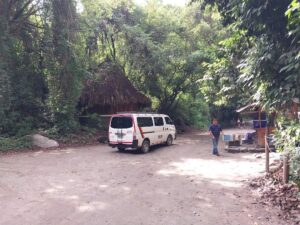
The shuttle buses leave when full and you usually don’t have to wait long. The shuttle bus is recommended, because the path to the beginning of the trail is not spectacular. From here you can continue walking or horseback riding. 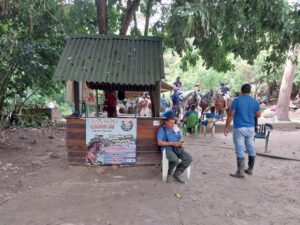
We ourselves had doubts about horseback riding and we ended up not doing it because we did not want to miss the experience of the hike and we doubted whether we would do any good for the well-being of the horses.
Cabo San Juan Trail via Arrecife
The trail to Playa Arrecife/Cabo San Juan is a well-maintained path that alternates between jungle and beach, over a wooden boardwalk and boulders. The path goes up and down but is not steep and is well manageable.
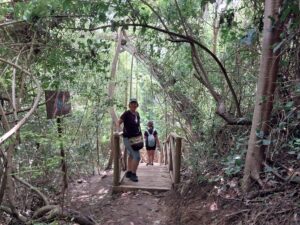
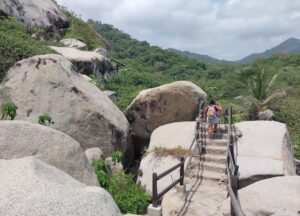
Several times we saw cute monkeys that we could observe very quietly up close.
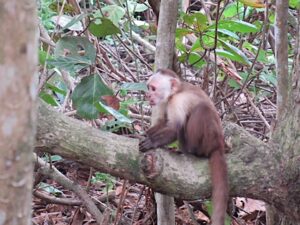
Playa Arrecife can be reached (depending on your pace) in an hour.
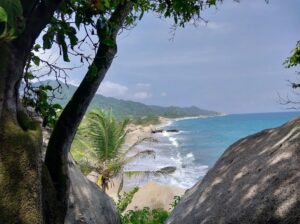
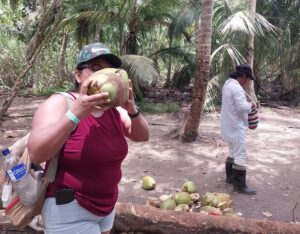
Just before Playa Arrecife you will find vendors selling ice creams and coco frio.
At Playa Arrecife you can have some food and drinks in the restaurant.
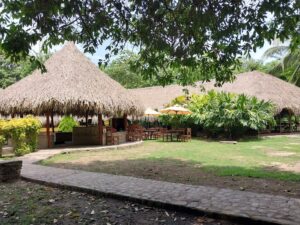
Here you can find more info about staying near Arrecife. Just past Arrecife you will find Bera bakery, where you can buy delicious chocolate caliente (and go to the toilet!). From here it’s about an hour’s walk to Cabo San Juan, where you can swim and snorkel and enjoy the view of the bay.
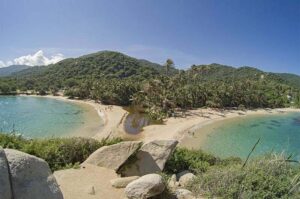
At Cabo San Juan you will find a restaurant and a store. Here find more info about staying overnight at Cabo San Juan.
The 9 Piedras trail is located near Cañavaral and leads through some large boulders to a lookout point, from which you have a nice view of the park. The large stones are of cultural significance to local indigenous communities and offers scenic views of the jungle and coastline.
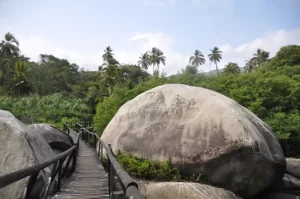
Since most people do the Cabo San Juan trail, this trail is generally very quiet.
On this trail, you can camp at Playa Arrecife, Castilletes, Cañaveral and Cabo San Juan. Hotel Ecohabs Tayrona is located in Cañaveral at the beginning of the trail. You can also stay spend the night at cabañas Arrecifes and Ecohabs Cañaveral.
Trails – CALABAZO ENTRANCE
Hike to Playa Brava
The Calabazo entrance (25 km. from Santa Marta) is a 10-minute drive before the Zaino entrance. Opening hours are from 7 a.m. – 3 p.m. You can enter until 11 a.m. There are mototaxis in Calabazo, if you don’t want to walk the first 3 km. A mototaxi costs arout COP20,000/$5.
Calabazo is the entrance for the hike to Pueblito (approx. 2h) and Playa Brava (approx. 3.5h). From Playa Brava you can continue to Cabo San Juan (approx. 2h). (update 2023: Pueblito is closed to the public, but you can pass it to go to Playa Nudista, about 4h from Calabazo).
The closure of El Pueblito has been in effect since 2019 at the request of the indigenous communities, particularly the Kogi people. With the closure, the indigenous community can protect this sacred site and allow for traditional rituals and environmental preservation.
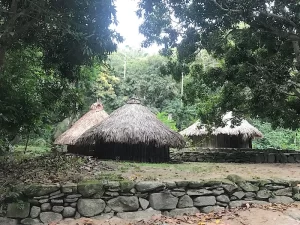
Because this hiking trail is much quieter than the hiking trail to Cabo San Juan from the Zaino entrance, you are more likely to spot wildlife here.
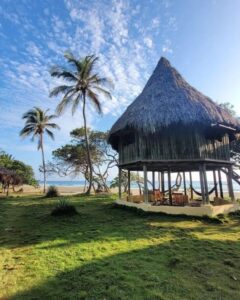
You can stay at hotel Playa Brava Teyumakke in a cabana or tent.
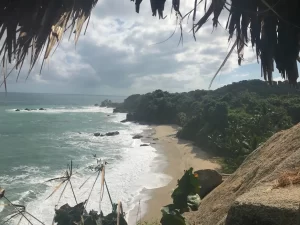
ColombiaMyWay tips
Tip #1
If you’re still not sure which hike is best for you, check out our additional tips here:
Hike from Zaino if you…
Want to do a hike that is not too intense, on a well-established trail where you can visit several beaches. The trail from the main entrance to Cabo San Juan del Guía is very doable. The trail alternates between wooden decks and rocks and boulders.
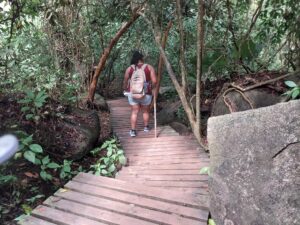
The trail does go up and down but is not steep. You cannot get lost as the trail is very well marked. This is the most popular entrance to the park so it can get very crowded on this trail. It takes you about 2 hours to get to Cabo San Juan. Tip: If you do not want to do the whole route to Cabo San Juan, walk in about an hour to Playa Arrecifes, which is in the middle of the park.
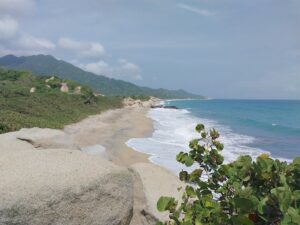
Even if you don’t walk the entire trail to Cabo San Juan, you can enjoy beautiful views of the coast and have a good chance of seeing monkeys up close.
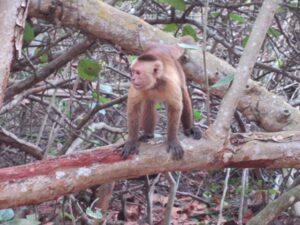
At Playa Arrecifes, you can have a drink and eat at the restaurant before walking back to the park entrance.

Another option is to spend the night in a cabaña or tent/hammock in Playa Arrecife, so you can do the hike to Cabo San Juan the next day, splitting the hike into two parts.
Hike from Calabazo if you….
Have a good level of fitness and want to do a challenging hike, then spend the night on an isolated beach away from the many tourists. This is a steep, more difficult hike on a more challenging trail. Especially the first hour is steep. On this trail you will encounter far fewer hikers than from Zaino. This gives you a better chance of seeing wildlife along the way. The trails to Playa Brava and to Boca San Juan take about 3.5-4 hours. If you have the time, you can spend 1 or 2 nights at Playa Brava and then hike to Cabo San Juan and the Zaino exit in 1 day. This will take about 4.5 hours including a stop for a swim at La Piscina. Tip: Want to do this long route Calabazo-Zaino? Then start in Calabazo and not at el Zaino. The climb from Calabazo to Playa Brava is steep and then you have already had the most difficult part of the trip at the beginning. In Playa Brava there is nothing else, (not even a first aid post) but it is a cool place to chill.
Tip #2
Check out these itineraries for a multi-day stay in Tayrona National Park here