Hotels in Colombia, Travel Guide Cartagena
Cartagena can make a first hotel choice feel more consequential than it is. The Walled City is compact but lively, Getsemaní has more edge and energy, and Bocagrande puts you by the water while moving you away from the colonial atmosphere most visitors came to see. The best hotels in Cartagena for first-time visitors are not simply the most luxurious ones. They are the places that make it easy to walk, cool off, sleep well, and get a real feel for the city.
For most independent travelers, staying inside or just outside the Walled City is the smartest move. You can explore early before the heat builds, return to the hotel for a midday break, and head out again for dinner without planning a taxi. Cartagena is best experienced in these small windows of wandering.
Best hotels in Cartagena for first-time visitors
Casa San Agustín: best for a special first stay
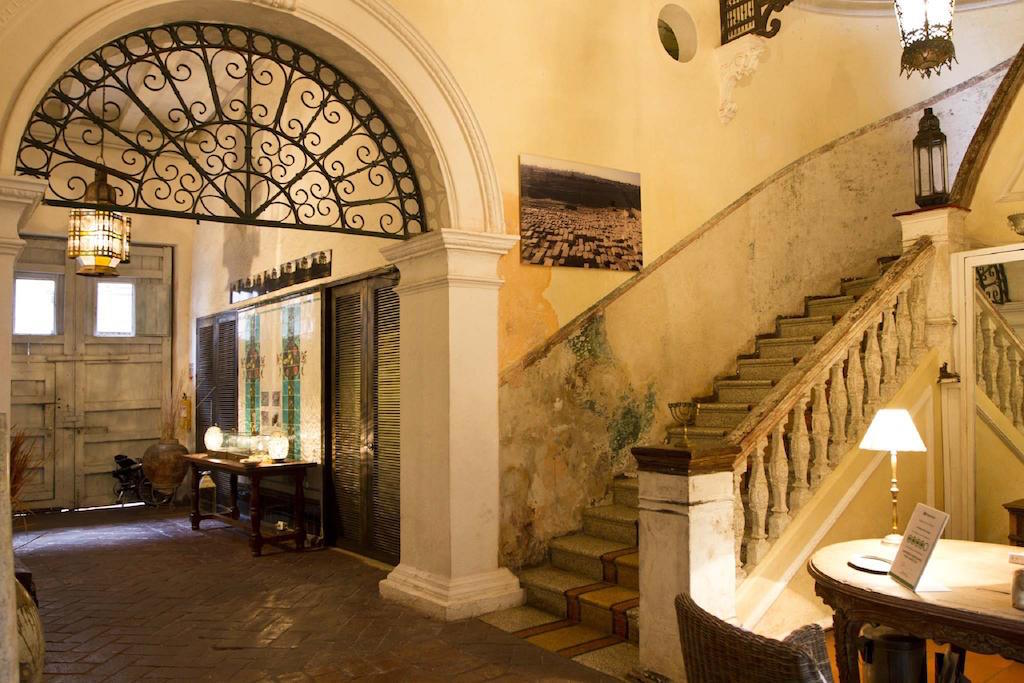
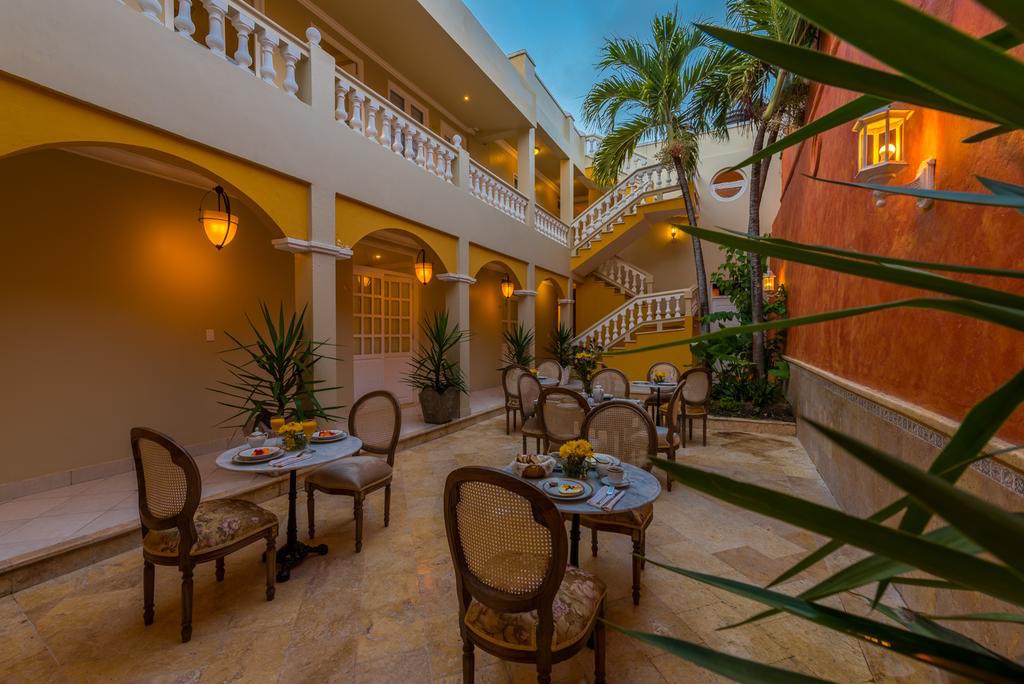
Casa San Agustín is one of Cartagena’s standout boutique hotels, set across beautifully restored colonial houses in the Walled City. It feels intimate rather than showy, with original frescoes, courtyards, and a small pool that is genuinely useful after an afternoon on the streets.
Its location is excellent for a first visit: close to the main sights, restaurants, and the Getsemaní edge of the historic center, but on a quieter street. Service is polished and the rooms have real character. This is a strong choice for couples, honeymooners, or travelers who want a memorable hotel as part of the trip itself.
The trade-off is price. It is firmly in Cartagena’s luxury category, and the atmosphere is refined rather than social. If you plan to spend most days on boat trips and most nights out, a less expensive boutique hotel may offer better value.
Sofitel Legend Santa Clara: best for full-service luxury
The former convent that houses Sofitel Legend Santa Clara is a destination in its own right. Its sweeping arches, gardens, large pool, spa, and several dining options create a resort-like pause within the historic center. For travelers accustomed to international five-star service, it is one of the easiest arrivals in Cartagena.
The hotel sits in San Diego, a northern section of the Walled City that feels slightly calmer than the busiest central streets. You are still within walking distance of plazas, museums, and excellent restaurants, while the neighborhood has a more residential, polished feel.
Choose Santa Clara if facilities matter as much as location. Families with older children, travelers celebrating an occasion, and anyone arriving after a long international journey may appreciate the pool and dependable service. It is a large hotel by old-city standards, though, so it lacks some of the personal, tucked-away quality of Cartagena’s smaller boutique stays.
Hotel Amarla: best for quiet boutique character
Hotel Amarla is a smaller, design-led option for travelers who prefer personality over a long list of facilities. The restored house has a calm, residential feeling, handsome interiors, and a rooftop plunge pool. It is near Plaza Santo Domingo, putting you close to the heart of the historic center.
This is the kind of hotel that works particularly well when your plan is simple: breakfast, walking, a long lunch, a late-afternoon rest, then dinner nearby. The scale is intimate, which many first-time visitors find more relaxing than a major hotel. On the other hand, room sizes and layouts can vary in historic buildings, so it is worth choosing your room category carefully rather than booking the lowest-priced option by default.
Hotel Quadrifolio: best for an intimate, romantic stay
With only a handful of rooms, Hotel Quadrifolio feels more like a private colonial residence than a conventional hotel. It has a small pool, a lovely terrace, and a location near the western side of the Walled City, convenient for the city walls and sunset walks.
It is a good fit for travelers who value attentive service and a peaceful base over a buzzy lobby scene. The small size also means it is not ideal if you want multiple restaurants, a gym, or the anonymity of a large property. Book early in high season, when Cartagena’s best small hotels fill quickly.
Bastión Luxury Hotel: best rooftop pool in the old city
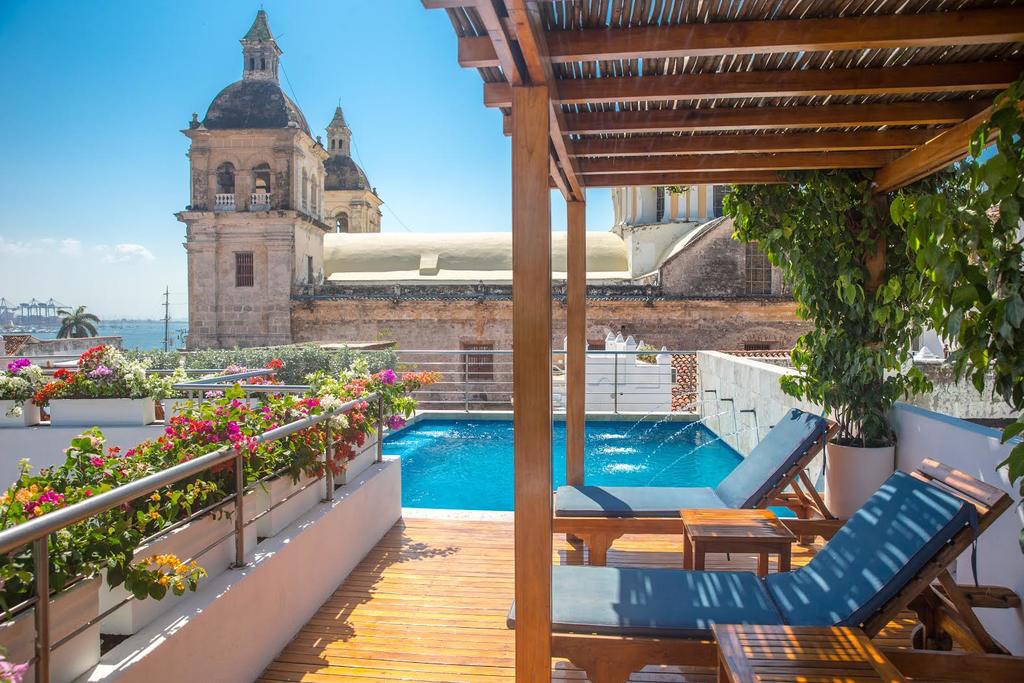
Bastión Luxury Hotel offers a more contemporary take on the colonial hotel. Its rooftop pool and terrace are the main draw, especially in Cartagena’s heat, while the setting remains squarely within the Walled City. The property is near the Clock Tower and major landmarks, making it especially convenient for a short first visit.
This is a practical luxury choice for travelers who want a stylish hotel with a livelier feel. The rooftop can feel more social than the pools at very small boutique properties. That may be a plus for friends or couples who enjoy a bit of energy, but less so for travelers seeking total quiet.
Where to stay if you want the beach: Hyatt Regency Cartagena
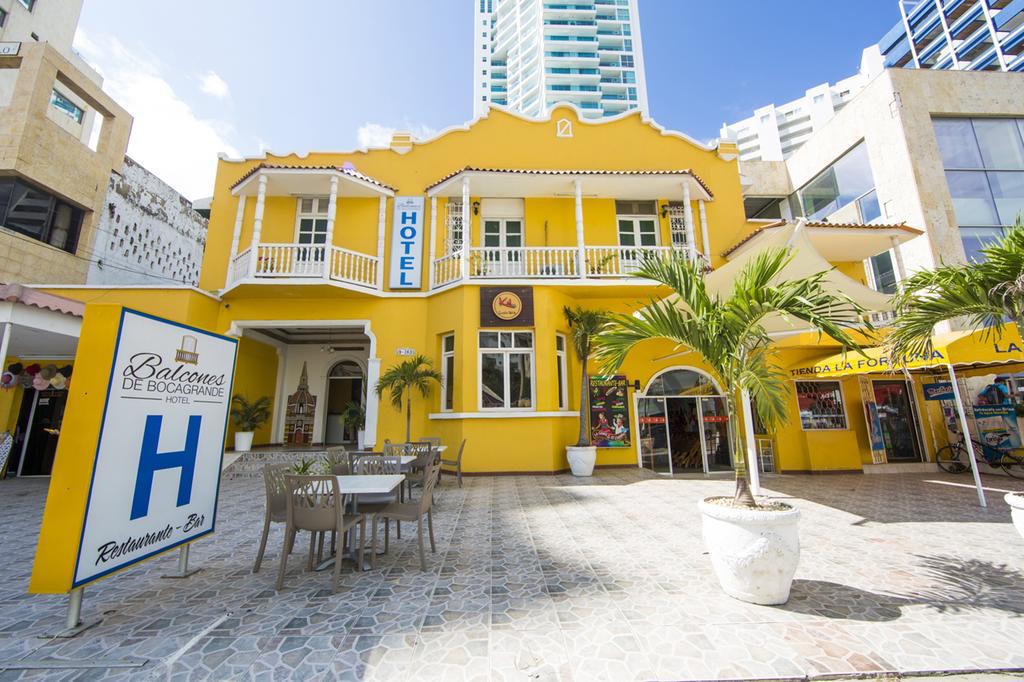
First-time visitors often assume Cartagena’s beach hotels are the obvious choice. In reality, Bocagrande is a modern high-rise district, more comparable to a city beachfront than a secluded Caribbean escape. The water is nearby, but the historic center is not at your doorstep.
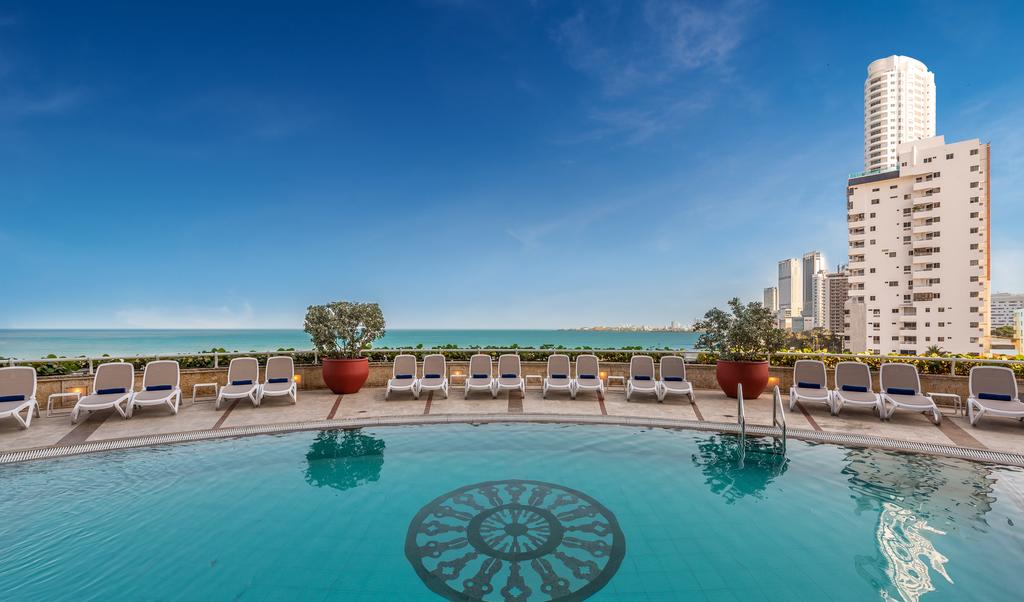
Hyatt Regency Cartagena is one of the strongest choices in this area. It has high floors with broad Caribbean views, multiple pools, dependable international standards, and easy access to restaurants and services in Bocagrande. It can be especially useful for families, travelers with points, or anyone who prefers a large contemporary hotel.
The main compromise is experience. You will use taxis to reach the Walled City, and you will miss the pleasure of stepping outside into Cartagena’s historic streets. For a first stay of two or three nights focused on culture, food, and architecture, the old city is usually a better base. Consider Bocagrande if beach access, larger rooms, elevators, and modern amenities are higher priorities.
What about Getsemaní?
Getsemaní is close enough to the Walled City to be highly convenient, but it has a different rhythm. The neighborhood is creative, colorful, and full of bars, casual restaurants, street art, and music. It is a great fit for travelers who want nightlife and a more local-feeling urban atmosphere.
Hotels here tend to be smaller and often less formal than those inside the walls. The neighborhood can also be noisy, particularly around Plaza de la Trinidad and on weekends. If you stay in Getsemaní, choose a property on a quieter side street and read recent guest comments specifically about sound. A rooftop bar may look appealing, but it is less appealing when the music is directly beneath your room.
For many first-timers, the best compromise is to stay in the Walled City and spend an evening or two in Getsemaní. The walk between them is short, and you can enjoy the neighborhood’s energy without making late-night noise part of your accommodation.
How to choose the right Cartagena hotel
Start with the rhythm of your itinerary, not the star rating. If you have three nights and want to see the old city, take a food tour, visit museums, and enjoy rooftop drinks, book within the Walled City. If you are adding Cartagena to a longer Colombia trip and need a day or two of pool time, a hotel with a good courtyard or rooftop pool matters more than a room with a distant sea view.
Also consider Cartagena’s climate. The city is hot and humid year-round, and afternoon rain is common in wetter months. Air conditioning is essential, not a luxury, and a pool can substantially improve your stay. In a historic hotel, confirm that your room has windows, reliable AC, and the level of quiet you need.
Airport logistics are straightforward. Rafael Núñez International Airport is only about 15 to 20 minutes from the Walled City in normal traffic, so there is little reason to stay near the airport. Use an official taxi or arrange a hotel transfer on arrival, especially if you land late.
Finally, Cartagena is a city where location saves energy. Paying a little more for a well-run hotel inside the walls can mean fewer taxis, more spontaneous walks, and a far better first impression. Choose the stay that makes you want to step outside early, then gives you a cool, comfortable place to return to when the city asks you to slow down.
Travel Guide Cartagena
Golden light hits the balconies in late afternoon, street musicians start setting up in the plazas, and suddenly Cartagena’s old town feels exactly like the postcard people promised. A good Cartagena walled city guide should help you enjoy that atmosphere without getting trapped in overpriced restaurants, midday heat, or a schedule that is too packed to actually take it in.
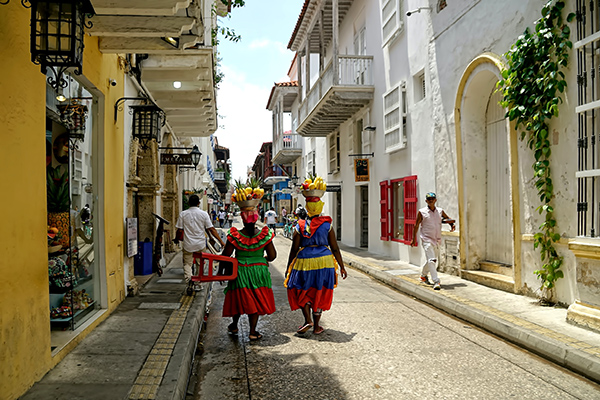
For most travelers, the Walled City is the heart of Cartagena. It is where you’ll find the colonial streets, flower-covered facades, historic churches, boutique hotels, rooftop bars, and some of the city’s most photogenic corners. It is also one of the busiest parts of Cartagena, which means a little planning makes a big difference.
Cartagena walled city guide: what the area actually includes
When people talk about the old town, they usually mean two connected areas – Centro and San Diego – both inside the historic walls. Getsemani sits just outside and often gets grouped into the same sightseeing circuit, but it has a different feel and deserves to be understood on its own.
Centro is the more polished, monumental side of the Walled City. This is where you’ll find grand churches, larger plazas, government buildings, and many of the best-known landmarks. It tends to feel more formal and more crowded, especially in the middle of the day and after cruise passengers arrive.
San Diego is calmer and more residential in character, even though it is still very much touristed. The streets here are lovely for wandering, and the pace is often a bit easier. If you want that classic Cartagena look without quite as much intensity, this is often the part people enjoy most.
The whole area is walkable. That is one of its biggest strengths. You do not need to plan complicated transportation once you are inside the old town, but you do want to wear breathable clothes, carry water, and accept that the heat can slow you down more than the map suggests.
What to see without turning it into a checklist
The best way to experience the Walled City is to combine a few landmarks with time to simply walk. Cartagena rewards wandering more than rushing.
Start with the walls themselves. Walking along the old stone fortifications gives you one of the clearest senses of the city’s history and also some of its best views. The stretch facing the sea is especially appealing near sunset, when locals and visitors gather for the breeze.
Plaza Santo Domingo is one of the most famous public squares and usually one of the busiest. It is lively, central, and worth seeing, but it can feel commercial. If you want a quieter plaza experience, Plaza San Diego often feels more relaxed.
The Cathedral area and Plaza Bolivar are also worth passing through, especially if it is your first time in Cartagena. You are not necessarily coming for a long museum-heavy day here unless that is your style. Instead, these stops help you understand the city’s layers – colonial wealth, religious history, Caribbean atmosphere, and modern tourism all sharing the same few blocks.
Las Bovedas is another well-known stop, though expectations matter. Historically interesting, yes. Essential shopping destination, not really. Many of the stalls sell souvenirs that can feel repetitive, so this is more of a quick look than a must-do.
If you enjoy architecture, one of the best things to do is look up. Wooden balconies, oversized doors, internal courtyards, and painted facades are part of what gives the old town its character. Some of the most memorable moments are not attached to a landmark at all.
The best time of day to explore
Timing matters in Cartagena more than many first-time visitors expect. Midday can be brutally hot, especially if you are walking on stone streets with limited shade.
Early morning is excellent for photos, quiet streets, and a more local feel. If you like seeing destinations before they fully wake up, this is the sweet spot. You will also avoid the heaviest heat.
Late afternoon into evening is the other ideal window. The light is beautiful, temperatures are more manageable, and the city becomes more social. Plazas fill up, bars open onto the street, and the Walled City feels more animated.
The trade-off is crowds. If you visit during high season or on weekends, evenings can get busy. That is not necessarily a bad thing – Cartagena is a city that suits lively evenings – but it changes the experience.
Where to eat and drink in the Walled City
Food in the old town ranges from excellent to forgettable, and price is not always the best clue. Some stylish places deliver very good meals, while others lean more heavily on their location and decor.
A useful approach is to prioritize restaurants a few streets off the main plazas rather than the most obvious terrace in the busiest square. You will often find better value and a less pushy atmosphere. Seafood is a natural choice in Cartagena, but the old town also has strong options for Colombian Caribbean dishes, cocktails, and upscale contemporary dining.
For a casual stop, look for a shaded cafe where you can reset in the afternoon heat. For dinner, reservations can be smart in peak travel periods, especially if you want a rooftop or one of the better-known restaurants.
Street food and fruit vendors are part of the experience too, though this is where it helps to use judgment. Freshly prepared food with visible turnover is usually a better bet than something sitting out in the heat. If you are still adjusting to the climate or sensitive to stomach issues while traveling, you may want to ease in.
Is it worth staying inside the walls?
For many travelers, yes. Staying in the Walled City puts you in the most atmospheric part of Cartagena and makes it easy to explore early and late, when the area is at its best. If this is your first visit and you want that classic Cartagena experience, it is hard to beat.
That said, it is not automatically the best choice for everyone. Hotels here are often more expensive, rooms can be smaller in historic buildings, and street noise can be a factor. If you are a light sleeper, check reviews carefully. A beautiful boutique hotel on paper can still come with nightlife noise or early morning street activity.
Getsemani is a common alternative if you want character and a slightly less polished feel, while Bocagrande may suit travelers who prefer modern hotels and beach access. Many independent travelers split their time or choose based on budget rather than romance alone, which is usually the smart move.
Safety, scams, and common annoyances
The Walled City is one of the easiest parts of Cartagena for visitors to navigate, and it generally feels comfortable for tourists. Still, ease should not turn into carelessness.
Petty theft can happen, especially in crowded areas. Keep your phone secure, avoid carrying more cash than you need, and be careful with bags in busy plazas and at outdoor tables.
The more common issue for many travelers is not crime but constant selling. Expect approaches from street vendors, massage offers on nearby tourist routes, performers asking for tips, and horse carriage pitches. A polite but firm no thanks usually works. If you engage too much out of politeness, it often turns into a longer interaction than you wanted.
Restaurant pricing is another area where attention helps. In tourist-heavy parts of Cartagena, always check menus and prices before ordering. This is especially true for seafood, cocktails, and anything sold informally in public spaces.
At night, the area is generally active and well-frequented, but quieter side streets can empty out. If you have been out late, a short taxi ride back to your hotel can be the more comfortable option, even within central areas.
How much time do you need?
You can see the Walled City in a few hours, but that does not mean you should. One full day is enough for the main sights and some relaxed wandering. Two days is better if you want room for long meals, a rooftop drink, museum stops, and breaks from the heat.
This matters because Cartagena is not a destination that rewards overpacking your itinerary. The old town works best when you leave some space in the day. Sit in a plaza. Pause for coffee. Walk a street because it looks interesting, not because it is on a top-ten list.
If you are building a larger Colombia itinerary, Cartagena often pairs well with nearby beach time, the Rosario Islands, or a shift inland to somewhere cooler. The Walled City is memorable, but it is also intense – visually, socially, and climatically. Giving yourself a little balance can improve the whole trip.
A few practical tips before you go
Bring lightweight clothing, but remember that churches and nicer restaurants may call for something a touch more put together than beachwear. Comfortable walking shoes matter because the streets are uneven in places. A hat, sunscreen, and water are not optional for most people.
If you want the old town at its prettiest, avoid treating it as a noon-to-3 p.m. sightseeing mission. Structure your day around the weather. Morning walk, midday break, evening return is often the most enjoyable rhythm.
And if the Walled City feels too polished at moments, that is part of understanding Cartagena honestly. It is beautiful, historic, and atmospheric, but it is also a highly visited destination with all the conveniences and frustrations that come with that. Approach it with realistic expectations, and it tends to deliver exactly what people come for – a place that is easy to remember long after the trip is over.
Travel Guide Cartagena, Travel Guide Santa Marta
At first glance, Cartagena or Santa Marta can look like a simple choice between two Caribbean cities on Colombia’s north coast. In practice, they deliver very different trips. One is polished, romantic, and built around history and atmosphere. The other feels more local, more relaxed, and often works better as a base for beaches and nature.
If you are trying to decide which one belongs on your Colombia itinerary, the right answer depends less on which city is “better” and more on how you like to travel. Do you want colonial streets, rooftop drinks, and a city that feels like an event? Or are you looking for easier access to Tayrona, Minca, and a lower-key Caribbean rhythm?
Cartagena or Santa Marta: the quick difference
Cartagena is the more iconic destination. It has the postcard old town, luxury hotels, stylish restaurants, and a polished tourism setup that makes short stays easy. It is especially good for couples, first-time Colombia visitors, and travelers who want culture, nightlife, and convenience in one place.
Santa Marta is usually the more practical choice for travelers who care most about the surrounding region. The city itself is less charming than Cartagena, but it gives you access to some of the Caribbean coast’s best experiences, including Tayrona National Park, Minca, and the beach towns farther east. It is often better for budget travelers, backpackers, and anyone building an itinerary around nature.
That is the broad version. The details are where the decision gets clearer.
Which city is more beautiful?
If you mean the city itself, Cartagena wins comfortably.
The walled city and Getsemaní have the kind of visual appeal that makes even a casual walk feel memorable. Balconies covered in flowers, colorful facades, plazas that fill up at sunset, churches, fortifications, and a real sense of history all give Cartagena a strong identity. Even when it is crowded, it still looks special.
Santa Marta has a historic center, but it is smaller, less striking, and less consistent. There are pleasant streets, a waterfront area, and enough bars and restaurants to enjoy a few nights, but it usually does not leave the same impression as Cartagena. Most travelers do not fall in love with Santa Marta for its architecture. They use it as a launching point.
If your trip is built around staying in a city that feels atmospheric from morning to night, Cartagena is the better pick.
Beaches and nearby nature
This is where Santa Marta starts to pull ahead.
Cartagena has beaches, but they are rarely the reason people love the city. Bocagrande is convenient but not especially beautiful, and urban beaches around Cartagena can feel busy, crowded, and a bit underwhelming if you are expecting a classic turquoise Caribbean setup. For better beach time, many travelers head out by boat to the Rosario Islands or Playa Blanca, which can be worthwhile but adds planning, cost, and day-trip logistics.
Santa Marta’s biggest advantage is what sits around it. Tayrona National Park offers some of Colombia’s most famous coastal scenery, with jungle-backed beaches and hiking trails. Minca gives you mountain air, waterfalls, birdlife, and a cooler climate less than an hour away. Taganga, while mixed in reputation, can still work for diving or a quick seaside stop. Continue east and you reach places like Palomino and the route toward La Guajira.
So if your version of a Caribbean trip includes beach days, outdoor activity, and moving between different landscapes, Santa Marta usually makes more sense.
Cartagena or Santa Marta for nightlife and restaurants
Cartagena is stronger if food and nightlife matter.
It has a broader and more refined dining scene, from casual seafood spots to upscale restaurants suited to a special evening out. There are rooftop bars, cocktail spots, live music, dance venues, and enough range to fill several nights without repetition. The city also feels more set up for travelers who want a social but polished atmosphere.
Santa Marta has solid restaurants and bars, especially around the historic center and marina area, but the scene is smaller and more casual. You can have a fun night out there, but it is not usually the main draw. For many travelers, evenings in Santa Marta are more about resting before Tayrona, Minca, or the next leg of the trip.
If you want a city break with energy after dark, Cartagena is the easier recommendation.
Price and overall value
Santa Marta is generally more budget-friendly.
Accommodation, casual meals, and everyday expenses tend to be lower than in Cartagena, especially if you stay in mid-range or budget places. Cartagena has options at different price points too, but the most desirable areas can get expensive quickly, particularly in peak travel periods. You are often paying for location, atmosphere, and convenience.
That said, value is not only about the cheapest room rate. Cartagena can offer strong value for travelers who only have a few days and want a smoother, more self-contained experience. You can walk between major sights, stay somewhere beautiful, and fit a lot into a short visit.
Santa Marta often offers better value for longer itineraries, especially if you plan to use the city as a base and spread your budget across multiple excursions or nearby destinations.
Safety, comfort, and ease of travel
Neither city is complicated for independent travelers, but they feel different on the ground.
Cartagena is one of Colombia’s most established tourism destinations, which makes it relatively easy to navigate. The trade-off is that it can also feel more intense. In the old town and Getsemaní, you may deal with persistent street vendors, tour offers, and inflated prices aimed at visitors. Most travelers manage this without major problems, but it can become tiring if you are sensitive to tourist pressure.
Santa Marta feels less polished, though often less pushy in the center than Cartagena’s busiest areas. The main advantage is logistical. If you are heading to Tayrona or Minca, staying in Santa Marta simplifies transportation. You are not adding a long transfer from another city just to start those trips.
For a smooth urban stay, Cartagena is easier. For regional travel, Santa Marta is more efficient.
Who should choose Cartagena?
Cartagena is usually the better fit for couples, first-time visitors to Colombia, and travelers on a shorter trip who want a destination with immediate character. It is also ideal if you care about architecture, food, nightlife, and staying somewhere that feels memorable without needing to leave the city every day.
It works particularly well for three to four nights. That is enough time to enjoy the historic center, visit the San Felipe fortress, spend time in Getsemaní, eat well, and maybe add a boat trip. If you stay much longer and are not mixing in island excursions or slower travel, some people start to feel the city’s tourist-heavy side.
Choose Cartagena if your goal is atmosphere first.
Who should choose Santa Marta?
Santa Marta suits travelers who are less interested in the city itself and more interested in what the region makes possible. If Tayrona is high on your list, if you want to add Minca, if you prefer a more relaxed and lower-cost base, or if your Colombia trip already includes bigger cities like Medellín or Bogotá, then Santa Marta can be the smarter choice.
It also works well for travelers who like building an itinerary with movement in it. A couple of nights in Santa Marta, followed by Tayrona, Minca, or Palomino, often creates a more varied Caribbean segment than staying only in Cartagena.
Choose Santa Marta if your goal is access first.
Can you do both?
Yes, and many independent travelers should.
If you have at least a week for Colombia’s Caribbean coast, combining them often gives you the best balance. Start in Cartagena for history, food, and city atmosphere, then move to Santa Marta to shift into beach and nature mode. The route is straightforward, and the contrast between the two places keeps the trip interesting.
If you only have three or four days total, trying to squeeze in both can feel rushed. In that case, choose the one that matches your priorities rather than collecting destinations.
My honest take on Cartagena or Santa Marta
If someone asked for the most beautiful and memorable city experience, I would say Cartagena. If someone asked for the most useful base for a broader Caribbean itinerary, I would say Santa Marta.
That is really the choice. Cartagena is the destination. Santa Marta is often the gateway.
For many travelers, Cartagena leaves the stronger first impression, but Santa Marta leads to some of the coast’s best days. If you know whether you want your trip to center on city atmosphere or regional adventure, the decision becomes much easier.
Pick the place that matches the way you actually travel, not the one that simply looks better in photos.
Travel Guide Cartagena, Travel Guide Santa Marta
If you’re planning a trip to Colombia’s Caribbean coast, chances are you’re trying to decide between Cartagena and Santa Marta. Both destinations offer beautiful beaches, warm weather year-round, rich culture, and access to incredible excursions. However, they provide very different travel experiences.
Cartagena is Colombia’s most famous Caribbean city, known for its colorful colonial architecture, luxury hotels, rooftop bars, and vibrant nightlife. Santa Marta, on the other hand, is the oldest city in Colombia and serves as the gateway to some of the country’s most spectacular natural attractions, including Tayrona National Park, Minca, and the Sierra Nevada mountains.
So which destination is better? The answer depends on your travel style, budget, and interests.
Quick Comparison: Cartagena vs Santa Marta
| Category |
Cartagena |
Santa Marta |
| Beaches |
Good |
Better |
| History & Culture |
Excellent |
Good |
| Nightlife |
Excellent |
Moderate |
| Nature & Hiking |
Good |
Excellent |
| Budget Travel |
Moderate |
Excellent |
| Luxury Travel |
Excellent |
Good |
| Family Travel |
Excellent |
Excellent |
| Digital Nomads |
Good |
Good |
| Day Trips |
Excellent |
Excellent |
| Food Scene |
Excellent |
Good |
| Safety |
Good |
Good |
Why Visit Cartagena?
Cartagena is one of the most beautiful colonial cities in Latin America. Its historic center, surrounded by centuries-old walls, is a UNESCO World Heritage Site filled with colorful streets, churches, plazas, and charming boutique hotels.
Walking through the Walled City feels like stepping into a living museum. During the day, visitors can explore historical landmarks, shop for local crafts, and enjoy Caribbean cuisine. At night, Cartagena transforms into one of Colombia’s most lively destinations, with rooftop bars, live music, salsa clubs, and upscale restaurants.
Highlights of Cartagena
- The Walled City
- Getsemaní neighborhood
- Castillo San Felipe de Barajas
- Rosario Islands
- Luxury rooftop bars
- Fine dining restaurants
- Sunset cruises
Cartagena is particularly attractive for couples, honeymooners, luxury travelers, and visitors seeking culture and nightlife.
Why Visit Santa Marta?
Santa Marta offers a more relaxed and authentic Caribbean experience. While the city itself has a pleasant historic center and beautiful waterfront, its biggest appeal lies in the incredible natural attractions surrounding it.
Santa Marta is the gateway to:
- Tayrona National Park
- Minca
- Sierra Nevada de Santa Marta
- Palomino
- Lost City Trek
- Buritaca
- Costeño Beach
For travelers who love nature, hiking, waterfalls, wildlife, and beaches, Santa Marta often becomes the favorite destination.
Highlights of Santa Marta
- Tayrona National Park
- Minca cloud forest
- Crystal-clear Caribbean beaches
- Coffee farms
- Indigenous culture
- Mountain scenery
- Lower prices
Santa Marta is ideal for adventure travelers, backpackers, families, and nature lovers.
Which Destination Has Better Beaches?
This is one category where Santa Marta clearly has an advantage.
While Cartagena has urban beaches such as Bocagrande and nearby island excursions to the Rosario Islands, many visitors are surprised that the city’s beaches are not the main reason to visit.
Santa Marta, on the other hand, offers access to some of Colombia’s most beautiful beaches.
Best Beaches Near Santa Marta
Cabo San Juan
Located inside Tayrona National Park, Cabo San Juan is often considered one of the most beautiful beaches in Colombia.
Playa Cristal
Known for its calm waters and excellent snorkeling opportunities.
Bahía Concha
A favorite among local families thanks to its calm waters.
Playa Blanca
A popular beach close to El Rodadero.
Best Beaches Near Cartagena
Playa Blanca (Barú)
The most famous beach near Cartagena.
Rosario Islands
Crystal-clear waters and excellent snorkeling.
Isla Grande
A beautiful island getaway close to Cartagena.
Winner: Santa Marta
For beach lovers, Santa Marta offers more variety and easier access to spectacular natural beaches.
Which Destination Is Better for Nature Lovers?
Santa Marta wins by a significant margin.
Within a short drive of the city, travelers can experience:
- Tropical rainforest
- Caribbean beaches
- Mountain scenery
- Waterfalls
- Coffee farms
- Indigenous communities
Few destinations in South America offer such diversity in such a compact area.
Cartagena has beautiful islands and mangroves, but nature is not its strongest selling point.
Winner: Santa Marta
Which Destination Has Better Nightlife?
Cartagena is one of Colombia’s nightlife capitals.
Popular nightlife areas include:
Getsemaní
The city’s most vibrant neighborhood for bars and live music.
Walled City
Home to rooftop lounges, cocktail bars, and upscale venues.
Bocagrande
Offers beach clubs and modern nightlife.
Santa Marta has a pleasant nightlife scene centered around Parque de los Novios, but it is much smaller and more relaxed.
Winner: Cartagena
Which Destination Is More Affordable?
Santa Marta is generally cheaper than Cartagena.
Average Hotel Costs
Budget Accommodation:
- Cartagena: $25–50 USD
- Santa Marta: $15–35 USD
Mid-Range Hotels:
- Cartagena: $80–180 USD
- Santa Marta: $50–120 USD
Luxury Hotels:
- Cartagena: $250–1,000+ USD
- Santa Marta: $120–400 USD
Restaurants and tours are also typically more affordable in Santa Marta.
Winner: Santa Marta
Which Destination Is Better for Families?
Both cities are excellent family destinations.
Cartagena for Families
- Historic attractions
- Horse-drawn carriage rides
- Family-friendly resorts
- Rosario Islands excursions
Santa Marta for Families
- Nature activities
- Calm beaches
- Wildlife spotting
- Short excursions
Families who prefer resorts and culture often choose Cartagena. Families who enjoy nature and outdoor adventures usually prefer Santa Marta.
Winner: Tie
Which Destination Is Better for Couples?
Cartagena is one of the most romantic destinations in Colombia.
Imagine:
- Sunset cocktails on a rooftop
- Walking through colonial streets
- Fine dining in historic buildings
- Luxury boutique hotels
Santa Marta offers beautiful natural settings but generally feels less romantic and luxurious.
Winner: Cartagena
Which Destination Is Better for Backpackers?
Santa Marta is one of Colombia’s backpacker capitals.
Nearby attractions such as Minca, Palomino, Costeño Beach, and Tayrona make it easy to spend several weeks exploring the region.
Budget accommodation is abundant, and the atmosphere is more laid-back.
Winner: Santa Marta
Safety Comparison
Both destinations are considered relatively safe for tourists when common travel precautions are followed.
Visitors should:
- Avoid displaying valuables.
- Use registered transportation.
- Stay aware in crowded areas.
- Avoid isolated locations at night.
Cartagena experiences more petty theft due to its larger tourism industry, while Santa Marta tends to feel more relaxed.
Winner: Slight Edge to Santa Marta
Can You Visit Both on the Same Trip?
Absolutely.
Many travelers combine both destinations in a single itinerary.
Suggested Route:
- Cartagena: 3–4 days
- Santa Marta: 3–4 days
- Tayrona National Park: 2 days
- Minca: 1–2 days
This combination allows you to experience both Colombia’s cultural and natural highlights.
Final Verdict: Cartagena or Santa Marta?
Choose Cartagena if you want:
- Colonial architecture
- Luxury hotels
- Nightlife
- Fine dining
- Romantic experiences
Choose Santa Marta if you want:
- Beautiful beaches
- Nature and hiking
- Tayrona National Park
- Lower prices
- Adventure travel
For first-time visitors to Colombia, the ideal solution is often not choosing one over the other but visiting both. Cartagena provides culture, history, and nightlife, while Santa Marta delivers some of the most spectacular natural experiences in the country.
Together, they create one of the best travel combinations in South America.
Frequently Asked Questions
Is Cartagena or Santa Marta safer?
Both are generally safe for tourists when basic precautions are taken.
Which city has better beaches?
Santa Marta offers significantly better beaches, especially in Tayrona National Park.
Is Santa Marta cheaper than Cartagena?
Yes, accommodation, food, and tours are generally more affordable in Santa Marta.
Which destination is better for nightlife?
Cartagena has the best nightlife on Colombia’s Caribbean coast.
Can you visit Cartagena and Santa Marta in one trip?
Yes. Many travelers combine both destinations in a one- or two-week itinerary.
Travel Guide Cartagena, Travel Guide Santa Marta
If you’re planning a trip to Colombia’s Caribbean coast, one of the biggest questions you’ll face is:
Should you visit Santa Marta or Cartagena?
The good news is that there is no wrong choice. Both destinations offer beautiful beaches, warm weather, rich culture, and easy access to some of Colombia’s most stunning attractions. However, they provide very different travel experiences.
Cartagena is famous for its colonial architecture, luxury hotels, vibrant nightlife, and romantic atmosphere. Santa Marta, on the other hand, is known for its proximity to nature, outdoor adventures, and more authentic Caribbean vibe.
So which destination is better for your travel style? Let’s compare them.
Quick Answer
Choose Cartagena if you want:
- Colonial charm
- Luxury hotels
- Fine dining
- Nightlife
- A romantic city break
Choose Santa Marta if you want:
- Nature and adventure
- Better access to beaches
- Hiking and ecotourism
- Lower prices
- A more local atmosphere
Cartagena: Colombia’s Most Beautiful Colonial City
Cartagena is often the first destination international visitors think of when planning a trip to Colombia.
The city’s historic center is a UNESCO World Heritage Site filled with colorful colonial buildings, flower-covered balconies, churches, plazas, and boutique hotels.
Walking through Cartagena feels like stepping into a living museum.
What Makes Cartagena Special?
- Beautiful colonial architecture
- Upscale restaurants
- Rooftop bars
- Luxury hotels
- Vibrant nightlife
- Rich history and culture
Cartagena is particularly popular among:
- Couples
- Honeymooners
- Luxury travelers
- First-time visitors to Colombia
Downsides of Cartagena
Cartagena’s popularity comes at a price.
Compared to Santa Marta, Cartagena is:
- More expensive
- More crowded
- More touristy
- Hotter and more humid
Many travelers are surprised to learn that Cartagena’s city beaches are not considered among the best beaches in Colombia.
Santa Marta: Colombia’s Adventure Capital of the Caribbean
Santa Marta offers a completely different experience.
While the city itself is smaller and less polished than Cartagena, it serves as the gateway to some of Colombia’s most spectacular natural attractions.
From Santa Marta you can easily visit:
- Tayrona National Park
- Minca
- Palomino
- Lost City Trek
- Sierra Nevada Mountains
For nature lovers, Santa Marta is often the clear winner.
What Makes Santa Marta Special?
- Tayrona National Park
- Jungle and mountain landscapes
- Better beaches nearby
- Ecotourism opportunities
- Adventure activities
- More affordable accommodations
Downsides of Santa Marta
Santa Marta is less visually impressive than Cartagena.
Visitors looking for:
- Colonial architecture
- Luxury shopping
- Sophisticated nightlife
may find Cartagena more appealing.
Beaches: Santa Marta Wins
Many travelers assume Cartagena has the best beaches because it is more famous.
In reality, Santa Marta has access to significantly better beaches.
Cartagena Beaches
Popular options include:
- Bocagrande
- Castillogrande
- Playa Blanca (Barú)
- Rosario Islands
While beautiful, many visitors need to leave the city to find the postcard-perfect Caribbean beaches they imagine.
Santa Marta Beaches
Santa Marta offers easy access to:
- Cabo San Juan
- Playa Cristal
- Bahía Concha
- Playa Grande
- Bello Horizonte
- Pozos Colorados
For beach lovers, Santa Marta generally comes out ahead.
Nature and Adventure: Santa Marta Wins
If your dream trip includes:
- Hiking
- Wildlife
- Waterfalls
- National parks
- Indigenous culture
then Santa Marta is difficult to beat.
Tayrona National Park alone attracts hundreds of thousands of visitors every year.
The nearby village of Minca offers coffee farms, waterfalls, birdwatching, and cooler mountain temperatures.
Cartagena simply cannot compete with the variety of natural attractions available around Santa Marta.
History and Culture: Cartagena Wins
Cartagena is one of the most historically important cities in Latin America.
Highlights include:
- The Walled City
- Castillo San Felipe
- Getsemaní
- Plaza Santo Domingo
- Colonial churches and museums
History enthusiasts could easily spend several days exploring Cartagena’s cultural attractions.
Santa Marta also has a historic center, but Cartagena offers a richer and more visually impressive historical experience.
Nightlife: Cartagena Wins
Cartagena has one of the best nightlife scenes in Colombia.
Popular areas include:
- Getsemaní
- Centro Histórico
- Bocagrande
You’ll find:
- Rooftop bars
- Salsa clubs
- Cocktail lounges
- Beach clubs
Santa Marta has a more relaxed nightlife scene focused on beach bars and local venues.
Cost: Santa Marta Wins
Travelers on a budget will generally find Santa Marta more affordable.
Expect lower prices for:
- Hotels
- Hostels
- Restaurants
- Tours
- Transportation
Cartagena’s international popularity has pushed prices significantly higher, particularly inside the historic center.
Safety: Which Is Safer?
Both destinations receive large numbers of tourists each year.
The most common issues reported in both cities are:
- Pickpocketing
- Phone theft
- Tourist scams
Travelers should use normal precautions regardless of which destination they choose.
Cartagena generally has a stronger tourism infrastructure, while Santa Marta provides easier access to natural attractions.
Which Destination Is Better for You?
Choose Cartagena If:
✔ You love history and architecture
✔ You want luxury hotels
✔ You enjoy nightlife
✔ You’re planning a romantic getaway
✔ It’s your first trip to Colombia
Choose Santa Marta If:
✔ You love nature and adventure
✔ You want to visit Tayrona National Park
✔ You prefer fewer crowds
✔ You are traveling on a budget
✔ You enjoy hiking and ecotourism
Why Not Visit Both?
The best part?
Santa Marta and Cartagena are only about four hours apart by road.
Many travelers combine both destinations in a single itinerary.
A popular route is:
- Cartagena (3–4 days)
- Santa Marta (2–3 days)
- Tayrona National Park (1–2 days)
- Minca (1–2 days)
This allows you to experience the best of Colombia’s Caribbean coast.
Final Verdict
If you’re looking for history, romance, luxury, and vibrant city life, Cartagena is the winner.
If you’re looking for beaches, nature, adventure, and better value for money, Santa Marta is the better choice.
For most travelers visiting Colombia for the first time, the ideal solution is simple:
Visit both.
Together, Santa Marta and Cartagena offer the perfect combination of culture, history, beaches, nature, and Caribbean charm.
Travel Guide Cartagena
Transportation in/from Cartagena →
Aeropuerto Internacional Rafael Núňez in Cartagena (CTG) is easily accessible, including:
- Direct KLM flight or with a stopover in Bogotá
- Avianca, Latam and Viva Air from Bogotá, Medellín, Pereira (coffee triangle)
- Wingo from Bogotá
- American Airlines, Jet Blue and Spirit from Miami
- Copa Airlines from Panama
Transportation from airport
The easiest way to get into getting to the city center is by cab. Follow the “yellow footsteps” and you will come out to a counter. Here you say where you need to go. You will then get a printout with the price and be assigned a cab. A cab ride to the city center takes about 15 minutes and will cost you around 14,000COP (€4).
Bus
There are connections from St. Marta (5 hours), Medellín (12 hours), and Bogotá (22 hours), among others. The Terminal de Transportes de Cartagena is about a 45-minute drive from downtown. If you are traveling to Cartagena from St. Marta, puerta a puerta (door-to-door transportation) is a convenient option. (See transportation from Cartagena).
Car
Cartagena is easily accessible by rental car, but parking is difficult in the city center. Moreover, the center is easy to walk around. If you are traveling with a family or a group and want a little more freedom, it may be worthwhile to rent a car, for example at the airport.
Boat
Cartagena is a popular destination for cruise lines. Consequently, many tourists get to know Cartagena for the first time on a cruise. There are also sailing trips between Cartagena and the San Blas Islands in Panama.
Transportation in/from Cartagena
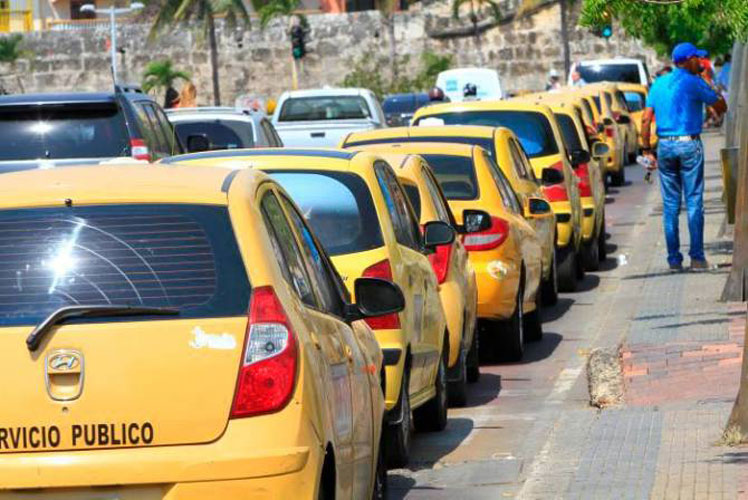
Grabbing a cab is easy. The yellow “servicio publico” cabs are the official cabs in Cartagena and there are many of them. Cabs do not run on meters, so agree on a price in advance.
The minimum price for a ride is COP7,000/€1.90. At night, a ride in Centro, San Diego and Getsemaní costs around COP10,000/€2.75.
Besides the Uber app, there are other cab apps in Colombia, such as Didi Rider and Easy Tappsi. These apps work like Uber; you sign up and can track the driver.
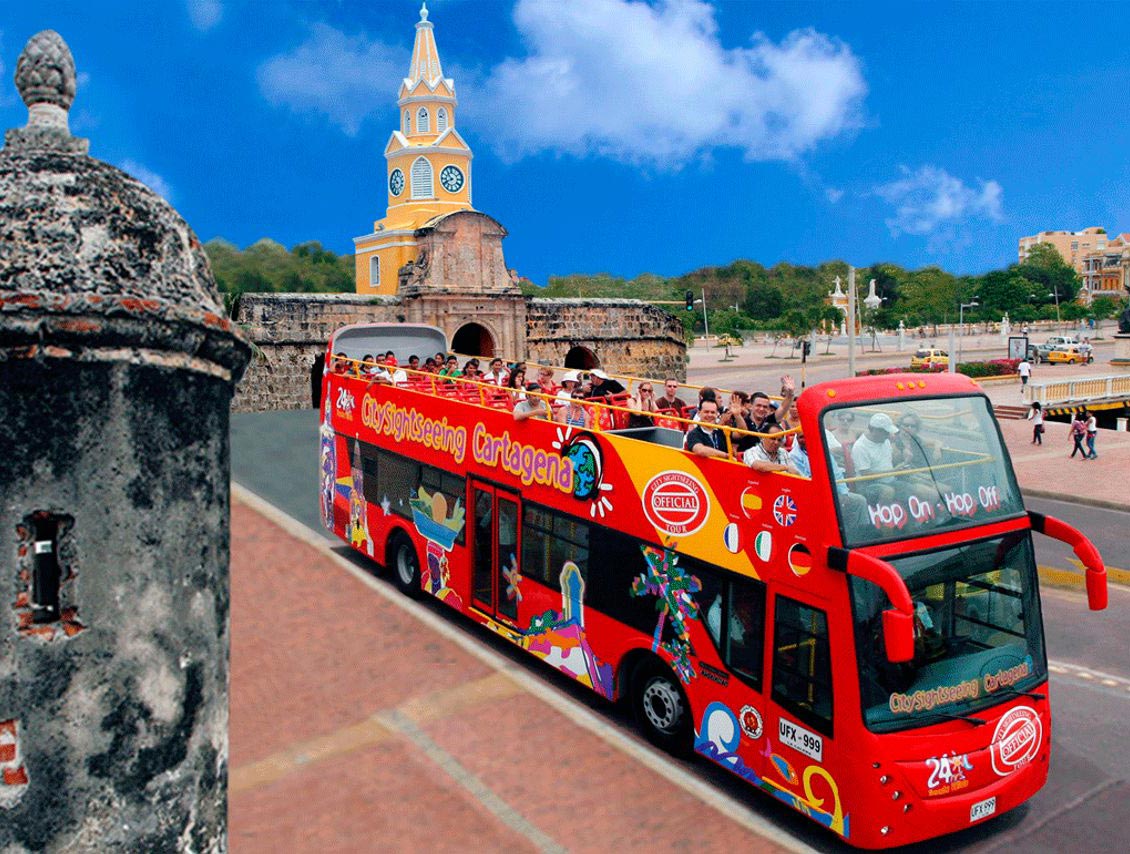
The distinctive red buses of Citysightseeing Cartagena, are especially popular with tourists who want to see the highlights of Cartagena in a short time. You can hop on and off at 14 stops as much as you want, during the duration of your ticket (24/48h). With English-language audio guide.
Bus transportation
Bus transportation to Medellín and Bogotá goes through the Terminal de Transportes, a 45-minute drive from downtown. From here, buses also go to other destinations such as St. Marta, Mompox, and Playa Blanca.
Tip: Puerta a Puerta service to St Marta
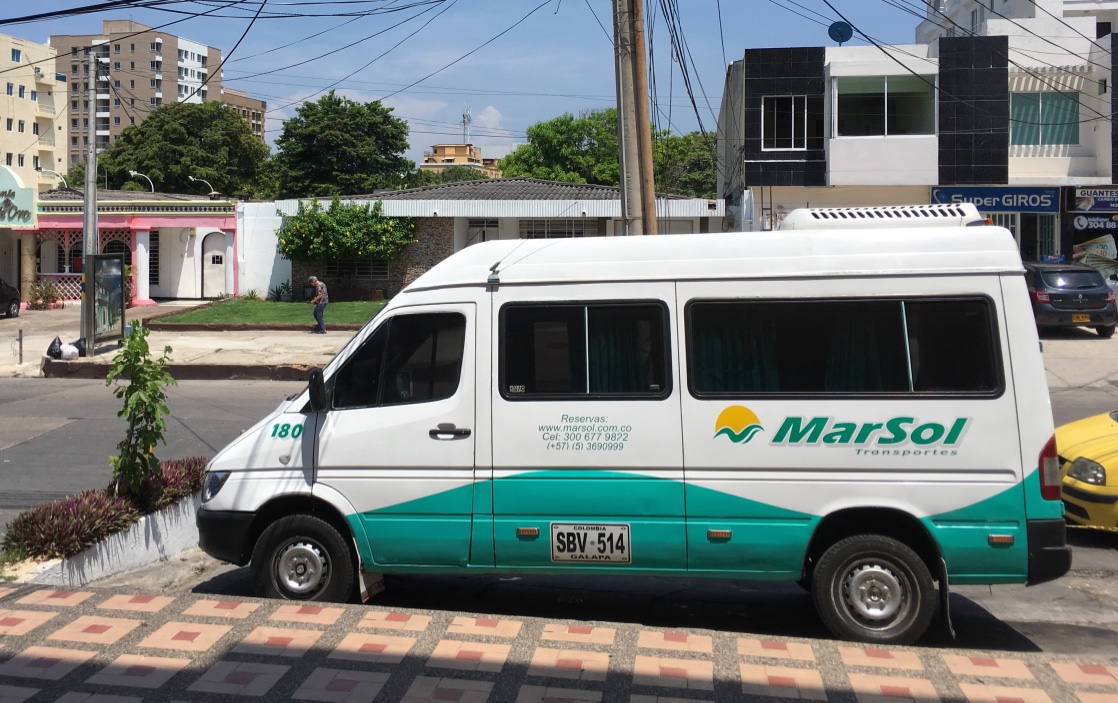
If you are traveling on from Cartagena to Barranquilla or St. Marta, the Puerta a Puerta service is a convenient option. Instead of taking a cab to the bus terminal, a minibus from Berlinas or Marsol will pick you up at your hostel and drop you off at the bus terminal in St Marta. The trip goes via Barranquilla. If you return to Cartagena after this, the minibus will drop you off as close to your hotel as possible.
Price indication
Cartagena-Santa Marta: COP52000/€14 (one way), 4.30 hours
Booking
There are fixed times, even on weekends there are several buses going every day. You can make reservations via WhatsApp, among other things.
Update May 2022: Marsol and Berlinas no longer do puerta a puerta transportation. You must now board at their Cartagena office and be dropped off at their Santa Marta office. Prices have been raised to COP70,000 pp.
Cartagena can be visited all year round
Even in the rainy season, you can just go out and it doesn’t rain every day.
Busiest and most expensive periods
December, January and Semana Santa (Easter week). Many Colombians then take their own vacations. Colombians also like to travel during the long weekends around the holidays (Puentes). September-November is quieter and there are often good deals to be had.
Events:
El Día de la Independencia de Cartagena
Cartagena’s Independence Day. Celebrations begin in October, last for 3 weeks and end on Nov. 11.
Hay Festival
January/February: literature and arts festival with international guests
Cartagena International Film Festival (CIFF)
February/March
Music Festival de Tambores y Expresiones Culturales|
October, in San Basilio de Palenque, 55 km from Cartagena.
There is a lot to see in and around Cartagena, but where do you start? Here is some inspiration for a trip of 2 days and 3 days or more.
In 2 days you will have enough time to see the most famous sights, grab a museum and terrace and do a tour or workshop.
Do you do on day 1 a city tour, you will immediately have a handy introduction to the city. On day 2 you can then visit Castillo de San Felipe, stroll through the trendy Getsemaní district, or sign up for a chocolate or coffee workshop, for example.
With a day or more added, you can take it completely easy and soak up the city. You can also take a cab to Bocagrande, to stroll along the modern boulevard, shop and see the contrast of “little Miami” with the old town.
With 3 days or more, you can do a trip to PNN Islas del Rosario y de San Bernardo or take the bus to the colonial town of Mompox inland.
€ price range up to €25
€€ price range €25 – €100
€€€ price range above €100
Money Matters
- Credit and debit cards are accepted in most stores and restaurants
- Paying with pesos (COP) is generally cheaper than paying with US$
- You can safely use debit cards in malls and the larger supermarkets and drug stores
- Look here for more info on money matters in Colombia
Locals & language
- Because Cartagena is one of the most touristy cities in Colombia, you will encounter more people who speak English there than in the rest of Colombia, especially at hotels and tour operators
- The “Costeños” (residents of the coastal region) are warm and welcoming. Don’t be surprised if you ask for directions and someone walks all the way with you. This is (usually) not meant to be intrusive, but polite. They feel responsible for your safety.
Medical
Vaccinations
No vaccinations are required for Cartagena. Only if you are entering Colombia from Brazil is a yellow fever vaccination required.
Doctor
Click here for more information:
Facebook Clínica Medihelp Services Cartagena
(also home visits)
MedicApp
An App service, where you can request a doctor’s consultation “at home” 24 hours a day.
Look here for more information and to download the App:
Website MedicApp
Hospital
Look here for more information:
Website Clinica Bocagrande
Dentist
Click here for more information:
Website Cartagena English speaking Dentist
Dutch consulate
Dutch consulate Cartagena
Consul: Mauricio Villegas Gerdts
Callejon Santa Clara Calle 24A #19-64, Manga, Cartagena de Indias
Phone: +5756605610
E-mail: [email protected]
Opening hours: Monday through Friday: 8 a.m. – 1:30 p.m.
Packing List
- Airy clothes and shoes
- Sunscreen
- Sunglasses
- Anti mosquito spray
- Cap/hat
- Rain jacket in rainy season
- Thermos for water
- Medicine if you want a particular brand
- Read: Love in times of cholera, by Gabriel Garcia Márquez. The book is largely set in Cartagena
Supermarkets and drugstores
Opening hours
Supermarkets are generally open from 8 a.m. to 9 p.m. Some drugstores are open 24/7.
Well-known supermarkets in Cartagena
- Éxito; medicines are also sold here
- Olímpica; medicines are also sold here in the Drogerias Olímpica 24/7
- Carrefour, Carulla, Falabella and Jumbo. Carulla is a more expensive supermarket that sells many imported products.
Safety
As in all tourist destinations, Cartagena has a police presence to ensure the safety of tourists. Therefore, you need not be afraid when walking the streets in downtown Cartagena. Nevertheless, do not walk around with your phone and other valuables and think logically during your stay in Cartagena.
Do not go into the suburbs
There is a lot of poverty in the “suburbs” and it is not safe for tourists. After sunset, avoid the neighborhoods outside the tourist center (Centro Histórico) of the city, Bocagrande and Manga.
Get advice from locals
If you want to go out at night, ask your hotel if it’s safe to walk. Otherwise, have them call a cab for you, or order one yourself through the App.
Go inside to withdraw money
Use ATMs in malls and supermarkets where you can safely withdraw money.
Be prepared for street vendors
In El Centro, near the tourist attractions and on the beaches, there are many street vendors. If you don’t fancy yet another vendor offering their wares, “No gracias” will suffice and you just walk on. That is usually enough for the street vendors not to bother you.
What to consider during a day at the beach
On the beaches, such as Playa Blanca and Bocagrande beach, the vendors can be very persistent. Keep a close eye on your belongings because sometimes the vendors tip off thieves. If you’re going to eat something at a beach shack, check the bill so they don’t have a chance to possibly rip you off.
Wifi
Most hotels and hostels have wifi, at least in the common areas. There are also buses and minivans with wifi.