How to get to San Agustín?

Home 9 Category: Cali & SW Colombia ( Page 2 )

How to get to San Agustín?

How to get to San Agustín? Here you will find all the ways of transportation, by bus or by plane.

Whether you travel by bus or by plane, in most cases you have to travel via Pitalito, on an hour’s drive from San Agustín. One option where you travel directly, is the direct bus service from Bogotá.
Bus transportation:

  • Bogotá
    From Bogotá there is a direct bus to San Agustín. It is a long ride of 11h; there are also night buses. Departs from the Salitre terminal. Tickets from COP97,000/$24 (Coomotor, Cootranshuila, Taxis Verdes).
  • From other destinations, the journey is via Pitalito. From Pitalito, you travel on to San Agustín in an hour. Buses run throughout the day and you can buy a ticket starting at COP23,000/$5.50. (Cootranshuila, Cootrans)
  • Neiva (Tatacoa) 5h (possibly bus change in Pitalito) from COP58,000/$14. Coomotor, Cootranshuila, Taxis Verdes
  • Cali: 8h (via Pitalito), from COP97,000/$24. Expreso Gaitana, Cootranslaboyana
  • Popayán:  4h (via Pitalito), from COP58,000/$14, Cootranshuila, Cootranslaboyana. Transipiales, Expreso Gaitana. Note: despite the distance being only 125km, the bus takes 4-5 hours because some roads are unpaved.
  • Florencia: 4h (via Pitalito), from COP56,000/$13.50, Cootranslaboyana, Coomotor Florencia

Plane:
The nearest airport is in Pitalito. A flight from Bogotá to Pitalito takes 1.15h. Prices from $80 Avianca/Satena. From Pitalito, it is a one-hour drive to San Agustín. Furthermore, there are flights to Pitalito from Cali (1h / Satena).

Transportation in the town
There are taxis and minivans and for the archaeological park you can also walk, depending on your location. The other sights further out of town and booking an organized tour can then be convenient so you can combine different attractions. Because of the roads through the mountains, renting a car is more complicated.

Transportation to the archaeological park
Depending on where you stay, you can walk to the park. From the center, it’s about a 45-minute walk. There are also buses (less than COP2,000/$0.50) and you can take a cab for a small COP12,000/$3.

If you want to plan a short trip from Bogotá and not travel further around southern Colombia, then this tour is an option.

All about San Agustín in Colombia: what to do and tips

Home 9 Category: Cali & SW Colombia ( Page 2 )

Archaeological sites in beautiful nature

San Agustín is located in the department of Huila, more than 500 kilometers south of Bogotá. The city, with some 34,000 inhabitants, is best known for its archaeological park, which is a UNESCO World Heritage Site. It is one of the best-preserved archaeological sites in Colombia, but nevertheless it is a lot less popular with international travelers than sites such as Ciudad Perdida in Northern Colombia.

Largest collection of religious monuments in the world
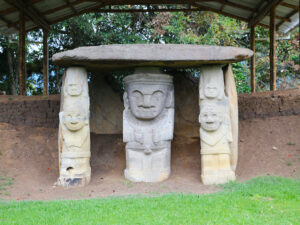
There are over 500 stone statues and tombs scattered over more than 50 km2. This makes these archaeological sites the largest collection of religious monuments and the largest cemetery in the world. The meters-high statues represent mythical animals and gods of the San Agustín Indian community, which lived between 1000-1500 A.D. in the area where the archaeological park is now located.

Beautiful location
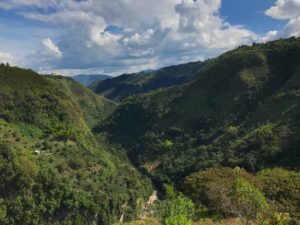
San Agustín is located in a beautiful green area with coffee plantations and there are–in addition to visiting the archaeological park–enough other fun things to do, to keep yourself entertained for a few days.

Itineraries
San Agustín is often skipped during a roundtrip in Colombia, partly due to the long bus trip from Bogotá. Are you planning a roundtrip through southern Colombia, then you can easily add this destination to your planning, e.g. with an itinerary from Bogotá to Cali or vice versa, with a stopover in the Tatacoa desert and Popayán. Due to its location on145 kms of Florencia, you can also combine your trip with a visit to the department of Caquetá, a department between the Andes and the Amazon.

Everything you want to know about San Agustín and the archaeological park can be found here: tips on what to do, the best tours and activities, the best hotels and hostels, how long to stay,  the best time to travel and practical information.

Everything about San Agustín

How to get to San Agustín?
Best time to travel + how long should you stay
The archaeological park
Practical information
Things to do
Hotels and hostels

The Tatacoa desert

Home 9 Category: Cali & SW Colombia ( Page 2 )

Spectacular rock formations in the Tatacoa desert

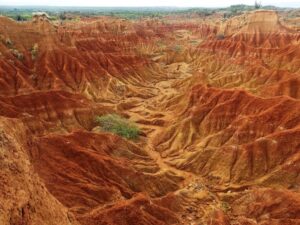
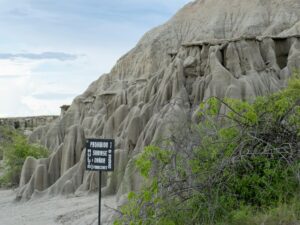
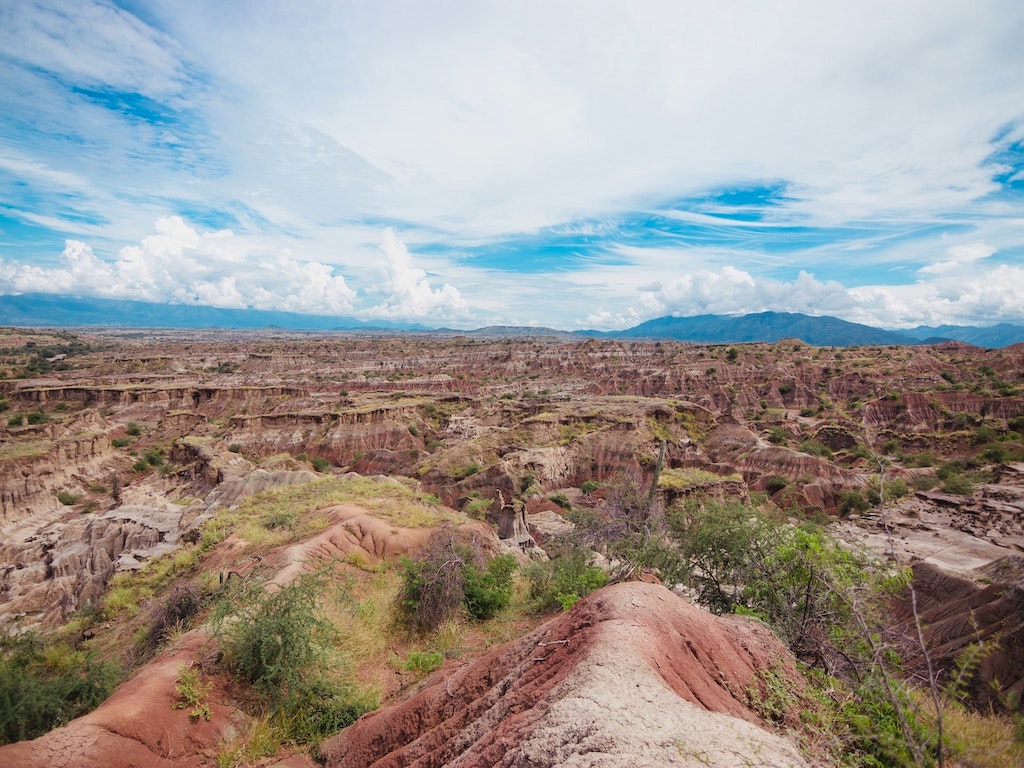
The Tatacoa Desert (desierto de la Tatacoa) in the department of Huila is one of the two deserts of Colombia. The other desert is located in La Guajira on the north coast.  Technically, Tatacoa is not a desert, but a dry tropical forest, where wind and rain have created bizarre shapes in the soil. The result of this are the spectacular rock formations: one of the most “instagrammable” locations in South Colombia!

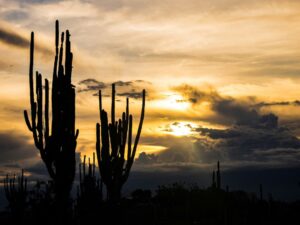
Especially during sunrise or sunset, the view is beautiful, when the colors are even more impressive.

The nearest major city is Neiva, 350 kilometers south of Bogotá, a city of some 365,000 people. Travelers who tour Colombia often combine a visit to the Tatacoa desert with a stay in Salento in the coffee triangle, Cali, San Agustín and Popayán (See roundtrip no. 7 of these travel routes.)

In this travel guide you will find more information about the two sections of the Tatacoa Desert, the trails, how to get there and our tips for the best places to sleep in and around Tatacoa.

The red and gray desert

.The Tatacoa desert is 330 km large and there are two sections: the red desert (El Cuzco) and the gray desert (Los Hoyos). In both sections you can hike on a trail with or without a guide. The trails are well marked, but if you want to learn more about Tatacoa’s ecosystem, a hike with a local guide is recommended.

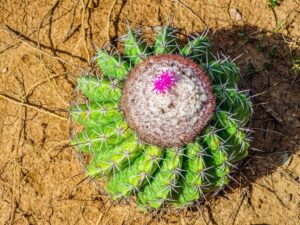
On hikes you can see cacti, birds, curious goats and sometimes even snakes. This is also where the name comes from, as Tatacoa means rattlesnake! For transportation between the red and gray deserts, you can take a tuktuk. If you don’t mind cycling in tropical temperatures, there are also bicycles for rent.

The red desert (El Cuzco)

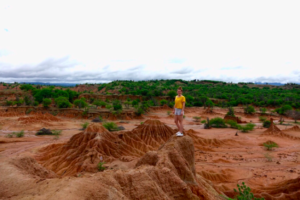
Red Desert is the most popular, due to its central location close to hotels and hostels. The hiking trail starts right near the observatory. The hike takes about 1.5 hours and is mostly over flat terrain. At the viewpoints Mirador Laberinto and Mirador el Cuzco you can enjoy the surreal landscape.

The gray desert (los Hoyos)

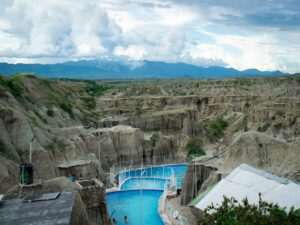
8 kilometers away, about 20 minutes away by tuk-tuk, you can find the -less visited- Gray Desert. The landscape of this desert is often compared to a lunar landscape. The grey desert may seem less iconic than that of the Red Desert, yet it is worth a visit as well. The trail begins at Estadero Los Hoyos and ends at the Piscina Mineral, an artificial pool.

Stargazing
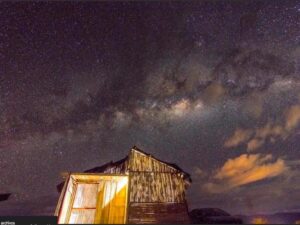
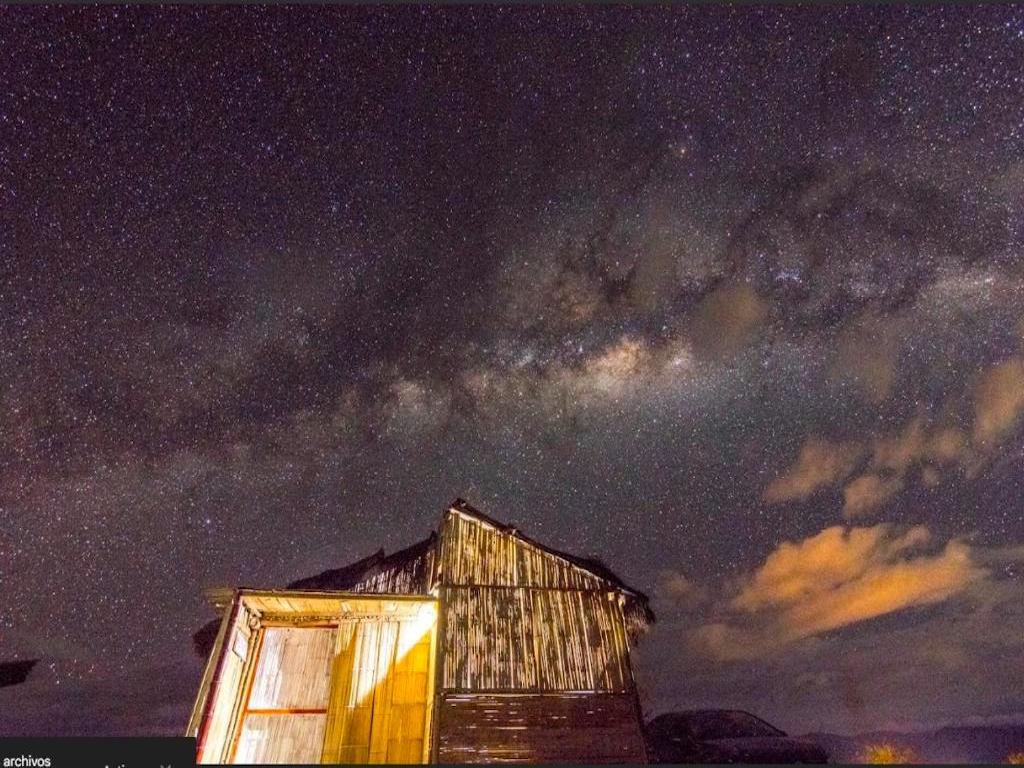
A must in the Tatacoa Desert is stargazing at the observatory. The night sky in Tatacoa is extra bright. Thanks to its remote location and few lights, there is hardly any light pollution, making Tatacoa the perfect place for stargazing. At night, you can also join a guided tour and use the observatory’s telescopes. You have to be a little lucky, though, because if it’s cloudy, the tour won’t take place.

Photo: biohotel tatacoa qji

How to plan your trip to the Tatacoa Desert?

How to get there

How do you get to the Tatacoa Desert?

If you go to the Tatacoa Desert, you must travel through Neiva. In Neiva, you then take a truck from Coomotor to Villavieja (approx. 1 hour), this is the last village before the Tatacoa desert. You can choose to spend the night in a hotel or hostel in Villavieja, or take a tuk tuk  (15 min) to the Tatacoa Desert.

How to get to Neiva?

By Plane
The most comfortable way is to fly from Bogotá (Latam airlines and Avianca (1h), from $75. From Cali, Pereira, Medellín and Cartagena there are flights with stopover (Avianca, Easy Fly (4-5h) and there is a flight with stopover from Santa Marta (6h)

By bus, from:

  • Bogotá: Salitre station. (6u): Coomotor, Taxis verdes, Cootranshuila from $15.
  • Cali (9h): Cootranshuila, Bolivariano, Coomotor, Palmira, from $20.
  • Salento: for this you must first go to Armenia. A ticket costs $2 and the ride takes 50 min. After this you take the bus to Neiva ( 7u). Tickets from Coomotor start at $19.

With an organized tour
If you want to go to the Tatacoa Desert from Bogotá or Neiva, you can also join an organized tour. Here you will find options for a tour from Bogotá and a tour with a local from Neiva

Climate and best time to travel

You can visit the Tatacoa Desert year-round, but keep in mind that it is one of the hottest places in Colombia. It is hot and dry and the temperature can reach 35-40 degrees Celcius. The sun is very bright, which is why it is recommended to do the hikes early in the morning or before sunset. June and July have the highest temperatures. April/May and October/November have the highest rainfall.

Where to stay in the Tatacoa Desert?

#ColombiaMyWay tips

Tip #1
If you’re going to visit Tatacoa, we recommend staying 2-3 nights so you can do both trails and chill out at the hotel with pool in the heat of the day.
In Villavieja you will find the largest choice of hotels and hostels. Some more luxurious accommodations can also be found here.

Tip #2
You can also spend a night in the desert itself. The advantage is that you can then start your hike extra early to avoid the greatest heat. Also, you can then join a tour at the observatory in the evening and stargaze through the observatory’s telescopes (if it is not cloudy). Accommodations are usually basic and you should note that electricity and wifi are limited in the desert. Making a reservation over the internet usually does not work, but if you go without a reservation, there is usually still room (if you go outside the busy Colombian holidays).

Tip #3
Two hostels in the Red Desert are
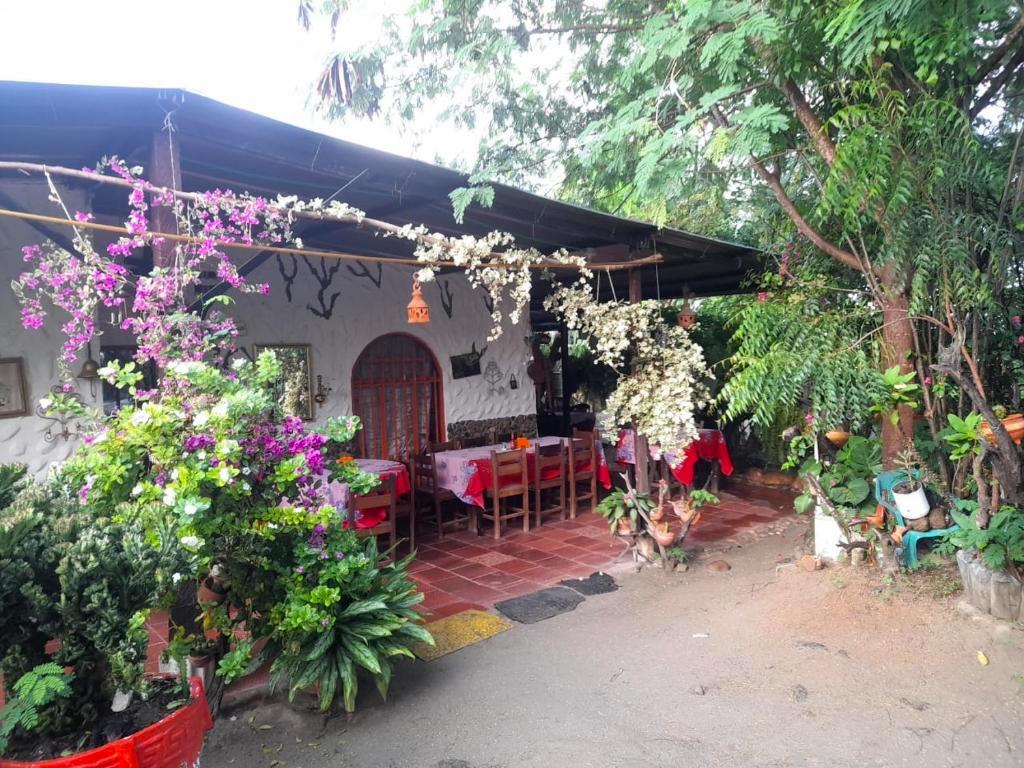
hostal noches de Saturno 400 meters from observatório astronomico in red desert. There are rooms and camping and the hostal has a pool and restaurant. Estadero Doña Lilla is located next to the observatory, where you can sleep in a tent, hammock or hut.


$ price range up to $50

$$ price range $50 – $75

$$$ price range above $75

Villavieja

Neiva

Practical info A-Z

Here you can check practical information for a trip to the Tatacoa Desert. Can you find ATM’s to withdraw money? What about internet? What should I bring? Here you will find all of this information and useful tips for your stay in the Tatacoa Desert.

Cash withdrawals

Not all ATMs work in Villavieja, so play on safe and withdraw money in Bogotá or Neiva.

Packing List
  • Anti mosquito spray
  • Sunscreen
  • Bring plenty of water and snacks because there is not much to buy in Tatacoa.Villavieja is the last stop before Tatacoa for shopping
  • Cap or hat
  • Warm sweater, as it cools off considerably in the evening
  • Flashlight
  • Closed shoes
  • Powerbank
  • Charged phone with Mapps me app for hiking trails
  • Cash
Safety

Tatacoa is considered safe. The locals are friendly and want to please the tourists. Do keep in mind that the electricity is limited in the desert and bring a flashlight.

Wifi and phone

Electricity and wifi are limited in the desert. Phone coverage is also limited. In general, provider Claro has the best coverage in Colombia.

Pasto

Home 9 Category: Cali & SW Colombia ( Page 2 )

Pasto: capital of the the Nariño department

Pasto, with full name San Juan de Pasto, is the capital of the department of Nariño, in southern Colombia. The city is located on 2500 meters -in a valley- at the foot of the Galeras volcano. Due to its location about an 8 hour drive from Quito in Ecuador, a visit to Pasto is often combined with a  trip to Ecuador or Popayán (6 hours by bus).

One of Colombia’s oldest cities
The city with some 400,000 inhabitants was founded in 1537. This makes it one of the oldest cities in Colombia.
There are a number of beautiful churches to admire, the most beautiful of which lies outside the city; the Santuario de las Lajas cathedral.

Spectacular nature and diverse culture
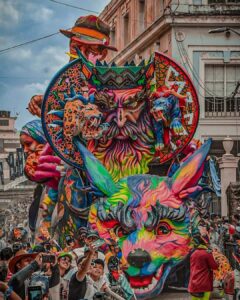
Because of its location in the Andes Mountains, there is much to enjoy in the area around Pasto. There are beautiful lakes, you can hike and there are indigenous villages with their very own culture. The symbol of Pasto’s diverse culture is the annual “Carnaval de Blancos y Negros.” The locals paint their faces black and white and walk through the streets as a symbol of the unity between the different ethnic groups and cultures.

#ColombiaMyWay tips

What can you do in Pasto?

Tip # 1
Celebrate the Carnival de Blancos y Negros
The famous carnival of Pasto, is held annually from Jan. 2-7. It is an event filled with folklore and music, of which the locals are very proud. On this facebook page you will find lots of info about the carnival and pre-carnival events.

Tip # 2
Visit the Santuario de las Lajas cathedral
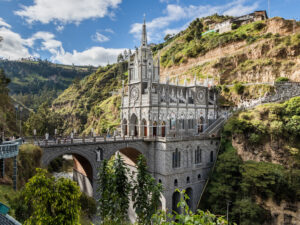
A must-see if you are in Pasto! This Catholic church in the middle of the mountains, -near the border town of Ipiales-, is also called Colombia’s most beautiful church.

The Gothic-style church is 100 meters long and could be straight out of a movie! Not only is the church beautiful, but the surrounding area is stunning, with a waterfall and a fast-flowing river. At night, the church is beautifully illuminated, and at Christmas the lighting is especially spectacular. The original Iglesia de las Lajas was built in 1764; the current church was built between 1916 and 1949. Ipiales can be reached with a 2-hour bus ride from Pasto, after which you catch a colectivo or cab to Santuario de las Lajas. There is also a cable car.

Tip #3
Visit the “Venice” of Colombia.
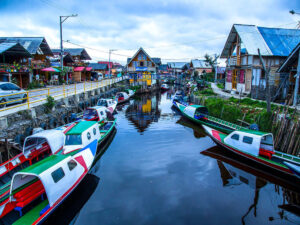
In El Encano / Laguna de la Cocha you will find numerous small bridges and colorful houses. You can rent a boat, sail to Isla Corata and then have some food in one of the restaurants that offer local specialties such as trout. On weekends it is a very popular place with locals. You can take a colectivo in Pasto that will take you directly to the Laguna de la Cocha.

Tip # 4
Hike at Laguna Verde
About a two-hour drive from Pasto is the green lake of Azufral volcano, one of Colombia’s natural wonders. You can hike to the top of the mountain, where you can see the green lake and a small volcano. The hike can be tough due to the altitude (4000 meters). You reach Laguna Verde by taking the bus to the town of Túquerres and from there take a cab or van to the start of the trail.

Tip #5
Taste the local cuisine
With its location close to Ecuador, it is not surprising that the food in Pasto is influenced by neighboring Ecuador. One of the specialties is Cuy, guinea pig. The guinea pig is fried, roasted or stewed and eaten with spicy potatoes and vegetables.


Where to stay in Pasto?

Check out our tips for the best places to stay in Pasto:

$

Casa hospedaje la Bohemia
Hotel San Blass Boutique

$$

Hotel Plaza Carnival
Hotel Home

$$$


Hotel Fernando Plaza
Loft Hotel Cuellars

Click on the links for example itineraries in southern Colombia and information about Cali, Popayán, the coffee region and other destinations in Colombia.

Update August 23, 2025
Presidential elections are scheduled in Colombia for May 2026. As a result, the risk of unrest or attacks is increasing throughout the country. Especially the southwest of Colombia (around Cali, Popayan and Pasto) is experiencing unrest at the moment. For example, there was an attack on a military base outside Cali. Although tourists are not the target of attacks, there is still a risk of collateral damage.

Therefore, follow the advice below:

  • Always listen to the advice of local authorities and remain alert throughout Colombia.
  • Be extra cautious near police stations and military buildings.
  • Avoid demonstrations and places where large numbers of people gather.

Popayán

Home 9 Category: Cali & SW Colombia ( Page 2 )

White city in southern Colombia

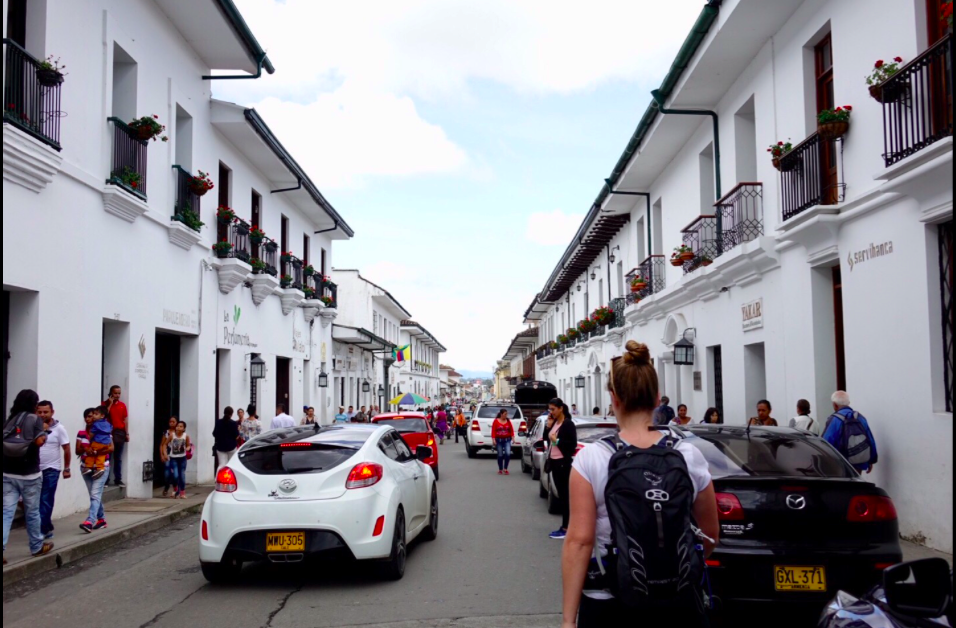
Popayán is a colonial city in southwestern Colombia, (a 4-hour drive from Cali) often visited by travelers passing through from Colombia to Ecuador. The capital of the Cauca region was founded in 1537 and is also called the white city, where it is pleasant to walk around the old city center with its many colonial buildings and churches.

Starting point for trips in the area
A visit to Popayán is well combined with a hike in Puracé Natural Park, the archaeological sites of San Agustín and Tierradentro, Pasto and the Tatacoa Desert. Update March 2024: Due to increasing volcanic activity, the Puracé volcano is currently closed.

Culinary and religious destination
Popayán is known as a culinary destination. In 2008, Popayán was even recognized by UNESCO as a gastronomic capital. Also, Popayán is one of Colombia’s most important religious centers, known for Colombia’s largest celebration of Semana Santa (Easter week).

Read on for our tips on what to do in Popayán.

#ToColombia tips

What is there to do in Popayán?

Tip #1
Take a free city tour of the historic city center
Learn all about Popayán’s history on a city tour with GetupandgoColombia. The same organization also offers a free “trekking” tour on Sundays. Tours are based on gratuity, minimum COP20,000/€5 per person.

Tip #2
Taste the local specialties of Popayán
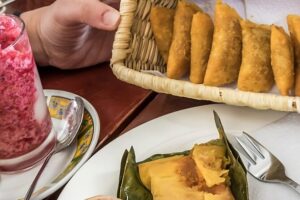
Popayán has its “own” empanada, the Empanada de Pipián: An empanada with a puree of potatoes, spices and peanuts. It comes with a spicy peanut sauce, which makes this empanada unique in Colombia. With a gastronomic walk you will get an insight into the gastronomic culture and the annual gastronomic congress that attracts more than 30,000 visitors.

Tip #3
Visit the market in Sivia
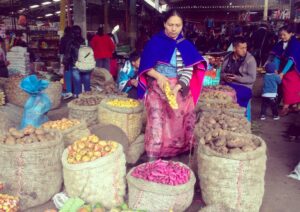
If you want to visit an authentic -not touristy- market, the market in mountain village Silvia is a must. Every Tuesday morning here you can see the Guambiano men and women with their colorful, traditional clothing. They come to the market in chivas (colorfully painted buses) to trade their goods. Some 20,000 Guambiano Indians live in Colombia and most live in the Silvia area. Grab an early morning bus from Popayán to Silvia, as the market only lasts until noon. If you prefer to go on an organized tour, you can take a trip to Silvia with Popayán tours. It is far for a day trip, but you can also visit Silvia -combined with Popayán- with a tour from Cali.

Tip #4
Take a mountain bike tour
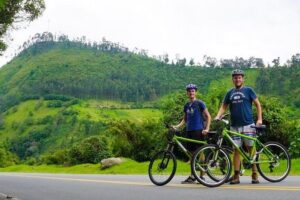
There is a cool mountain bike tour from the mountain village of Coconuco at an altitude of over 2,500 meters. This is where you will be taken, and after visiting the thermal baths, you can start the mountain bike trip downhill (30km).

Tip #5
Take a Spanish course
There are many students in Popayán and several language schools offer Spanish lessons. With Popayán tours you can not only study Spanish but also take fun excursions in the area.

Tip#6
Visit the archaeological sites of San Agustin and/or Tierradentro
A UNESCO World Heritage Site, San Agustin is one of Colombia’s most important archaeological sites. There are over 500 statues from the Precolumbian civilization, all the more reason why San Agustin attracts visitors from all over the world.

Tierradentro is an archaeological site of nearly 20,000 square meters with statues and tombs from the pre-Columbian civilization.

#ColombiaMyWay tips

Check our top 3 tips for where to stay in Popayán:

$
El Caracol
Affordable accommodation in a small hotel with cozy cafe

$$
Hotel la Plazuela
Hotel in a historic building, 100 meters from Caldas square

$$$
Hotel Dann Monasterio
Stay overnight in a renovated monastery from 1570.

Check out our tips for itineraries in southern Colombia and information about Cali, Pasto, San Agustín, the coffee region and other destinations in Colombia.

Update August 23, 2025
Presidential elections are scheduled in Colombia for May 2026. As a result, the risk of unrest or attacks is increasing throughout the country. Especially the southwest of Colombia (around Cali, Popayan and Pasto) is experiencing unrest at the moment. For example, there was an attack on a military base outside Cali. Although tourists are not the target of attacks, there is still a risk of collateral damage.

Therefore, follow the advice below:

  • Always listen to the advice of local authorities and remain alert throughout Colombia.
  • Be extra cautious near police stations and military buildings.
  • Avoid demonstrations and places where large numbers of people gather.

Mocoa

Mocoa

Home 9 Category: Cali & SW Colombia ( Page 2 )

Mocoa: paradise for nature lovers

Mocoa is the capital of the department of Putumayo, in southwestern Colombia, an area bordering Peru and Ecuador. It is a -yet undiscovered- paradise for nature lovers, who can hike to the many waterfalls in the area. The town has 30.000 inhabitants.

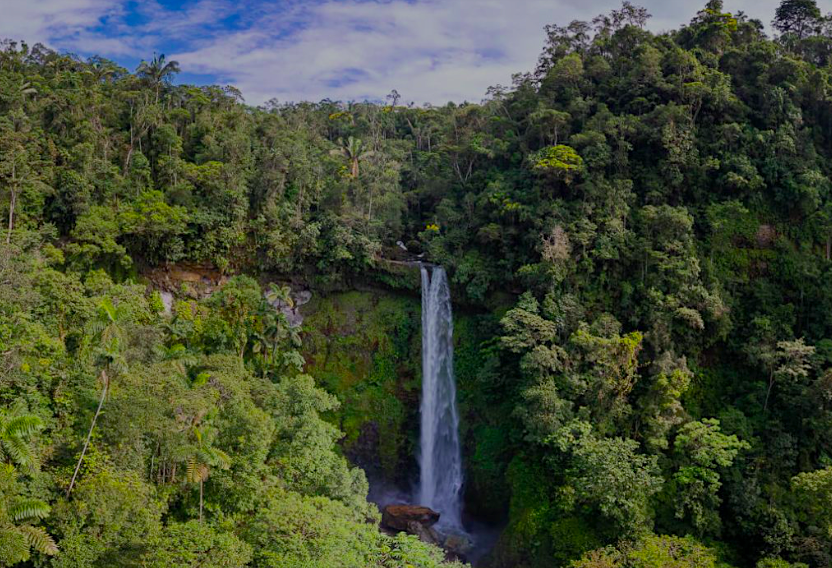
Mocoa is known for its waterfalls and the most famous waterfall is 75-meter-high Fin del Mundo. This waterfall is located in a nature reserve with even more waterfalls and natural pools. Backpackers en route from Colombia to Ecuador often make a stop in the town and stay in one of the hostels or hotels in Mocoa. As this area is often skipped during a trip through Colombia. It is a real “off the beaten track” destination.

Behind the beautiful scenery lies a tragic history. In 2017, a landslide killed more than 250 people after it rained for days and mudslides inundated the town.

Check here information about other destinations in the southern Colombia, such as Popayán, Pasto, Cali and destinations in the Amazon.

Here you will find general information about traveling to Colombia.