Los Llanos Orientales Colombia

Summary

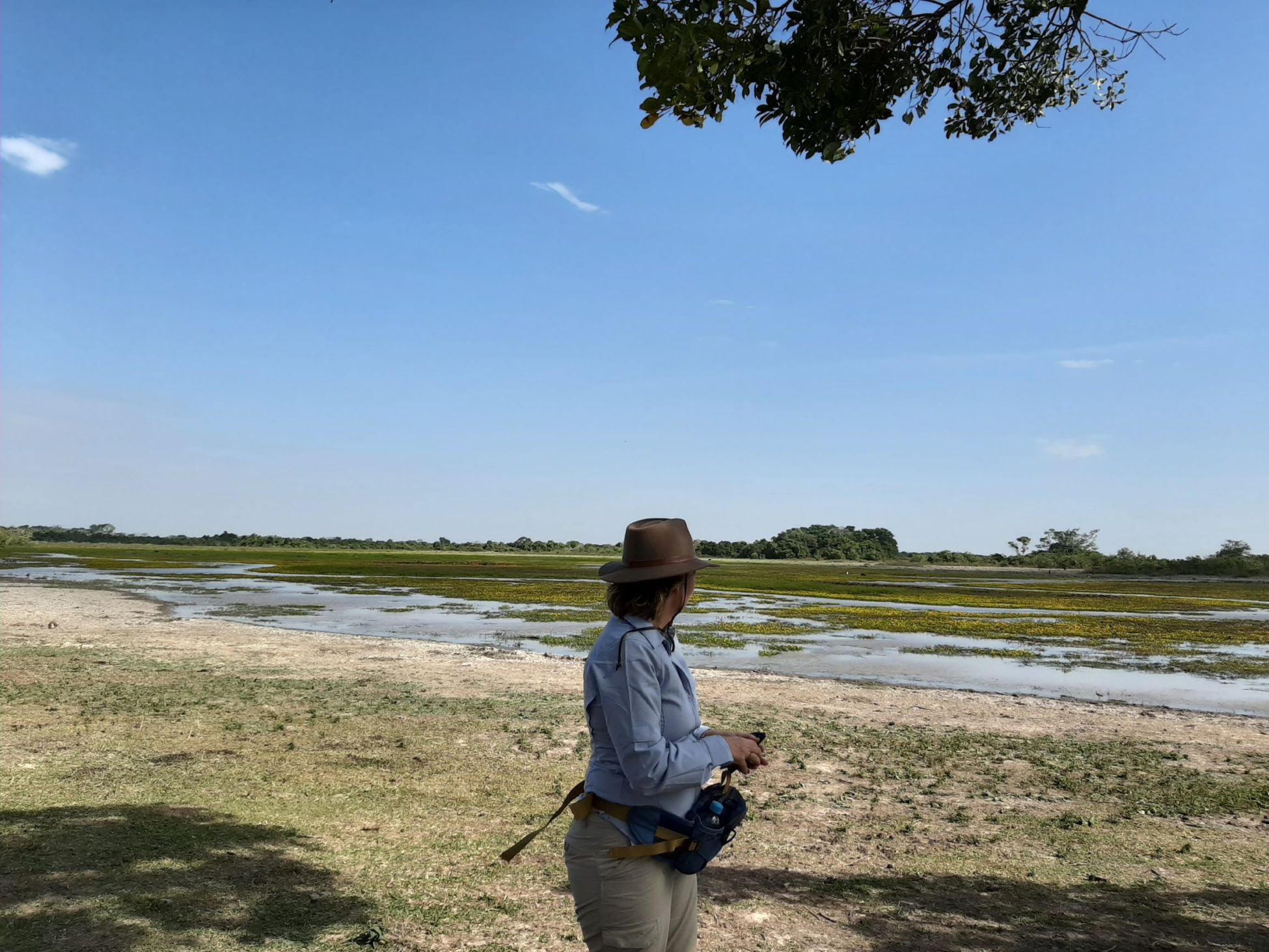
Los Llanos Orientales (the lowlands) cover a large, vast area in eastern Colombia with endless savannahs, forests and agricultural land. The “Llanos” border Venezuela to the east and north and the Amazon to the south. The departments that belong to the Llanos are Casanare, Meta, Arauca, Vichada and part of Guaviare, which lies in a transitional area between the Llanos and the Amazon. It is a region of great biodiversity and a paradise for nature lovers. For a long time, it was not possible to travel to the Llanos due to safety concerns. As a result, this part of Colombia is usually left out of travel guides. Apart from certain areas with security risks, mainly around the border with Venezuela,  you can travel to the Llanos without any danger. It is a remote destination in Colombia that will surprise you with its extraordinary nature and culture.

Highlights

  • Spend the night on a hato (ranch) and get to know the typical music, dance and food culture of the Llaneros, the Colombian “cowboys”.
  • Enjoy a Colombian safari in a magnificient, unspoiled nature reserve
  • Go horseback riding with a “llanero”
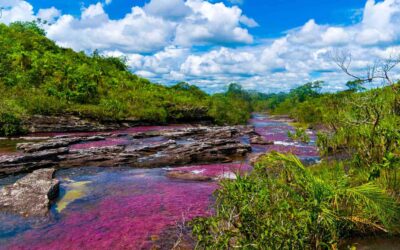
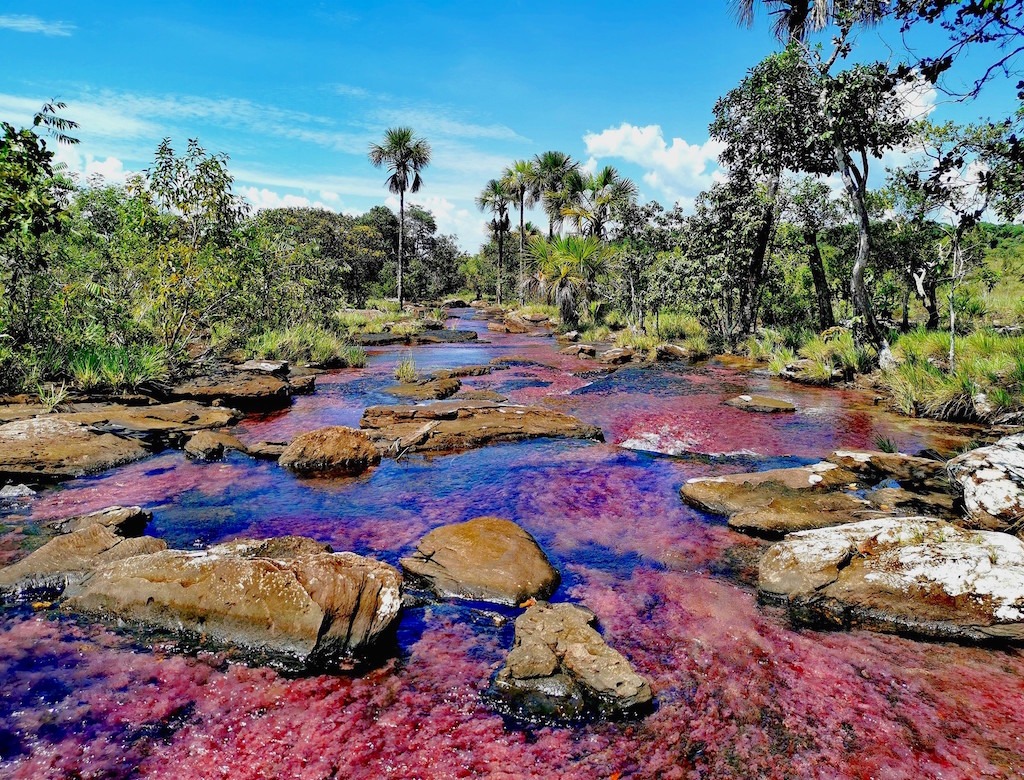
  • Hike to the pink river Caño Cristales
  • Watch wildlife during a river cruise
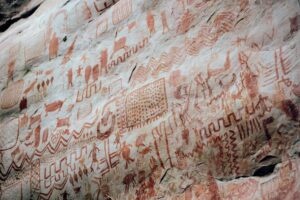
  • Hike to recently discovered Indian drawings near San José del Guaviare
  • Pink dolphin watching in Damas del Nare and Orocué

Related articles about Los Llanos
Los Llanos Orientales Colombia

Los Llanos Orientales Colombia

SummaryLos Llanos Orientales (the lowlands) cover a large, vast area in eastern Colombia with endless savannahs, forests and agricultural land. The “Llanos” border Venezuela to the east and north and the Amazon to the south. The departments that belong to the Llanos...

read more
San José del Guaviare

San José del Guaviare

Emerging eco-travel destination on the edge of the Amazon basinSan José del Guaviare is the capital of the department of Guaviare and has 66,000...
read more
Colombian safari in Casanare

Colombian safari in Casanare

Nature reserves and llanero culture The department of Casanare is known for the great diversity of birds and wildlife and the typical Llanero...

read more
My trip to the Llanos

My trip to the Llanos

My trip to the Llanos Orientales, began with a car ride from Yopal in the region of Casanare, to Hato la Aurora Nature Reserve. I was told, that this would be a drive of about 5 hours through vast plains, to the lodge, that was located literally in "the middle of...
read more
horseback riding – Llanera for a day

horseback riding – Llanera for a day

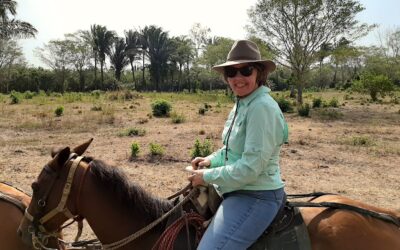
The ride with my horse Fatima, was nice and relaxed. We rode along the river, across the dry plains and through the forest. Quite unexpectedly, we saw an armadillo in the bushes. Like the giant anteater, this is a nocturnal animal, so we were lucky! Today I went...
read more
Boat ride in the Llanos

Boat ride in the Llanos

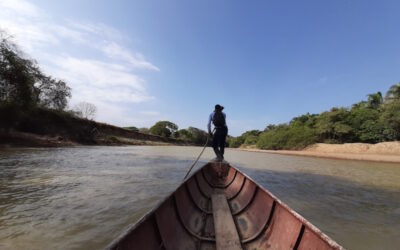
On a boat trip in the Llanos, you can spot caimans, capybaras and turtles. Another highlight of a boat trip is fishing for piraña's!We were walking by the river, when Jeremiah said very quietly; "look next to you." A few feet away there was a caiman in the water. We...
read more
On Colombian safari: Hato La Aurora, Casanare

On Colombian safari: Hato La Aurora, Casanare

A wildlife safari in Colombia's lowlands At another spot we saw an anaconda about 5 meters long. The anaconda was easy to spot for guide Giovanny because the water was low. The animal was laying quietly in a corner...I didn't think I would ever be able to spot an...
read more
Colombian hospitality in Yopal, Colombia

Colombian hospitality in Yopal, Colombia

The taxi ride I wanted to do in the afternoon turned out to be an extended sightseeing trip. Intern Alejandro from the hotel, suggested to go with me and he had already arranged a taxi. I was a little overwhelmed by this well-meant "arrangement," but I decided to...
read more

San José del Guaviare

Home 9 Category: Travel Guide Los Llanos Orientales

Emerging eco-travel destination on the edge of the Amazon basin

San José del Guaviare is the capital of the department of Guaviare and has 66,000 inhabitants. The city is located at the northern end of the Colombian Amazon region, just over an hour’s flight from Bogotá.

The still unknown San José del Guaviare is most likely not a destination on your Colombia bucket list, but do you like a destination off the beaten track where you can hike in a special and still largely untouched natural environment? Then this destination should definitely be on your bucket list!

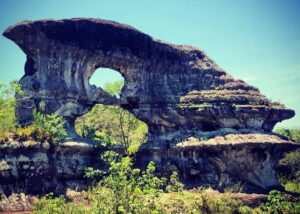
Given its location in the transition area from the Llanos to the Amazon, there is a varied landscape with spectacular rock formations and natural whirlpools. The wildlife is equally diverse. These include many species of birds, monkeys, pink river dolphins, anteaters and caimans.

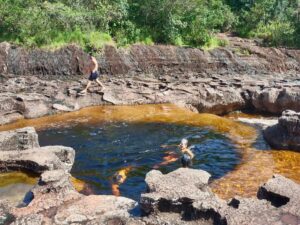
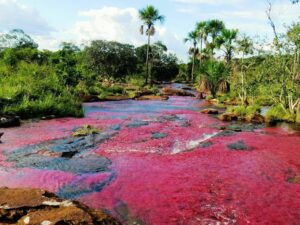
In Tranquilandia you will find this pink river, the lesser-known “sister” of the Caño Cristales, the pink river in the Meta region.

The well-preserved Indian drawings in Nuevo Tolima and Cerro Azul, which were placed under protection in 2018, are also special. But these are not the only reasons why San Jose del Guaviare is so special.

Region of change
The Guaviare region is also known as the region of change: Not so long ago, this area was inaccessible to travellers because of the “conflict”, but since the peace agreement, ecotourism has slowly taken off. Tour operators are working with local indigenous communities and families who used to work in the coca industry now tell travellers their stories of how tourism has completely changed their lives. As the income from tourism goes to the locals, you know that your money is well spent.

Another advantage of a trip to San Jose del Guaviare: Since tourism is still new, you’ll be one of the few tourists! A trip to San Jose del Guaviare will therefore inspire you and give you an insight into the history of the country and its people, who prefer to look forwards rather than backwards.

How do you plan a trip to San Jose del Guaviare? This travel guide will tell you everything you need to know to plan a trip to this beautiful part of Colombia.

Photos: Geotours

# ColombiaMyWay Tips

How do you plan your trip to San José el Guaviare?

#1 Check the best time to travel
The rainy season from June to November is the best time to visit. During the dry season, the rivers and natural “whirlpools” are dry and these are the special attractions in this area

#2 Check the current situation
The capital San José del Guaviare and the tourist attractions in the area are considered safe, but it is good to keep an eye on the current situation and to check the travel advice of your government. Most of all: check the current situation with the locals who are on site, such as local tour operators. You need a guide and jeep to see the attractions, don’t try this yourself.

#3 Book your flight
You can reach San José del Guaviare with a 1.15h direct flight from Bogotá with Satena or EasyFly. There is also a bus from Bogotá and Villavicencio, but this is currently not recommended due to safety concerns (as of July 2025).

#4 Book your excursions
San José del Guaviare is not a destination that you can visit on your own. The sights are located deep inland, where you can only get to with an off-road vehicle or boat and a local guide.

Option 1: Book a package deal with a tour operator
The easiest way to make the trip. Accommodation, transportation and excursions are included. If you do a group trip (in small groups), it can be much cheaper than if you have to organise everything yourself or as a couple. The costs for transportation, guide, entrance fee and possibly boat can add up.

Geotours is one of the pioneers in eco toursim in Guaviare. They work very closely with indigenous communities and former coca farmers who have now opened up their fincas to tourism. So you know your money is well spent when you book a tour with them. Moreover, their tours are consistently rated 5 stars, making them a great choice for your trip to Guaviare. Popular tours include the Cerro Azul day tour which includes a hike to the famous Indian drawings and the 3 days/2 nights -all inclusive- tour which includes a visit to the pink river at Tranquilandia and a hike to the bizarre rock formations at Puerto Orion.

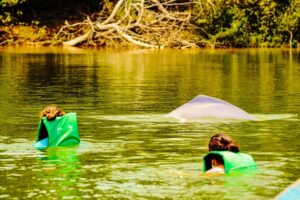
The highlight of this multi-day tour is a boat trip to Laguna del Nare, where you can watch dolphins in the wild and even swim among them.

Option 2: Arrange tours on site
This is a little more adventurous (especially if you don’t speak Spanish). Arranging tours locally can be a challenge. There is usually a minimum number of participants required for a tour.

#5 Check out our tips for hotels in San José del Guaviare 
San José del Guaviare is a small town and there is a limited choice of hotels. However, there are a few comfortable hotels and guesthouses. Here are our tips:

Price range between $50-$75

  • Hotel Quinto Nivel
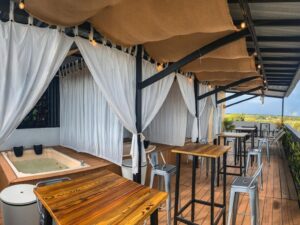
    The special thing about this hotel are the two whirlpools on the roof terrace with a beautiful view

Price range under $50

    Check here for more Hotels in San José del Guaviare.

    Colombian safari in Casanare

    Home 9 Category: Travel Guide Los Llanos Orientales

    Nature reserves and llanero culture

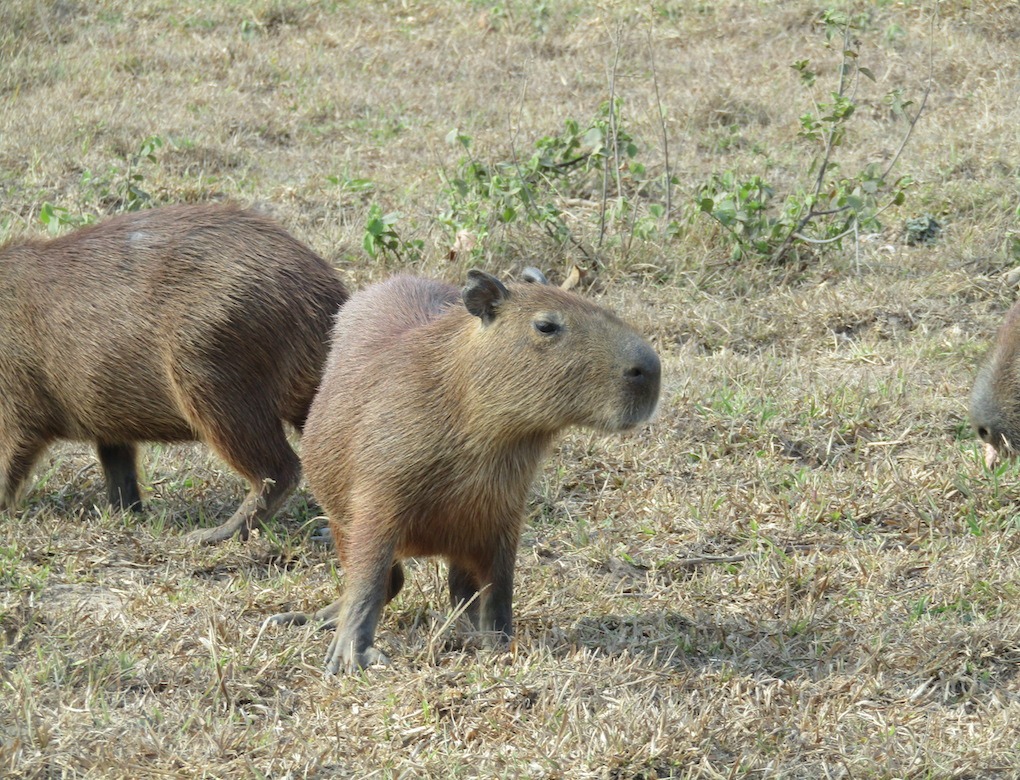
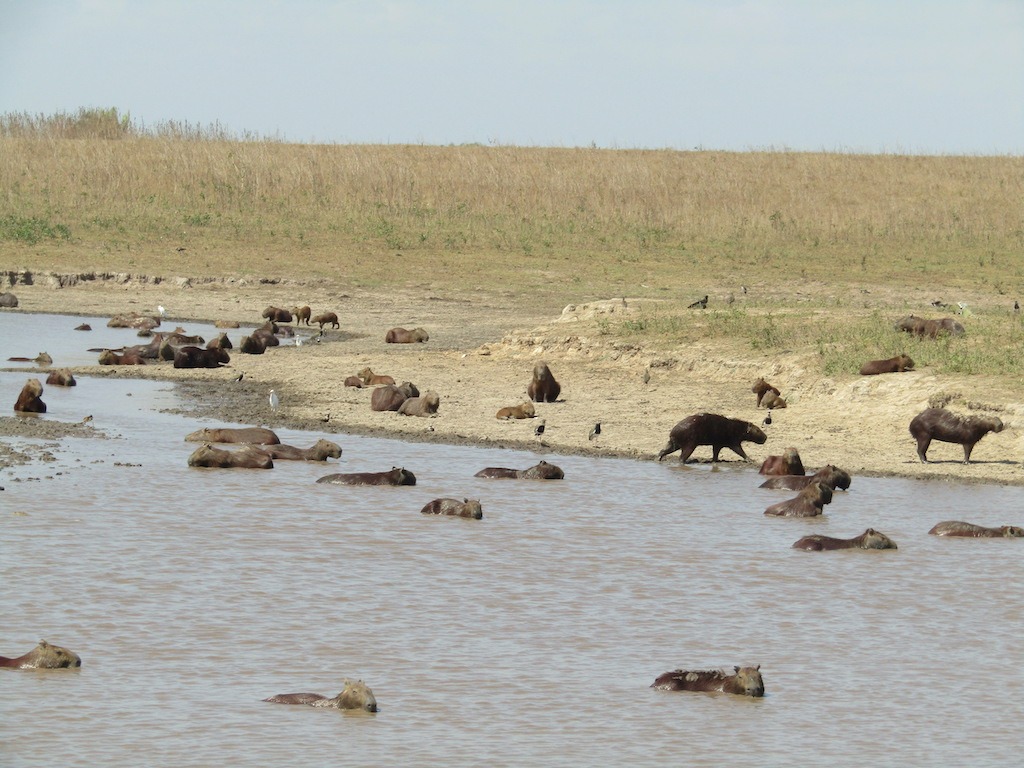
    The department of Casanare is known for the great diversity of birds and wildlife and the typical Llanero culture. On various hato’s (ranches) in the private nature reserves, you can experience the life of the Llaneros, the colombian cowboys. You can spot wildlife, do birdwatching and go horseback riding. Some animals that you you can spot include capybaras (the largest rodents in the world), anteaters, armadillos, caimans and howler monkeys.

    How to get there
    Starting point for a trip to any of the ranches, is capital city Yopal, accessible by plane from Bogotá and Medellín and by bus from Bogotá (approx. 6-8 hours). The hato’s that are within a few hours’ drive of Yopal are usually easily accessible by car. If you want to go to one of the ranches deep inland, a private transfer from the airport  is your best and safest option. Public transportation is limited in these remote areas and you can often only get there by all-terrain vehicle (or motorcycle cab).

    Best time to travel to Casanare?
    You can visit Casanare all year round. Each season has its advantages: December through February is the driest period. The animals then gather at the water holes, making them easy to spot. This is also the busiest and hottest period. Bird watchers will also find the rainy season a great time  to visit, as this is when the many waterfowls can be seen. Some roads inland are not accessible in the rainy season.

    Is Casanare safe?
    Casanare is safe to travel, with the exception of the north / border area with Venezuela, but you don’t normally go there if you go to the hato’s. It’s important to check the current situation with a local touroperator or your hotel.

    #ColombiaMyWay tips

    Tip # 1
    Make an off the beaten track trip to Hato la Aurora
    Do you have the time and do you like an off the beaten track adventure? Then book a trip to Hato La Aurora Reserva Natural. Hato la Aurora is located deep in the countryside of Casanare, about a 5-hour drive from Yopal. Curious? We made this trip ourselves and wrote a travel story about our adventure. Read about our own journey here.

    Tip # 2
    Stay at a ranch near Yopal
    Limit your travel time and book a trip at for example El Encanto de Guanapalo, which consists of 3 hato’s in San Luis de Palenque. Travel time from Yopal is about 90 minutes.
    Book the nicest accommodations in Yopal here

    Tip # 3
    Book through a tour operator if you don’t speak Spanish
    English is not spoken at most accommodations, so booking accommodation and transportation can be tricky. Tour operator Wild Llanos in Yopal, is a specialist in travel in Casanare and can communicate with you in English. They will create a “customized trip” for you and can arrange an English-speaking guide for the excursions.


    Caño Cristales: The most beautiful river in the world

    Home 9 Category: Travel Guide Los Llanos Orientales

    The most beautiful river in the world?

    Caño Cristales is also called “the most beautiful river in the world.” Its rivers, rapids and waterfalls stretch for 100 km and are part of the Serranía de la Macarena National Park in the region of Meta. The park is a “meeting point” of the Andes mountains, the Amazon rainforest and the plains of the Llanos. This makes it a perfect place to spot wildlife in the jungle, hike to rock formations and waterfalls, take boat trips and chill in natural pools.

    Here you can read all about the Caño Cristales. Why does the river turn pink, how to get there and tips.

    Why does the river turn pink?
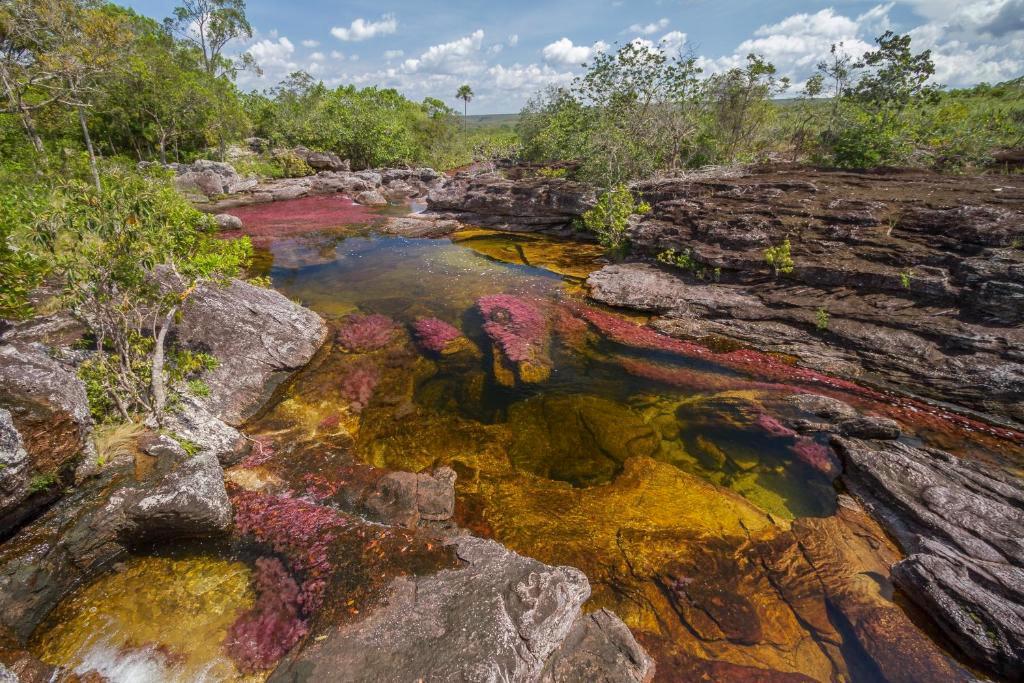
    Half the year, Caño Cristales looks like any other river in Colombia, but between June and November, red, purple, green, blue and yellow colors give the river the nickname “the liquid rainbow,” “the river of 5 colors” or simply the most beautiful river in the world. It is the aquatic plants “Macarenia Clavígera” that give the river its special pink-purple colors. The colors change under the influence of the sun.

    How to get to Caño Cristales?
    Access to Caño Cristales, is only possible from the town of la Macarena, south of Serranía de la Macarena National Park. The town is home to about 32,000 people and has a few hotels and restaurants. You cannot go to Caño Cristales on your own; you can only do so with an official guide approved by the park. Transportation to/in the park is by all-terrain vehicle and boat.

    #ColombiaMyWay Tips

    Tip #1
    Book a package trip
    A trip including flight to la Macarena, lodging and activities, can be booked departing from Bogotá (75 minutes). There are also flights from Medellín, Villavicencio and Cali. Check here the options for a package trip to Caño Cristales.

    Tip #2
    Arrange the flight and hotel yourself
    If you don’t want to book a package tour, there are some hotels that can arrange the trip to Caño Cristales for you.  la Manigua lodge, is one of your best bets to do this. The resort is located on 9 km from Caño Cristales, 20 min. by boat from la Macarena. The location of the beautiful lodge -smack in the middle of nature- is  your home base for making trips to Caño Cristales and other natural attractions in the area. At the lodge itself, you don’t need to get bored. You can fill any free time easily with observing the nature and wildlife from your cabin, but if you would like to be entertained there are also plenty of options: the lodge can arrange activities such as a cacao workshop or a sunset serenade on the water, an experience that you not forget lightly!

    Book other hotels in la Macarena here.

    Tip #3
    Arrange your trip ahead of time
    To protect the ecosystem, a very limited number of visitors are admitted

    Tip #4
    Keep in mind that there are strict rules in the park

    For example, plastic bottles are prohibited and swimming with sunscreen on is not allowed (it is harmful to aquatic plants).

    The history of Serranía de la Macarana National Park
    Caño Cristales was closed to the public and partially destroyed by the guerrillas, paramilitaries and the army between 1989 and 2009. After this, it gradually became safer and tour operators entered the area. Today, protection of the ecosystem of Serranía de la Macarena National Park a very high priority. Caño Cristales is a growing eco-tourism destination and the area is safe to travel with a tour operator.

    Sustainable development
    Cormacarena is the sustainable development institute responsible for protection in the Macarena area. Only about 200 visitors are allowed per day and visitors are assigned to different sections of the park. The local communities are very dedicated to protecting the area and making sure it does not get too crowded. Therefore, visitors must follow strict rules. In 2009, 700 visitors visited the area and that number grew to 16,000 visitors in 2018. Because of the strict measures, the effect on nature of ecotourism is minimal.

    The social and economic impact of ecotourism is immense, as local families and communities organise and lead the trips. In the beginning, 35 families were involved in ecotourism; today there are as many as 650 families. Ecotourism not only raises awareness among the residents of la Macarena. The locals are also enormously proud of their nature and culture. During a cultural evening, they get a chance to share their culture and customs with the travellers.

    Scientific research
    In the province of Meta, 40% of its area is a protected natural area. In addition to Caño Cristales, Laguna de Loma linda, Piscinias del Güejar and Cañon del Güejar are also protected. In 2018, the flora and fauna of the Guayabero, Duda and Losada rivers were studied.

    This research was conducted by Cormacarena in collaboration with the Alexander von Humboldt Institute. These are the results in number of species: 66 microalgae, 114 macroinvertebrates, 245 fish, 38 frogs and toads, 24 lizards, 33 snakes, 7 turtles, 4 crocodiles and 737 birds.


    My trip to the Llanos

    My trip to the Llanos Orientales, began with a car ride from Yopal in the region of Casanare, to Hato la Aurora Nature Reserve. I was told, that this would be a drive of about 5 hours through vast plains, to the lodge, that was located literally in “the middle of nowhere.”

    We got closer to the nature reserve and saw beautiful birds, a caiman and capybaras. According to Nelson, Reserva la Aurora has the largest number of wildlife after the nature reserves in South Africa.

    Upon arrival at the airport in Yopal, driver Alex, Nelson and Jennifer from Juan Solito Ecolodge were already waiting for me. Nelson, owner of the lodge, had been shopping in Yopal and together with him I would drive to the lodge.

    Colombian cowboy hat
    Before the drive of about 5 hours began, I bought some snacks at the airport. I also went with Jennifer to a  store, where I bought an original Llanero Sombrero. While trying on the different hats, I was immediately given a “mini course” on hat use and maintenance. What a fun first experience in the Llanos, the land of the Llaneros and Llaneras!

    Indian cows
    For the first few hours, the ride was on an asphalt road. When we arrived at a bridge outside the city, there was a traffic jam. It turned out that only 1 car at the time was allowed to cross the bridge.

    The landscape was hilly and we saw many grazing “Indian cows,” recognisable by a hump on their backs. After this, the vast -desert-like- plains began. There were also barren stretches of land that had been cut down to -illegally- grow rice, Nelson told us.

    Paz de Ariporo
    After some time, we stopped at a little restaurant in the village of Paz de Ariporo, for a lunch of grilled chicken. The heat in the village was exhausting and it was a relief to get back into the air-conditioned Toyota Hilux.

    Montañas del Totumo
    After an endless dirt road, we approached the village of Montañas
    del Totumo. To my surprise, there was suddenly a stretch of asphalt road, which stopped again as we drove out of the village. Nelson explained that the petroleum company had donated the paved road to the residents of the village.

    After the smooth asphalt, the road turned back into a dirt road with big rocks. After this, the road only got worse and I was shaken up considerably.

    Reserva la Aurora
    Closer to Reserva la Aurora we saw beautiful birds, a caiman and capybaras. According to Nelson, Reserva la Aurora has the largest number of wildlife in the world after the nature reserves in South Africa. This, of course, made my curiosity even bigger!

    Juan Solito ecolodge
    By now the sun was beginning to set and this was a beautiful sight on the endless plains. In the dark, we arrived at Juan Solito ecolodge, where hostess Marysol was waiting for me with a lemonade. Jeremiah showed me my room and in the bathroom I got my first “surprise”: A giant frog was staring at me with his big eyes!

    “You’re in Los Llanos,” I told myself, you’ll see more than a frog in the room!” Still, I asked Jeremiah to catch the frog and bring it outside, and he did so with a smile from ear to ear.

    House deer Pippa
    After the long trip, I enjoyed an ice-cold Poker beer in the restaurant and got my second surprise: “house deer” Pippa looked curiously into the kitchen with her big eyes -:)

    After dinner, Jeremiah came to discuss with me what the rest of the week would look like. We decided that my first activity would be a morning walk with himself.

    Back in my room, the frog was back in “its” spot on the sink. Aaaah!!!


    Written by Jeanette
    Travel date: February 2020
    Updated September 2025

    Check our travel guide Casanare -the Colombian safari- for more info on the Llanos Orientales. Need a hotel in Yopal prior to your trip, check the options here.

    We do not accept direct payments from touroperators or hotels for our reviews and we pay for our own stay and tours. Every recommendation is based solely on our own experiences and honest opinions. However, some of our links are affiliate links, which means we earn a small commission if you book through them. This commission comes at no extra cost to you and helps us maintain our website.

    Jeanette and Shelly

    Writers and Travelers, Colombia My Way

    horseback riding – Llanera for a day

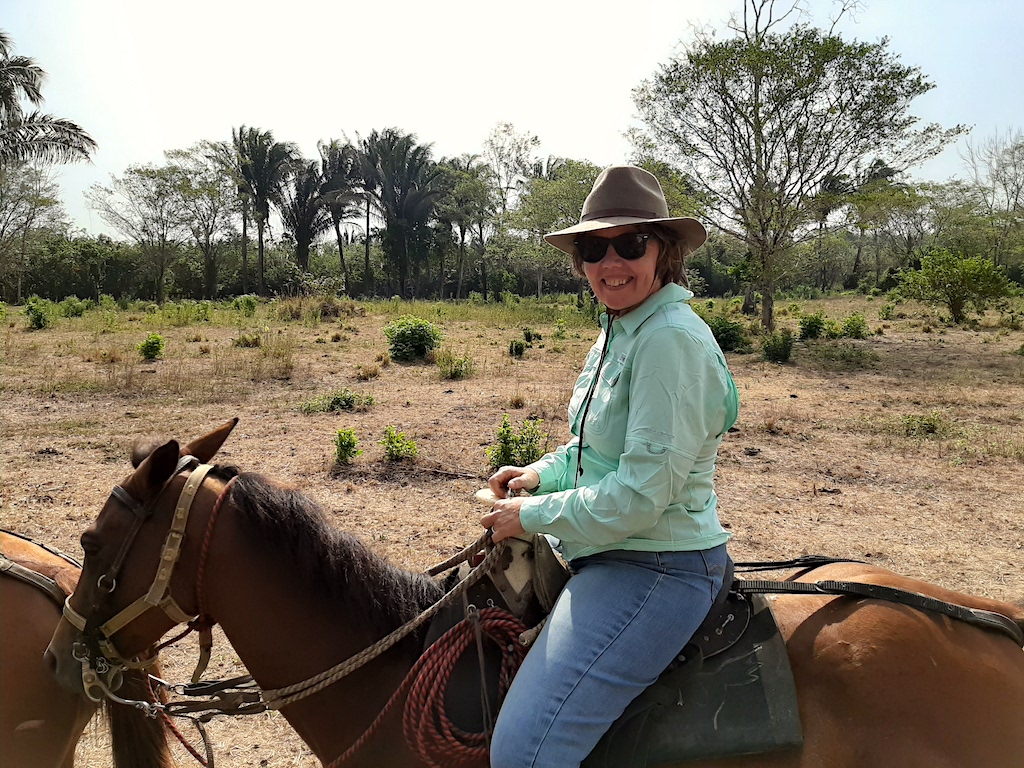
    The ride with my horse Fatima, was nice and relaxed. We rode along the river, across the dry plains and through the forest. Quite unexpectedly, we saw an armadillo in the bushes. Like the giant anteater, this is a nocturnal animal, so we were lucky!

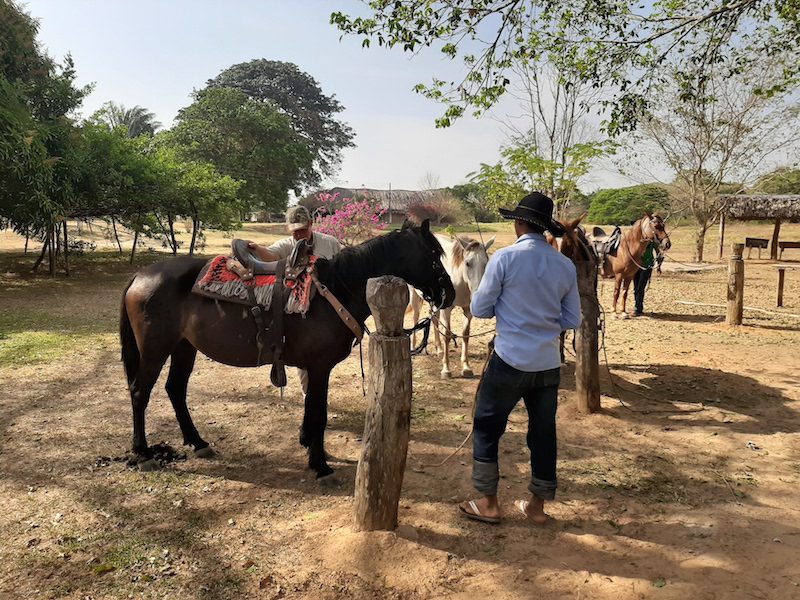
    Today I went horseback riding with Dutch couple Ted and Anneke, their Colombian translator Gabriela and our “cowboys.” The horseback riding started with a slight delay; someone had forgotten to close the gate the night before, so some of the horses had run away. So we had to wait a while until the horses returned -:) After I put myself-not too charmingly-on my horse, the new adventure could begin.

    We chose a short, not too strenuous ride. Gabriela quickly proved to be an experienced rider, but for the rest of us it took some getting used to again. It had been a while since we had ridden.

    Armadillo
    The ride with my horse Fatima, was nice and relaxed. We rode along the river, across the plains and through the forest.

    Quite unexpectedly, we saw an armadillo in the bushes. This is a nocturnal animal, so we were lucky! The armadillo quickly hid again, but we could clearly see the carapace.

    Fatima
    Despite the fact that I had not ridden for a long time, it went very well and I secretly regretted that I had chosen the short ride. I enjoyed riding and admiring the landschape around me. After it was time to say goodbye to Fatima, I promised myself to go for another ride soon.

    Llanero music
    After horseback riding, we were able to stay in the Llanero ambiente for a while. Since Ted, Anneke and Gabriela were going back to Yopal that afternoon, there was a farewell with a demonstration of the música Llanera, the Joropo. In this typical music of the Llanos, the harp places an important role and the songs about life on the Llanos are performed passionately.

    Chico
    Chico was the dancer and singer of the show, but I heard that he would also be a good guide. That came in handy, because I was going to take a walk in the forest with him later that day.

    During the hike, Chico explained to me all kinds of things about the different plants and trees and how the Indigenas used to use them. For example, he showed how spears were made from tree branches and which trees were used for cremes for their faces.

    During the walk, Chico he also told me about his life as a Llanero. I was struck by how humble he was, just like the other Llaneros I met before. At the same time, Chico was full of passion when he talked about working with the horses and about nature on the Llanos.

    Meanwhile, he was removing very small ticks from my pants, which were so small that I hadn’t even seen them myself. In the dry season, ticks are common in certain parts of the forest.

    Howler monkey family
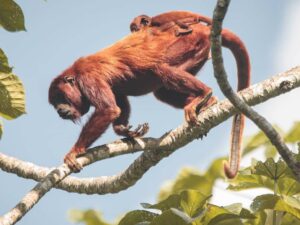
    At one point we heard something in the trees and then Chico pointed to a group of howler monkeys, known in Colombia as monos aulladores. We saw a whole family with mother and little ones. The male was chilling out and stayed in the same spot for a while. We stayed very quiet and could observe him very well. What an extraordinary experience!

    On the way back, we saw a turtle crossing the path of a capybara, but the capybara was not too impressed. After a nice walk, we boarded the boat again, back to the lodge.

    The rest of the evening, the impressions of the day still went through my head and I closed the Llanero’s in my heart forever.

    Written by Jeanette
    Travel date: February 2020.

    For more info, check our travel guide Casanare -the Colombian safari- Hotel needed in Yopal prior to your trip, check here the options.

    We do not accept direct payments from touroperators or hotels for our reviews and we pay for our own stay and tours. Every recommendation is based solely on our own experiences and honest opinions. However, some of our links are affiliate links, which means we earn a small commission if you book through them. This commission comes at no extra cost to you and helps us maintain our website.

    Jeanette and Shelly

    Writers and Travelers, Colombia My Way