All about Santa Marta Colombia: what to do and tips
About Santa Marta
Santa Marta is a convenient base for visiting Tayrona National Park, Minca, Palomino in La Guajira and the trek to Ciudad Perdida. Its location on the north coast is very central between Cartagena and Barranquilla to the west and La Guajira to the east.
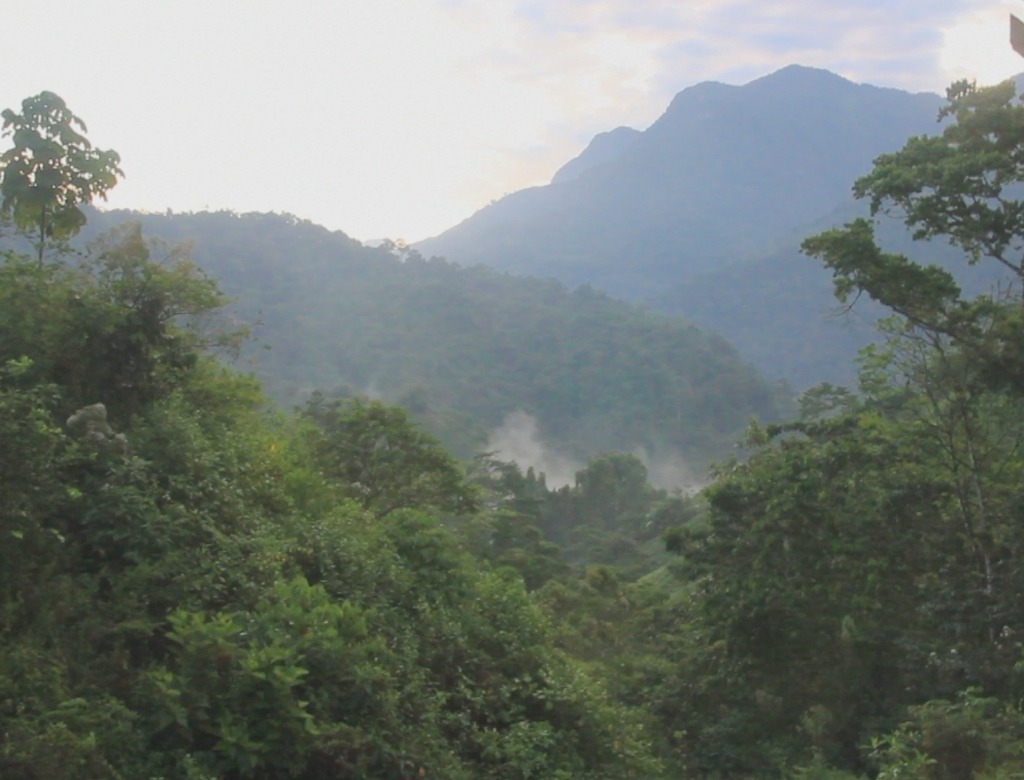
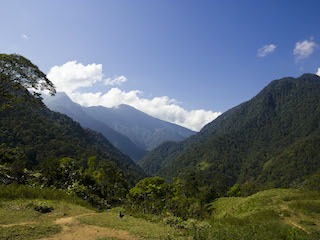
Santa Marta is Colombia’s oldest city, founded in 1525. The city lies at the foot of the Sierra Nevada de Santa Marta, the highest coastal mountain range in the world. This makes for great mountain views from the beach, the sea, or from your hotel. Today Santa Marta is a mix of old -in the centro histórico- and new in El Rodadero, with highrise hotels on the beach.
Santa Marta is a favorite beach destination of Colombians. The city itself has few attractions; the biggest attractions are those outside the city. That’s why most travelers stay only a few nights, heading to their next destination. We had few expectations for our trip to Santa Marta, but were pleasantly surprised. We found Santa Marta to be a great place for a few days.
In this travel guide we share information and tips for fun things to do in and outside Santa Marta, the best neighborhoods to stay in + the best hotels in Santa Marta. You will also find practical information and useful tips for your stay in Colombia’s oldest city.
Our tips
What to do in and outside Santa Marta
What to do in Santa Marta and the surrounding area? From a free tour of the centro histórico to a hike to Tayrona National Park. The best tips for fun things to do and organized tours and activities can be found here.
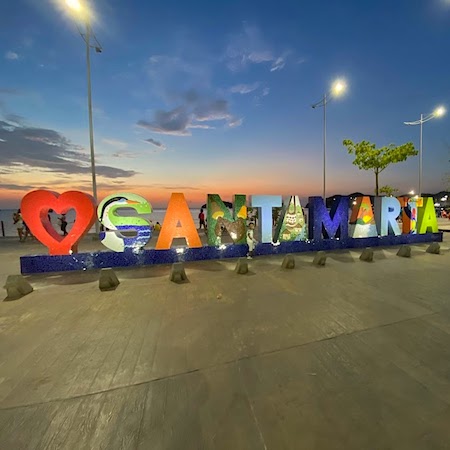
1. Stroll along the Malecón
Especially during sunset, the Malecón (promenade) on Santa Marta Bay is a hot spot. People come here to relax or exercise. There are many places where you can drink and eat something and there are many street vendors selling ice cream, coffee and souvenirs. Near the letters of Santa Marta you will find the most popular spot for a photo shoot.
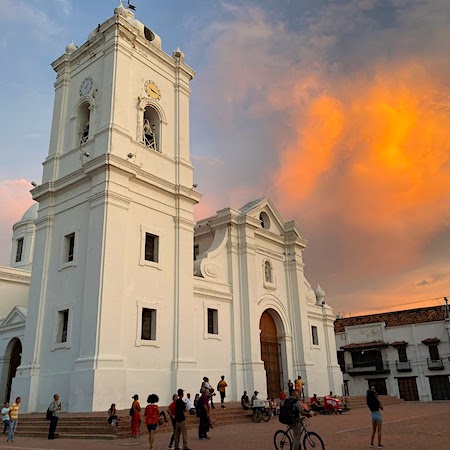
2.Admire colonial architecture
Santa Marta is the oldest city in Colombia and was founded in 1525. As such, in the centro histórico you will see a number of beautiful colonial buildings, including the white cathedral at the Plaza de la Basílica de Santa Marta and the Museo del Oro Tairona, the gold museum. The centro histórico is located between Calle 10 and Calle 22, near Santa Marta Bay. Plaza de Bolívar (also called Santander park) is in the heart of the historic center. A fun way to discover the “old” city is with a free tour, which you can book here. The tour is on a gratuity basis for the guide. Guideline:around $10 per person. Other options for a tour in Santa Marta include a street food tour in the historic center, a bicycle tour and a private tour of Santa Marta

3. Check out the street art
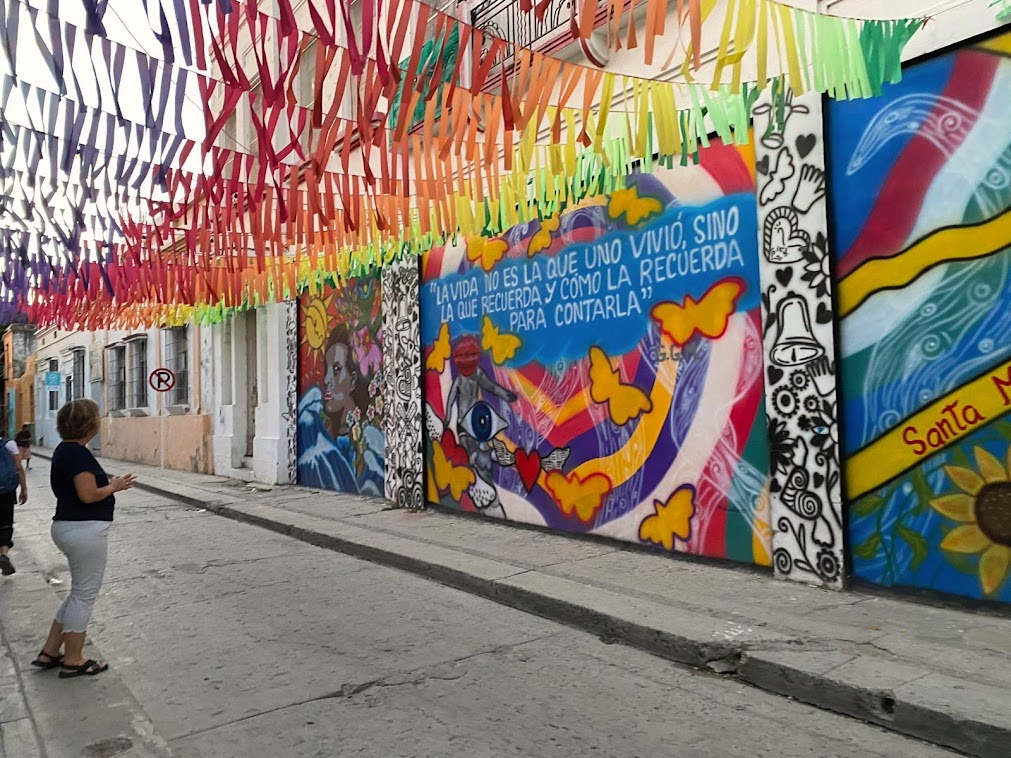
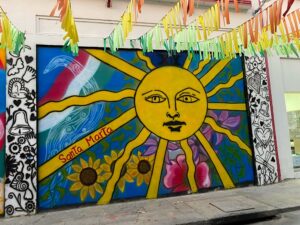
Among the traditional buildings, you’ll also find many colorful murals, including in the alley between Plaza de la Basílica de Santa Marta and the Malecón (Calle 16) and Carrera 3. We thought that it all fits together: colonial buildings and street art: a nice contrast between old and new!
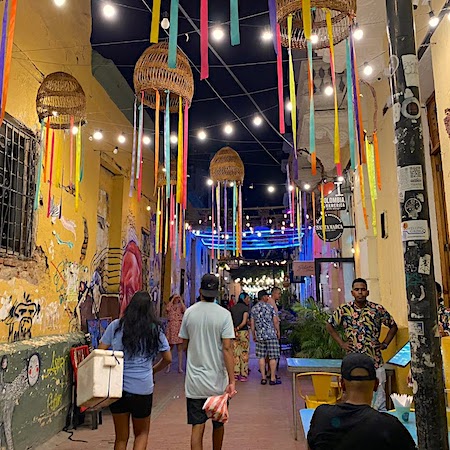
4. Stroll through the cozy Carrera 3
The Carrera 3 connects the Parque de Bolívar with the Parque de los Novios. The narrow streets are very pleasant with street performers, such as musicians, mime players and rappers, who can improvise amazingly well. In terms of atmosphere, it reminded us of the Getsemaní neighborhood in Cartagena. There are cafes and restaurants for every taste and budget. Tip: With happy hour, there are high discounts on cocktails,
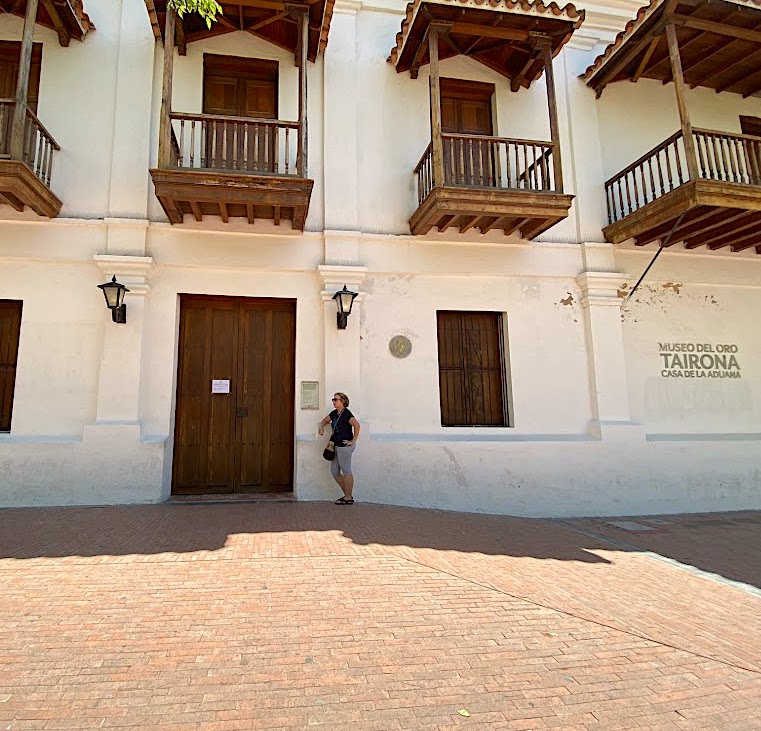
5. Visit the Gold Museum
The gold museum (Museo del Oro Tairona) is housed in the restored Casa de la Aduana, one of Santa Marta’s oldest colonial buildings near Plaza Bolívar. The museum features a collection of over 500 artifacts—goldwork, ceramics, textiles—that showcase the culture of the indigenous Tairona people and the history of the region. Access to the museum is free. (closed on Mondays). Unfortunately, during our stay in Santa Marta, the gold museum was also closed on Fridays and Saturdays. Check more info on the official website of the Museo del Oro Tairona. Another cultural trip you can take is to the house where Simon Bolivar spent his last days, the hacienda La Quinta de San Pedro Alejandrino.
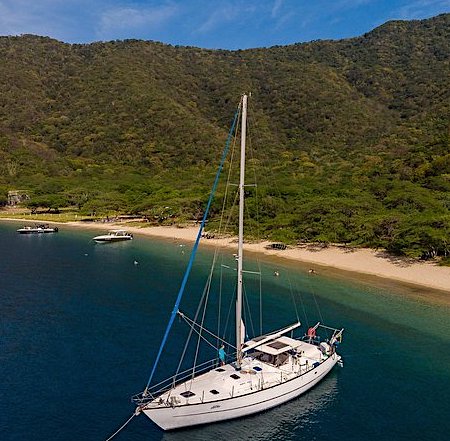
6. Chill on a beautiful beach
Santa Marta’s most beautiful beaches are not in the city, but outside of the city. The beach at Santa Marta Bay, while nice for watching the sunset, is not a clean beach. The beaches in El Rodadero are better, but crowded. Furthermore, there are many street vendors and you look out on highrise hotels, so not the most beautiful beaches as far as we are concerned. Playa Blanca in El Rodadero is a beach with fun activities for children, such as a zipline. In Tayrona national park there are some nice beaches, such as Bahía Concha, Playa Cristal, Playa Cinto, Playa Cabo San Juan and Playa Brava. Most of the beaches can be reached by boat. A nice way to sail to Bahia Concha is with a sailing trip to Bahia Concha, Tip: From December through April there is a lot of wind, so before booking a boat trip to the beaches, check the forecast for wind and waves.
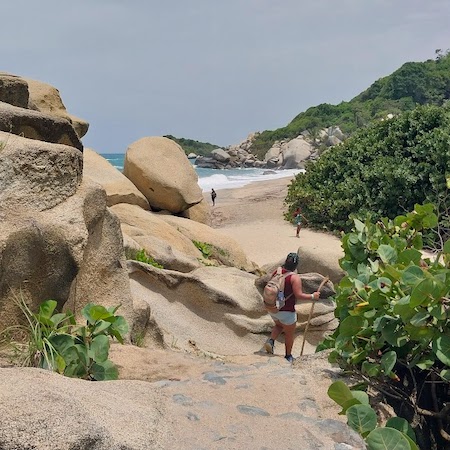
7. Hike in the Tayrona National Park
The location of Tayrona National Park is spectacular, between the Caribbean Sea and the Sierra Nevada de St. Marta. In Tayrona national park you can make beautiful hikes on trails that run through the jungle to the beaches. You can do a day trip, but there are also several options to camp there or stay overnight in a hotel. Tayrona National Park is easily accessible from Santa Marta with a one-hour bus ride. If you prefer to go to Tayrona National Park with a guide, check the options here.
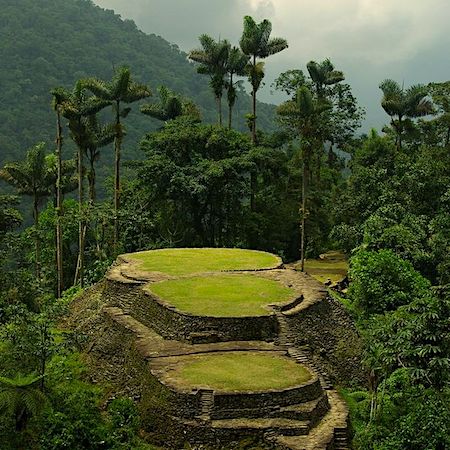
9. Hike to Ciudad Perdida-the lost city.
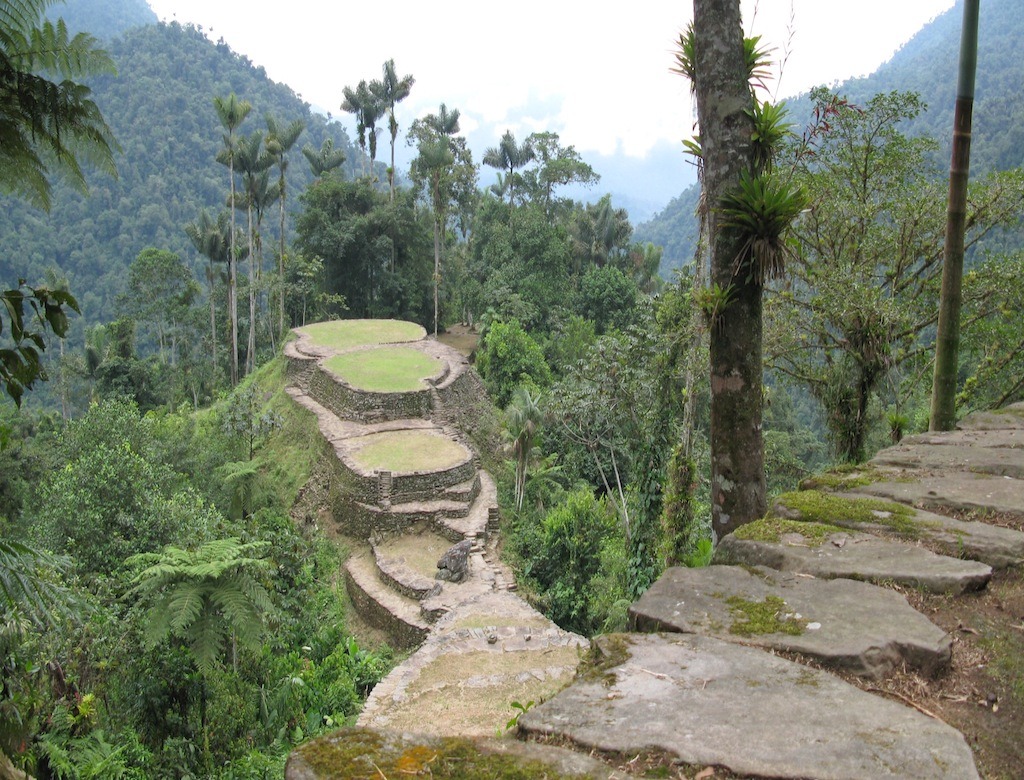
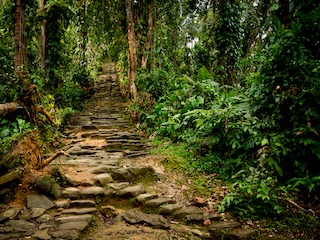
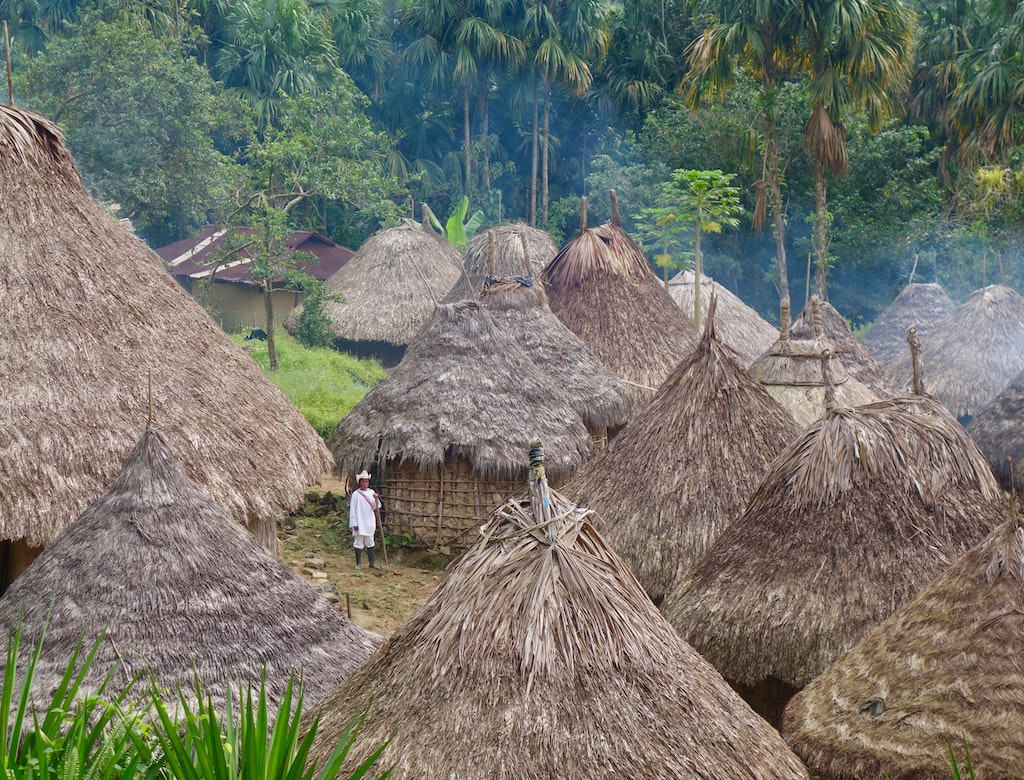
Santa Marta is starting point of treks to the Ciuadad Perdida, the lost city of Colombia. During a trekking of 4 days, you will swim at waterfalls, spot birds and other animals and enjoy the sounds of the jungle. You will meet people from the Indian communities and can see how they live in the villages. The guide shares with you his insider knowledge about the Indian communities, which makes the whole experience extra special.
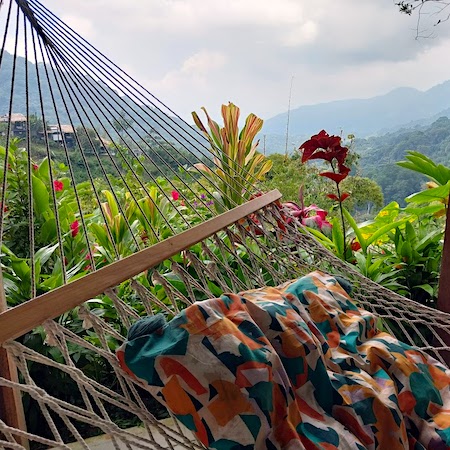
8. Spend the night in the mountain village of Minca
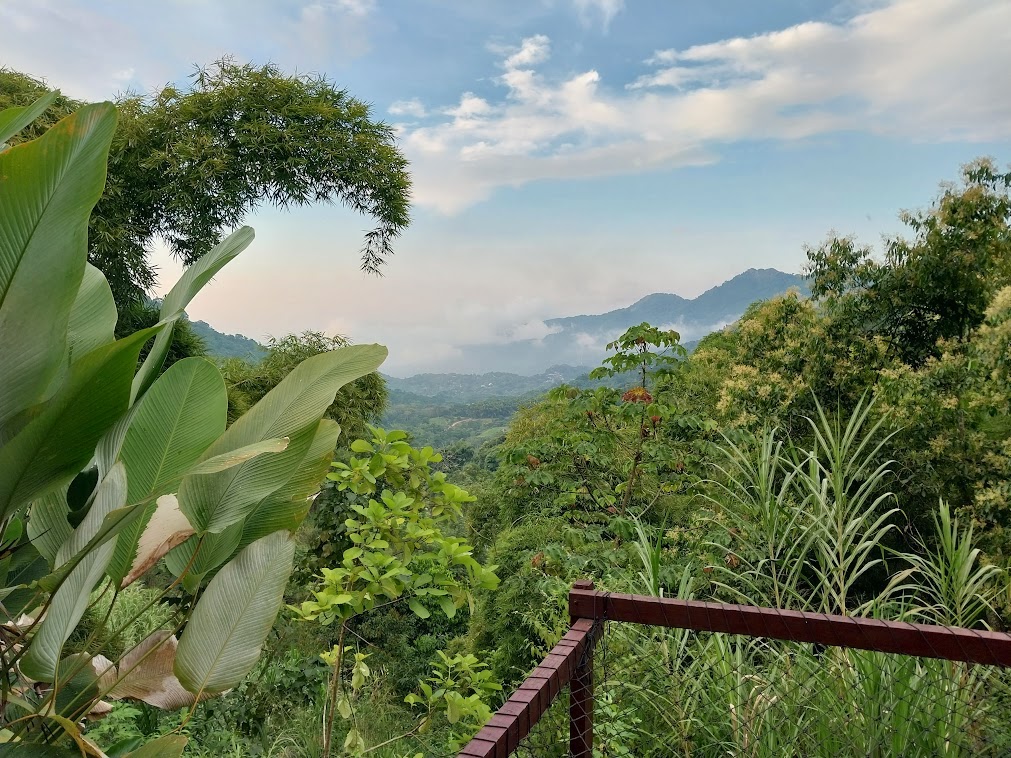
Minca is a nice village in the Sierra Nevada de Santa Marta, about a 45-minute drive from Santa Marta. Here you can breathe the wonderful fresh mountain air, a relief from the hot Caribbean coast! There’s not much to do in the village itself, but in the surrounding area you can hike to waterfalls, visit coffee and cocoa plantations and do some serious bird watching. Are you only in Santa Marta for a short time? Then you can take a day trip from Santa Marta to Minca and surroundings, visit coffee and cocoa plantations and do some bird watching. . Check more information in our travel guide Minca
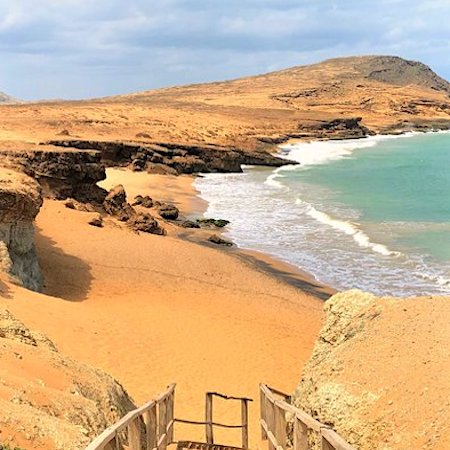
10.Book an off road trip to La Guajira
In Santa Marta, you can book a tour to La Guajira, the home of the indigenous Wayuu community. You have the beaches in la Guajira mostly to yourself. You can kitesurf in Cabo de la Vela, “sandboard” in the Tarao dunes and bird watch in Parque Nacional Natural Macuira, the “wettest” area of La Guajira. If you want to go to Punta Gallinas -the most extreme point of the peninsula -a tour is absolutely a must, given the limited infrastructure. Plus, with a guide, you’ll get an insider’s look at Wayuu culture.
Here’s how to plan your trip to Santa Marta
HOW TO GET THERE?
How to get to Santa Marta?
Santa Marta is centrally located on the north coast of Colombia and is easily accessible by plane, bus and private transportation. Her you can find information on how to get to Santa Marta and tips for transportation in Santa Marta.
By plane
You can fly to Santa Marta from places such as Bogotá, Medellín, Cali, Neiva and Pereira. We started our trip on the north coast of Colombia in Barranquilla and flew back to Bogotá from Santa Marta. We paid about 50US$ pp one way with Wingo Air (1.5h).
The airport
Aeropuerto Internacional Simon Bolívar is 16 km from Santa Marta. A taxi from the historic center to the airport costs around COP 30,000/$7.50 USD and takes about half an hour. A bus ticket costs around COP 2000-3000/under $1 USD and takes about 45 minutes. A taxi from the airport to El Rodadero costs around COP 27,000/$7 USD. A private “pre-booked” cab is a very relaxed option. here you can book a private taxi online.
Playa del Aeropuerto
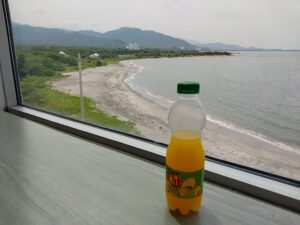
What is immediately noticeable is that Santa Marta’s airport is located on the beach, the Playa del Aeropuerto. Especially on weekends, this is a busy place. What also stands out are the many people who want to sell you anything from the beach. Because of the police presence, they do keep their distance.
#Tip if you depart from Santa Marta
There are two departure halls: Wingo departs from departure hall 1 and Avianca and Latam depart from departure hall 2. This is not well marked and we had to search some time to find Wingo’s departure hall, which eventually turned out to be near Wingo’s check-in desk. The airport is not big, but it has all kinds of souvenir stores, coffee shops like Tostao and a drugstore. There is also a food court with mostly fast food. From the food court you overlook the beach and the Sierra Nevada.
By bus
From Minca
In 2023, we took a “colectivo” (minibus) for COP9000 pp (one way). The bus leaves near Hotel Minca, at the entrance to the village. We were dropped off at the last stop, the busy central market. Backpackers who were in the same colectivo and wanted to catch the bus to Palomino were dropped off before us. A taxi soon came along and took us to our hotel in el Centro Histórico for COP8000.
From Palomino
You must take the bus from Riohacha to Santa Marta, which stops in Palomino. The ride takes about 1.5 hours and the price starts at COP30,000/$7.50
From Cartagena and Barranquilla
If you are traveling from Cartagena or Barranquilla to St. Marta, you may find it convenient to travel by the “colectivos” (minibuses) of MarSol or Berlinas. Instead of taking a taxi to the bus terminal, catch the colectivo at the MarSol or Berlinas office in Cartagena. In Santa Marta, you will be dropped off at their office. There are set times, including several buses per day on weekends. You can make reservations via WhatsApp or through the RedBus app.
Price Indication
Cartagena-Santa Marta: COP90,000/$22.50 (one way) 5 hours.
Barranquilla-Santa Marta: COP45,000/$11.25 (one way) 3 hours
Private transportation
If you have little time or want to travel in extra comfort, you can also opt for a private transfer, where you will be picked up at your hotel in Cartagena and dropped off at your hotel in Santa Marta. Booking a private transfer is possible here. If you want to travel by private transport from Minca, it will cost you COP100,000/$25 for 2 people. You can book the private transfer also book online.
Transportation in Santa Marta
Santa Marta’s historic center is perfectly walkable. We only took a cab when we arrived by bus. A taxi for a short ride from the central market to Plaza de la Basílica de Santa Marta cost us COP8000/$2. The minimum fare for a taxi in Santa Marta is COP5500/$1.50. A taxi from the historic center to El Rodadero will cost you about COP25,000/$6. Standard fare for a bus ride is COP2300/$0.60.
(prices updated August 2025)
CLIMATE AND BEST TRAVELING PERIOD
The dry season is from December through April. It is then less warm and there is more wind. From December to February is the high season. In March and April it begins to rain more and in the month of May it rains almost every day. June through August are busier months with an extra busy period in July during the festival “Fiestas del Mar,” which takes place every year during 10 days at the end of July. During this period it is essential to book your hotel early. From September to November is the rainy season and things get quieter. October is the rainiest month. We were in Santa Marta at the end of September and had very nice weather, so you also need a little luck with the weather. Due to the rougher sea, the period from December to April is tricky for booking a boat trip. The boat trip can be very rough. Therefore check the wind and waves in Santa Marta before booking a boat trip.
WHERE TO STAY IN SANTA MARTA?
Where to stay in Santa Marta? Centro histórico en El Rodadero…. Which district is the most fun and convenient to stay in? Find the best tips here.
Centro Histórico and El Rodadero and are the two most popular neighborhoods with travelers. Rodadero is 5 km. from the centro histórico. For Colombian tourists, Santa Marta is a #1 beach destination. In particular, the beaches in Rodadero are very popular and many of the luxury hotels are located here.
In the Centro Histórico you will find a wide selection of boutique hotels. There are also plenty of choices in the cheaper price range.
If you want to be close to the beach, in a quieter location than Rodadero Beach, then Pozo Colorado an option. The neighborhood is 30 minutes by taxi from the centro histórico. Bello Horizonte is a safe, upscale neighborhood between the airport and El Rodadero, 25 minutes by taxu from downtown. The neighborhood resembles El Rodadero but is quieter and is more of a residential area.
If you want to take a diving course, then Taganga is an option to book a hotel or hostel. Prices for hostels and hotels there are lower than in Santa Marta.
#ColombiaMyWay hotel tips
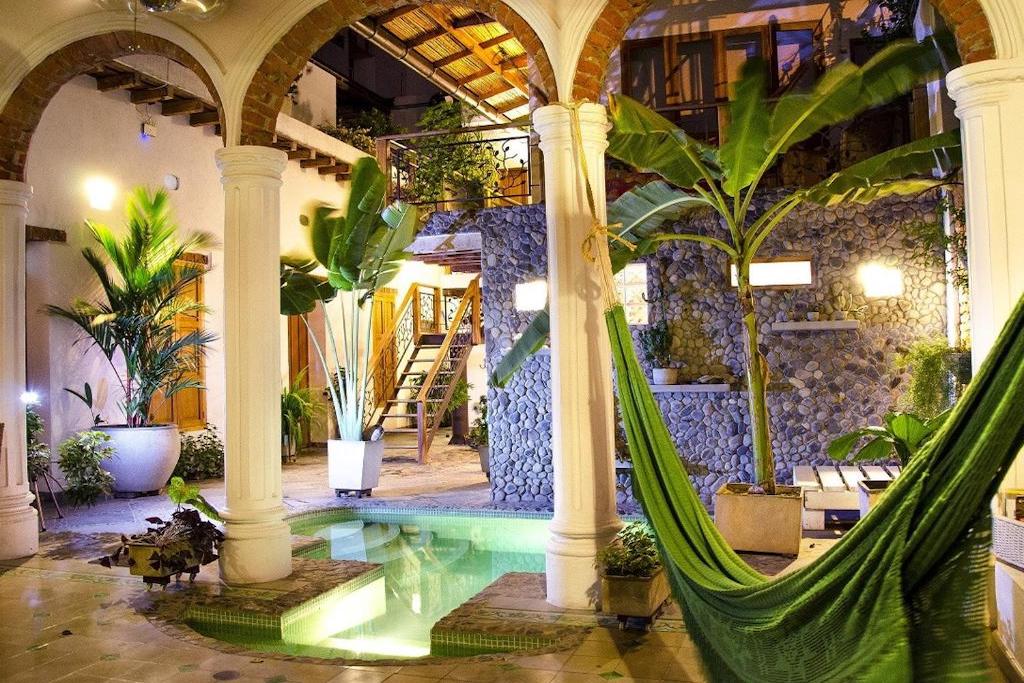
We found centro histórico a nice neighborhood to spend the night. Here you will find some of Santa Marta’s most beautiful traditional buildings.
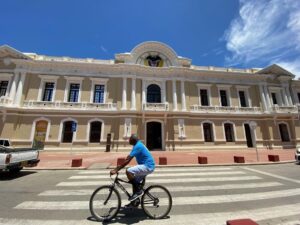
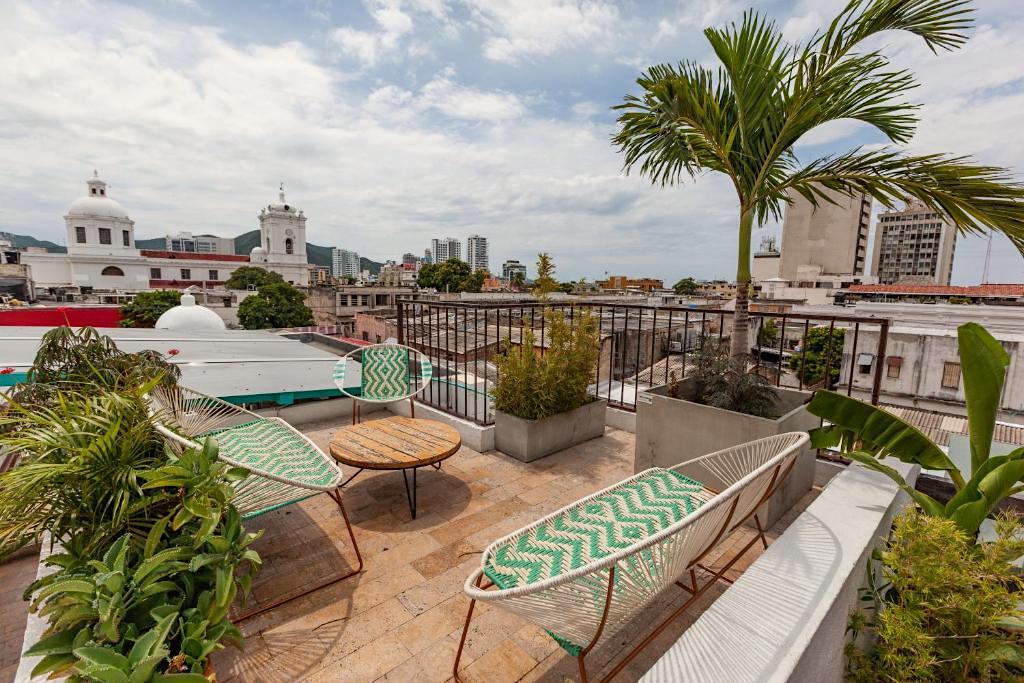
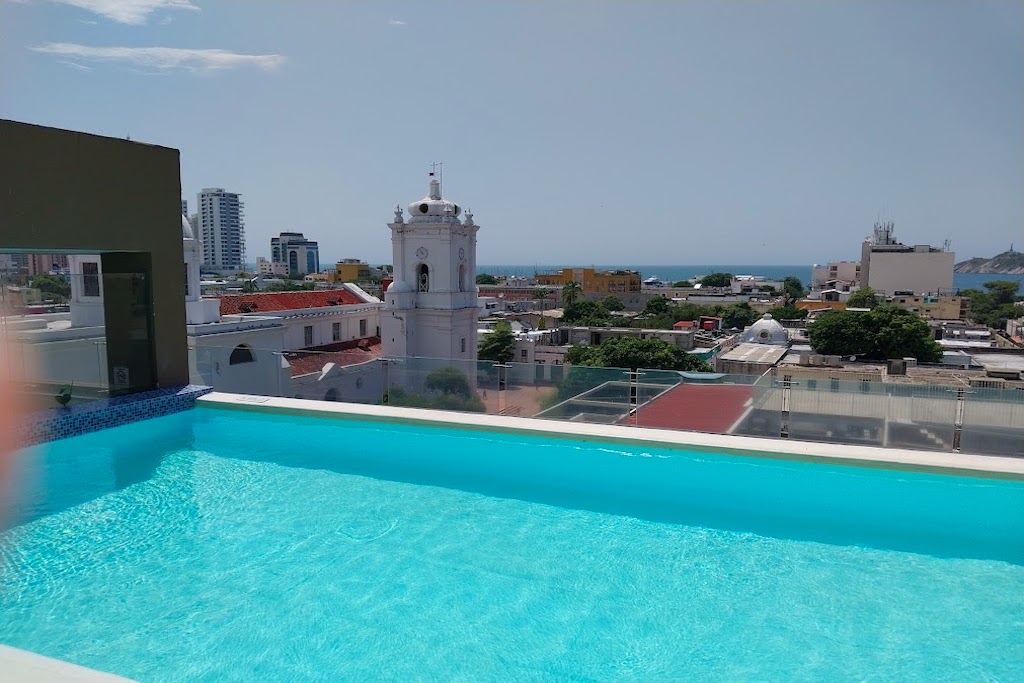
From the roof terrace of our hotel Catedral Plaza we looked out on the white cathedral.
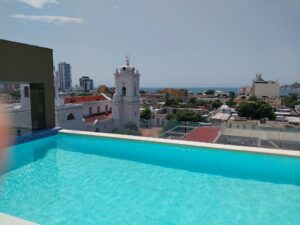
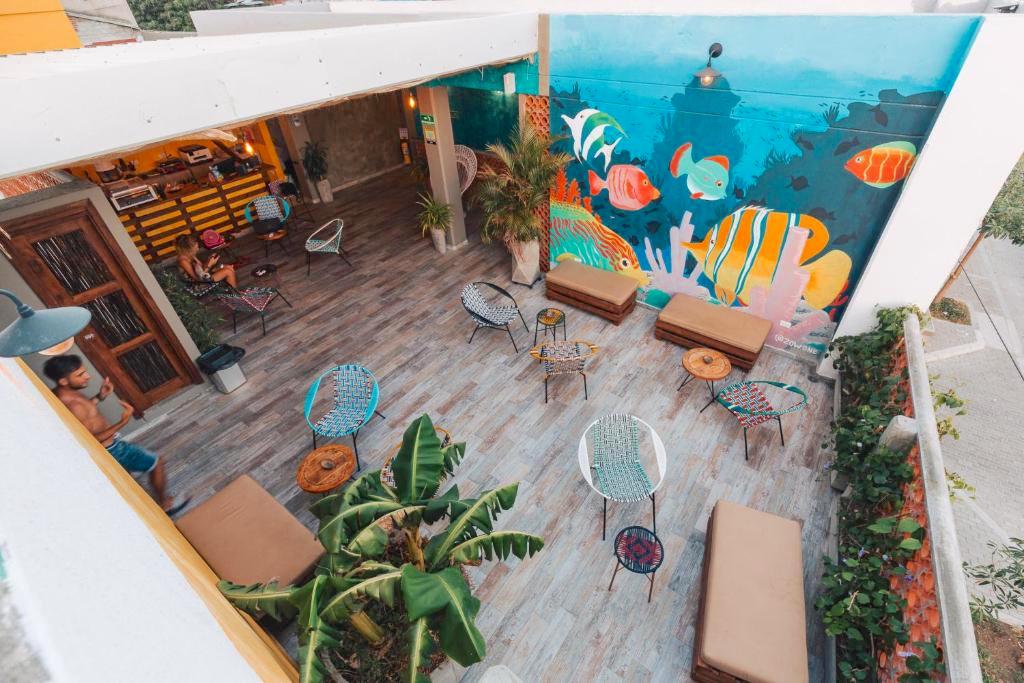
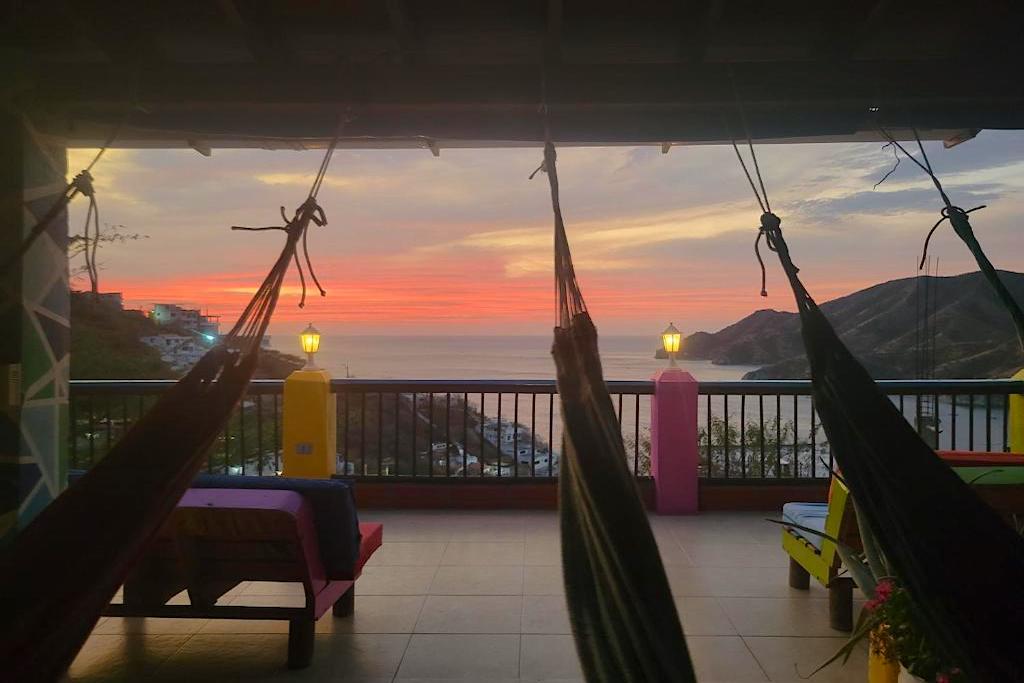
Also from the roof terrace of Masaya Santa Marta hostel, you have a great view of the cathedral and the city.
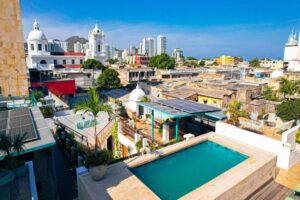
Furthermore, there are cheerfully colored facades, quaint stores and colorful murals.
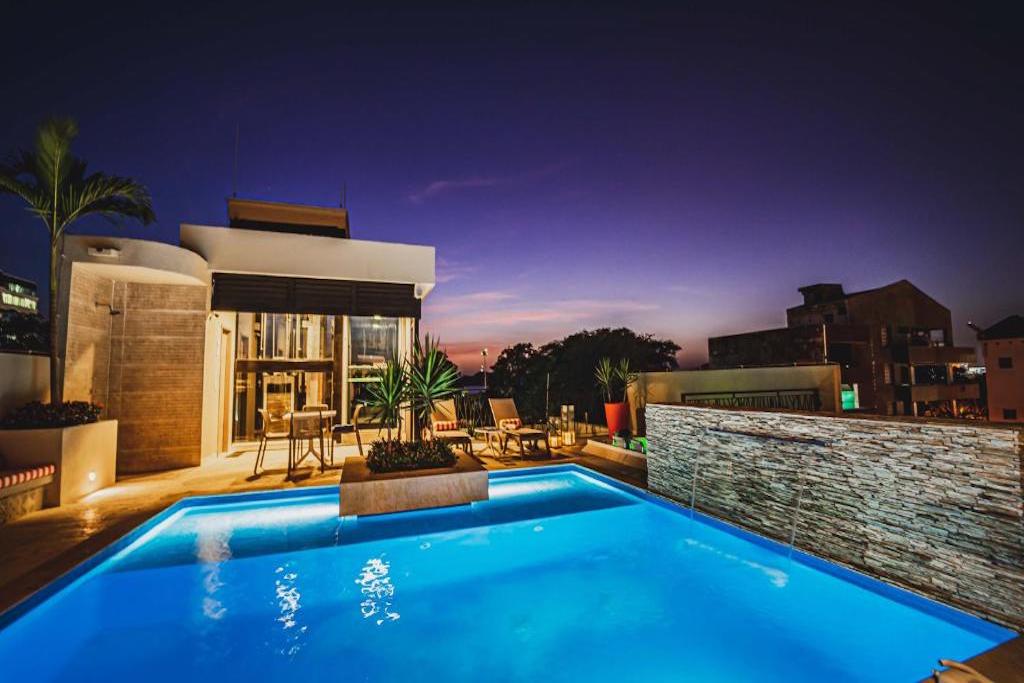
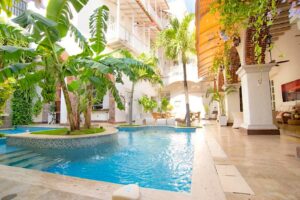
The more luxurious Boutique Hotel Don Pepe is also in the historic center -a bit closer to the Malecón- and looked very cozy.
Especially the colorful street Carrera 3 is a pleasant place to be. In terms of atmosphere, it reminded us of the artsy neighborhood of Getsemani in Cartegena.
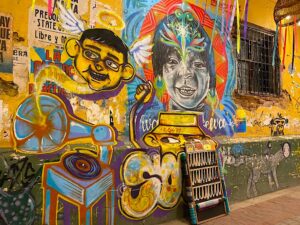
Furthermore, its location is central: you can walk to the Malecón, the boulevard on Santa Marta’s bay.
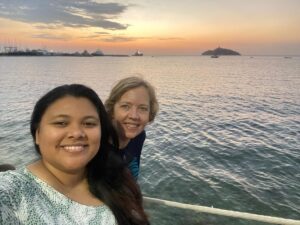
Even if you travel onward to Tayrona national park, Minca and Palomino, the historic center is a convenient place to spend the night as buses leave from the market.
What are the best hotels in Santa Marta? Check out more hotel tips in Santa Marta for every budget below.
$ price range up to $50
$$ price range $50 – $100
$$$ price range above $100
Centro histórico
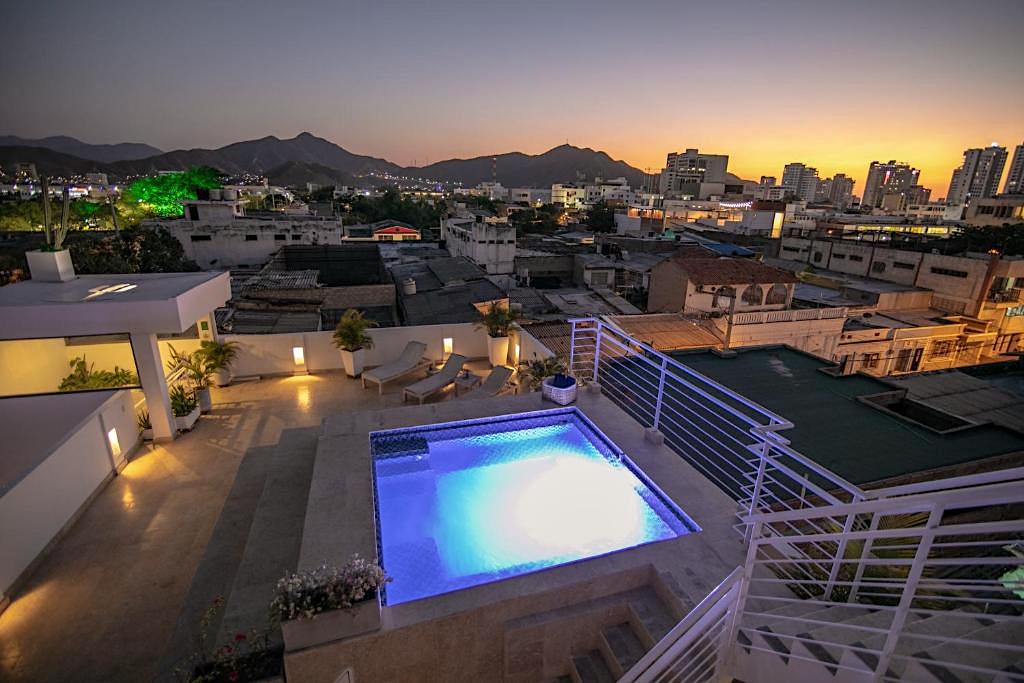
El Rodadero
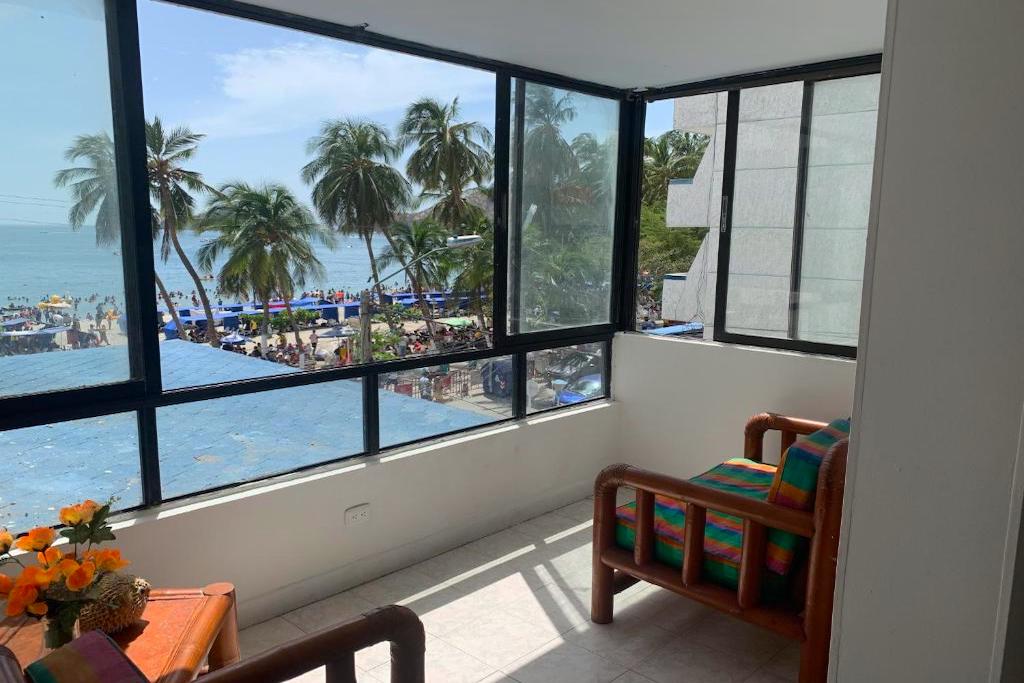
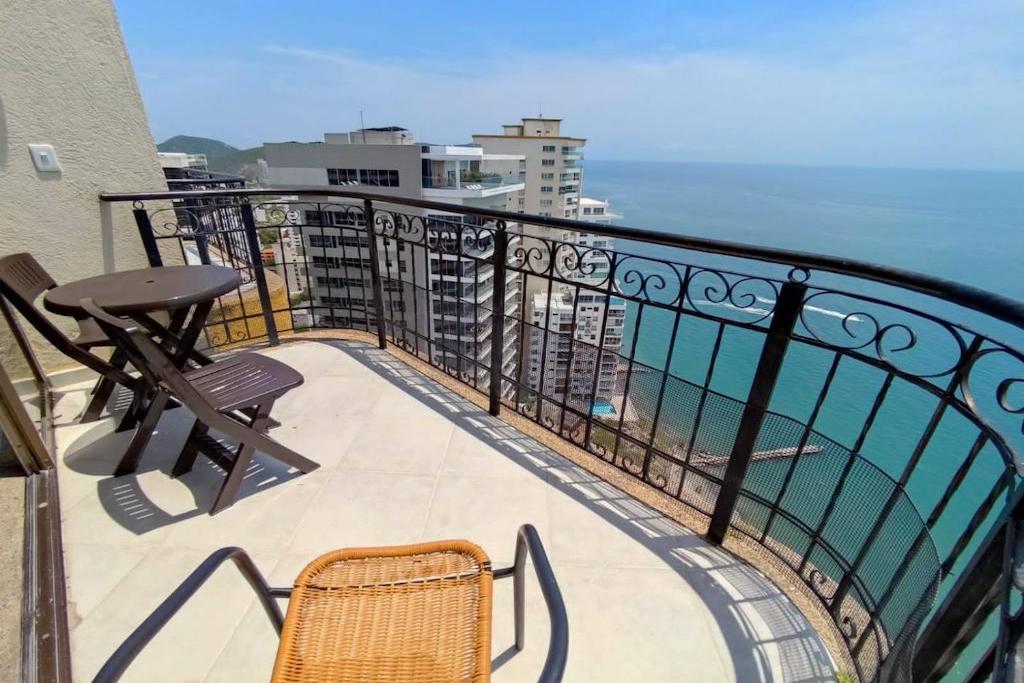
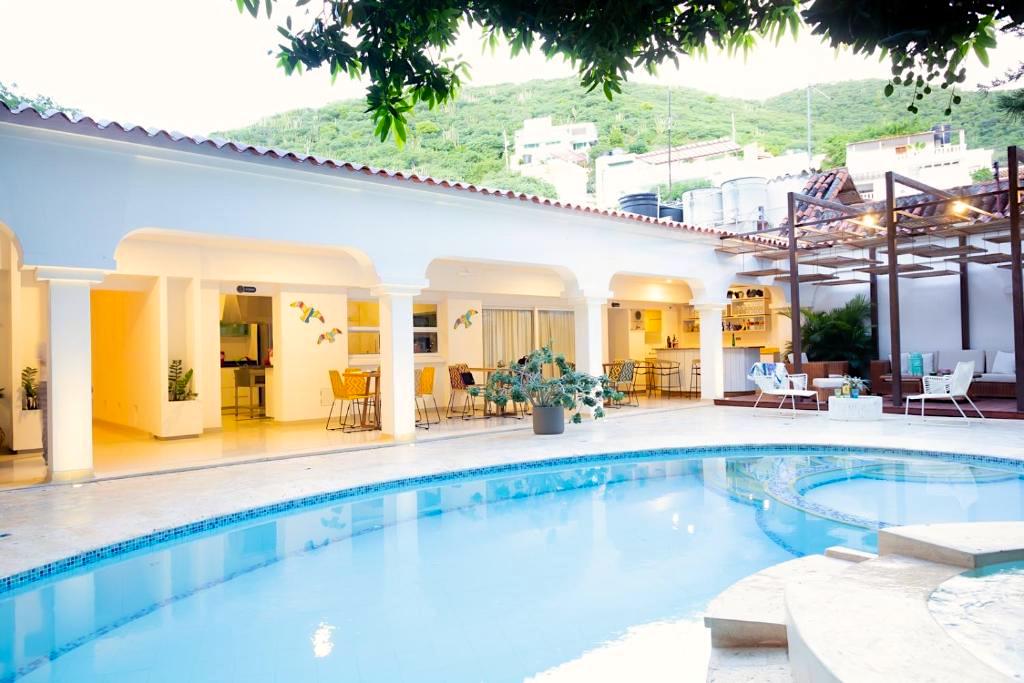
Other neighborhoods
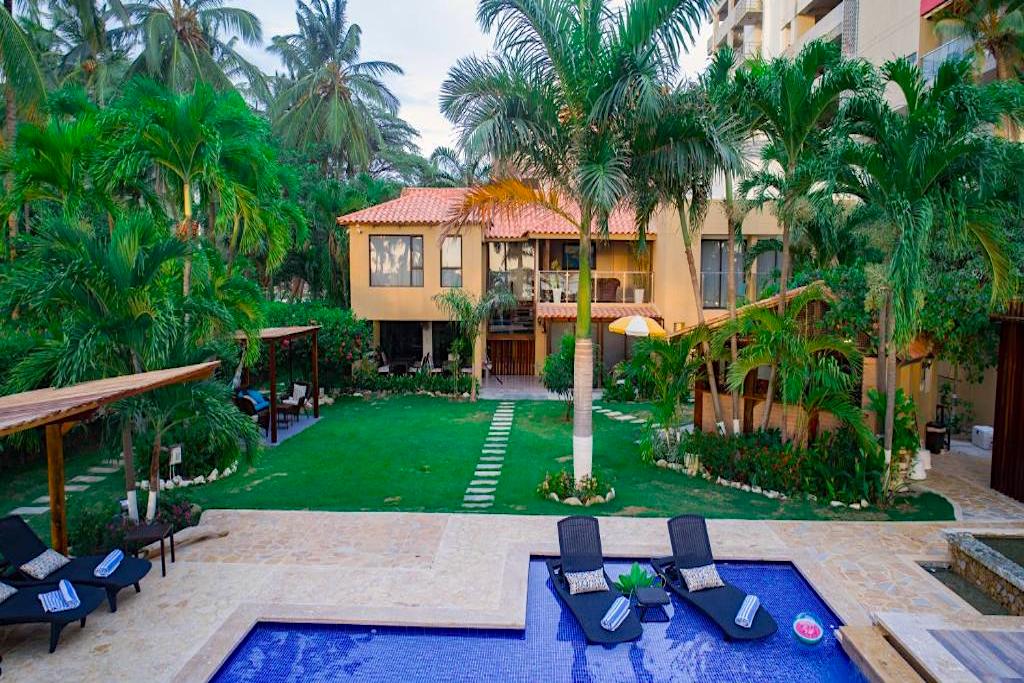
Pozos Colorados
30 minutes by cab from the centro histórico
- Playa del Ritmo Beach Hostel & Bar
- Casa Verano Beach hotel-adults only
- Apartasuites Samaria-Club de Playa
- Best Luxury Samaria
- Santa Marta Apartamentos Pozos Colorados -Samaria
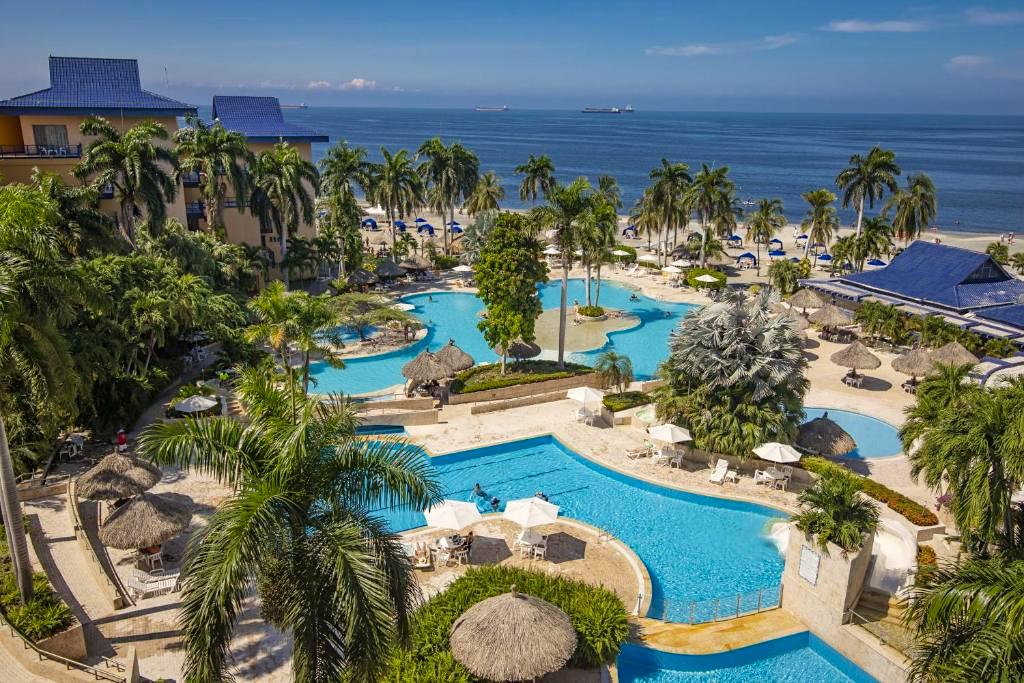
Bello Horizontes
25 minutes by cab from the city center.
- Santa Marta Marriott Resort Playa Dormida
- Zuana Beach Resort
- Hilton Santa Marta
- Makaira Casa de Playa
Food and drinks in Santa Marta
Santa Marta has restaurants for every taste and budget: from “gourmet” arepas to Mediterranean and specialty seafood restaurants.
In Carrera 3, which connects Parque de Bolívar with Parque de los Novios, there are several cafes and restaurants for every taste,and budget, like mexican, chinese, but also fast food places where you can buy a hot dog for COP6000/$1.50. Several cafes have happy hour from 6pm-8pm, with a big discount on cocktails. As you walk further toward Calle 16, the music gets louder and you’ll find more clubs.
Around Parque de los Novios you will also find several restaurants and bars, and there is regular live music in the evening.
On the Malecón on Santa Marta Bay, you’ll find coffee shop Juan Valdez and several businesses where you can buy an ice cream, oblea or Malteada (a kind of combo of a shake and cream). There is also fast food, such as a place where you can order fries all kinds of ways, with meat, chicken and lots of sauces.
The best nights to go out are Thursday and Saturday nights. If you want to go out in the big Colombian clubs, El Rodadero is the place to be.
Organized food & drink tours
During a street food tour in the centro histórico, you can taste Santa Marta’s traditional specialties while learning all about Colombian culture.
A trip in a Chiva, is a typical Colombian “party” experience. A chiva is a
cheerfully colored bus that has been converted into a “party bus.” A ride in a Chiva guarantees lots of music, lots of ambiente and Aguardiente!
Here are our tips for Santa Marta’s best restaurants, best coffee shops and best clubs in Santa Marta’s historic center.
Our tips
COFFEE & ICECREAM
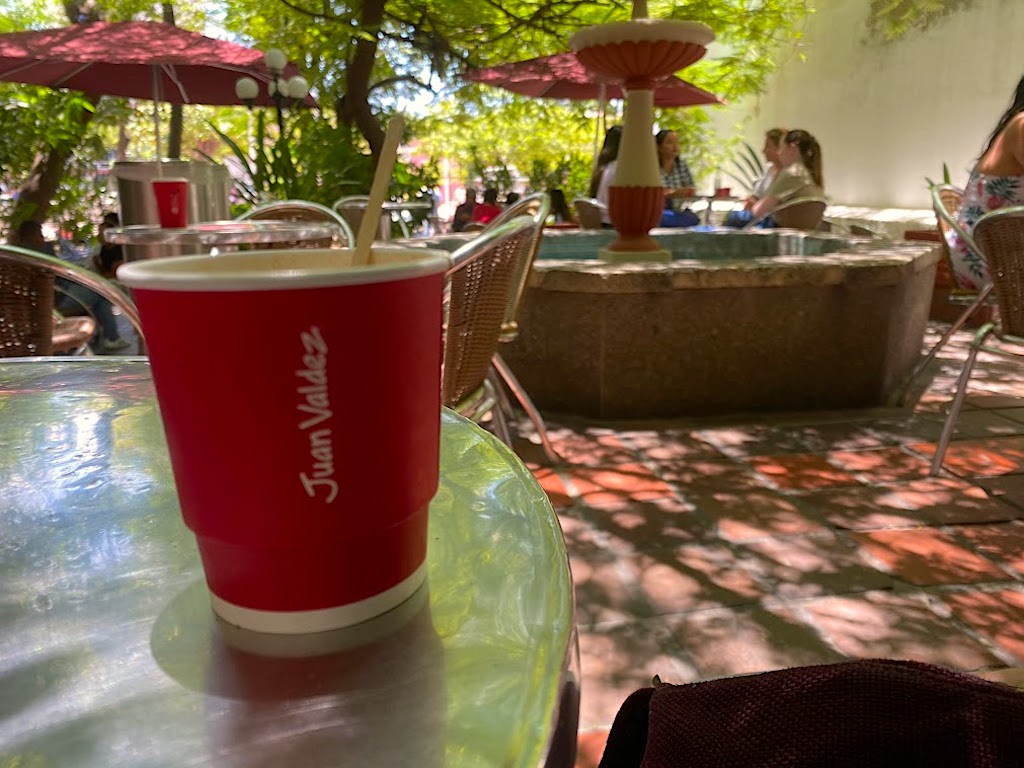
Juan Valdez café
Calle 14 Entre # 2 y 3 al lado de la Alcaldía
For a good cup of coffee on a shaded terrace at Plaza Venezuela, near the gold museum.
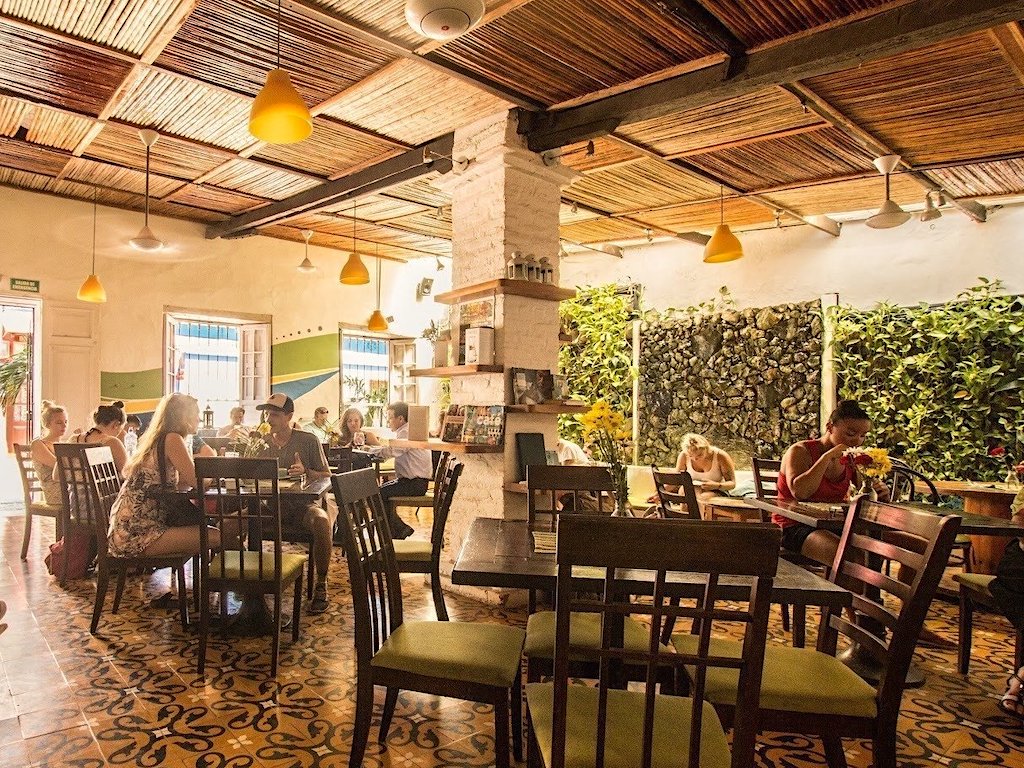
Ikaro café
Parque de los Novios
Calle 19 #3-60
Ikaro café uses local coffee beans that they roast themselves. It’s a great place to work for digital nomads and you can get good vegan and vegetarian food here. Also for oriental dishes like Pad Thai. Organic products are used.
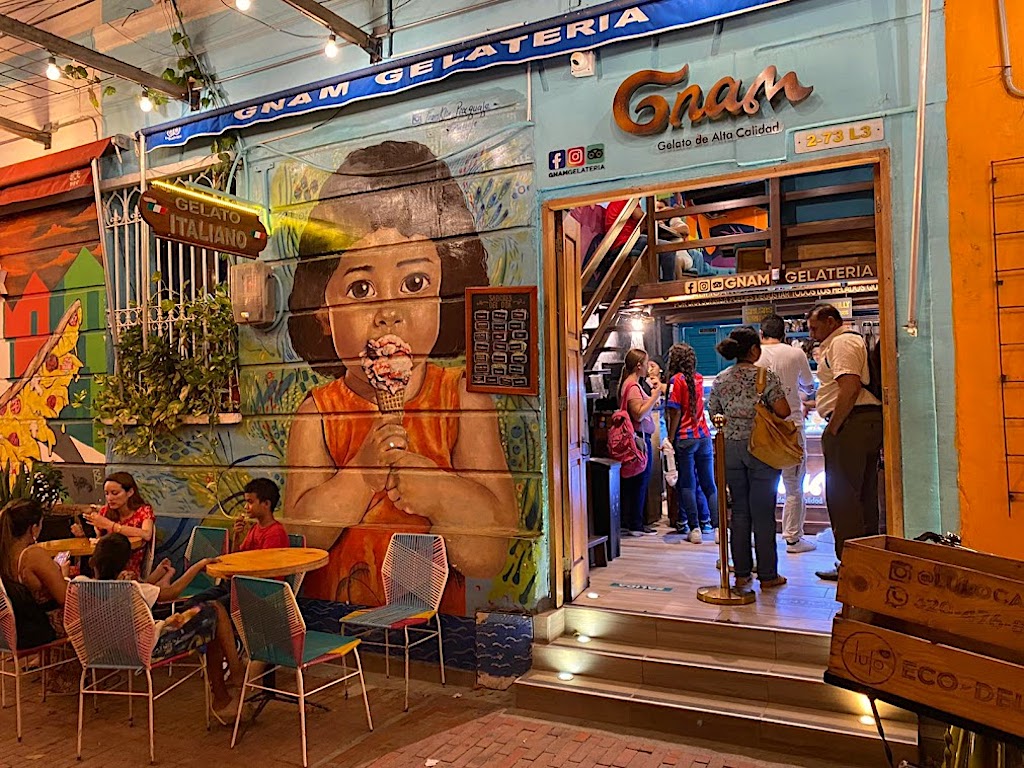
Gnam Gelateria
Carrera 3 #17-73
Italian ice cream parlor with long lines at the door. Here you can taste Italian ice cream with traditional flavors, but also with a local touch, through the addition of fruits, such as the corozo fruit typical of the Caribbean coast and maracuja (passion fruit).
RESTAURANTS
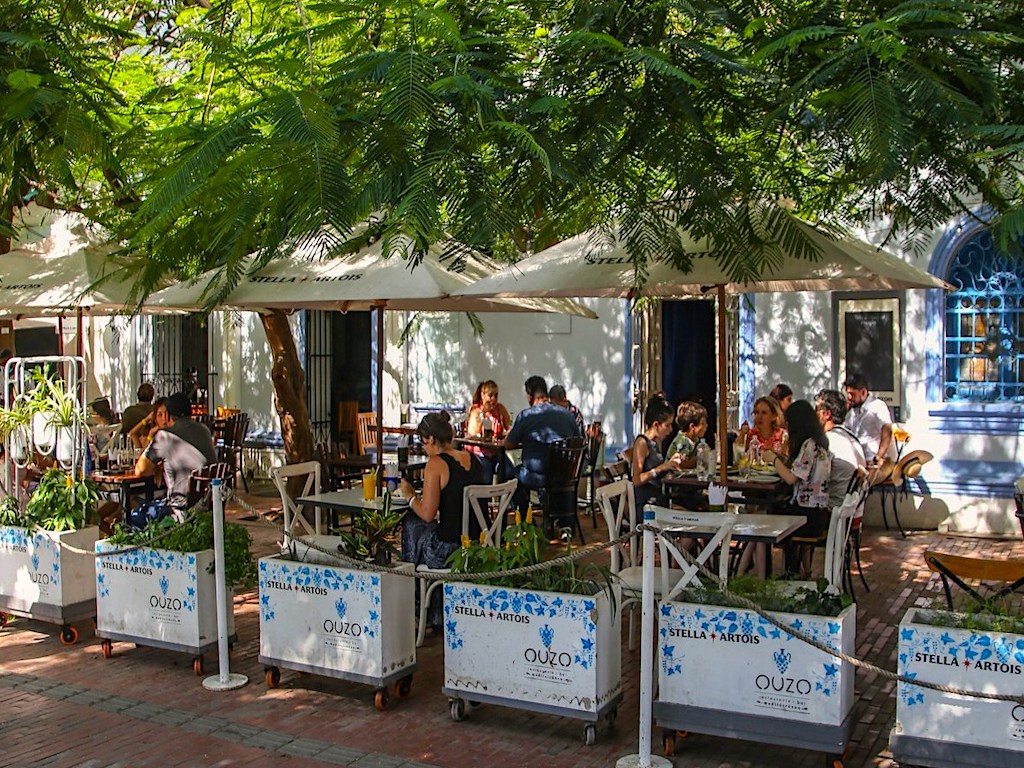
Ouzo Restaurante Bar
Parque de los Novios
Cra. 3 #19-29
Mediterranean restaurant serving Italian and Greek meals such as octopus, lamb, pizza, raviolis and pasta with seafood. You can sit outside or inside, on several floors.
Tip: From Mon-Fri, you can get cheap lunch (around COP15,000/$4) with the menú del día (daily menu).
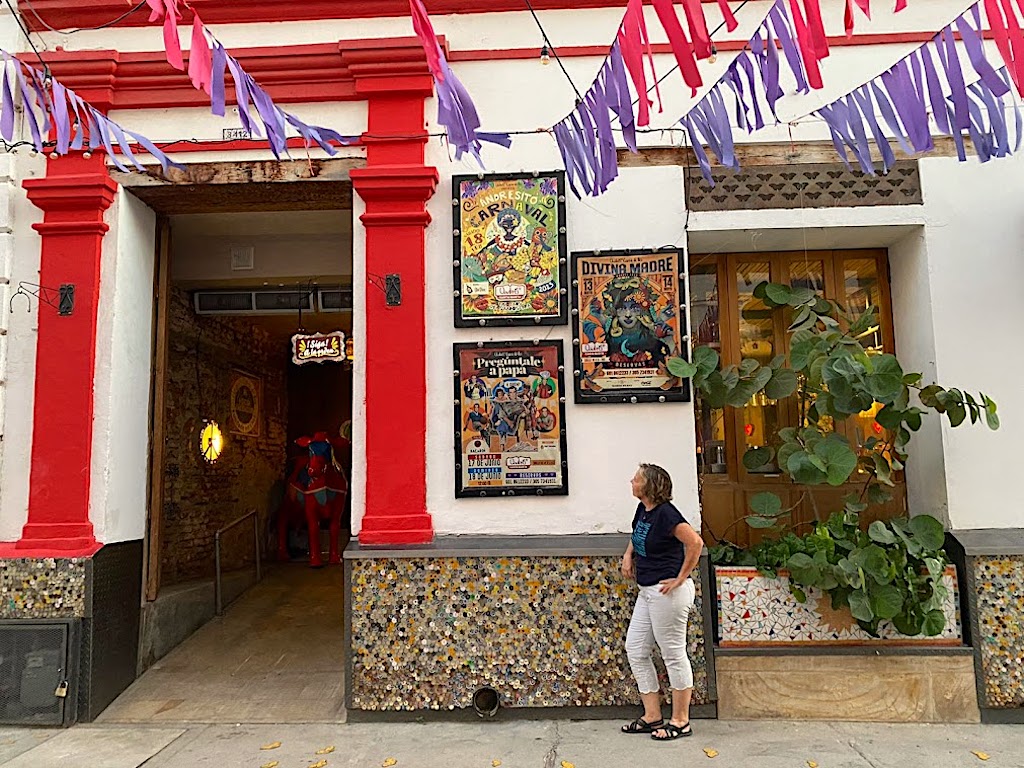
Andres Carne de Res
Calle 16 #3-112
Between the Plaza de la basílica de Santa Marta and Santa Marta Bay, you’ll find Andres Santa Marta. Easily recognizable by the colored flags in front of the restaurant. Here, in an atmospheric setting, you can enjoy a good piece of meat or chicken a la Parilla, or typical Colombian dishes and snacks, such as patacones with various sauces.
Donde Chucho Gourmet
Parque de los Novios
Calle 19 #2 – 17
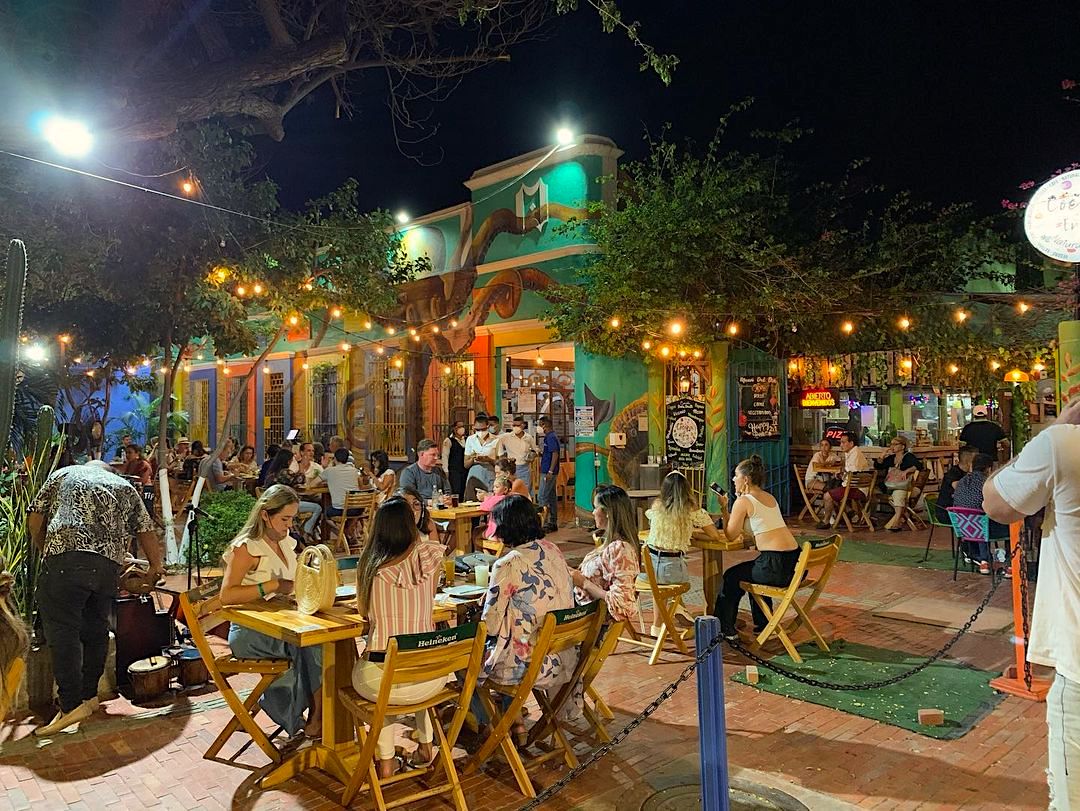
Donde Chucho is a traditional restaurant with a very extensive menu, which specializes in fish and seafood. There are also 2 more restaurants in El Rodadero; Chucho Blu (on the waterfront) and Donde Chucho Rodadero. The establishment on Parque de los Novios has regular live music.
Lulo Cafe Bar
Carrera 3 #16-34
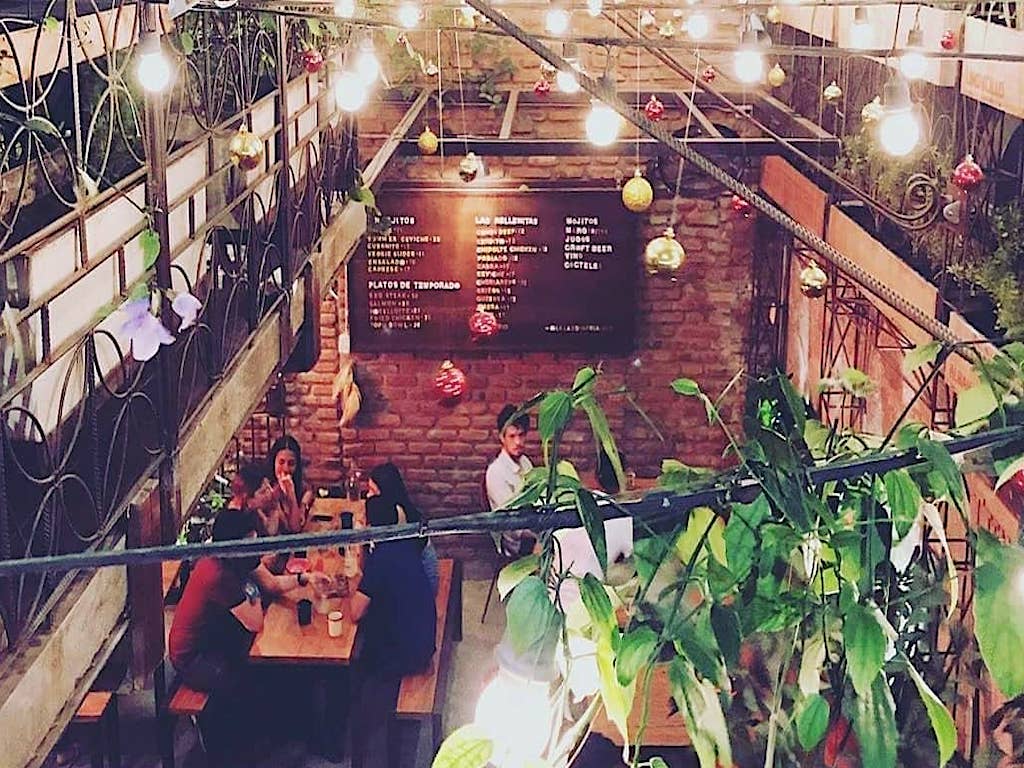
In this cozy building -next to Gnam gelateria- you can get breakfast, superdeluxe “gourmet” arepas and wraps, among other things. There are also vegetarian, vegan and gluten-free options.
Restaurante Lamart
Carrera 3 #16-30
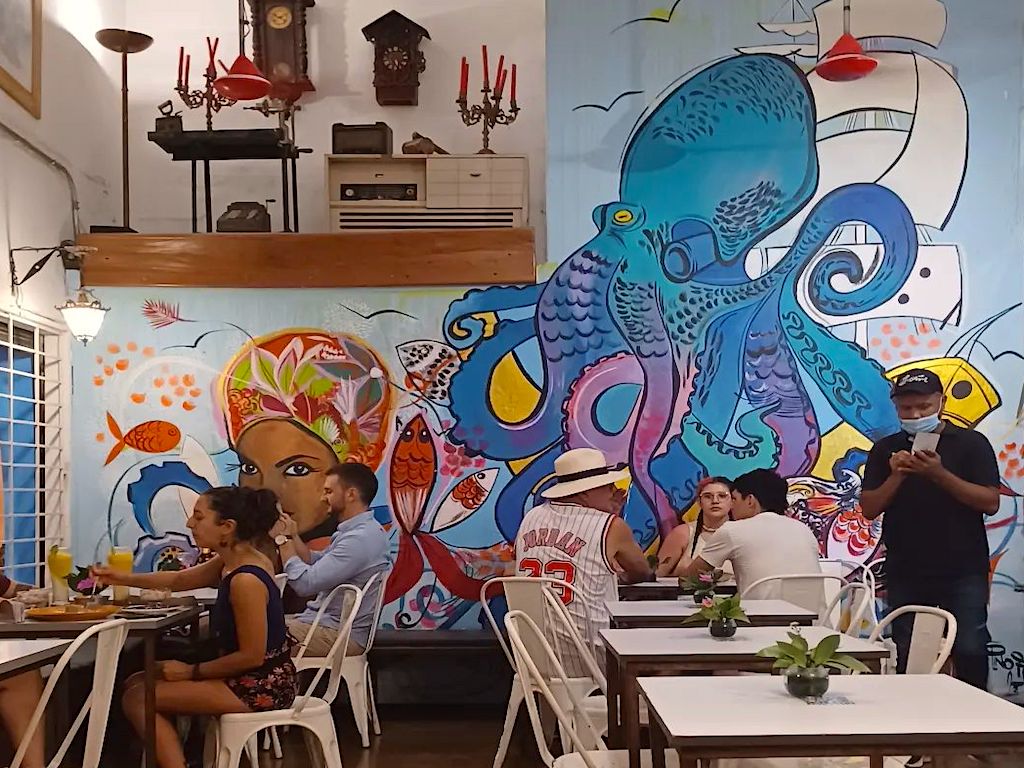
This little restaurant is known for its delicious fish, ceviche and handmade pasta. There are a few tables outside and you can also sit inside, in a nice setting.

Porthos Steakhouse and Pub
Parque de los Novios
Calle 19 #3 – 25
For tasty steak, chicken and the best burgers in Santa Marta. Porthos Steakhouse and Pub is also a great place for a good glass of beer and a cocktail.
CLUBS
La Brisa Loca hostel
Calle 14 # 3-58
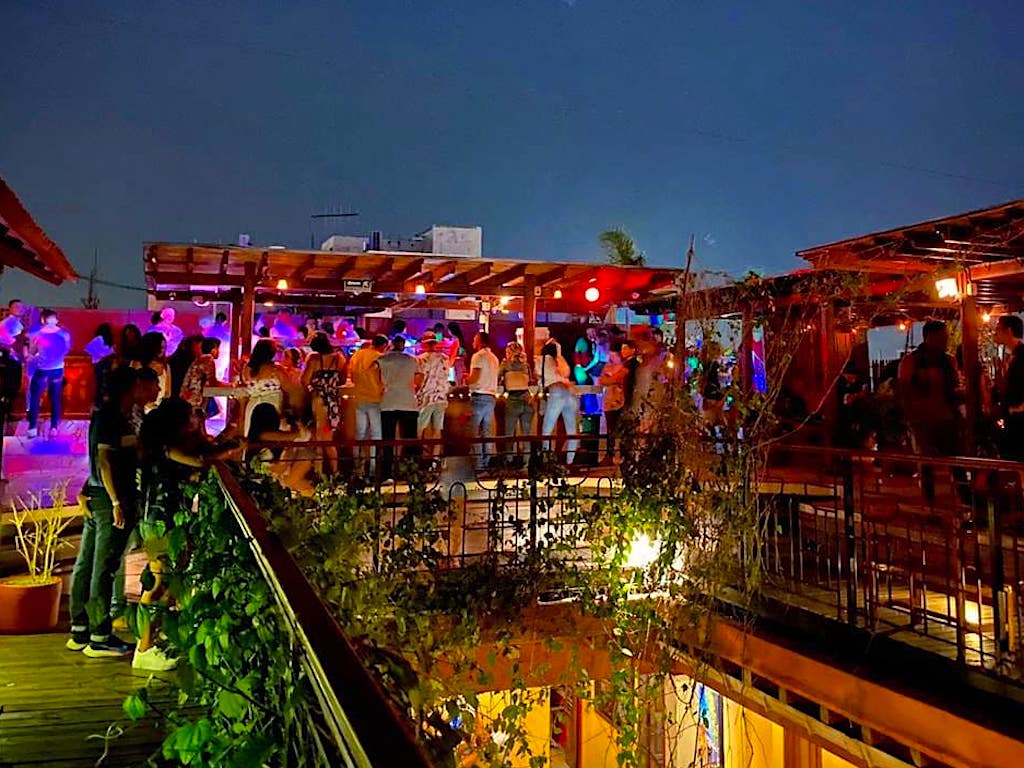
A party hostel, where you can party on the rooftop terrace from Thursday to Sunday, with live music and DJs.
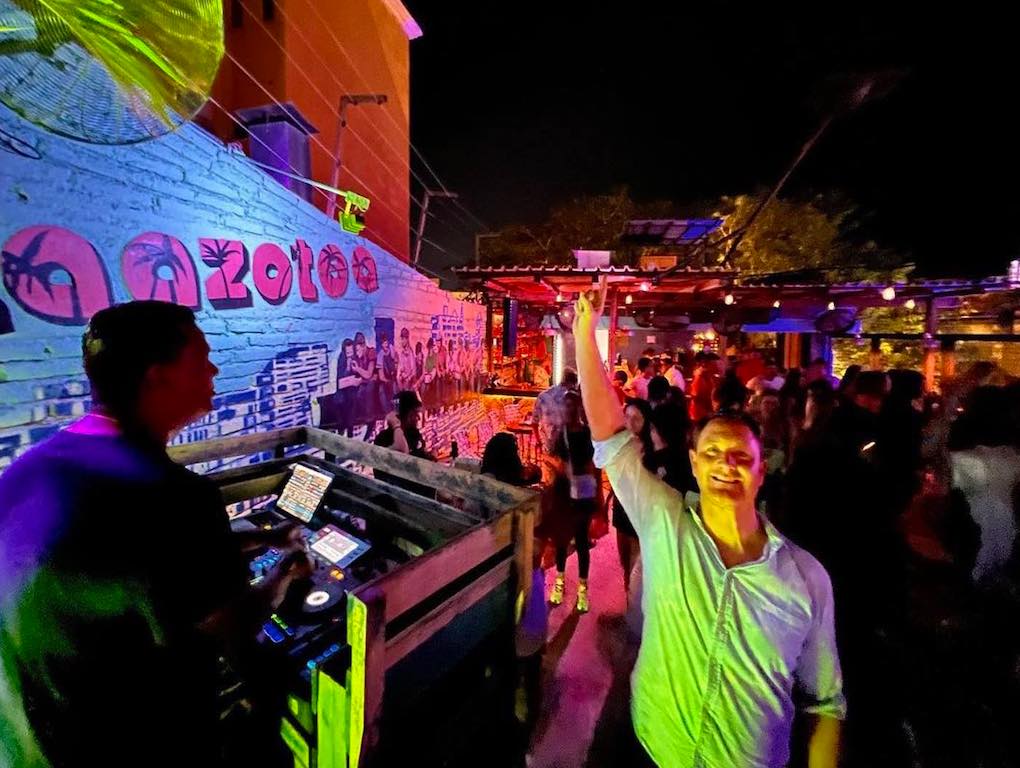
La Azotea disco bar
Parque de los Novios
Carrera 3 #19-25
Come early and try one of the 20 cocktails. You can dance all night on the rooftop terrace with music from the DJs. (rock, funk, hip-hop, disco, dance, house, salsa)
@herwegofilms.
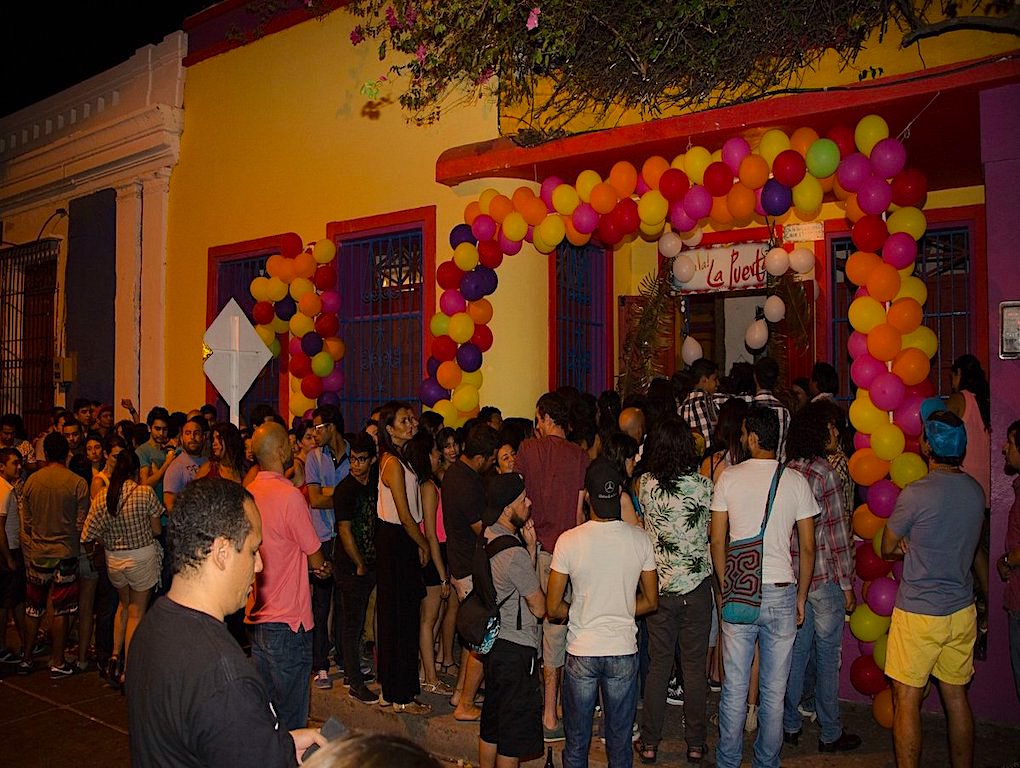
La Puerta
Calle 17 #2-29
Nightclub with a mix of locals and travelers, where you can dance to salsa music.
Practical info A-Z
Is Santa Marta safe? What should I bring with me? What about withdrawing money in Santa Marta? Check here for practical information and useful tips for your stay in Santa Marta.
Drinking water
The water from the tap is not drinkable
Cash withdrawals
There are plenty of ATMs in Santa Marta. If you go to Minca, Tayrona National Park or Cabo de la Vela after Santa Marta, withdraw money in Santa Marta, as there is no ATM in those places.
Packing List
- Anti mosquito spray
- Sunscreen
- Waterproof bag or plastic bags to protect your belongings during possible boat trips
- Swimwear
- Hat or cap
- Sandals or flip flops
Vaccinations
No vaccinations are required for Santa Marta. If you are going to Tayrona National Park, a yellow fever shot is recommended.
Safety
Our own experience (September 2023)
- We visited the historic center of Santa Marta and felt safe. We did notice that some streets in the historic center were very dark at night and looked rather shady, so these are best avoided.
- The Malecón in particular is a place where you see homeless people and people asking for money. What we noticed was that the security guards who were present, immediately intervened when people came asking for money. On the Malecón, we felt a great sense of security due to the presence of police and security. There wer many street vendors. If you are not interested, a “no gracias” usually suffices.
- We recommend to ask the receptionists of your hotel or hostel for tips where it’s (not) safe to walk at night.
Update about security Santa Marta July 2025
In the last few years, Santa Marta has become less safe. The city can be relatively safe in popular tourist areas during the day, especially with proper planning and vigilance. However, there are elevated risks, particularly from petty crimes, scams, and rare but serious violent incidents. In April 2025, an Italian tourist was killed on the outskirts of Santa Marta. The murder was linked to organized crime in the Sierra Nevada region.
Staying informed of local advisories and choosing secure neighborhoods and transportation options is key for a safe visit.
- Safer Neighborhoods:
El Rodadero, Centro Histórico, Taganga, Bello Horizonte — these areas are more tourist-friendly with better infrastructure and lower crime reports - Areas to Avoid:
Pescaito, La Paz, and remote regions of Sierra Nevada — these are associated with higher crime rates and paramilitary group presence, making them potentially hazardous for visitors - Solo travelers: Exercise high caution, avoid walking alone at night. Especially female travellers run the risk of being harassed.
- Couples & familiesGenerally safe in tourist zones if precautions are taken
- LGBTQIA+ travelers Accepted in main zones but discretion advised in more conservative areas
Tips to stay safe
- Stay in well-lit and populated tourist areas, especially after dark.
- Avoid flashing valuables; follow the Colombian advice: “no dar papaya” (don’t give papaya) — meaning don’t advertise what you have or invite theft
- Use official ride services or hotel-arranged transportation rather than street taxis
- Use ATMs located inside banks or shopping centers during business hours, not on the street
- Consider travelling with a companion or guided tour, especially in remote areas.
Wifi and phone
Wifi is generally good in Santa Marta. If you want a data package for your phone, provider Claro has the best coverage in Colombia.
Stores
There are several small stores that sell basic groceries.
In the centro histórico, we found the Exitó a must. A kind of department store, where you can buy food and drinks as well as clothes, among other things.
At Totto (next to Hotel Catedral Plaza) you can buy backpacks, rain jackets and other travel items for a fraction of what it costs in Europe or the Caribbean.