No Results Found
The page you requested could not be found. Try refining your search, or use the navigation above to locate the post.

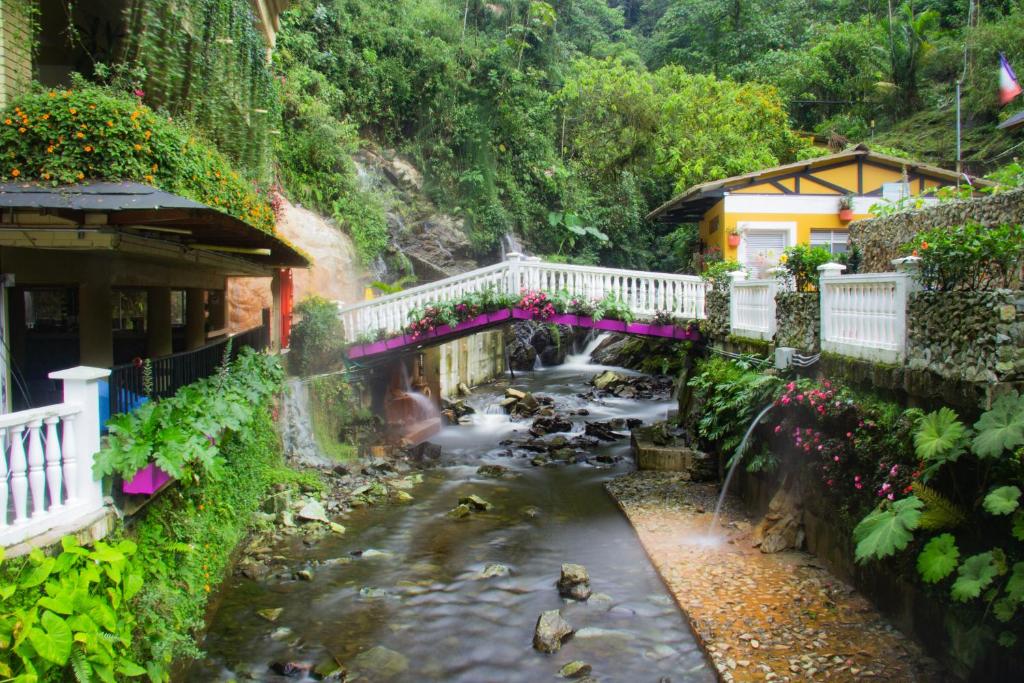
There are several thermal baths in the coffee region, but the natural setting of the Termales Santa Rosa de Cabal is hard to match. From the baths, you look out on the waterfall, which is surrounded by tropical plants and flowers. When you see this place for the first time, it’s guaranteed to take your breath away!
The Termales are located in a nature reserve, at an altitude of over 1,900 meters, in the province of Risaralda. 10 Kilometers away is the town of Santa Rosa de Cabal. The Termales are not on the well-known tourist route to Salento and are therefore often skipped when visiting the coffee triangle. However, if you want to relax a few days in a beautiful, green surroundings, this part of the coffee triangle is definitely worth a detour. Here you can read more about the thermal baths, such as prices and packages, opening hours, the best time to visit the thermal baths, what to bring and the best hotels to stay near Termales Santa Rosa de Cabal.
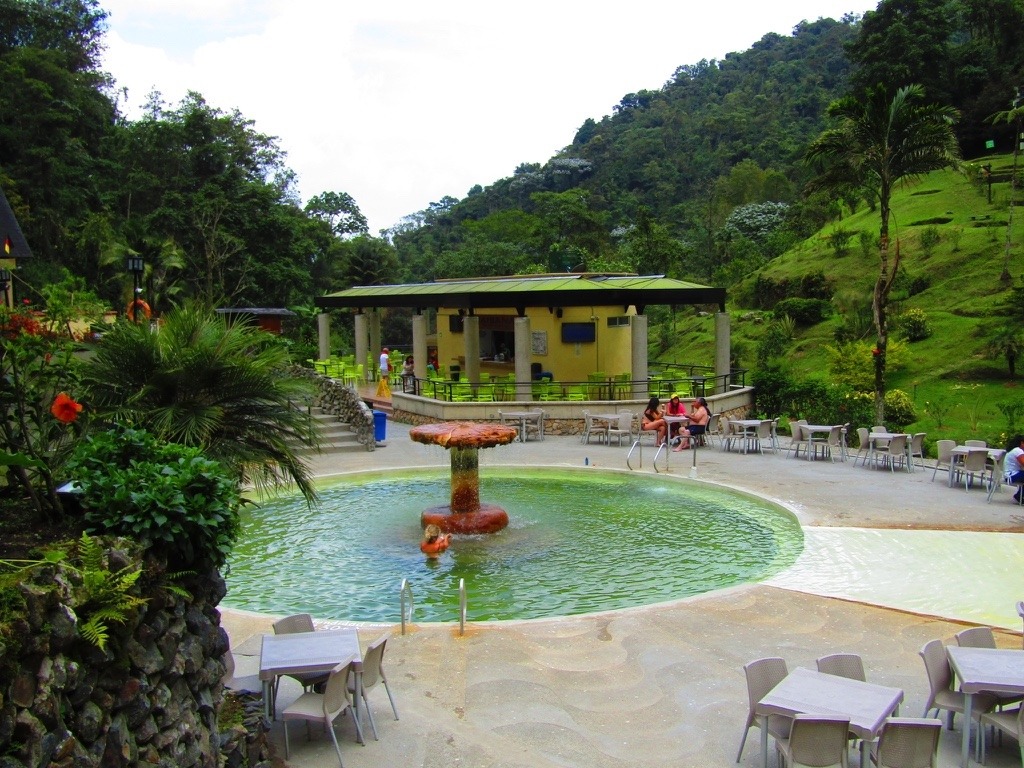
There are 3 pools and 1 children’s pool with natural, warm water. From all the pools you have a beautiful view of the 95-meter high waterfall, under which you can take a cold shower.
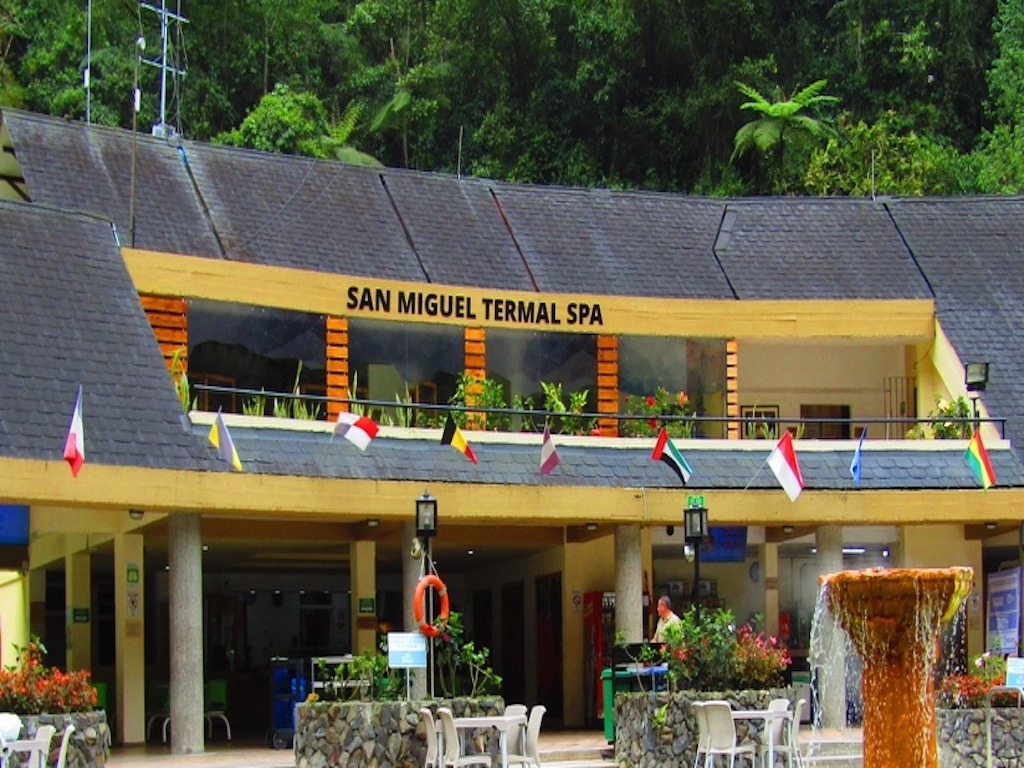
There are various spa treatments at the San Miguel Termal Spa, from a mud mask to scrubs and full body treatments.
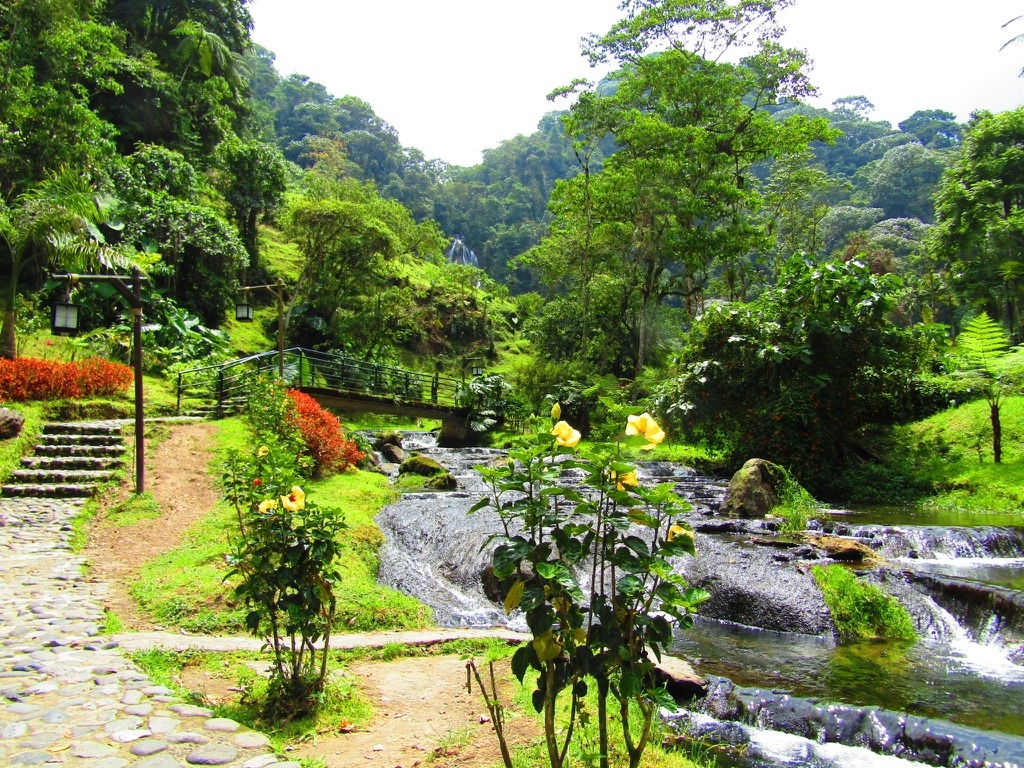
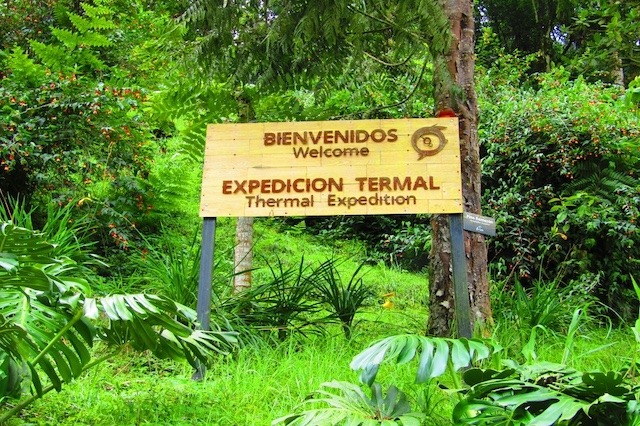
If you arrive early like we did, you will have the trails almost to yourself and can photograph the waterfall in peace. You can also do an organized hike, the Expedición Termal. During this hike of about 2 hours, you will hike with a guide to the point where the waterfall starts.
365 days a year from 9:00 am to 12:00 am (ticket office closes at 10:00 pm)
These prices are valid until 15.12 2025
From St. Rosa de Cabal
By Willy Jeep, taxi or bus
Bus:
The bus departs from the town hall of Santa Rosa de Cabal to the balneario of Termales Santa Rosa de Cabal. A ticket costs around COP2,500-3,000 ($0.75) and the trip takes about 45 minutes. There is a bus every half hour until about 6:00 pm. Upon arrival at the Termales, check what time the bus returns to the city.
Tip: Check with your hotel if it is on the bus route. We were able to get on right in front of our hotel and didn’t have to go into town to catch the bus.
Willy Jeep:
The traditional Willy Jeeps depart from the market of Santa Rosa de Cabal. You agree on a price with the driver on the spot, which is usually around COP5,000/$1.25 one way. In the mornings and early afternoons, Willys go frequently to the Termales.
Taxi:
A one-way taxi ride from the center of Santa Rosa de Cabal to the hot springs costs on average between COP20,000-25,000 ($5-6.25), depending on the time of day, traffic, and any waiting time. The ride usually takes about 15 to 20 minutes. Some drivers also offer a return service where they wait while you are at the pools. Including waiting time, this usually costs around COP40,000-50,000 ($10-12.50).
Coming from Salento
First take the bus to Pereira. From there, continue to Santa Rosa de Cabal/Termales Santa Rosa de Cabal. The bus ride from the Terminal de Transportes in Pereira to Salento takes about 1 hour. Tickets cost around COP12,000/$3. Expreso Alcalá departs every hour and Flota Occidental has 2 departures per day.
Coming from Manizales
First take the bus to St. Rosa de Cabal. Then continue to Termales Santa Rosa de Cabal. The bus ride takes about 1 hour. A ticket costs around COP10,000/$2.50 one way. The trips between Manizales and St. Rosa de Cabal are operated by Flota Occidental and run about every 4 hours (during the day).
Own transport
If you come with your own vehicle, you can park in the spacious parking lot.
During the week in the early morning hours. On weekends and holidays it can get very busy with families, especially later in the morning.
What should you defenitely not forget to bring?
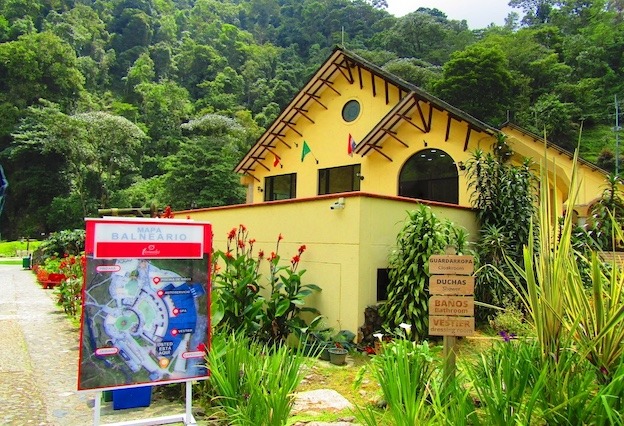
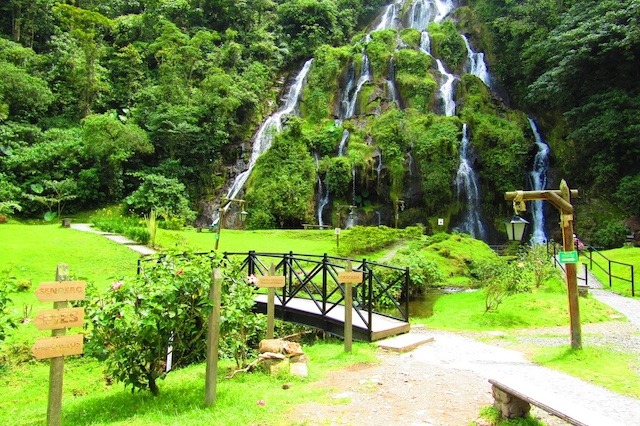
Termales Santa Rosa de Cabal is located in a gorgeous, green surroundings. On the road between Termales and Santa Rosa de Cabal, there are several nice little hotels for every budget, often with beautiful gardens and a “private” river. If you choose your hotel wisely, you can stay very close to the hot springs, or even have them at your doorstep! Check our insiders tips here.
#ColombiaMyWay Tips
# Tip 1
Hotel Termales Santa Rosa de Cabal
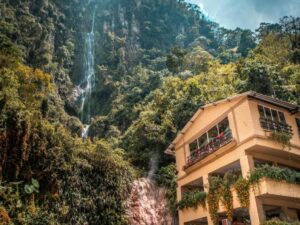
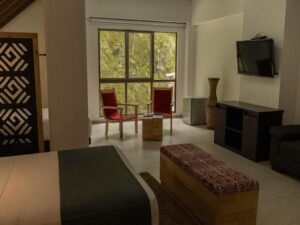
This hotel has a spectacular setting between waterfalls and hotsprings. You cannot get any closer to the thermal baths than in this hotel! If your planning allows it, plan a stay during the week. This is a popular hotel with Colombian tourists and it can be especially crowded on weekends and during vacation periods.
# Tip 2
Mamatina hotel
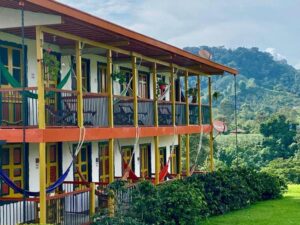
Recommended if you would like to stay close to the Termales, but still book an affordable, comfortable accommodation. The restaurant of Mamatina has a very good reputation. This colorful hotel is close to the Termales, 1km away. The bus to the Termales stops right in front of it!
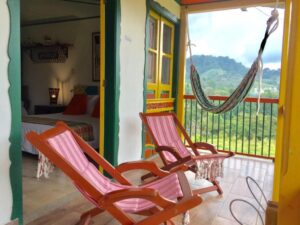
Below you will find more hotels and hostels. For your convenience, we have listed the distance from Termales with each accommodation.
$ price range up to $35
$$ price range $35 – $65
$$$ price range above $65
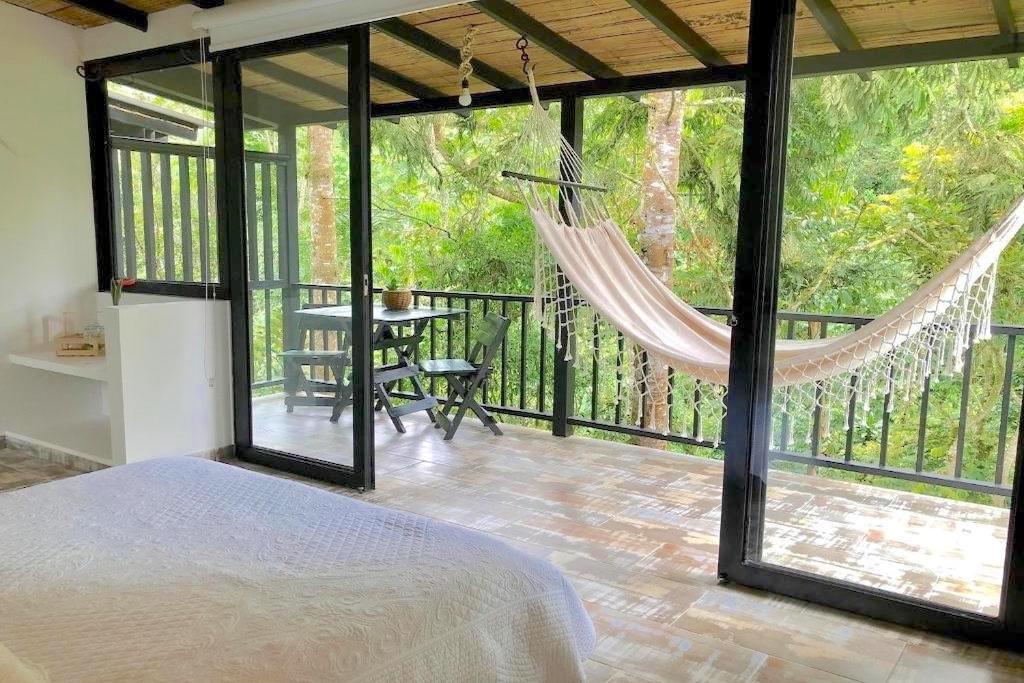
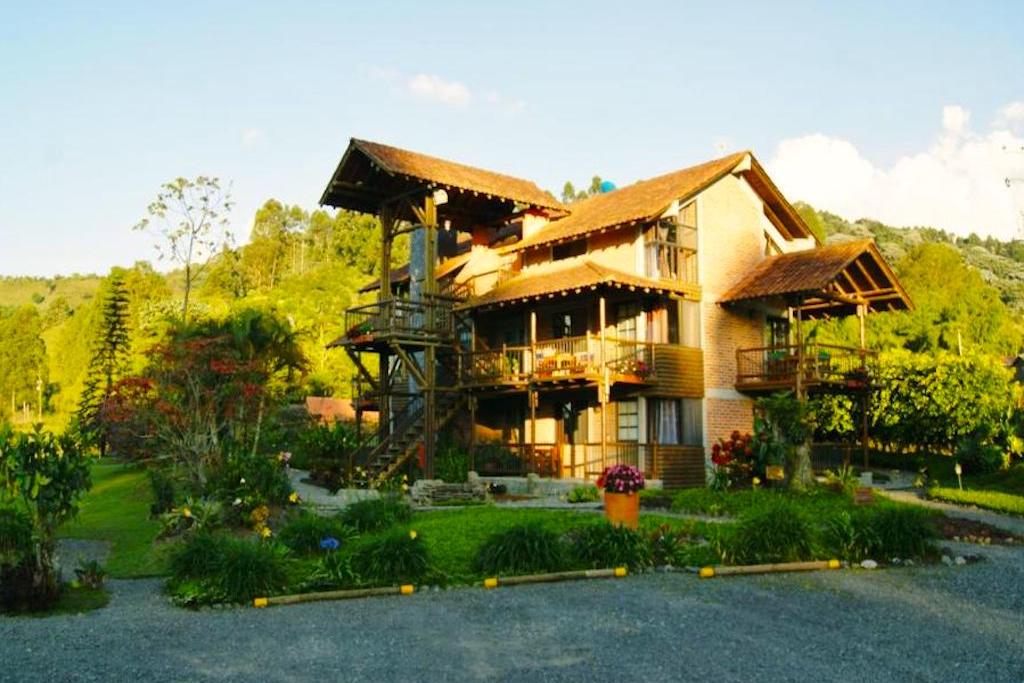
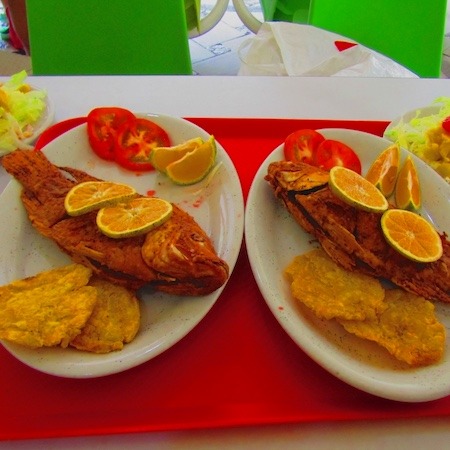
Most of the hotels between Termales and Santa Rosa de Cabal are rural and there is not much to do in the evening. Also, not all hotels have their own restaurant. Therefore, go for dinner in the afternoon so you don’t have to look for a restaurant nearby in the evening.

If you tell a Colombian you’re going to Santa Rosa de Cabal, 9 times out of 10 he won’t mention the thermal baths, but the chorizo santarrossano! This homemade sausage, is a local specialty, which is famous throughout the region.
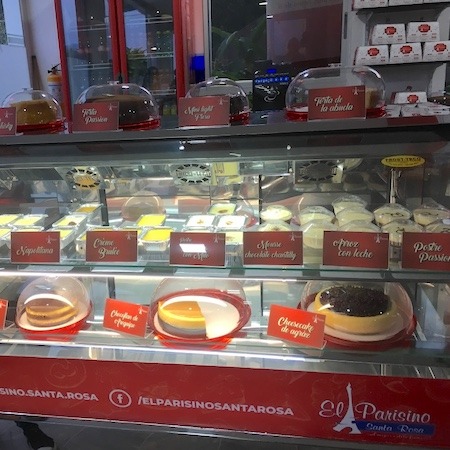
In a beautiful setting, you can enjoy French pastries here, made with a Colombian touch. Be sure to try the yummy Cheesecake con Arequipe (caramel) or the Cheesecake con (mucho) chocolate. Que riiico! Café el Parisino is located in Hacienda Santa Clara, Via Termales de Santa Rosa km 1. Opening hours (August 2025): On Sundays from 12:00 to 20:00, on Mondays and Tuesdays from 13:00 to 19:00, and on Fridays and Saturdays until 20:00.
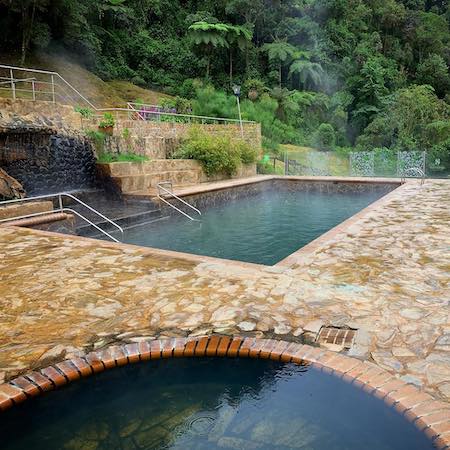
If you can’t get enough of the wonderful hot water, check out San Vicente Reserva Termal, 17 km from the town of Santa Rosa de Cabal. If you go here by rental car, keep in mind that the last 12 km of the road are unpaved.
The page you requested could not be found. Try refining your search, or use the navigation above to locate the post.
Santa Marta is a convenient base for visiting Tayrona National Park, Minca, Palomino in La Guajira and the trek to Ciudad Perdida. Its location on the north coast is very central between Cartagena and Barranquilla to the west and La Guajira to the east.
Santa Marta is Colombia’s oldest city, founded in 1525. The city lies at the foot of the Sierra Nevada de Santa Marta, the highest coastal mountain range in the world. This makes for great mountain views from the beach, the sea, or from your hotel. Today Santa Marta is a mix of old -in the centro histórico- and new in El Rodadero, with highrise hotels on the beach.
Santa Marta is a favorite beach destination of Colombians. The city itself has few attractions; the biggest attractions are those outside the city. That’s why most travelers stay only a few nights, heading to their next destination. We had few expectations for our trip to Santa Marta, but were pleasantly surprised. We found Santa Marta to be a great place for a few days.
In this travel guide we share information and tips for fun things to do in and outside Santa Marta, the best neighborhoods to stay in + the best hotels in Santa Marta. You will also find practical information and useful tips for your stay in Colombia’s oldest city.
What to do in Santa Marta and the surrounding area? From a free tour of the centro histórico to a hike to Tayrona National Park. The best tips for fun things to do and organized tours and activities can be found here.
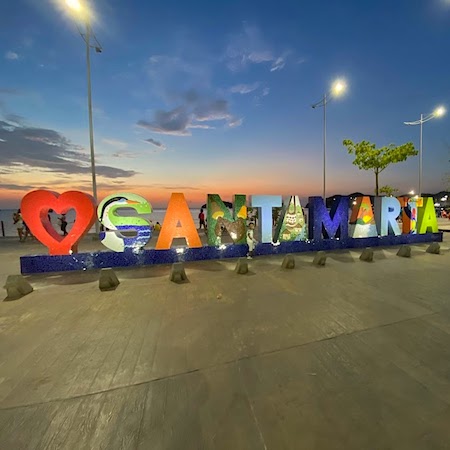
Especially during sunset, the Malecón (promenade) on Santa Marta Bay is a hot spot. People come here to relax or exercise. There are many places where you can drink and eat something and there are many street vendors selling ice cream, coffee and souvenirs. Near the letters of Santa Marta you will find the most popular spot for a photo shoot.
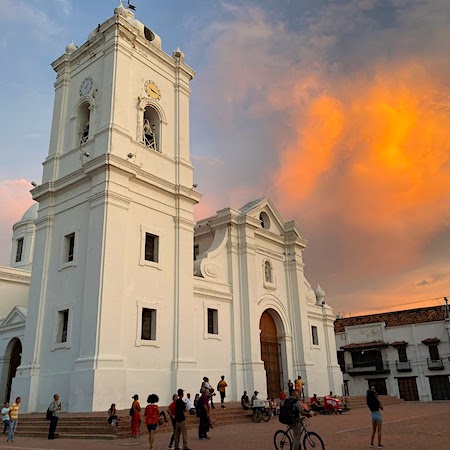
Santa Marta is the oldest city in Colombia and was founded in 1525. As such, in the centro histórico you will see a number of beautiful colonial buildings, including the white cathedral at the Plaza de la Basílica de Santa Marta and the Museo del Oro Tairona, the gold museum. The centro histórico is located between Calle 10 and Calle 22, near Santa Marta Bay. Plaza de Bolívar (also called Santander park) is in the heart of the historic center. A fun way to discover the “old” city is with a free tour, which you can book here. The tour is on a gratuity basis for the guide. Guideline:around $10 per person. Other options for a tour in Santa Marta include a street food tour in the historic center, a bicycle tour and a private tour of Santa Marta

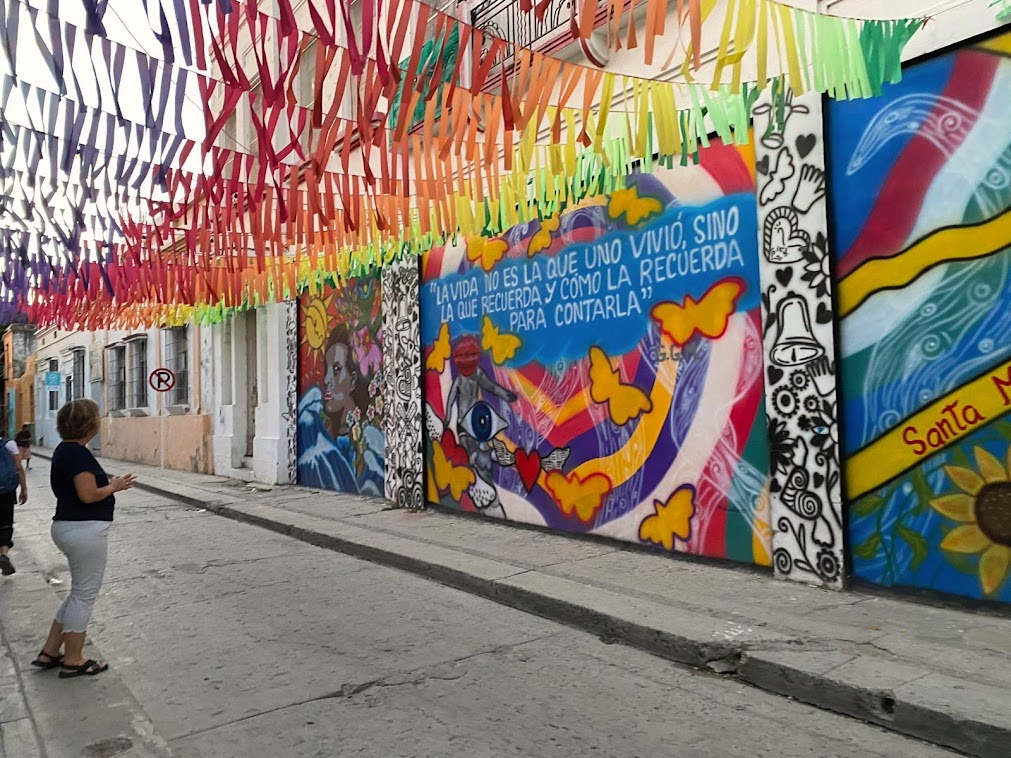
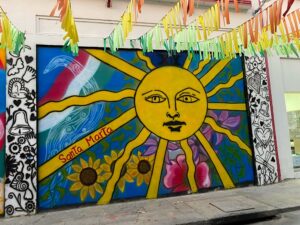
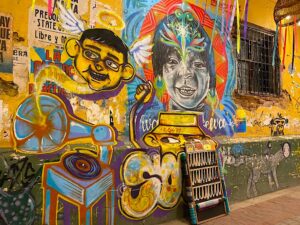
Among the traditional buildings, you’ll also find many colorful murals, including in the alley between Plaza de la Basílica de Santa Marta and the Malecón (Calle 16) and Carrera 3. We thought that it all fits together: colonial buildings and street art: a nice contrast between old and new!
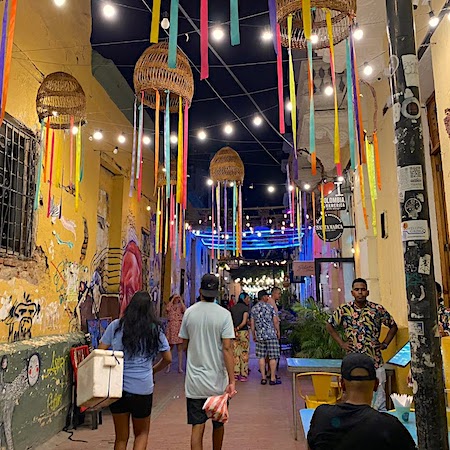
The Carrera 3 connects the Parque de Bolívar with the Parque de los Novios. The narrow streets are very pleasant with street performers, such as musicians, mime players and rappers, who can improvise amazingly well. In terms of atmosphere, it reminded us of the Getsemaní neighborhood in Cartagena. There are cafes and restaurants for every taste and budget. Tip: With happy hour, there are high discounts on cocktails,
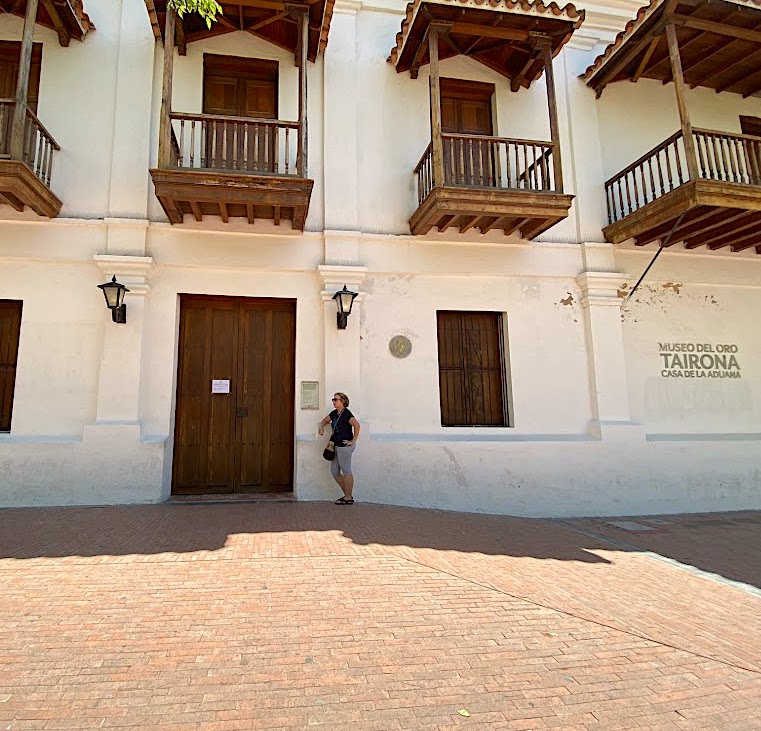
The gold museum (Museo del Oro Tairona) is housed in the restored Casa de la Aduana, one of Santa Marta’s oldest colonial buildings near Plaza Bolívar. The museum features a collection of over 500 artifacts—goldwork, ceramics, textiles—that showcase the culture of the indigenous Tairona people and the history of the region. Access to the museum is free. (closed on Mondays). Unfortunately, during our stay in Santa Marta, the gold museum was also closed on Fridays and Saturdays. Check more info on the official website of the Museo del Oro Tairona. Another cultural trip you can take is to the house where Simon Bolivar spent his last days, the hacienda La Quinta de San Pedro Alejandrino.
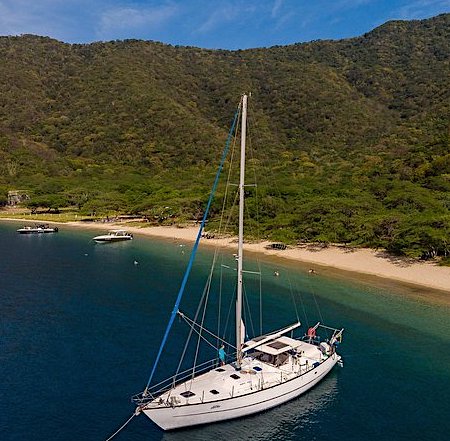
Santa Marta’s most beautiful beaches are not in the city, but outside of the city. The beach at Santa Marta Bay, while nice for watching the sunset, is not a clean beach. The beaches in El Rodadero are better, but crowded. Furthermore, there are many street vendors and you look out on highrise hotels, so not the most beautiful beaches as far as we are concerned. Playa Blanca in El Rodadero is a beach with fun activities for children, such as a zipline. In Tayrona national park there are some nice beaches, such as Bahía Concha, Playa Cristal, Playa Cinto, Playa Cabo San Juan and Playa Brava. Most of the beaches can be reached by boat. A nice way to sail to Bahia Concha is with a sailing trip to Bahia Concha, Tip: From December through April there is a lot of wind, so before booking a boat trip to the beaches, check the forecast for wind and waves.
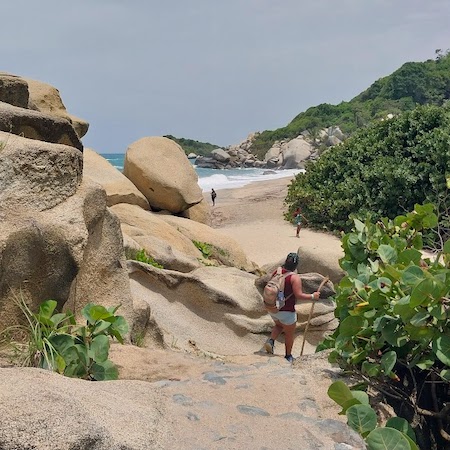
The location of Tayrona National Park is spectacular, between the Caribbean Sea and the Sierra Nevada de St. Marta. In Tayrona national park you can make beautiful hikes on trails that run through the jungle to the beaches. You can do a day trip, but there are also several options to camp there or stay overnight in a hotel. Tayrona National Park is easily accessible from Santa Marta with a one-hour bus ride. If you prefer to go to Tayrona National Park with a guide, check the options here.
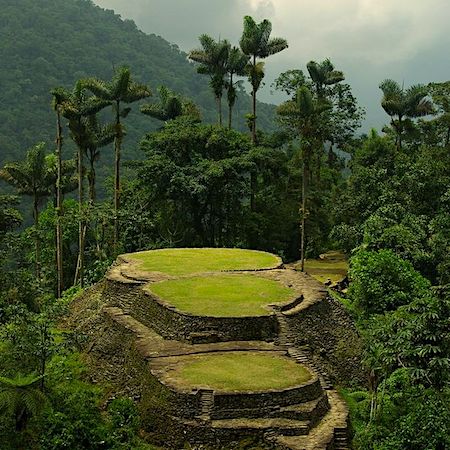
Santa Marta is starting point of treks to the Ciuadad Perdida, the lost city of Colombia. During a trekking of 4 days, you will swim at waterfalls, spot birds and other animals and enjoy the sounds of the jungle. You will meet people from the Indian communities and can see how they live in the villages. The guide shares with you his insider knowledge about the Indian communities, which makes the whole experience extra special.
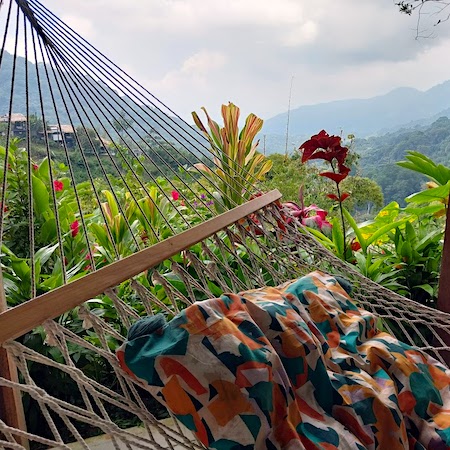
Minca is a nice village in the Sierra Nevada de Santa Marta, about a 45-minute drive from Santa Marta. Here you can breathe the wonderful fresh mountain air, a relief from the hot Caribbean coast! There’s not much to do in the village itself, but in the surrounding area you can hike to waterfalls, visit coffee and cocoa plantations and do some serious bird watching. Are you only in Santa Marta for a short time? Then you can take a day trip from Santa Marta to Minca and surroundings, visit coffee and cocoa plantations and do some bird watching. . Check more information in our travel guide Minca
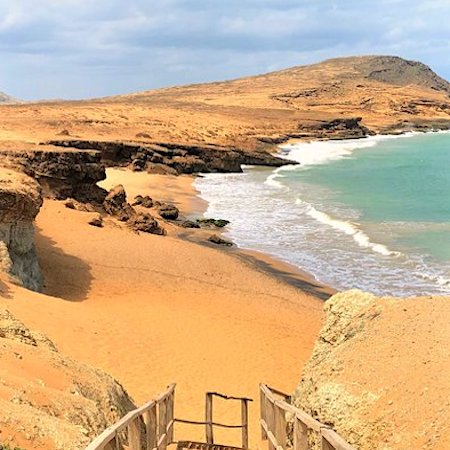
In Santa Marta, you can book a tour to La Guajira, the home of the indigenous Wayuu community. You have the beaches in la Guajira mostly to yourself. You can kitesurf in Cabo de la Vela, “sandboard” in the Tarao dunes and bird watch in Parque Nacional Natural Macuira, the “wettest” area of La Guajira. If you want to go to Punta Gallinas -the most extreme point of the peninsula -a tour is absolutely a must, given the limited infrastructure. Plus, with a guide, you’ll get an insider’s look at Wayuu culture.
How to get to Santa Marta?
Santa Marta is centrally located on the north coast of Colombia and is easily accessible by plane, bus and private transportation. Her you can find information on how to get to Santa Marta and tips for transportation in Santa Marta.
By plane
You can fly to Santa Marta from places such as Bogotá, Medellín, Cali, Neiva and Pereira. We started our trip on the north coast of Colombia in Barranquilla and flew back to Bogotá from Santa Marta. We paid about 50US$ pp one way with Wingo Air (1.5h).
The airport
Aeropuerto Internacional Simon Bolívar is 16 km from Santa Marta. A taxi from the historic center to the airport costs around COP 30,000/$7.50 USD and takes about half an hour. A bus ticket costs around COP 2000-3000/under $1 USD and takes about 45 minutes. A taxi from the airport to El Rodadero costs around COP 27,000/$7 USD. A private “pre-booked” cab is a very relaxed option. here you can book a private taxi online.
Playa del Aeropuerto
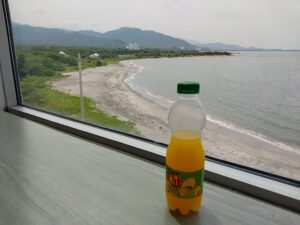
What is immediately noticeable is that Santa Marta’s airport is located on the beach, the Playa del Aeropuerto. Especially on weekends, this is a busy place. What also stands out are the many people who want to sell you anything from the beach. Because of the police presence, they do keep their distance.
#Tip if you depart from Santa Marta
There are two departure halls: Wingo departs from departure hall 1 and Avianca and Latam depart from departure hall 2. This is not well marked and we had to search some time to find Wingo’s departure hall, which eventually turned out to be near Wingo’s check-in desk. The airport is not big, but it has all kinds of souvenir stores, coffee shops like Tostao and a drugstore. There is also a food court with mostly fast food. From the food court you overlook the beach and the Sierra Nevada.
By bus
From Minca
In 2023, we took a “colectivo” (minibus) for COP9000 pp (one way). The bus leaves near Hotel Minca, at the entrance to the village. We were dropped off at the last stop, the busy central market. Backpackers who were in the same colectivo and wanted to catch the bus to Palomino were dropped off before us. A taxi soon came along and took us to our hotel in el Centro Histórico for COP8000.
From Palomino
You must take the bus from Riohacha to Santa Marta, which stops in Palomino. The ride takes about 1.5 hours and the price starts at COP30,000/$7.50
From Cartagena and Barranquilla
If you are traveling from Cartagena or Barranquilla to St. Marta, you may find it convenient to travel by the “colectivos” (minibuses) of MarSol or Berlinas. Instead of taking a taxi to the bus terminal, catch the colectivo at the MarSol or Berlinas office in Cartagena. In Santa Marta, you will be dropped off at their office. There are set times, including several buses per day on weekends. You can make reservations via WhatsApp or through the RedBus app.
Price Indication
Cartagena-Santa Marta: COP90,000/$22.50 (one way) 5 hours.
Barranquilla-Santa Marta: COP45,000/$11.25 (one way) 3 hours
Private transportation
If you have little time or want to travel in extra comfort, you can also opt for a private transfer, where you will be picked up at your hotel in Cartagena and dropped off at your hotel in Santa Marta. Booking a private transfer is possible here. If you want to travel by private transport from Minca, it will cost you COP100,000/$25 for 2 people. You can book the private transfer also book online.
Transportation in Santa Marta
Santa Marta’s historic center is perfectly walkable. We only took a cab when we arrived by bus. A taxi for a short ride from the central market to Plaza de la Basílica de Santa Marta cost us COP8000/$2. The minimum fare for a taxi in Santa Marta is COP5500/$1.50. A taxi from the historic center to El Rodadero will cost you about COP25,000/$6. Standard fare for a bus ride is COP2300/$0.60.
(prices updated August 2025)
The dry season is from December through April. It is then less warm and there is more wind. From December to February is the high season. In March and April it begins to rain more and in the month of May it rains almost every day. June through August are busier months with an extra busy period in July during the festival “Fiestas del Mar,” which takes place every year during 10 days at the end of July. During this period it is essential to book your hotel early. From September to November is the rainy season and things get quieter. October is the rainiest month. We were in Santa Marta at the end of September and had very nice weather, so you also need a little luck with the weather. Due to the rougher sea, the period from December to April is tricky for booking a boat trip. The boat trip can be very rough. Therefore check the wind and waves in Santa Marta before booking a boat trip.
Where to stay in Santa Marta? Centro histórico en El Rodadero…. Which district is the most fun and convenient to stay in? Find the best tips here.
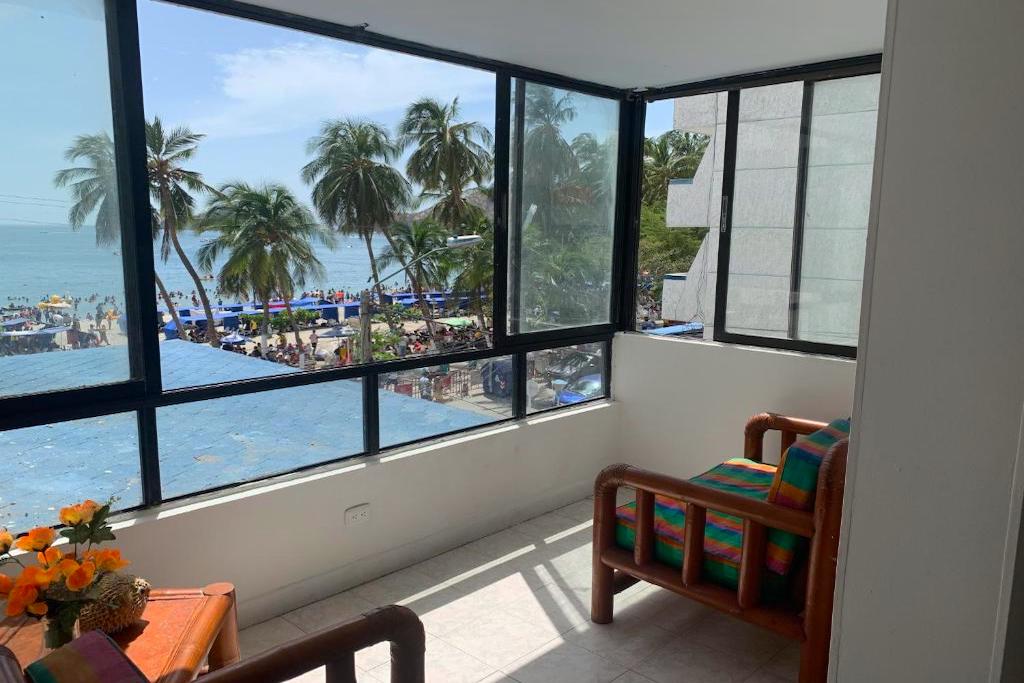
Centro Histórico and El Rodadero and are the two most popular neighborhoods with travelers. Rodadero is 5 km. from the centro histórico. For Colombian tourists, Santa Marta is a #1 beach destination. In particular, the beaches in Rodadero are very popular and many of the luxury hotels are located here.
In the Centro Histórico you will find a wide selection of boutique hotels. There are also plenty of choices in the cheaper price range.
If you want to be close to the beach, in a quieter location than Rodadero Beach, then Pozo Colorado an option. The neighborhood is 30 minutes by taxi from the centro histórico. Bello Horizonte is a safe, upscale neighborhood between the airport and El Rodadero, 25 minutes by taxu from downtown. The neighborhood resembles El Rodadero but is quieter and is more of a residential area.
If you want to take a diving course, then Taganga is an option to book a hotel or hostel. Prices for hostels and hotels there are lower than in Santa Marta.
#ColombiaMyWay hotel tips
We found centro histórico a nice neighborhood to spend the night. Here you will find some of Santa Marta’s most beautiful traditional buildings.
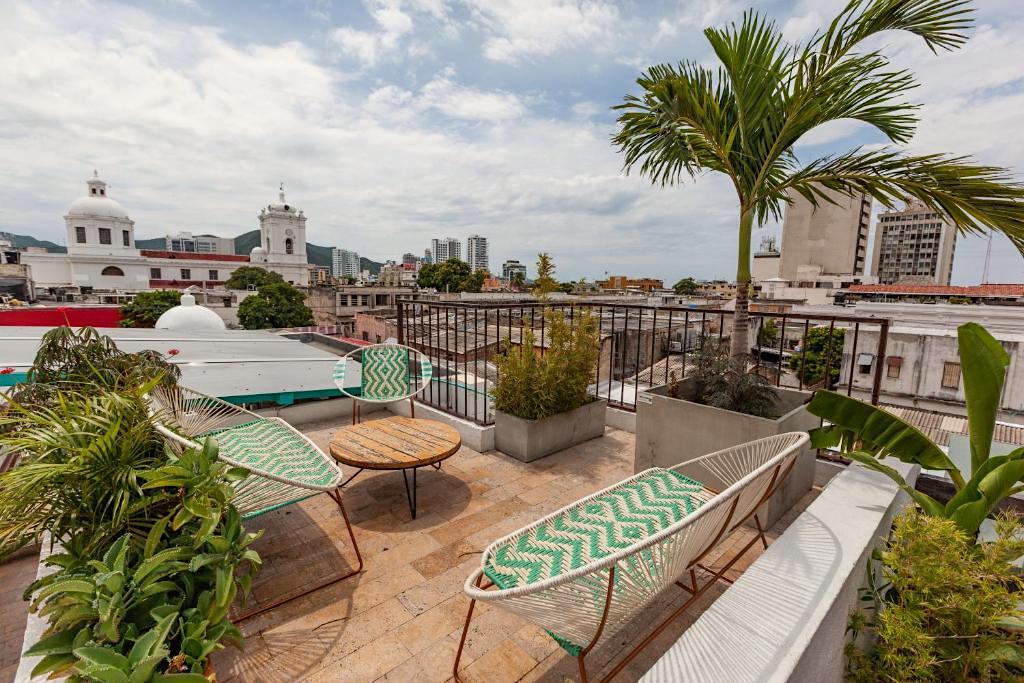
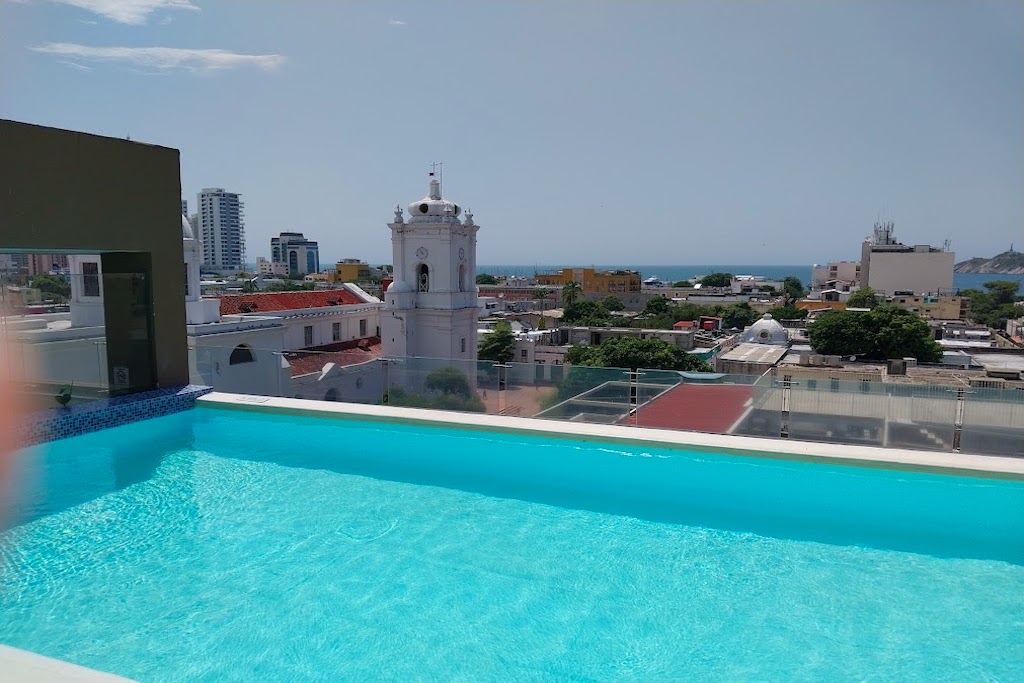
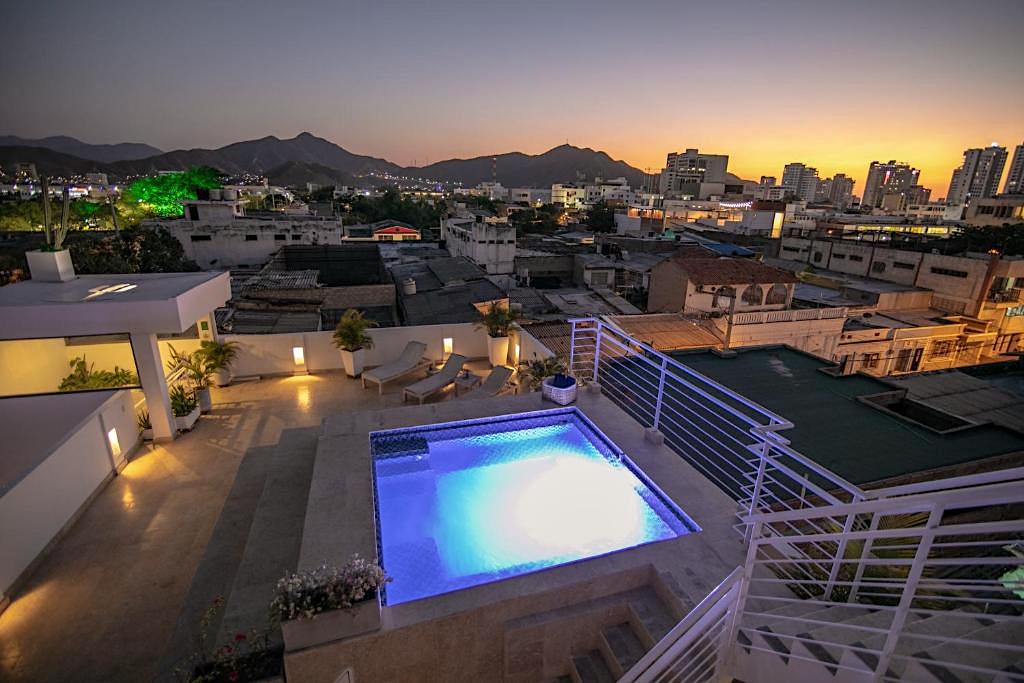
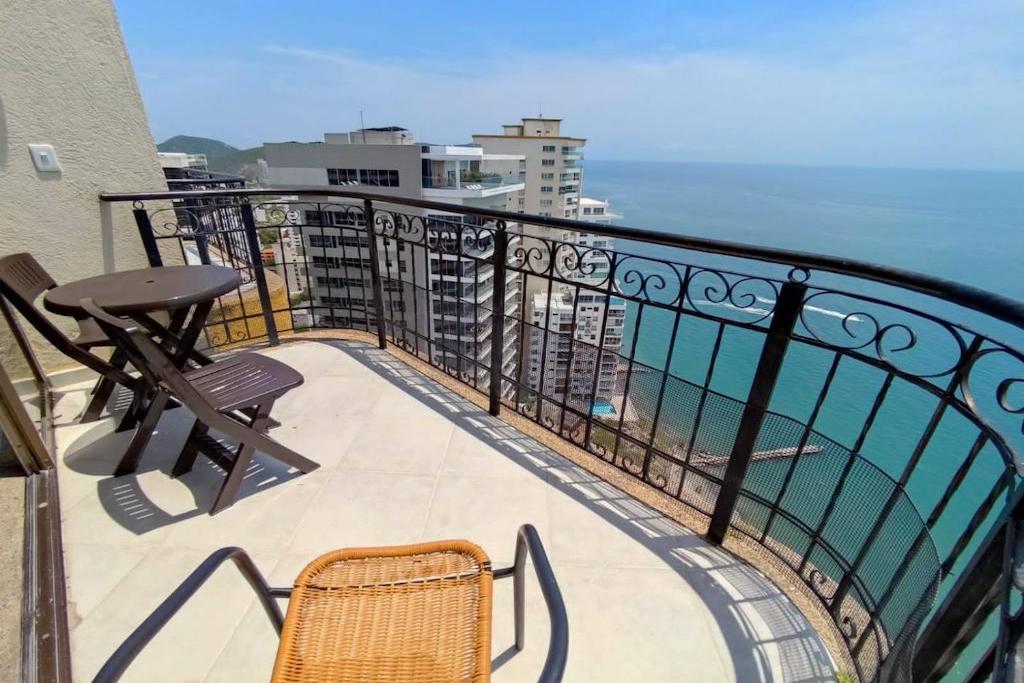
From the roof terrace of our hotel Catedral Plaza we looked out on the white cathedral.
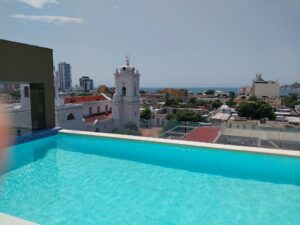
Also from the roof terrace of Masaya Santa Marta hostel, you have a great view of the cathedral and the city.
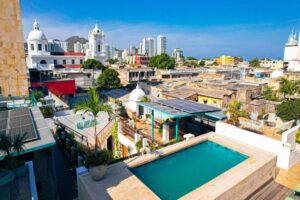
Furthermore, there are cheerfully colored facades, quaint stores and colorful murals.
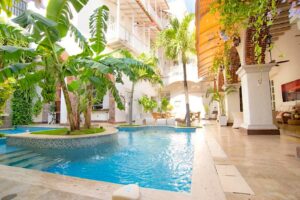
The more luxurious Boutique Hotel Don Pepe is also in the historic center -a bit closer to the Malecón- and looked very cozy.
Especially the colorful street Carrera 3 is a pleasant place to be. In terms of atmosphere, it reminded us of the artsy neighborhood of Getsemani in Cartegena.
Furthermore, its location is central: you can walk to the Malecón, the boulevard on Santa Marta’s bay.
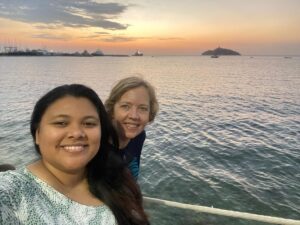
Even if you travel onward to Tayrona national park, Minca and Palomino, the historic center is a convenient place to spend the night as buses leave from the market.
What are the best hotels in Santa Marta? Check out more hotel tips in Santa Marta for every budget below.
$ price range up to $50
$$ price range $50 – $100
$$$ price range above $100
Other neighborhoods
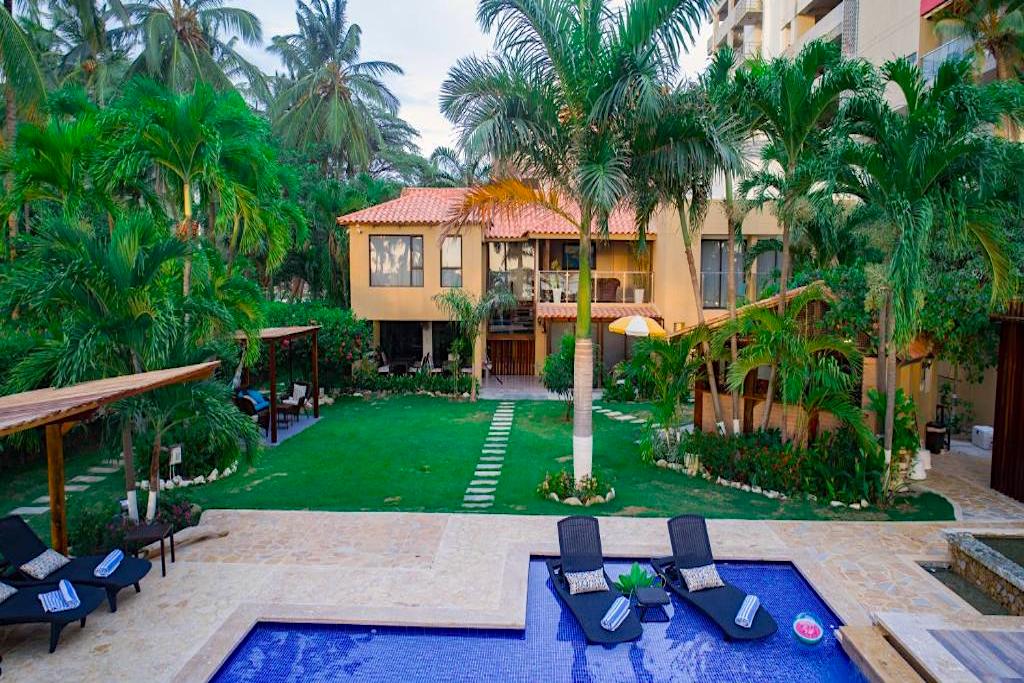
Pozos Colorados
30 minutes by cab from the centro histórico
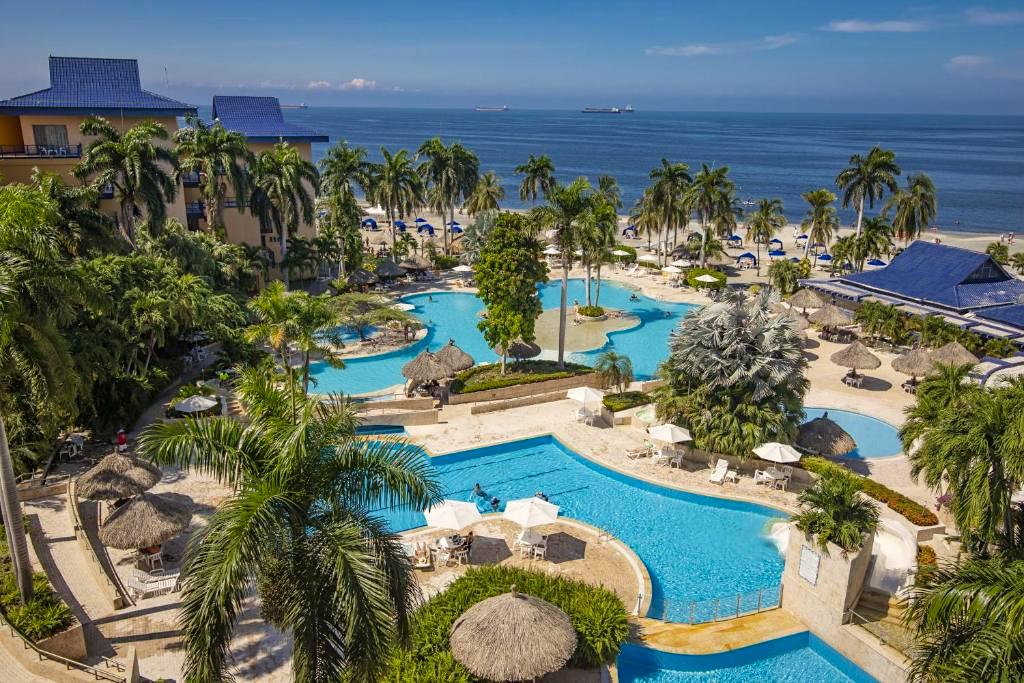
Bello Horizontes
25 minutes by cab from the city center.
Santa Marta has restaurants for every taste and budget: from “gourmet” arepas to Mediterranean and specialty seafood restaurants.
In Carrera 3, which connects Parque de Bolívar with Parque de los Novios, there are several cafes and restaurants for every taste,and budget, like mexican, chinese, but also fast food places where you can buy a hot dog for COP6000/$1.50. Several cafes have happy hour from 6pm-8pm, with a big discount on cocktails. As you walk further toward Calle 16, the music gets louder and you’ll find more clubs.
Around Parque de los Novios you will also find several restaurants and bars, and there is regular live music in the evening.
On the Malecón on Santa Marta Bay, you’ll find coffee shop Juan Valdez and several businesses where you can buy an ice cream, oblea or Malteada (a kind of combo of a shake and cream). There is also fast food, such as a place where you can order fries all kinds of ways, with meat, chicken and lots of sauces.
The best nights to go out are Thursday and Saturday nights. If you want to go out in the big Colombian clubs, El Rodadero is the place to be.
Organized food & drink tours
During a street food tour in the centro histórico, you can taste Santa Marta’s traditional specialties while learning all about Colombian culture.
A trip in a Chiva, is a typical Colombian “party” experience. A chiva is a
cheerfully colored bus that has been converted into a “party bus.” A ride in a Chiva guarantees lots of music, lots of ambiente and Aguardiente!
Here are our tips for Santa Marta’s best restaurants, best coffee shops and best clubs in Santa Marta’s historic center.
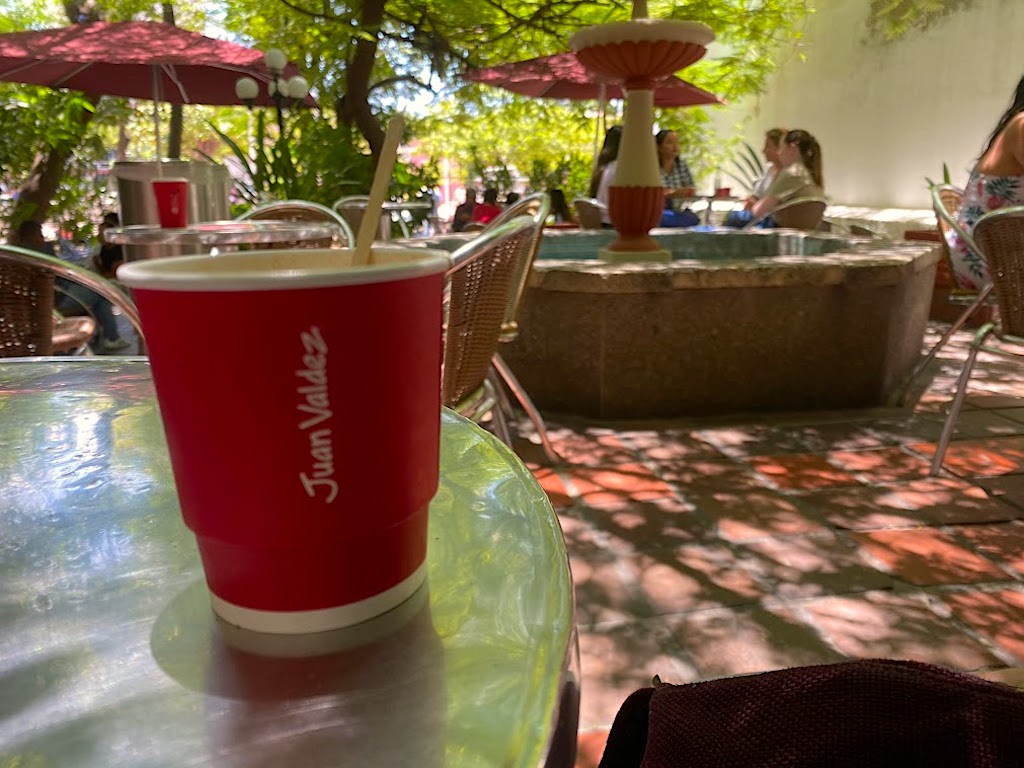
Calle 14 Entre # 2 y 3 al lado de la Alcaldía
For a good cup of coffee on a shaded terrace at Plaza Venezuela, near the gold museum.
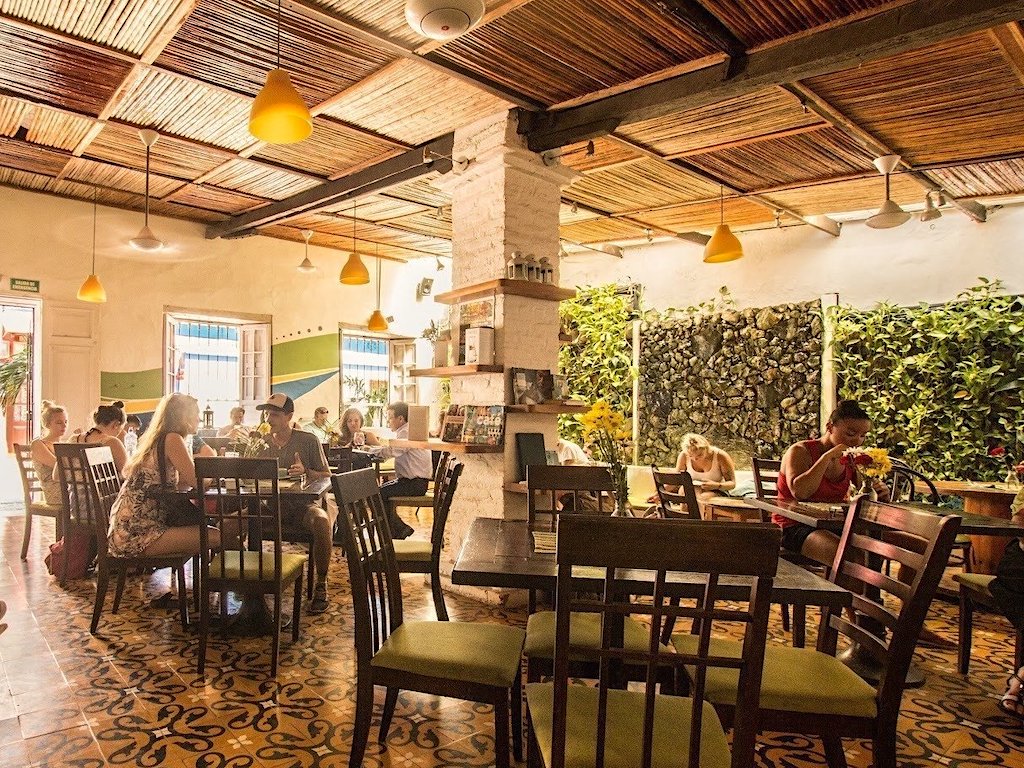
Parque de los Novios
Calle 19 #3-60
Ikaro café uses local coffee beans that they roast themselves. It’s a great place to work for digital nomads and you can get good vegan and vegetarian food here. Also for oriental dishes like Pad Thai. Organic products are used.
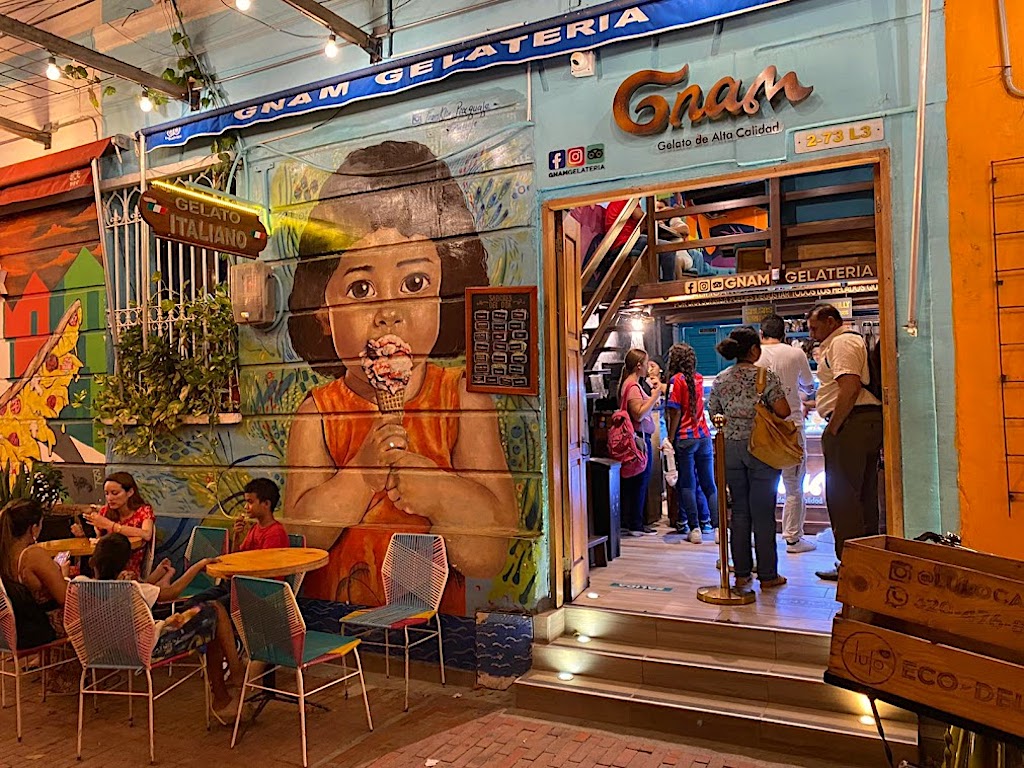
Carrera 3 #17-73
Italian ice cream parlor with long lines at the door. Here you can taste Italian ice cream with traditional flavors, but also with a local touch, through the addition of fruits, such as the corozo fruit typical of the Caribbean coast and maracuja (passion fruit).
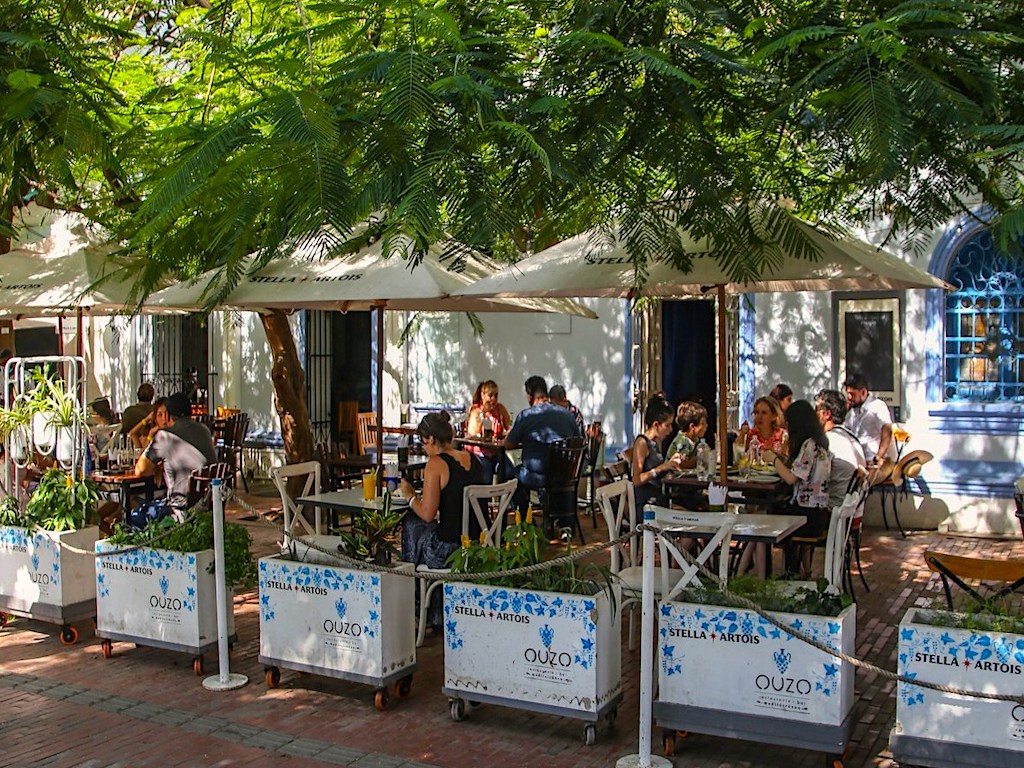
Parque de los Novios
Cra. 3 #19-29
Mediterranean restaurant serving Italian and Greek meals such as octopus, lamb, pizza, raviolis and pasta with seafood. You can sit outside or inside, on several floors.
Tip: From Mon-Fri, you can get cheap lunch (around COP15,000/$4) with the menú del día (daily menu).
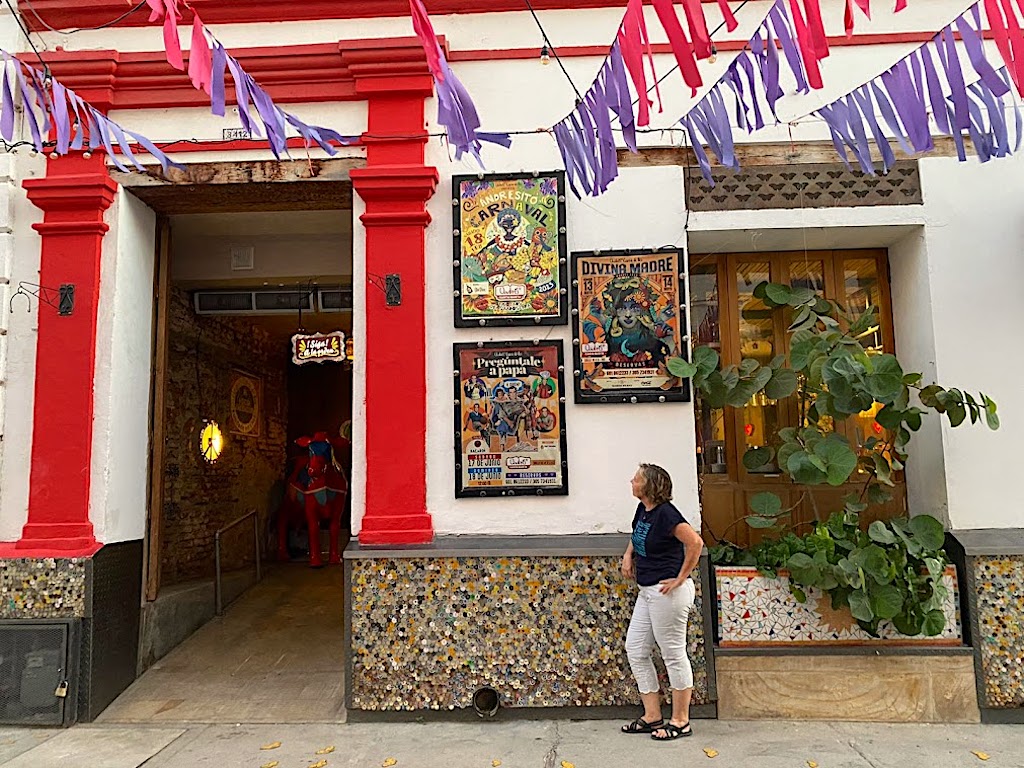
Calle 16 #3-112
Between the Plaza de la basílica de Santa Marta and Santa Marta Bay, you’ll find Andres Santa Marta. Easily recognizable by the colored flags in front of the restaurant. Here, in an atmospheric setting, you can enjoy a good piece of meat or chicken a la Parilla, or typical Colombian dishes and snacks, such as patacones with various sauces.
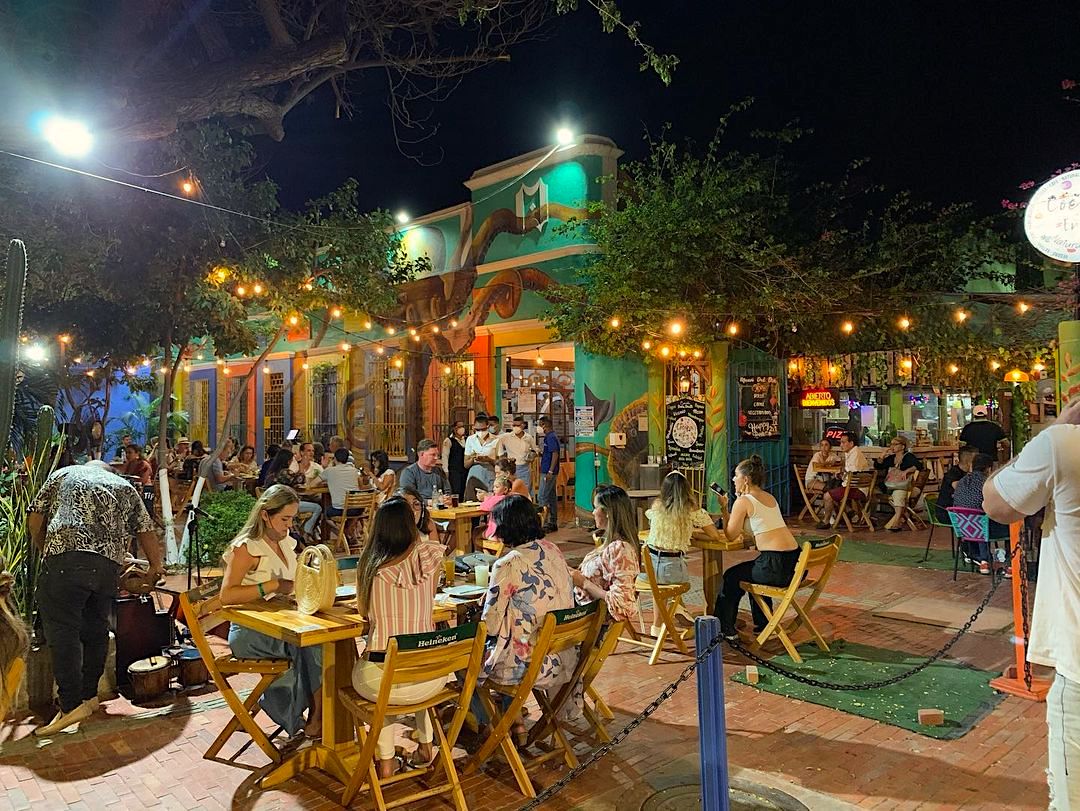
Parque de los Novios
Calle 19 #2 – 17
Donde Chucho is a traditional restaurant with a very extensive menu, which specializes in fish and seafood. There are also 2 more restaurants in El Rodadero; Chucho Blu (on the waterfront) and Donde Chucho Rodadero. The establishment on Parque de los Novios has regular live music.
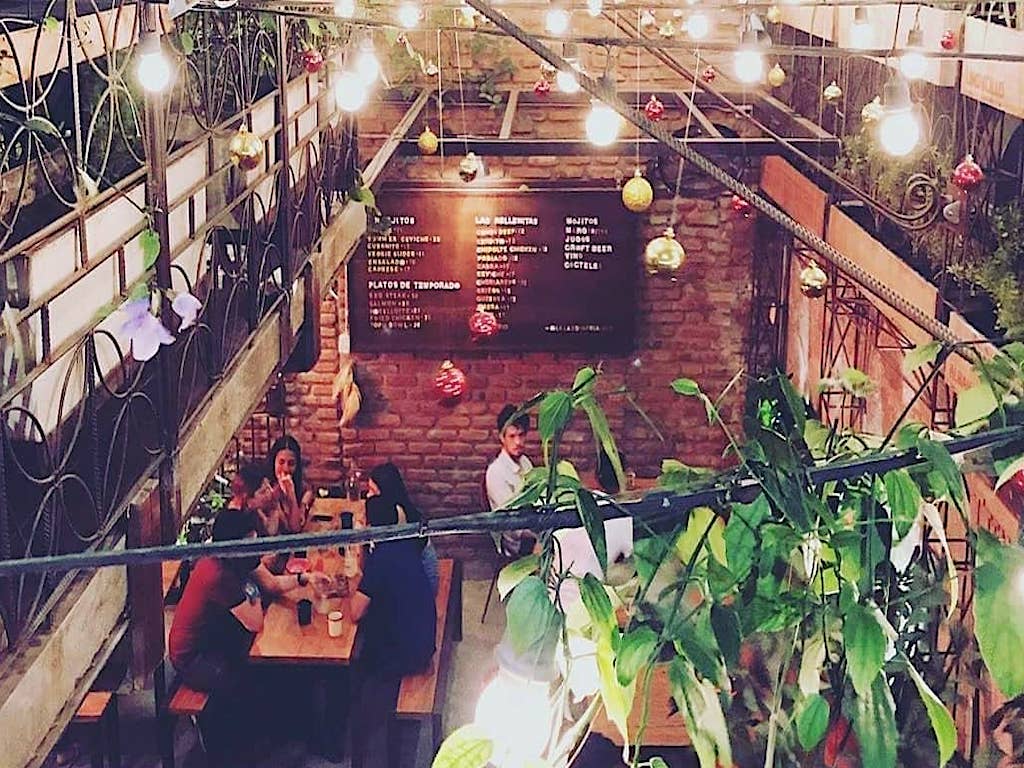
Carrera 3 #16-34
In this cozy building -next to Gnam gelateria- you can get breakfast, superdeluxe “gourmet” arepas and wraps, among other things. There are also vegetarian, vegan and gluten-free options.
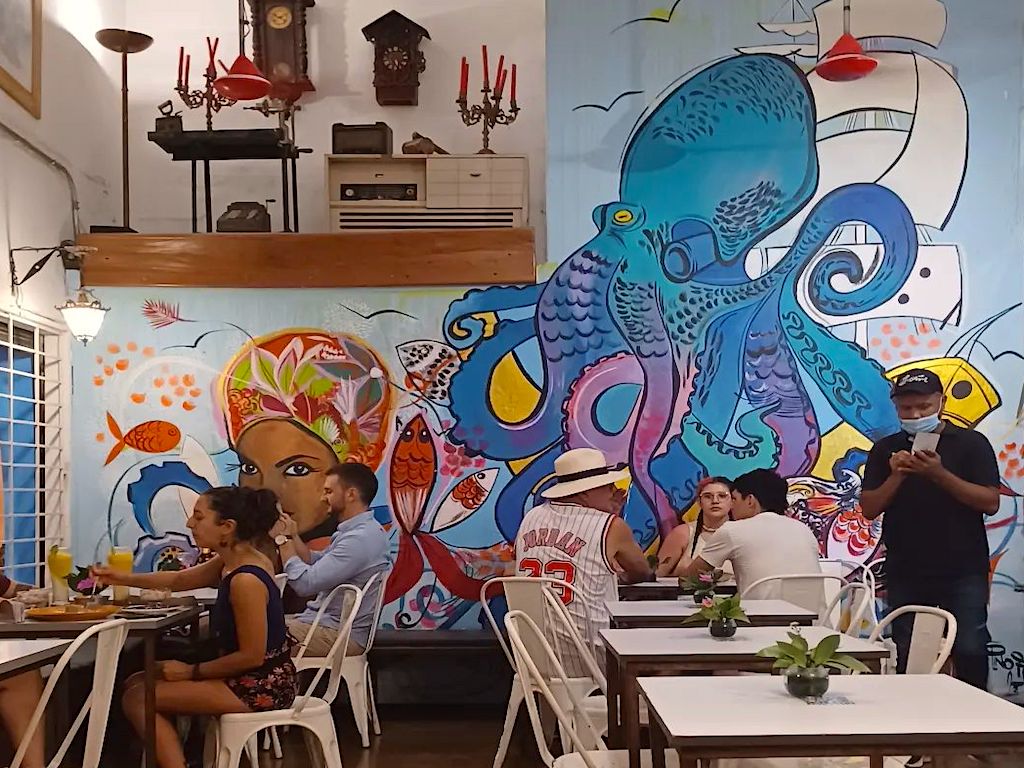
Carrera 3 #16-30
This little restaurant is known for its delicious fish, ceviche and handmade pasta. There are a few tables outside and you can also sit inside, in a nice setting.

Parque de los Novios
Calle 19 #3 – 25
For tasty steak, chicken and the best burgers in Santa Marta. Porthos Steakhouse and Pub is also a great place for a good glass of beer and a cocktail.
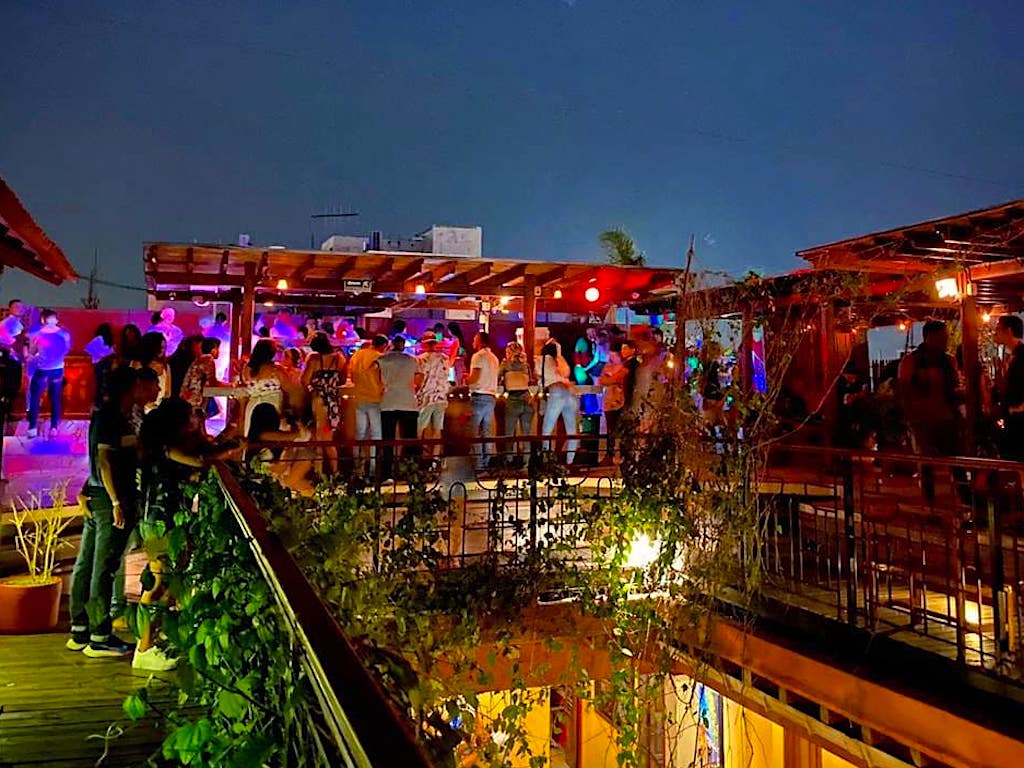
Calle 14 # 3-58
A party hostel, where you can party on the rooftop terrace from Thursday to Sunday, with live music and DJs.
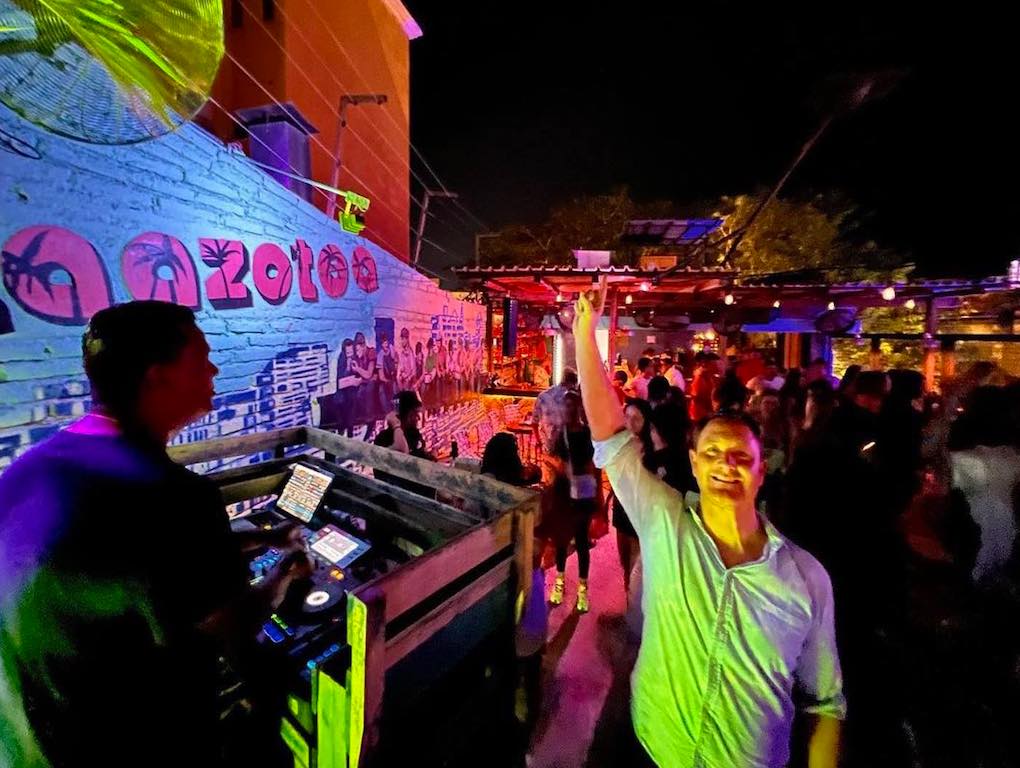
Parque de los Novios
Carrera 3 #19-25
Come early and try one of the 20 cocktails. You can dance all night on the rooftop terrace with music from the DJs. (rock, funk, hip-hop, disco, dance, house, salsa)
@herwegofilms.
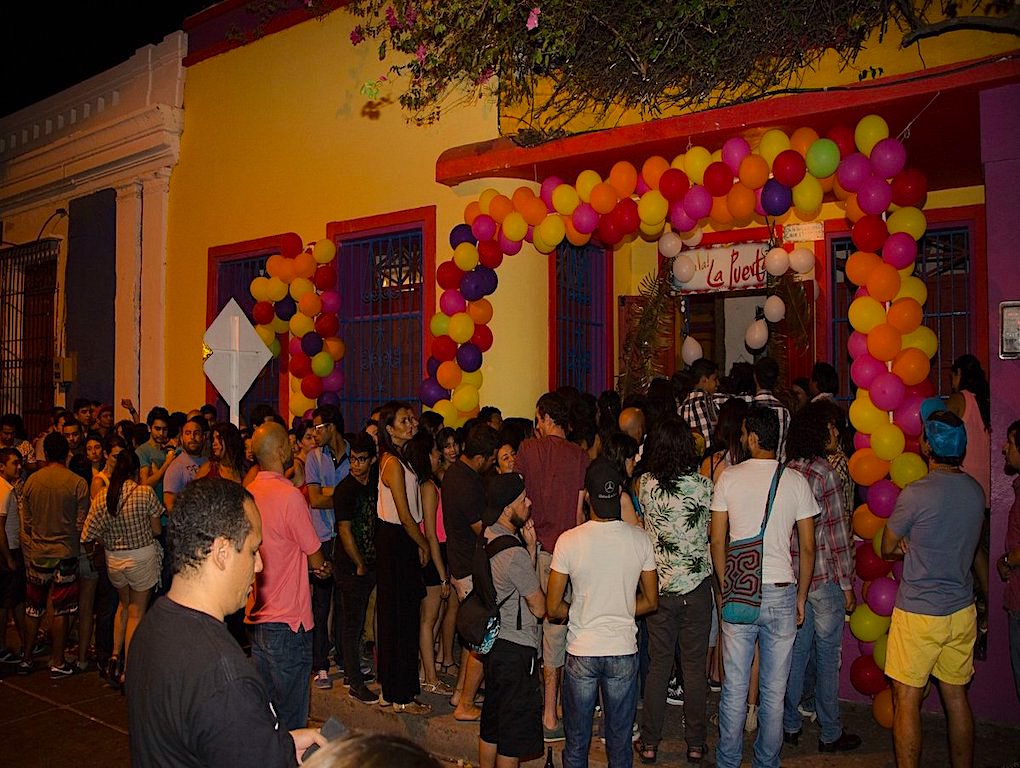
Calle 17 #2-29
Nightclub with a mix of locals and travelers, where you can dance to salsa music.
Is Santa Marta safe? What should I bring with me? What about withdrawing money in Santa Marta? Check here for practical information and useful tips for your stay in Santa Marta.
The water from the tap is not drinkable
There are plenty of ATMs in Santa Marta. If you go to Minca, Tayrona National Park or Cabo de la Vela after Santa Marta, withdraw money in Santa Marta, as there is no ATM in those places.
No vaccinations are required for Santa Marta. If you are going to Tayrona National Park, a yellow fever shot is recommended.
Our own experience (September 2023)
Update about security Santa Marta July 2025
In the last few years, Santa Marta has become less safe. The city can be relatively safe in popular tourist areas during the day, especially with proper planning and vigilance. However, there are elevated risks, particularly from petty crimes, scams, and rare but serious violent incidents. In April 2025, an Italian tourist was killed on the outskirts of Santa Marta. The murder was linked to organized crime in the Sierra Nevada region.
Staying informed of local advisories and choosing secure neighborhoods and transportation options is key for a safe visit.
Tips to stay safe
Wifi is generally good in Santa Marta. If you want a data package for your phone, provider Claro has the best coverage in Colombia.
There are several small stores that sell basic groceries.
In the centro histórico, we found the Exitó a must. A kind of department store, where you can buy food and drinks as well as clothes, among other things.
At Totto (next to Hotel Catedral Plaza) you can buy backpacks, rain jackets and other travel items for a fraction of what it costs in Europe or the Caribbean.

Mompox is one of Colombia’s best-preserved colonial cities. Founded in 1537, the city has been a UNESCO World Heritage Site since 1995. Mompox has 44,000 inhabitants and is located deep inland on the Río Magdalena, more than 300 km southeast of Cartagena.
“Little Cartagena”
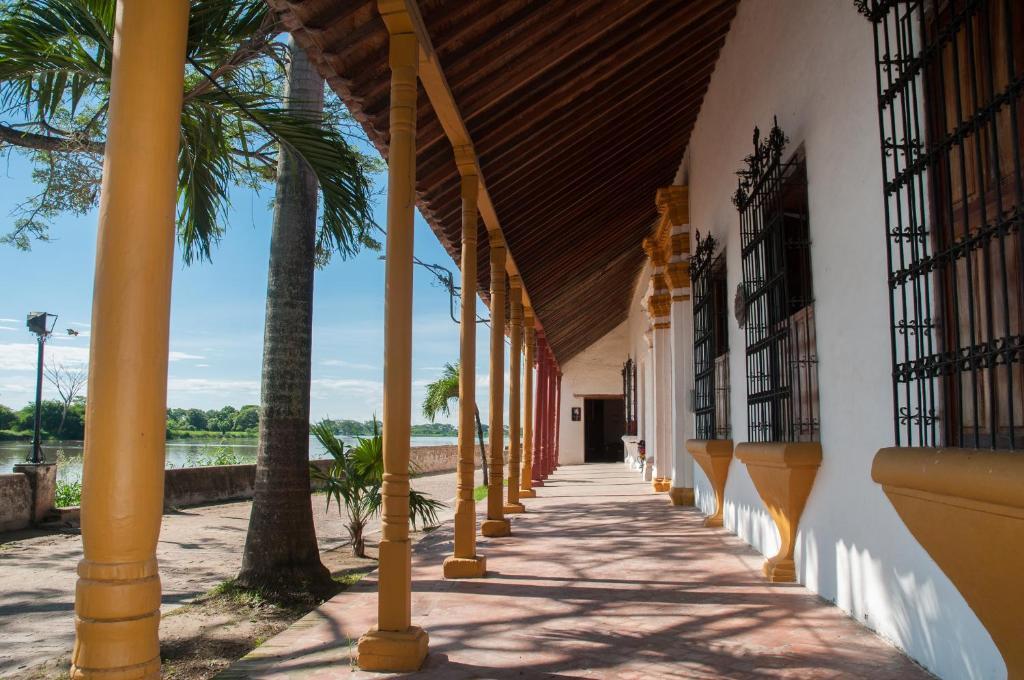
Time has stood still in Mompox. Old crafts are still practiced, such as iron, silver and goldsmithing. The people are friendly and proud of their city, and nature is always nearby. You can walk through cozy streets with white houses, across squares with beautiful colonial churches, and along the waterfront. All of this gave Mompox the nickname “Little Cartagena.”
A piece of history
Until the mid-19the century, Mompox was an important port, as a connecting point between the coast and the Andes. However, due to erosion of the river, ships had to find another route. The inhabitants moved elsewhere and Mompox was cut off from the outside world for years. The city inspired the famous Colombian writer Gabriel García Márquez: there are strong similarities between Mompox and the fictional village of Macondo from his novels.
Mompox, Mompós or Mompoj?
There are several names you will come across on the Internet if you google Mompox. The original name is Mompoj, named after the chief of the Malibú Indian community. The official name is Santa Cruz de Mompox. After Mompox, people began using the name Mompós. The inhabitants are called “Momposinos” and “Momposinas.”
In this travel guide you will read all about Mompox: how to get there, what to do, what are the nicest hotels and much more.
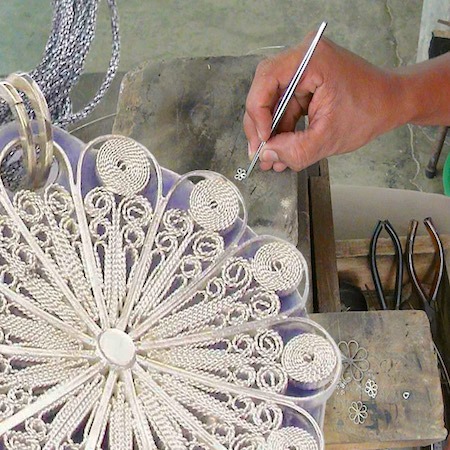
Crafts such as silver and goldsmithing, have a long tradition in Mompox. In the workshops you can see, among other things, how the fine “filigrana” technique is used, where wafer-thin gold and silver threads are woven.
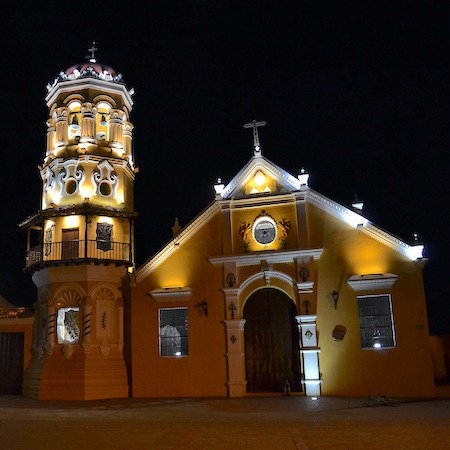
The colonial buildings and churches are Mompox’s biggest attraction, including the Iglesia de Santa Bárbara on the waterfront. The church has a bell tower, which you can climb. You then have a nice view of the river. At night, the church is especially beautiful, when it is attractively lit.
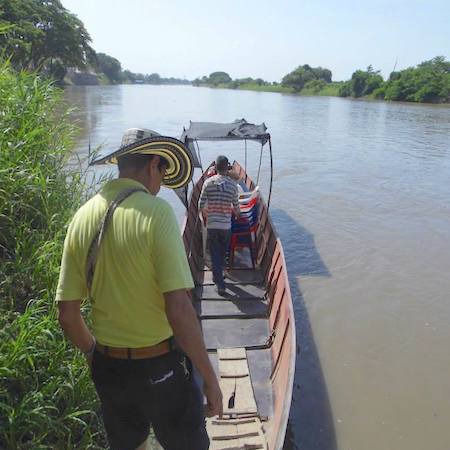
In the mangrove area, you can spot birds and reptiles and along the way there is plenty to see on the waterfront. You can join a boat trip with Cienaga Juan Criollo tours (La Casa del Viajero) Also fun: a “sunset cruise” on the river, where, with a drink in your hand, you watch the sun sink into the Río Magdalena. Among others with Valerosa tours
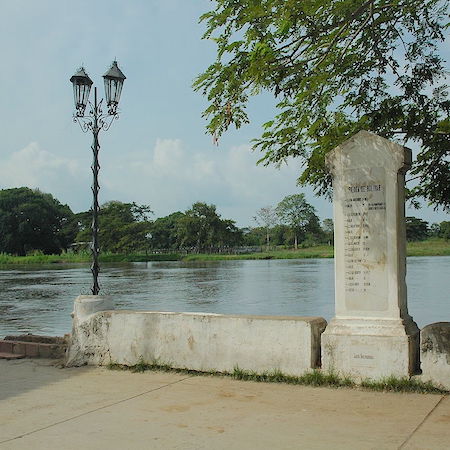
On the waterfront, you can get a good look at the beautiful architecture of the colonial houses. A “mandatory” stop, is a photo stop at the colorful Mompox “letters.” Bicycles can be rented at the Hotel San Rafael, among other places. Don’t feel like biking with the warm temperatures? Then hire a tuk-tuk and see the highlights of Mompox in a very relaxing way.
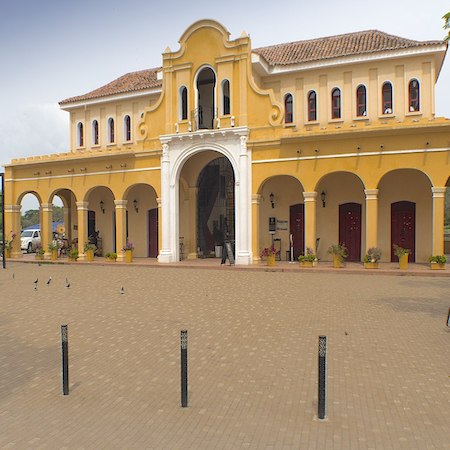
In its fine days, Mompox was one of the most important trading places in Colombia, and the old market building played an important role in it. Its location is ideal, with the Río Magdalena on one side and the Plaza de la Concepción on the other. In 2014, the building was restored. Today it sells handmade jewelry and souvenirs, among other things, but you can still soak up the atmosphere of earlier days.
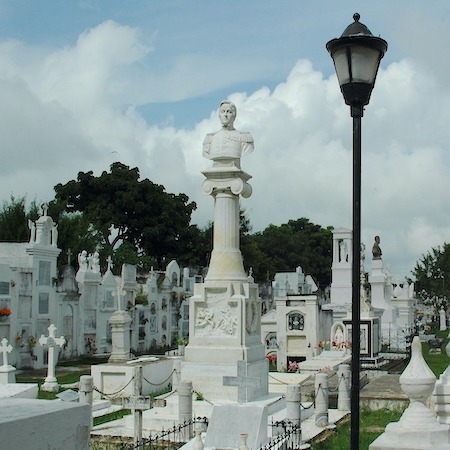
With its white tombs, statues and chapel, the cemetery is a sight in itself. During Easter week, locals gather in the cemetery to commemorate the dead and sing together.
Check out our #ColombiaMyWay tips for eating and drinking in Mompox
#1 Have lunch on the waterfront at the Comedor Costeño
Do as the locals do and step inside for the menú del dia (daily menu)
#2 Try a pizza at El Fuerte restaurant
Pizzas are prepared in the wood-fired oven and served in the cozy courtyard
#3 Order Mompox beef at Ambrosía restaurante-bar
For the “very local” version, order the steak with queso de capa*.
*This cheese is made by a handful of families in Mompox. The cheese is also delicious when it’s paired with the sweet Guava (Bocadillo), which you can buy from street vendors
#4 Have a cup of coffee on the waterfront at Cafe 1700
The most relaxed way to enjoy your coffee is in a lazy rocking chair
#5 Enjoy a crepe at Crepes de la Villa
Also good for waffles, desserts and vegetarian crepes
#6 Bring a bottle of Corozo home
Corozo is the small fruit of the Caribbean Corozo palm. The fruit with a deep red-purple color, is used in juices, sauces and ice creams and in Mompox they make a sweet wine from it. You can buy it in various stores.
By plane from Medellín
Direct Flights are imited to Medellín (EOH) with SATENA and Clic Air. A new route is planned from Cartagena (CTG) to Mompox by SATENA, but not yet confirmed (July 2025) If direct flights are not available or convenient, consider these alternatives:
Fly to Cartagena or Montería & continue by land
From Cartagena or Montería, you can travel to Mompox by bus or car. The journey takes approximately 6–8 hours, depending on road conditions. The price of a bus ticket Cartagena – Mompox with Unitransco (Expreso Brasilia) is around COP80,000/$20. Buses leave from the Terminal de Transportes de Cartagena, about a 45-minute drive from the center. In Mompox you don’t need a car. The city center is easy to explore on foot.
River Transport: Mompox is accessible via the Magdalena River. Boats operate from towns like Magangué, offering a scenic route to Mompox.
Events
Mompox Jazz Festival – September
The festival is well known in Colombia and far beyond. Every year in September, national and international artists and visitors come to Mompox for this event.
Semana Santa – Easter week
Mompox is one of the best places in Colombia to experience Easter celebrations. The celebrations there are a centuries-old tradition. They include processions and the many churches are beautifully decorated. For both popular events, be sure to book your accommodations well in advance.
Dia de independencia de Colombia- July 20
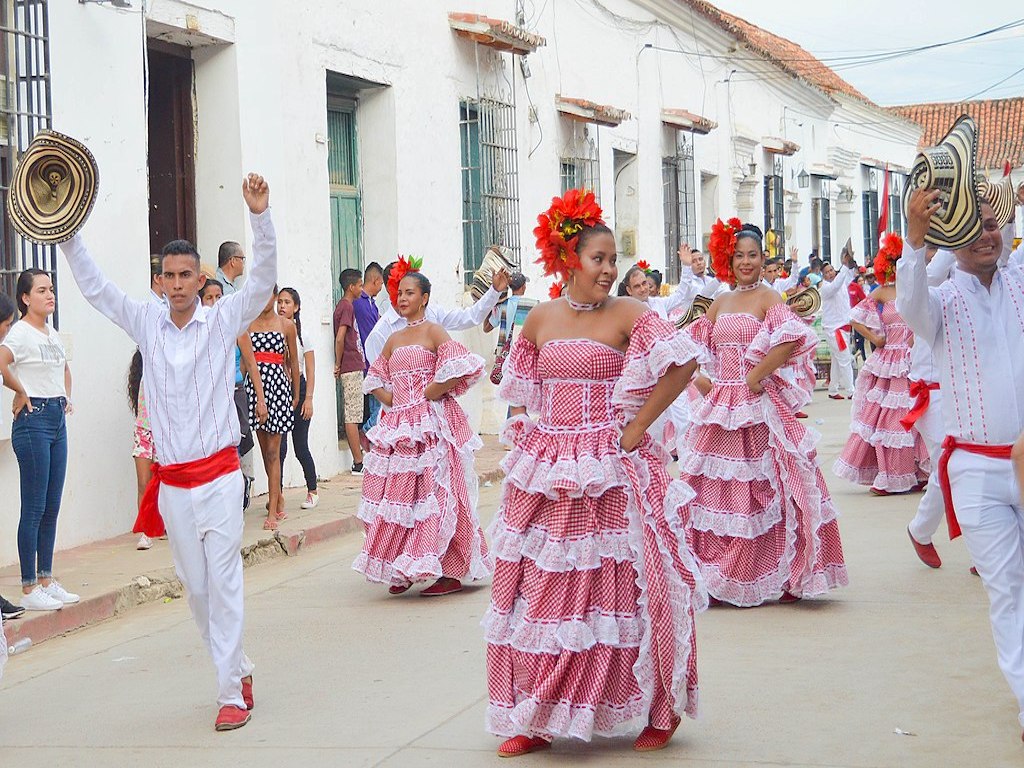
During Independence Day, parties are celebrated in Mompox, including traditional dances such as cumbia and bambuco. With the beautiful clothing of the dancers, this provides quite a few nice pictures.
$ price range up to $40
$$ price range $40 – $60
$$$ price range above $60
The water from the tap is not drinkable
In general, little English is spoken. A word of Spanish is certainly helpful and does wonders for getting in touch with the locals.
No vaccinations are required for Mompox.
Mompox is known as safe, especially the historic center where most of the sights are. When in doubt, always check with hotel staff or other locals.
Most hotels have wifi, but the connection is not always stable.
In this travel guide (updated March 2025) you will find tips for fun things to do, hotel and restaurant tips and useful facts for planning your trip to Palomino.
Palomino is a village of 6,000 inhabitants located between Santa Marta and Riohacha. Because of this location, the village is also called the “gateway to la Guajira.” Palomino is a popular place to spend a few days relaxing on the beach while touring the highlights of northern Colombia, such as Tayrona National Park, the Lost City trail and La Guajira.
With its laid-back atmosphere and cozy hostels, Palomino has become a popular spot among backpackers in recent years.

The most popular activity in Palomino! In a large rubber inner tube, you float down the Río Palomino. Along the way, you can enjoy the jungle views for about 2 hours.
How does it work?
You rent a tube in Palomino and after this you are taken by a moto cab to a high point by the river. After this it is a half hour walk to the starting point. The trip ends on the beach of Palomino. The price for the trip is around COP50,000/$13. This includes the tube, life jacket and ride by motorcycle (outward). You can also do this with an organized trip with a guide.
Best time to go?
Early morning to avoid the brightest sun, as there is no shelter during the trip. Also, early in the morning you are most likely to see monkeys and birds. In the dry season (January to March), the water may be low, requiring you to walk certain parts of the trip.
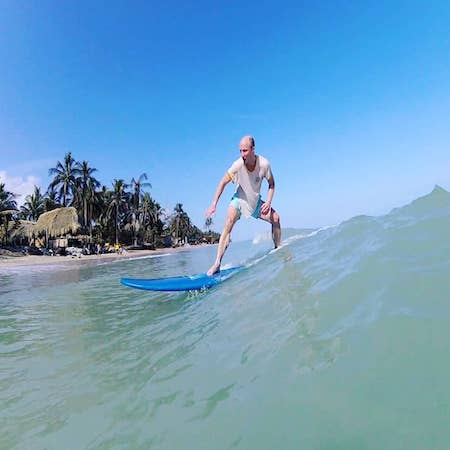
Never been on a board before? No problem! Colombians are patient teachers -:) Boardsurfing lessons can be arranged through your hostel or at one of the surf schools, such as TIDE Escuela de Surf.
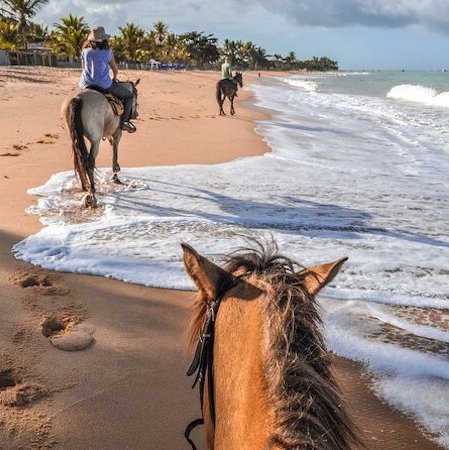
One of the most fun ways to enjoy the beach of Palomino, is on the back of a horse, for example with this horseback ride. Another special experience, is a ride in the mountains and jungle surrounding Palomino. Horseshoe tours, which is owned by a Dutch lady called Loïs, organizes trips from her finca on the Río Salvador, 7 kilometers from Palomino. Multi-day trips in the Sierra Nevada de Santa Marta are also possible.
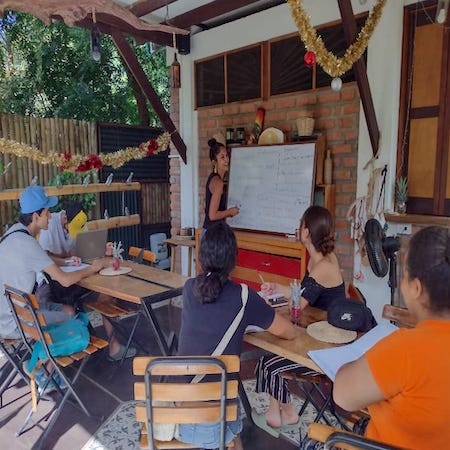
Casa Cocotte is a restaurant run by French lady Sophie, where local employees learn the business and increase their chances of getting a job in tourism. The restaurant also includes a Centro de Idiomas, where locals can learn English and you, the traveler, can brush up on your Spanish. Join the course, or practice during the weekly practice hour (which ties in nicely with happy hour -:)
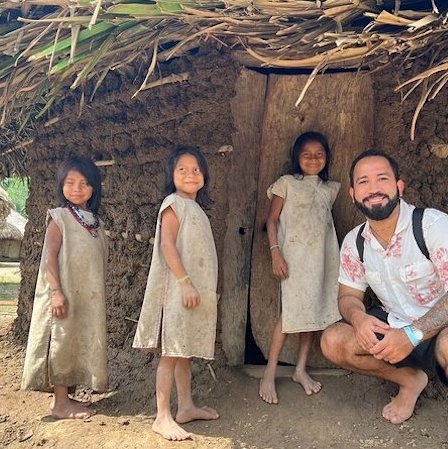
There are some tour operators who organize a trip to an Indigenous community in the Sierra Nevada de Santa Marta. For example, to the Seviaka community. For this tour, you will be picked up by motorbike to visit the village and learn about the traditions of the Seviaka people. The tour includes tubing.
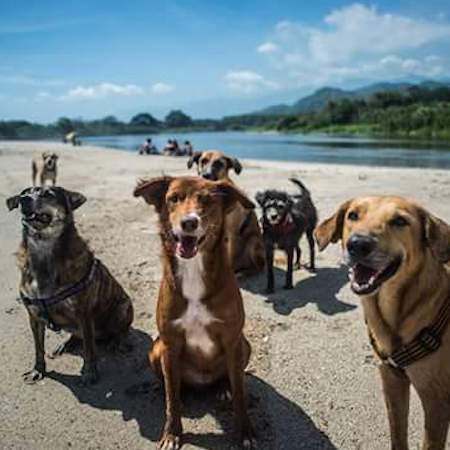
There are many stray dogs and cats in Palomino. So at the village’s only animal shelter, a lot of animals are well taken care of. They also organize walks with the dogs, including a picnic (doggy picnic). Check the availability of the walks in advance with the shelter. The proceeds of the tours go 100% to the shelter of the animals. Check this link for more info.
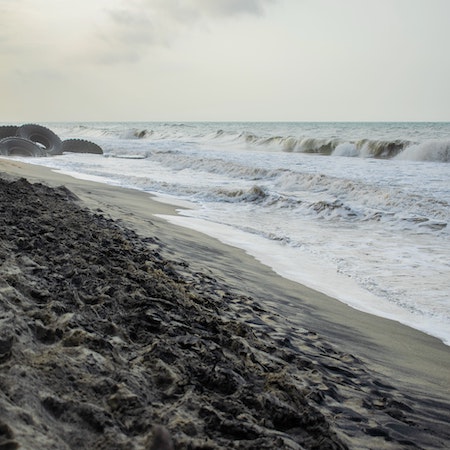
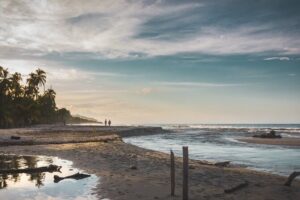
Walking along the beach when (almost) everyone is still asleep has something special. You can watch the fishermen busy with their traditional nets and enjoy the birds while having the beach to yourself. On a clear day, you can see the peaks of the Sierra Nevada de Santa Marta mountains from the beach.
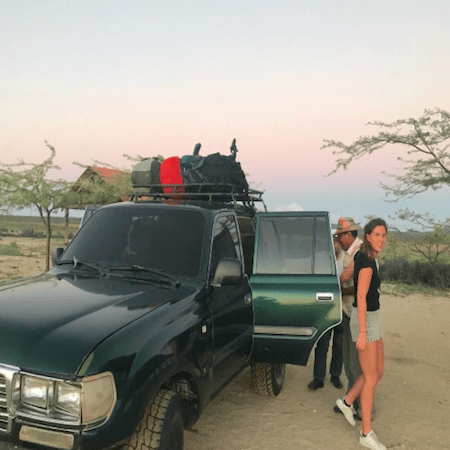
This village, in la Guajira, in the middle of the “Colombian desert,” is the habitat of the indigenous Wayuu community. If you want to go completely “off the beaten track,” travel on from Cabo de la Vela to Punta Gallinas at the tip of Colombia: a vast area of deserted beaches and dunes. This area is very much of the beaten track, and a visit must be organized with an agency. This 3 day 2 night tour, offers pickup in Palomino.
Good to know:
Below you can find the approximate distances and prices of transport to and from Palomino (updated March 2025)
By bus:
From Tayrona: 1u (COP7,500/€2)
From Santa Marta: 2h (COP30,000/$8)
From Riohacha: 2h (COP25,000/€7)
From Cartagena: 6u (COP68,000/$17)
From Baranquilla: 4h (COP59,000/$15)
It is hot and humid all year in Palomino. September through November is the rainy season, with October receiving the most rain. January through March has the least rainfall. You can visit Palomino just fine during the rainy season, as it usually clears up quickly after a shower. If you want to avoid crowds, go to Palomino during the week. During weekends and puentes (long weekends around holidays), many Colombians come to Palomino and the beach can get quite crowded. It is particularly crowded during Semana Santa (Easter week), Christmas, New Year’s Eve,
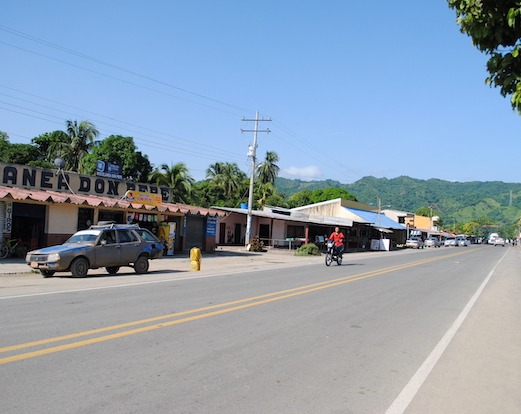
If you come to Palomino to chill on the beach, a day or 2-3 will probably be sufficient. If you want to do some active trips as well, stay a little longer. There are plenty of hostels and hotels to choose from. Because Palomino is so small (there is 1 main street), you can easily walk to the beach and eat out. You don’t have to walk further than 15 minutes. There are also moto cabs to take you.
$ Price range up to $30
$$ Price range $30 – $50
$$$ Price range from $50
#ColombiaMyWay Bonus tips
#1 Prefer to stay in the middle of nature?
Then check ONE Santuario Natural. This luxurious, small-scale hotel is only accessible by 4×4. If you book a stay here it includes all meals.
#2 Learn more about Tairona culture
Stay at Hotel Taironaka Turismo Ecológico y Arqueología. This eco hotel is located on the Don Diego River a short 20-minute drive from Palomino. In the archaeological museum near the hotel you will find more than 300 objects from the former Indigenous Tairona community. You can also go tubing in the river and bird watching.
Look here for more hotels in Palomino
For a small village like Palomino, there are many restaurants, from simple ones where you can eat the local specialty -fish with coconut rice and patacones-, to French-Caribbean restaurants. Many of the restaurants in Palomino, belong to a hotel or hostel. Even if you are not staying there, you can join them for breakfast, lunch or dinner. Opening hours can change depending on the season. There is no vibrant nightlife in Palomino, as bars close at 11 p.m.

This restaurant by French lady Sophie, has a daily changing (small) menu of fresh dishes, beautifully served. The service consists of students in training.

Ceviche is one of the specialties, but you can also go there for a good burger and vegetarian options. Extra cozy during cocktail happy hour and evenings with live music.

Cocktails on the beach…Need we say more? You can also stay there to eat, the menu is international.

The restaurant at the popular Tiki hut hostel, features a menu of Caribbean and local dishes.

Pizzeria by the owner who learned the trade in Napoli. Pizzas are baked in a wood-fired oven.

The menu includes shrimp burgers, pizza and vegetarian options. Have regular live music and also host meditations.
Water from the tap is not drinkable. If you don’t trust the hygiene anywhere, watch out for ice cubes, salads and uncooked vegetables.
There is no ATM in Palomino and credit cards are only accepted at most of the larger hotels and restaurants. Therefore, bring all the cash you think you will need.
If you do need to withdraw money, you can do so in the village of Mingueo, a 20-minute ride by moto cab.
In Palomino, you can buy the famous mochilas, bags made by the Wayuu community.

There is a lot of poverty in Palomino. The locals depend largely on tourism, which has sprung up in a very short time. Palomino is safe, but stay on the main road at night and don’t wander around after dark. There are few street lights, so it is quite dark in places. Don’t forget to bring your cell phone or flashlight.
Power outages (and therefore wifi outages) are common. There are hotels and restaurants with wifi but the connection is usually not stable
There are small stores in Palomino, where you can buy basic items, but no big supermarket.
Due to strong currents and high waves, you cannot swim far out to sea. Keep a close eye on the red warning flags.
The page you requested could not be found. Try refining your search, or use the navigation above to locate the post.
Nuquí, on Colombia’s Pacific coast, is one of those destinations that could be on your bucket list for ages before you make the bold move and book a ticket.
Why is Nuquí a bucket list destination?
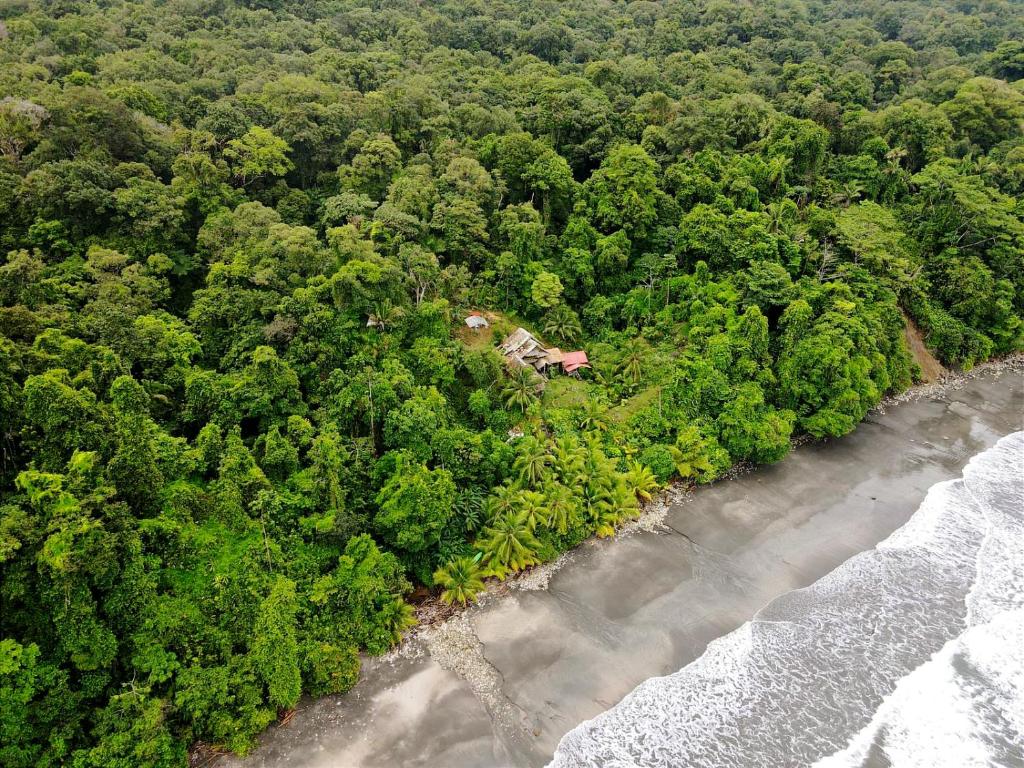
The jungle ends there on the miles of sandy beaches, there are waterfalls and natural thermal pools, there is a huge diversity of flora and fauna, and you can spot whales in season (and much more). Nuquí itself is a bit of a chaotic town and most travelers travel directly on by boat to the beautiful beaches in the area, such as Playa Guachalito, Termales and Playa Terco.
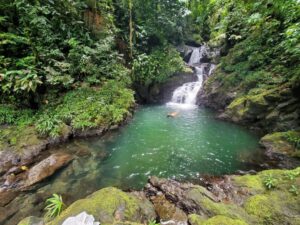
Off the beaten track
Nuquí is an adventurous destination that is far from the tourist route. You won’t find luxury hotels here and wifi is not a given. There are no roads leading to Nuquí and you’ll have to put in some effort to get there. You reach Nuquí with a domestic flight from Medellín and a boat trip to your hotel. Tourism is still just starting here, as for a long time Chocó was a “no go” area because the jungle was inhabited by guerrillas for many years. The villages Nuquí, Termales, Playa Guachalito and Arusi are now safe to visit.
In this travel guide you will find everything you need to know about Nuquí; what is there to do? How to get there. What are the nicest hotels and practical information and tips about pins, luggage, what to bring and what to know about safety in Nuquí.
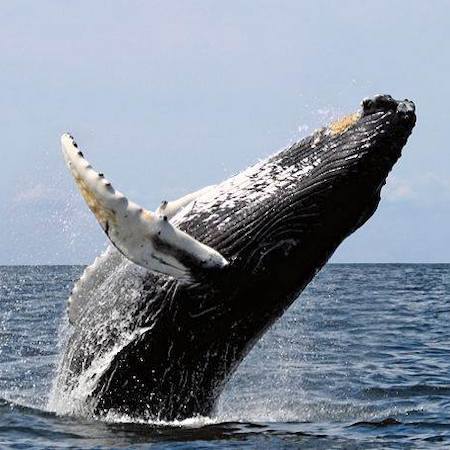
From July to mid-October, humpback whales (ballenas jorobadas) come from the South Pole to the warmer waters of the Colombian coast to give birth to their young. A journey of some 8000km! You can often see the whales from the hammock of your hotel. You can also take an organized boat trip to spot whales. Depending on the number of people joining, you can book such a trip from COP100,000-COP200,000 ($25- $50) per person.
The 54,000-acre Utría park is one of the best places to spot whales in the Colombian Pacific.
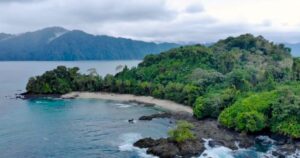
The lagoon of the park, in the months of August-October is often used as a “baby room” by the whales. It is also home to turtles and several species of birds, among others. You can take a walk along the mangroves on the wooden boardwalk. The park is 90 minutes by boat, north of Nuquí and entrance costs COP72,000/$18.(2024)
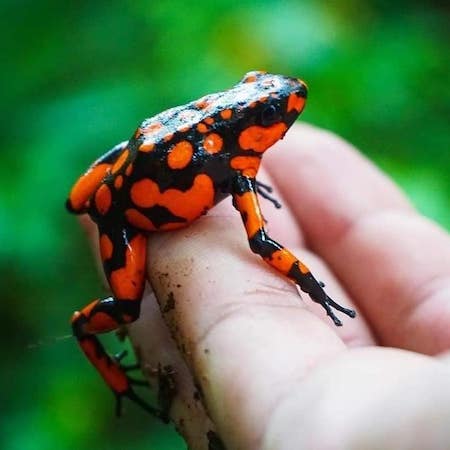
Nuquí has great biodiversity. In fact, Chocó is the region with the second largest biodiversity in the world. The best way to view the extraordinary flora and fauna is with an experienced guide. During the hikes, you will cross rivers, hike to waterfalls and spot different animals. The jungle is inhabited by monkeys, different species of birds and (poisonous and non-poisonous) snakes and frogs. Prices vary depending on the distance and level of the hike and start at around COP30,000/$7.50 per person for a half-day hike.
photo: Explorando Colombia
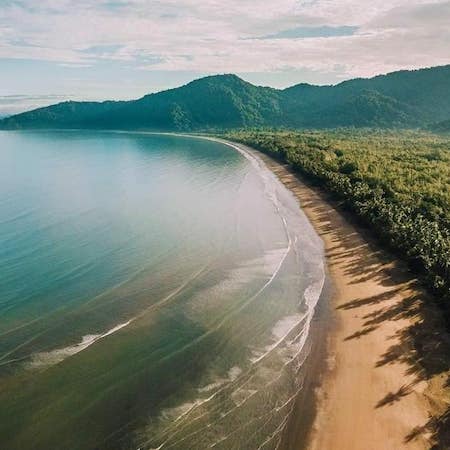
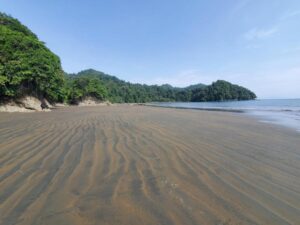
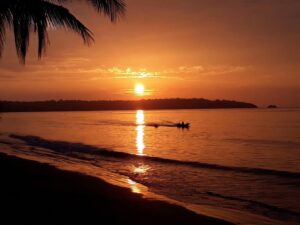
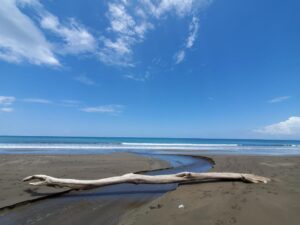
The beaches are spectacular in Nuquí. Here you won’t find white sandy beaches, but miles of brown sandy beaches surrounded by jungle. One of the most beautiful beaches is Guachalito. From here you can hike to the waterfall Cascada de Amor. Especially the sunsets on the beach are spectacular in Chocó!
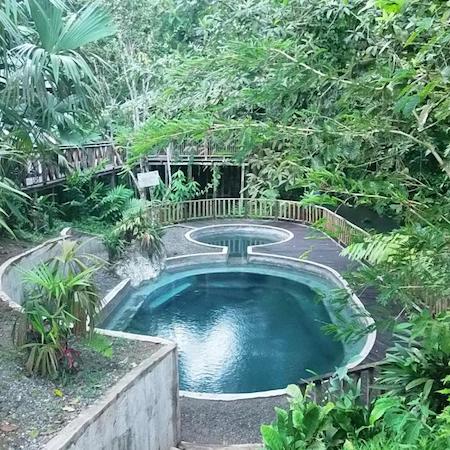
These natural thermal pools, are a 20-minute walk from the village of Termales. You pay COP15000/€3.75 entrance fee for the first time and COP5000/€1.25 for each time you want to return after that. An evening ticket costs COP20,000/€5 and aromatherapy costs COP60,000/€15. Prices are set by the local community and can change. Want to visit a more natural thermal spa? Then hire a guide and visit Jurubirá, 9 km from Nuquí.
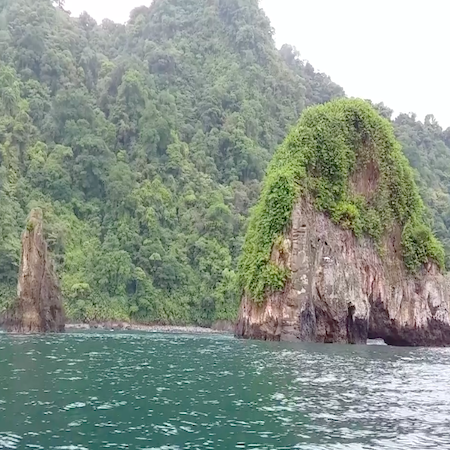
This is the southernmost tip of the Gulf of Tribugá. It is a hot spot for whale watching, surfing, snorkeling and fishing. May is the month for fishermen. Schools of sardines come in with the current then, attracting large fishermen. You can rent a boat with captain from COP350,000/$87.50 per day.
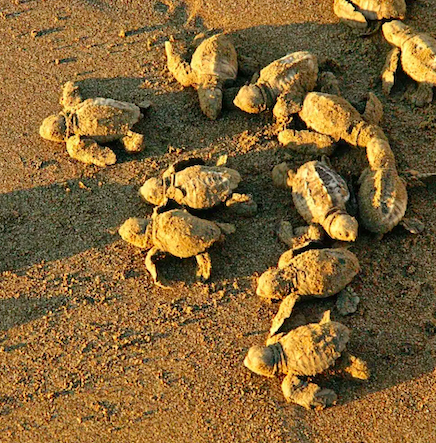
Every year, sea turtles come to the coast to bury their eggs in the sand (especially between June and October). To increase the chances of survival, volunteers from local organizations store the eggs in a safer place. When the baby turtles are born, they are carefully escorted to the sea. As a traveler, you get the chance to see this. September through November are the best months for this. Your hotel or hostel can help you organize this experiece.
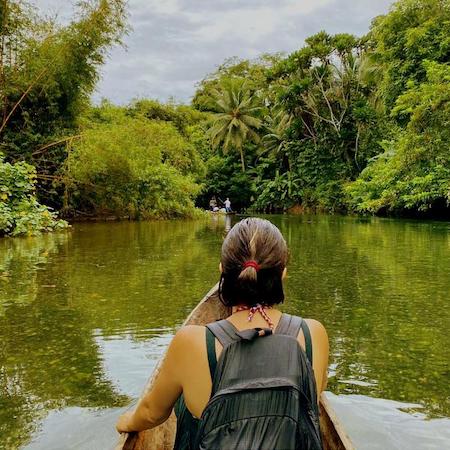
One of the popular trips in Nuquí is a hike + boat ride on the río Joví. In a chingo (traditional wooden boat) you cruise on the river while learning about the different types of mangroves and the diverse flora and fauna. You can book such a boat trip from COP45000/$11 per person.
photo: el Amargal lodge
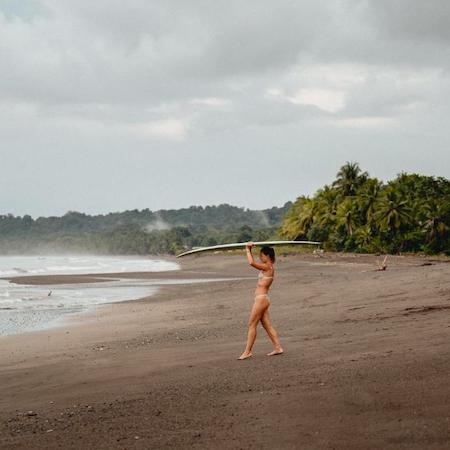
Experienced surfers have known it for a long time…In Chocó you will find the best waves of Colombia. Yet the waves are not only suitable for experienced surfers. If you haven’t surfed before, you can take surf lessons at the surf school in Termales or Guachalito or at one of the hostels. For surf lessons, you’ll spend about COP80,000/$20 per hour. If you just want to rent a board, it will cost you COP30,000/$7.50. One of the cool surf spots in Nuquí is el Vijo surf bungalows.
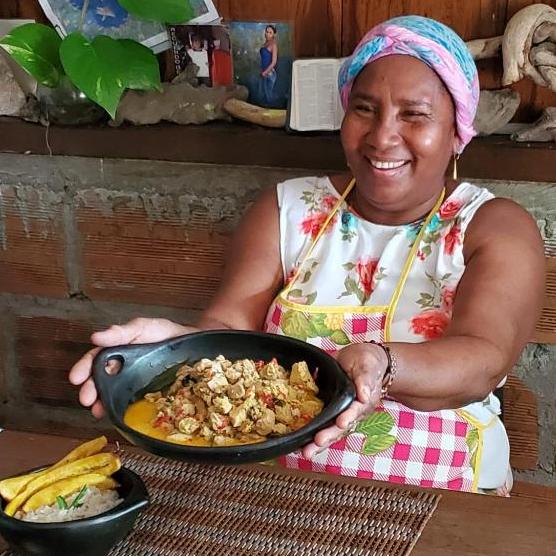
If you like fish, then you will be very happy with the food in Nuquí! Fish is prepared in different variations, such as in fish soup. Crustacean lovers can try the Cambute, similar to the crown snail (Conch). Popular side dishes include “Arroz con Coco,” Yuka and “Patacones”: coconut rice, cassava and green banana “cookies”. Coconut is also a popular ingredient in desserts and sweets such as Panelitas de coco. Want to learn to cook some of these dishes yourself? Then take cooking lessons! Prices start from about COP60000/$15 per person.

The good-humored locals are a mix of Afro-Colombians and the Indian community, who live mostly in the interior. Recent years have also seen an increasing number of locals who have fled Colombia’s busy cities and are building a new life in laid-back Chocó. Locals are, among other things, active in the hotels, provide tours and prepare the most delicious dishes for you. They are happy and proud to welcome travelers. With a trip to Chocó, you support the local community. And that support is badly needed in one of the poorest areas of Colombia.
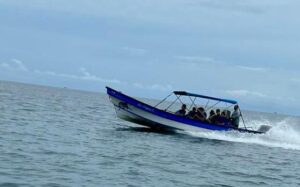
There are no roads to Nuquí and the only way to get there is by plane, or by boat from Bahía Solano (2h), and El Valle (1.30h). You can also reach Nuquí by boat from Buenaventura, but that is a long trip that can be violent if the sea is wild. Moreover, Buenaventura does not have a good reputation when it comes to safety.
Where do you start if you want to take a trip to Nuquí?
Check out our 4 step plan here and start planning your trip to Nuquí!
In these 4 steps, plan your trip to Nuquí!
1. Book a ticket Medellin – Nuquí (NQU-Reyes Murillo Airport).
Check our ColombiaMyWay hotel tips and book your accommodation here
Once arrived in Nuquí:
3. At Nuquí airport pay the tourist tax a COP41,000/$10.25 and possibly do some shopping before boarding the boat.
4. From Nuquí airport walk 150 meters to the pier and catch the boat
This info was updated in January 2025.
Chocó is one of the wettest places in the world. At first that doesn’t sound too appealing, but on the other hand, that makes the jungle super exuberant!
You have to be lucky with the weather. You can have beautiful days with blue skies, but it can also rain for long periods at a time. There is high humidity. The most sunshine and least rain is in the summer, from January to March.
The best time to go to Nuquí depends on what you want to do:
January through March
The best time for hikes in the jungle and trips on the river. The sea is calm and ideal for boat trips and for diving and snorkeling.
May
The best month for fishing. With the current come schools of sardines, which attract big fish. Best spot for anglers is Cabo Corrientes.
July- mid-October (especially from August)
The best months to spot whales, which in this period come to the Colombian coast to give birth.
September-November
The best months to see the release of baby turtles.
Surfing is possible-depending on your level-all year round.
High season
Prices increase in high season, during semana santa (Easter week) + 15/6-15/10 and 15/12-15/1.
Tips to book your hotel
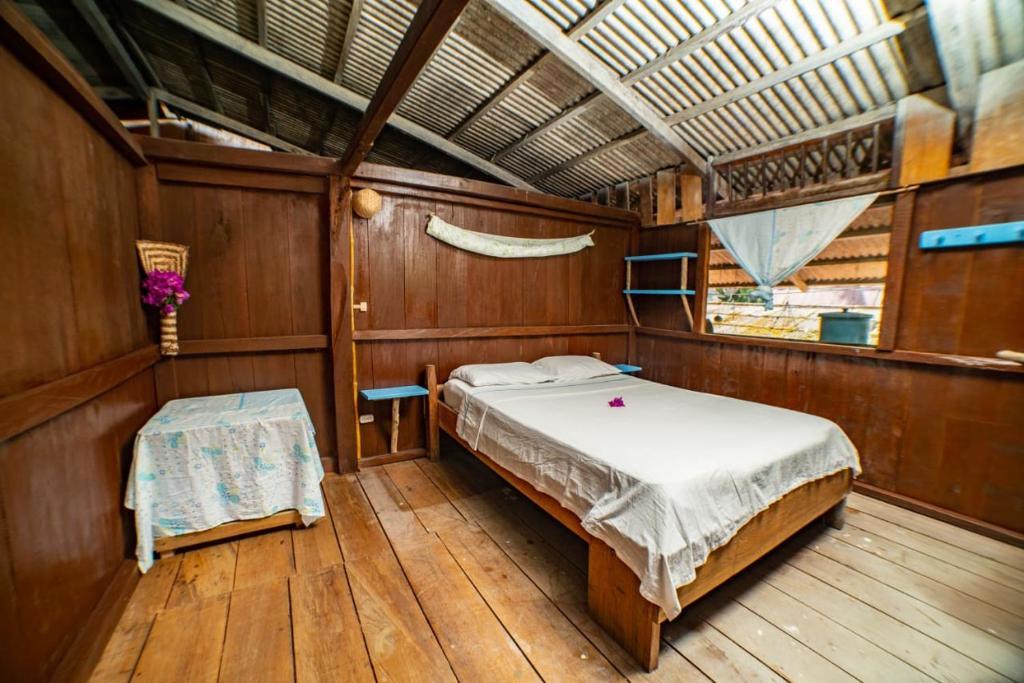
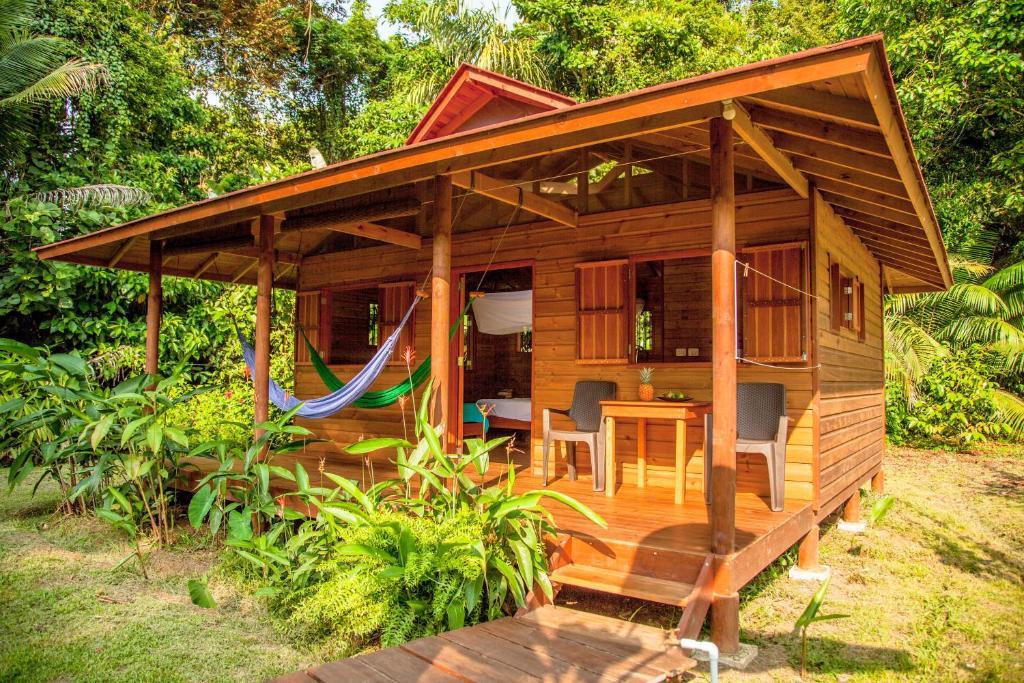
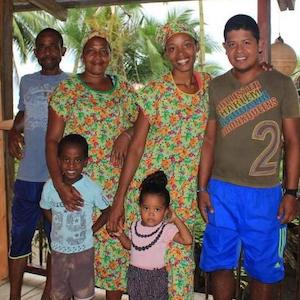
#1 Most budget-friendly accommodations are in the villages of Termales and Arusi
Here there are small hotels run by local families. Accommodations are basic, but the hospitality of the families is usually top notch.
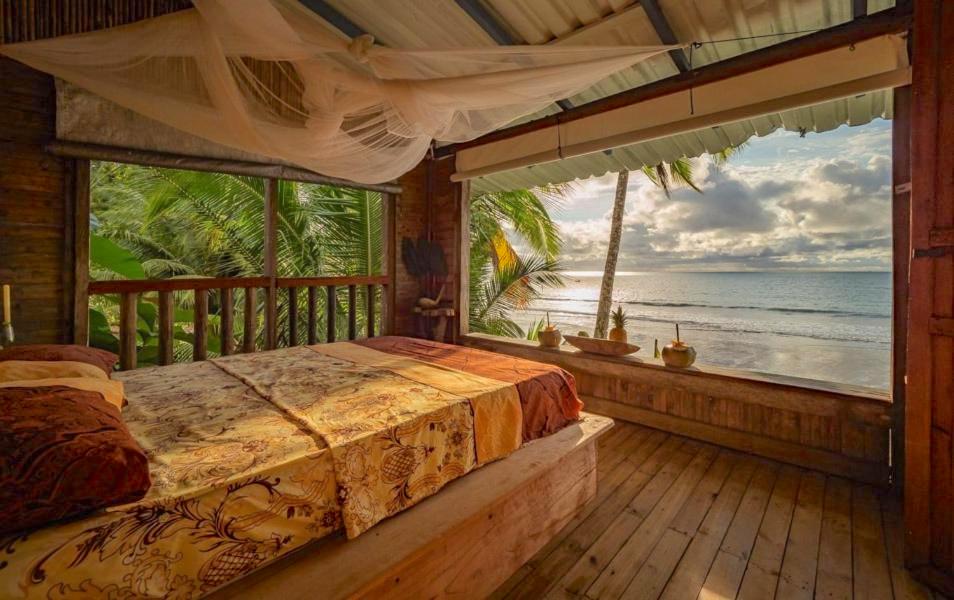
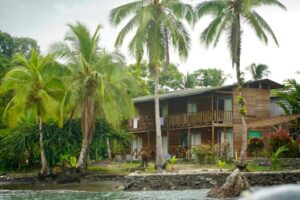
#2 The ecolodges with a little more comfort are located mainly on Guachalito beach and at Cabo Corrientes
By comfortable, don’t think air conditioning and high speed internet, but a comfortable room in an idyllic location, in a beautiful tropical garden.
#3 Wifi and power are not a given in this region.
If the accommodation is very remote, there may only be power in the evening hours and no wifi or phone signal.
#4 If you are going to book a hotel, check if it is “bare” rental or an “all in” trip.
A package including 3 meals a day, is often offered at the lodges that are very remote with no stores or restaurants nearby.
$ price range up to $50
$$ price range $50 – $100
$$$ price range above $100
Travel with as little luggage as possible. For the flight to Nuquí, small planes of up to about 20 passengers are used. In general, 10kg is the maximum weight to check in and 5kg is the maximum for hand luggage. Moreover, you will continue traveling by boat, for which the rule is; the less luggage the better! The boat from Nuquí will drop you off at the beach, but you may still have to walk a bit on the beach to your hotel. Therefore, we recommend a backpack instead of a suitcase.
Nuquí is not a low budget destination. Because you can only get there by plane/boat, transportation costs are already a big chunk of your budget. However, affordable hotels can be found and if you can share the cost of excursions such as hikes and boat trips with other travelers, you can still travel to Nuquí affordably.
For breakfast in a local restaurant you will pay about COP20,000/$5 and lunch and dinner will cost COP30,000/$7.50. You can make the tours as expensive as you want. The prices are depending on the number of people going along. For an indication of prices, check our tips on what to do in Nuquí.
#ColombiaMyWay tip
If you want to go to Chocó on a smaller budget, check out el Valle. At hostels like Humpback turtle, Utría eco hostel and the Pelican house hostel you can book a dorm bed and the cost of tours is often lower because you can share it with more travelers.
The water from the tap is not drinkable
At the very remote accommodations, electricity may be limited to a few hours in the evening.
There is no ATM in Nuquí, so bring all the money you think you will need.
With about 5 days, 4 nights, you have time to take long walks on the beach and do various activities at your leisure, such as visiting the thermal pools at Termales, doing whale spotting trips, hike with a guide in the jungle and do some kayaking on the river. And then you still have time to read a book in the hammock -:)
The locals are a mix of Afro-Colombians and the Native American community, who live mostly in the interior. Very little English is spoken. A word of Spanish is certainly helpful and works wonders for getting in touch with the locals.
For Chocó, a yellow fever injection is recommended. Tip: If you’re traveling around Colombia for longer, you can get a free yellow fever injection at Bogotá’s El Dorado airport. The vaccination only works after 10 days, so get it in time!
Wifi is not a given outside Nuquí. If you stay near a village, sometimes there is wifi in the lodge. The village of Termales, for example, has Internet through a government project. Provider Claro has the best coverage in Chocó. It very much depends on the location of your hotel, whether you can use your phone because if the lodge is very remote, chances are that there is no coverage and no wifi signal.