
No Results Found
The page you requested could not be found. Try refining your search, or use the navigation above to locate the post.

In this travel guide (updated March 2025) you will find tips for fun things to do, hotel and restaurant tips and useful facts for planning your trip to Palomino.
Palomino is a village of 6,000 inhabitants located between Santa Marta and Riohacha. Because of this location, the village is also called the “gateway to la Guajira.” Palomino is a popular place to spend a few days relaxing on the beach while touring the highlights of northern Colombia, such as Tayrona National Park, the Lost City trail and La Guajira.
With its laid-back atmosphere and cozy hostels, Palomino has become a popular spot among backpackers in recent years.

The most popular activity in Palomino! In a large rubber inner tube, you float down the Río Palomino. Along the way, you can enjoy the jungle views for about 2 hours.
How does it work?
You rent a tube in Palomino and after this you are taken by a moto cab to a high point by the river. After this it is a half hour walk to the starting point. The trip ends on the beach of Palomino. The price for the trip is around COP50,000/$13. This includes the tube, life jacket and ride by motorcycle (outward). You can also do this with an organized trip with a guide.
Best time to go?
Early morning to avoid the brightest sun, as there is no shelter during the trip. Also, early in the morning you are most likely to see monkeys and birds. In the dry season (January to March), the water may be low, requiring you to walk certain parts of the trip.
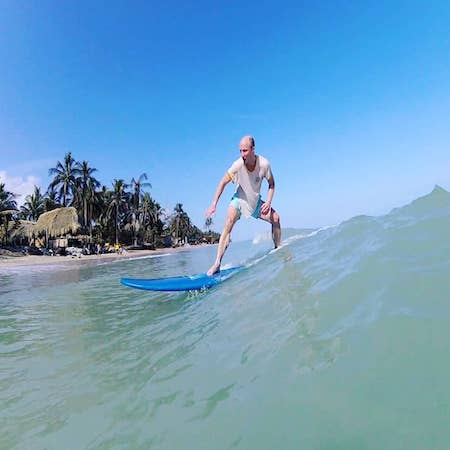
Never been on a board before? No problem! Colombians are patient teachers -:) Boardsurfing lessons can be arranged through your hostel or at one of the surf schools, such as TIDE Escuela de Surf.
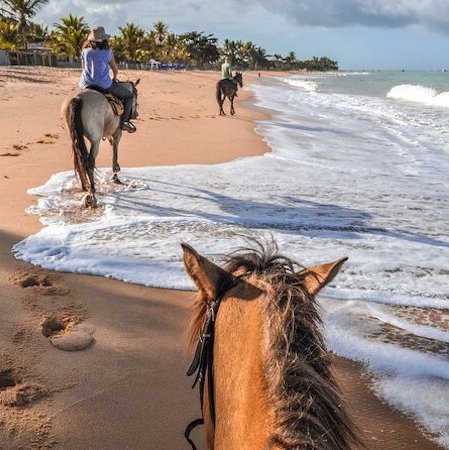
One of the most fun ways to enjoy the beach of Palomino, is on the back of a horse, for example with this horseback ride. Another special experience, is a ride in the mountains and jungle surrounding Palomino. Horseshoe tours, which is owned by a Dutch lady called Loïs, organizes trips from her finca on the Río Salvador, 7 kilometers from Palomino. Multi-day trips in the Sierra Nevada de Santa Marta are also possible.
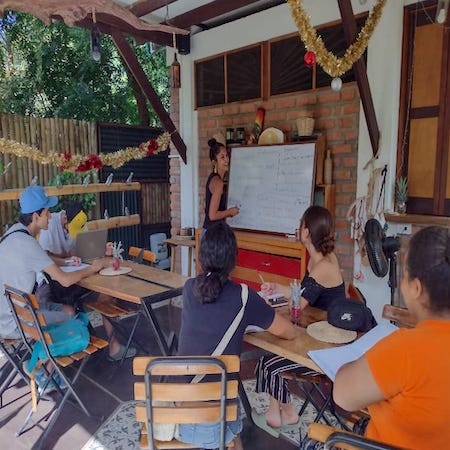
Casa Cocotte is a restaurant run by French lady Sophie, where local employees learn the business and increase their chances of getting a job in tourism. The restaurant also includes a Centro de Idiomas, where locals can learn English and you, the traveler, can brush up on your Spanish. Join the course, or practice during the weekly practice hour (which ties in nicely with happy hour -:)
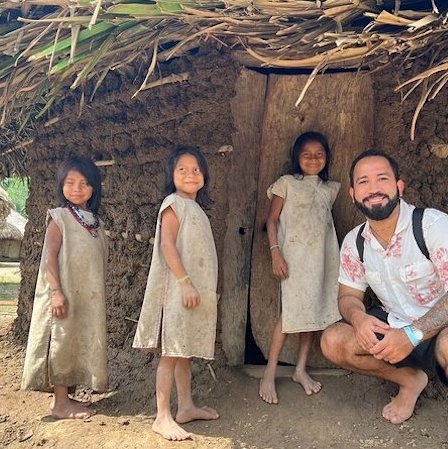
There are some tour operators who organize a trip to an Indigenous community in the Sierra Nevada de Santa Marta. For example, to the Seviaka community. For this tour, you will be picked up by motorbike to visit the village and learn about the traditions of the Seviaka people. The tour includes tubing.
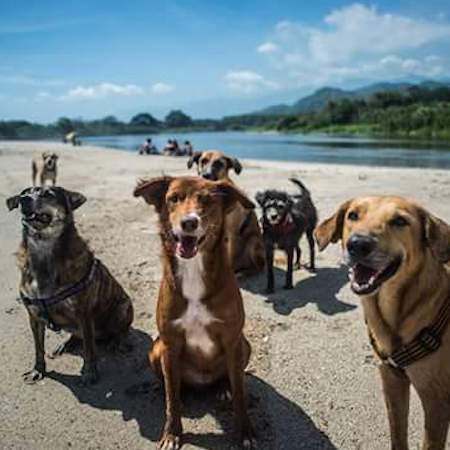
There are many stray dogs and cats in Palomino. So at the village’s only animal shelter, a lot of animals are well taken care of. They also organize walks with the dogs, including a picnic (doggy picnic). Check the availability of the walks in advance with the shelter. The proceeds of the tours go 100% to the shelter of the animals. Check this link for more info.
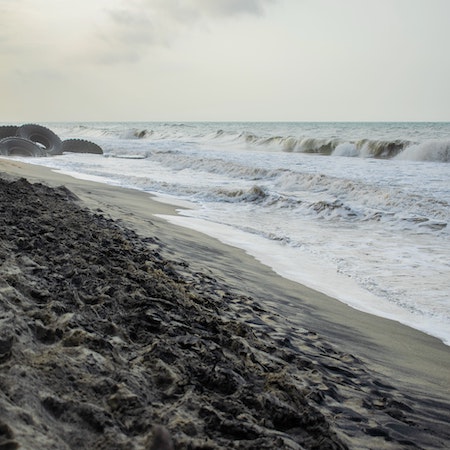
Walking along the beach when (almost) everyone is still asleep has something special. You can watch the fishermen busy with their traditional nets and enjoy the birds while having the beach to yourself. On a clear day, you can see the peaks of the Sierra Nevada de Santa Marta mountains from the beach.
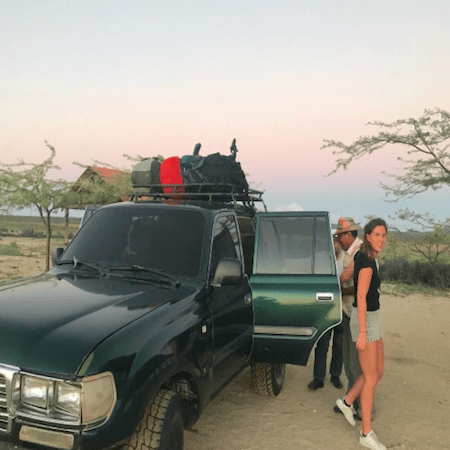
This village, in la Guajira, in the middle of the “Colombian desert,” is the habitat of the indigenous Wayuu community. If you want to go completely “off the beaten track,” travel on from Cabo de la Vela to Punta Gallinas at the tip of Colombia: a vast area of deserted beaches and dunes. This area is very much of the beaten track, and a visit must be organized with an agency. This 3 day 2 night tour, offers pickup in Palomino.
Good to know:
Below you can find the approximate distances and prices of transport to and from Palomino (updated March 2025)
By bus:
From Tayrona: 1u (COP7,500/€2)
From Santa Marta: 2h (COP30,000/$8)
From Riohacha: 2h (COP25,000/€7)
From Cartagena: 6u (COP68,000/$17)
From Baranquilla: 4h (COP59,000/$15)
It is hot and humid all year in Palomino. September through November is the rainy season, with October receiving the most rain. January through March has the least rainfall. You can visit Palomino just fine during the rainy season, as it usually clears up quickly after a shower. If you want to avoid crowds, go to Palomino during the week. During weekends and puentes (long weekends around holidays), many Colombians come to Palomino and the beach can get quite crowded. It is particularly crowded during Semana Santa (Easter week), Christmas, New Year’s Eve,
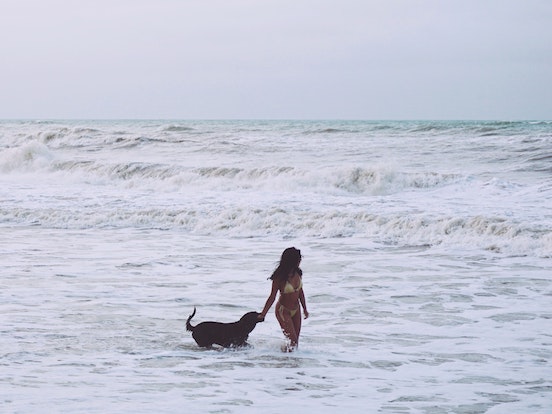
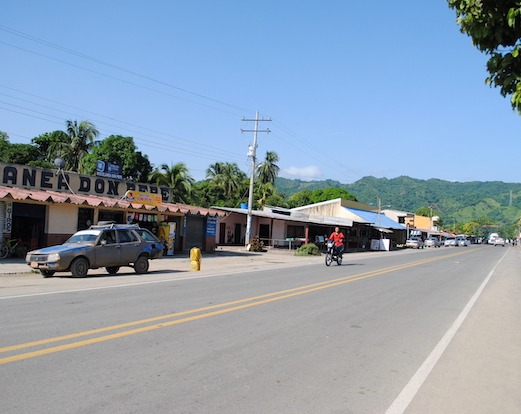
If you come to Palomino to chill on the beach, a day or 2-3 will probably be sufficient. If you want to do some active trips as well, stay a little longer. There are plenty of hostels and hotels to choose from. Because Palomino is so small (there is 1 main street), you can easily walk to the beach and eat out. You don’t have to walk further than 15 minutes. There are also moto cabs to take you.
$ Price range up to $30
$$ Price range $30 – $50
$$$ Price range from $50
#ColombiaMyWay Bonus tips
#1 Prefer to stay in the middle of nature?
Then check ONE Santuario Natural. This luxurious, small-scale hotel is only accessible by 4×4. If you book a stay here it includes all meals.
#2 Learn more about Tairona culture
Stay at Hotel Taironaka Turismo Ecológico y Arqueología. This eco hotel is located on the Don Diego River a short 20-minute drive from Palomino. In the archaeological museum near the hotel you will find more than 300 objects from the former Indigenous Tairona community. You can also go tubing in the river and bird watching.
Look here for more hotels in Palomino
For a small village like Palomino, there are many restaurants, from simple ones where you can eat the local specialty -fish with coconut rice and patacones-, to French-Caribbean restaurants. Many of the restaurants in Palomino, belong to a hotel or hostel. Even if you are not staying there, you can join them for breakfast, lunch or dinner. Opening hours can change depending on the season. There is no vibrant nightlife in Palomino, as bars close at 11 p.m.

This restaurant by French lady Sophie, has a daily changing (small) menu of fresh dishes, beautifully served. The service consists of students in training.

Ceviche is one of the specialties, but you can also go there for a good burger and vegetarian options. Extra cozy during cocktail happy hour and evenings with live music.

Cocktails on the beach…Need we say more? You can also stay there to eat, the menu is international.

The restaurant at the popular Tiki hut hostel, features a menu of Caribbean and local dishes.

Pizzeria by the owner who learned the trade in Napoli. Pizzas are baked in a wood-fired oven.

The menu includes shrimp burgers, pizza and vegetarian options. Have regular live music and also host meditations.
Water from the tap is not drinkable. If you don’t trust the hygiene anywhere, watch out for ice cubes, salads and uncooked vegetables.
There is no ATM in Palomino and credit cards are only accepted at most of the larger hotels and restaurants. Therefore, bring all the cash you think you will need.
If you do need to withdraw money, you can do so in the village of Mingueo, a 20-minute ride by moto cab.
In Palomino, you can buy the famous mochilas, bags made by the Wayuu community.

There is a lot of poverty in Palomino. The locals depend largely on tourism, which has sprung up in a very short time. Palomino is safe, but stay on the main road at night and don’t wander around after dark. There are few street lights, so it is quite dark in places. Don’t forget to bring your cell phone or flashlight.
Power outages (and therefore wifi outages) are common. There are hotels and restaurants with wifi but the connection is usually not stable
There are small stores in Palomino, where you can buy basic items, but no big supermarket.
Due to strong currents and high waves, you cannot swim far out to sea. Keep a close eye on the red warning flags.
The page you requested could not be found. Try refining your search, or use the navigation above to locate the post.
Nuquí, on Colombia’s Pacific coast, is one of those destinations that could be on your bucket list for ages before you make the bold move and book a ticket.
Why is Nuquí a bucket list destination?
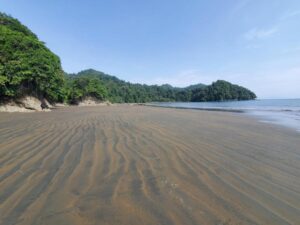
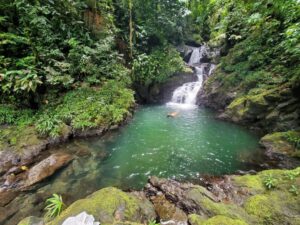
The jungle ends there on the miles of sandy beaches, there are waterfalls and natural thermal pools, there is a huge diversity of flora and fauna, and you can spot whales in season (and much more). Nuquí itself is a bit of a chaotic town and most travelers travel directly on by boat to the beautiful beaches in the area, such as Playa Guachalito, Termales and Playa Terco.
Off the beaten track
Nuquí is an adventurous destination that is far from the tourist route. You won’t find luxury hotels here and wifi is not a given. There are no roads leading to Nuquí and you’ll have to put in some effort to get there. You reach Nuquí with a domestic flight from Medellín and a boat trip to your hotel. Tourism is still just starting here, as for a long time Chocó was a “no go” area because the jungle was inhabited by guerrillas for many years. The villages Nuquí, Termales, Playa Guachalito and Arusi are now safe to visit.
In this travel guide you will find everything you need to know about Nuquí; what is there to do? How to get there. What are the nicest hotels and practical information and tips about pins, luggage, what to bring and what to know about safety in Nuquí.
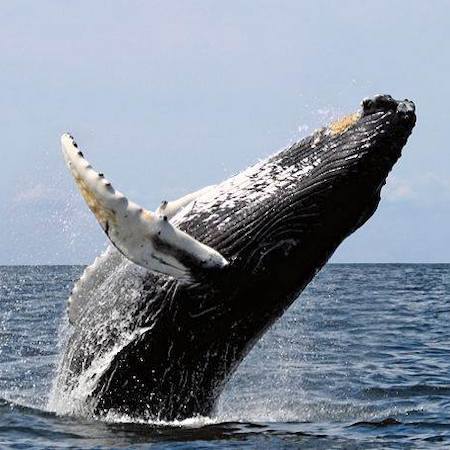
From July to mid-October, humpback whales (ballenas jorobadas) come from the South Pole to the warmer waters of the Colombian coast to give birth to their young. A journey of some 8000km! You can often see the whales from the hammock of your hotel. You can also take an organized boat trip to spot whales. Depending on the number of people joining, you can book such a trip from COP100,000-COP200,000 ($25- $50) per person.
The 54,000-acre Utría park is one of the best places to spot whales in the Colombian Pacific.
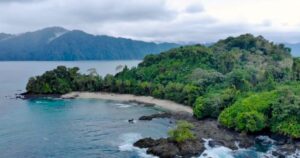
The lagoon of the park, in the months of August-October is often used as a “baby room” by the whales. It is also home to turtles and several species of birds, among others. You can take a walk along the mangroves on the wooden boardwalk. The park is 90 minutes by boat, north of Nuquí and entrance costs COP72,000/$18.(2024)
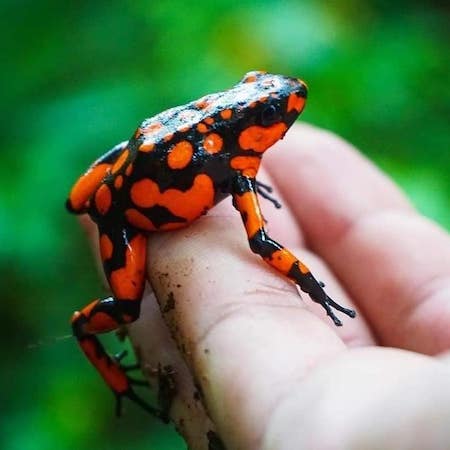
Nuquí has great biodiversity. In fact, Chocó is the region with the second largest biodiversity in the world. The best way to view the extraordinary flora and fauna is with an experienced guide. During the hikes, you will cross rivers, hike to waterfalls and spot different animals. The jungle is inhabited by monkeys, different species of birds and (poisonous and non-poisonous) snakes and frogs. Prices vary depending on the distance and level of the hike and start at around COP30,000/$7.50 per person for a half-day hike.
photo: Explorando Colombia
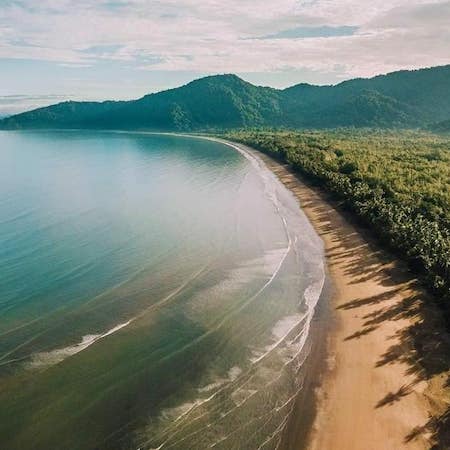
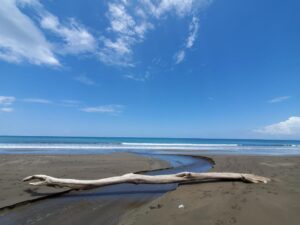
The beaches are spectacular in Nuquí. Here you won’t find white sandy beaches, but miles of brown sandy beaches surrounded by jungle. One of the most beautiful beaches is Guachalito. From here you can hike to the waterfall Cascada de Amor. Especially the sunsets on the beach are spectacular in Chocó!

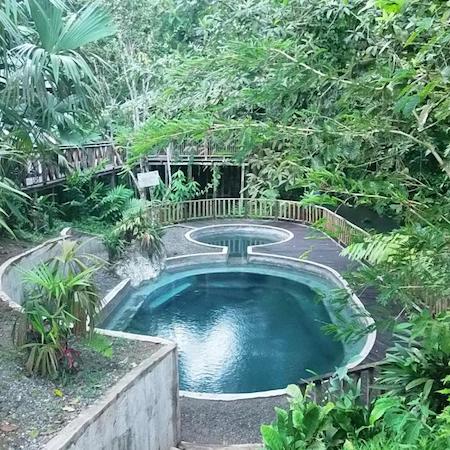
These natural thermal pools, are a 20-minute walk from the village of Termales. You pay COP15000/€3.75 entrance fee for the first time and COP5000/€1.25 for each time you want to return after that. An evening ticket costs COP20,000/€5 and aromatherapy costs COP60,000/€15. Prices are set by the local community and can change. Want to visit a more natural thermal spa? Then hire a guide and visit Jurubirá, 9 km from Nuquí.
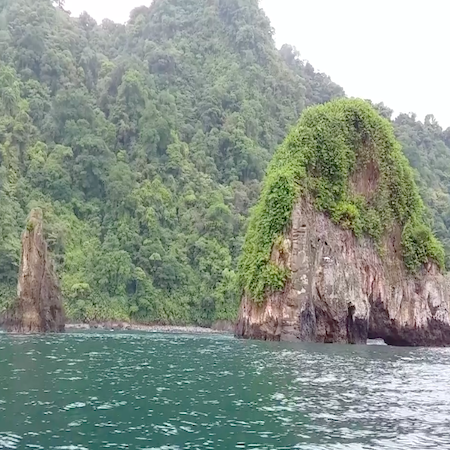
This is the southernmost tip of the Gulf of Tribugá. It is a hot spot for whale watching, surfing, snorkeling and fishing. May is the month for fishermen. Schools of sardines come in with the current then, attracting large fishermen. You can rent a boat with captain from COP350,000/$87.50 per day.
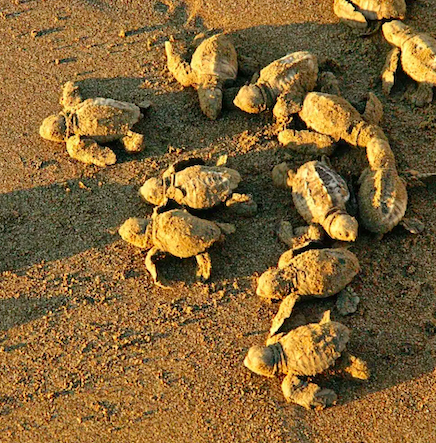
Every year, sea turtles come to the coast to bury their eggs in the sand (especially between June and October). To increase the chances of survival, volunteers from local organizations store the eggs in a safer place. When the baby turtles are born, they are carefully escorted to the sea. As a traveler, you get the chance to see this. September through November are the best months for this. Your hotel or hostel can help you organize this experiece.
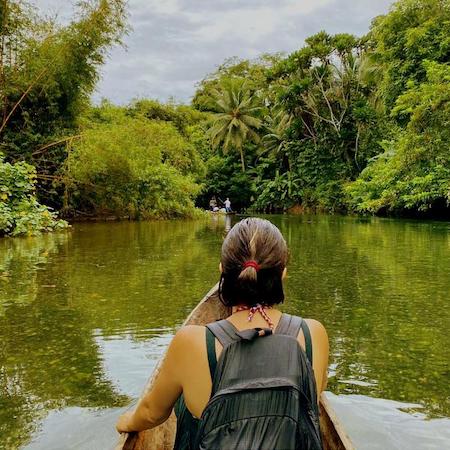
One of the popular trips in Nuquí is a hike + boat ride on the río Joví. In a chingo (traditional wooden boat) you cruise on the river while learning about the different types of mangroves and the diverse flora and fauna. You can book such a boat trip from COP45000/$11 per person.
photo: el Amargal lodge
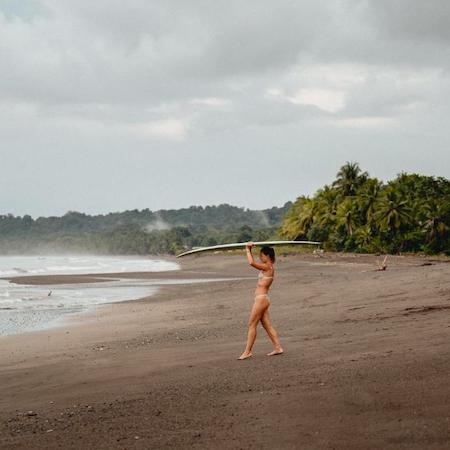
Experienced surfers have known it for a long time…In Chocó you will find the best waves of Colombia. Yet the waves are not only suitable for experienced surfers. If you haven’t surfed before, you can take surf lessons at the surf school in Termales or Guachalito or at one of the hostels. For surf lessons, you’ll spend about COP80,000/$20 per hour. If you just want to rent a board, it will cost you COP30,000/$7.50. One of the cool surf spots in Nuquí is el Vijo surf bungalows.
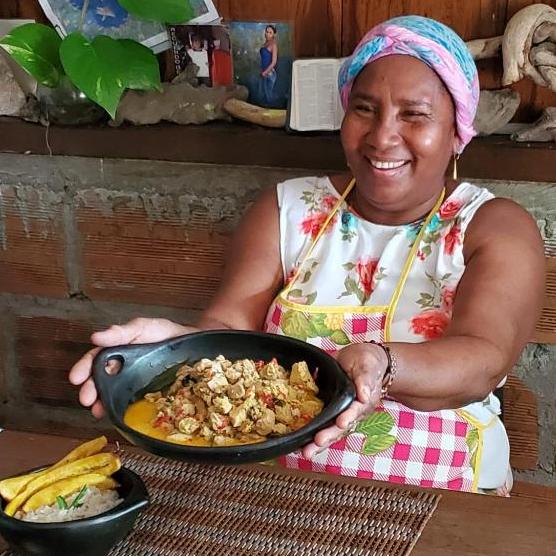
If you like fish, then you will be very happy with the food in Nuquí! Fish is prepared in different variations, such as in fish soup. Crustacean lovers can try the Cambute, similar to the crown snail (Conch). Popular side dishes include “Arroz con Coco,” Yuka and “Patacones”: coconut rice, cassava and green banana “cookies”. Coconut is also a popular ingredient in desserts and sweets such as Panelitas de coco. Want to learn to cook some of these dishes yourself? Then take cooking lessons! Prices start from about COP60000/$15 per person.

The good-humored locals are a mix of Afro-Colombians and the Indian community, who live mostly in the interior. Recent years have also seen an increasing number of locals who have fled Colombia’s busy cities and are building a new life in laid-back Chocó. Locals are, among other things, active in the hotels, provide tours and prepare the most delicious dishes for you. They are happy and proud to welcome travelers. With a trip to Chocó, you support the local community. And that support is badly needed in one of the poorest areas of Colombia.
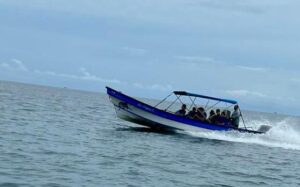
There are no roads to Nuquí and the only way to get there is by plane, or by boat from Bahía Solano (2h), and El Valle (1.30h). You can also reach Nuquí by boat from Buenaventura, but that is a long trip that can be violent if the sea is wild. Moreover, Buenaventura does not have a good reputation when it comes to safety.
Where do you start if you want to take a trip to Nuquí?
Check out our 4 step plan here and start planning your trip to Nuquí!
In these 4 steps, plan your trip to Nuquí!
1. Book a ticket Medellin – Nuquí (NQU-Reyes Murillo Airport).
Check our ColombiaMyWay hotel tips and book your accommodation here
Once arrived in Nuquí:
3. At Nuquí airport pay the tourist tax a COP41,000/$10.25 and possibly do some shopping before boarding the boat.
4. From Nuquí airport walk 150 meters to the pier and catch the boat
This info was updated in January 2025.
Chocó is one of the wettest places in the world. At first that doesn’t sound too appealing, but on the other hand, that makes the jungle super exuberant!
You have to be lucky with the weather. You can have beautiful days with blue skies, but it can also rain for long periods at a time. There is high humidity. The most sunshine and least rain is in the summer, from January to March.
The best time to go to Nuquí depends on what you want to do:
January through March
The best time for hikes in the jungle and trips on the river. The sea is calm and ideal for boat trips and for diving and snorkeling.
May
The best month for fishing. With the current come schools of sardines, which attract big fish. Best spot for anglers is Cabo Corrientes.
July- mid-October (especially from August)
The best months to spot whales, which in this period come to the Colombian coast to give birth.
September-November
The best months to see the release of baby turtles.
Surfing is possible-depending on your level-all year round.
High season
Prices increase in high season, during semana santa (Easter week) + 15/6-15/10 and 15/12-15/1.
Tips to book your hotel
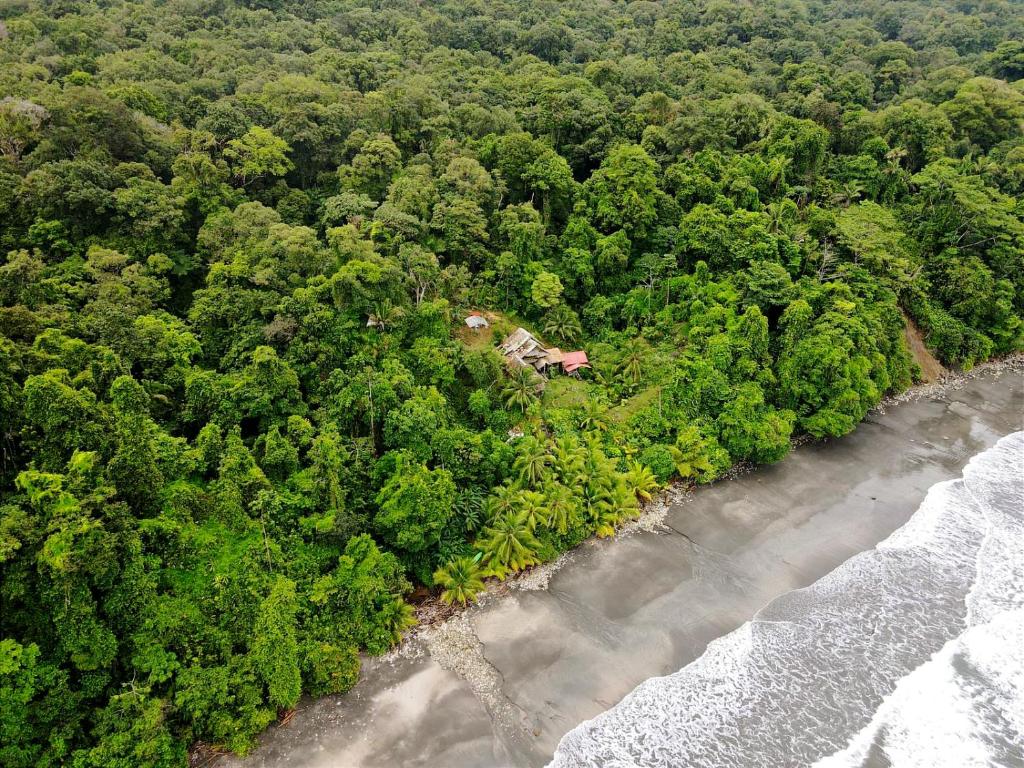
#1 Most budget-friendly accommodations are in the villages of Termales and Arusi
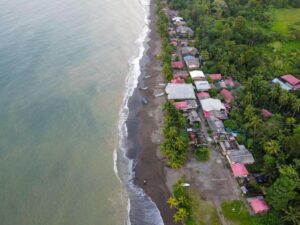
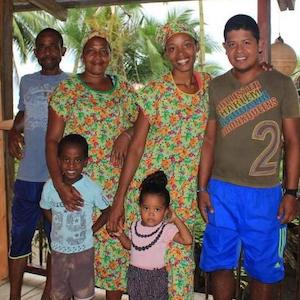
Here there are small hotels run by local families. Accommodations are basic, but the hospitality of the families is usually top notch.
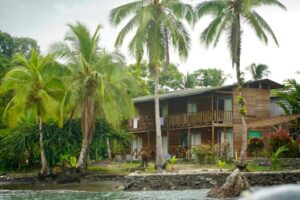
#2 The ecolodges with a little more comfort are located mainly on Guachalito beach and at Cabo Corrientes
By comfortable, don’t think air conditioning and high speed internet, but a comfortable room in an idyllic location, in a beautiful tropical garden.
#3 Wifi and power are not a given in this region.
If the accommodation is very remote, there may only be power in the evening hours and no wifi or phone signal.
#4 If you are going to book a hotel, check if it is “bare” rental or an “all in” trip.
A package including 3 meals a day, is often offered at the lodges that are very remote with no stores or restaurants nearby.
$ price range up to $50
$$ price range $50 – $100
$$$ price range above $100
Travel with as little luggage as possible. For the flight to Nuquí, small planes of up to about 20 passengers are used. In general, 10kg is the maximum weight to check in and 5kg is the maximum for hand luggage. Moreover, you will continue traveling by boat, for which the rule is; the less luggage the better! The boat from Nuquí will drop you off at the beach, but you may still have to walk a bit on the beach to your hotel. Therefore, we recommend a backpack instead of a suitcase.
Nuquí is not a low budget destination. Because you can only get there by plane/boat, transportation costs are already a big chunk of your budget. However, affordable hotels can be found and if you can share the cost of excursions such as hikes and boat trips with other travelers, you can still travel to Nuquí affordably.
For breakfast in a local restaurant you will pay about COP20,000/$5 and lunch and dinner will cost COP30,000/$7.50. You can make the tours as expensive as you want. The prices are depending on the number of people going along. For an indication of prices, check our tips on what to do in Nuquí.
#ColombiaMyWay tip
If you want to go to Chocó on a smaller budget, check out el Valle. At hostels like Humpback turtle, Utría eco hostel and the Pelican house hostel you can book a dorm bed and the cost of tours is often lower because you can share it with more travelers.
The water from the tap is not drinkable
At the very remote accommodations, electricity may be limited to a few hours in the evening.
There is no ATM in Nuquí, so bring all the money you think you will need.
With about 5 days, 4 nights, you have time to take long walks on the beach and do various activities at your leisure, such as visiting the thermal pools at Termales, doing whale spotting trips, hike with a guide in the jungle and do some kayaking on the river. And then you still have time to read a book in the hammock -:)
The locals are a mix of Afro-Colombians and the Native American community, who live mostly in the interior. Very little English is spoken. A word of Spanish is certainly helpful and works wonders for getting in touch with the locals.
For Chocó, a yellow fever injection is recommended. Tip: If you’re traveling around Colombia for longer, you can get a free yellow fever injection at Bogotá’s El Dorado airport. The vaccination only works after 10 days, so get it in time!
Wifi is not a given outside Nuquí. If you stay near a village, sometimes there is wifi in the lodge. The village of Termales, for example, has Internet through a government project. Provider Claro has the best coverage in Chocó. It very much depends on the location of your hotel, whether you can use your phone because if the lodge is very remote, chances are that there is no coverage and no wifi signal.
Medellín is the second largest city in Colombia and capital of the department of Antioquia; a fertile region with coffee plantations, flower farms and traditional villages. Besides the fact that Medellín itself has much to offer, the city -because of its central location- is also an ideal stopover during a tour of Colombia.
Highlights
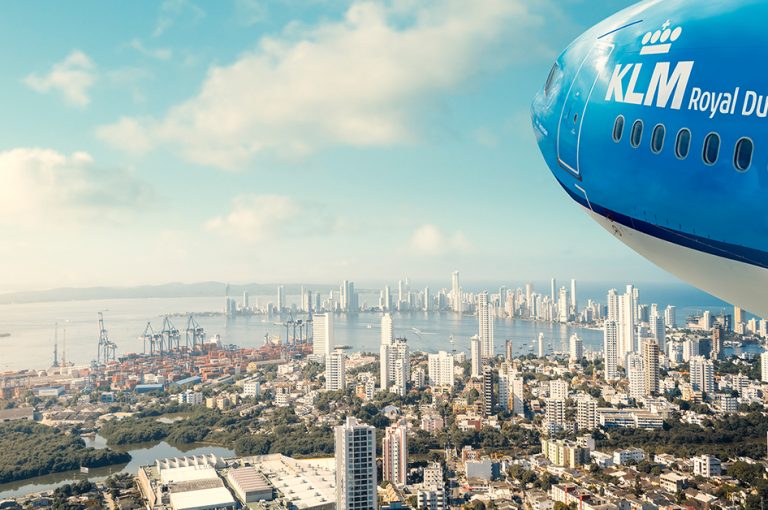
Aeropuerto Internacional Rafael Núňez in Cartagena (CTG) is easily accessible, including:
Transportation from airport
The easiest way to get into getting to the city center is by cab. Follow the “yellow footsteps” and you will come out to a counter. Here you say where you need to go. You will then get a printout with the price and be assigned a cab. A cab ride to the city center takes about 15 minutes and will cost you around 14,000COP (€4).

Bus
There are connections from St. Marta (5 hours), Medellín (12 hours), and Bogotá (22 hours), among others. The Terminal de Transportes de Cartagena is about a 45-minute drive from downtown. If you are traveling to Cartagena from St. Marta, puerta a puerta (door-to-door transportation) is a convenient option. (See transportation from Cartagena).
Car
Cartagena is easily accessible by rental car, but parking is difficult in the city center. Moreover, the center is easy to walk around. If you are traveling with a family or a group and want a little more freedom, it may be worthwhile to rent a car, for example at the airport.
Boat
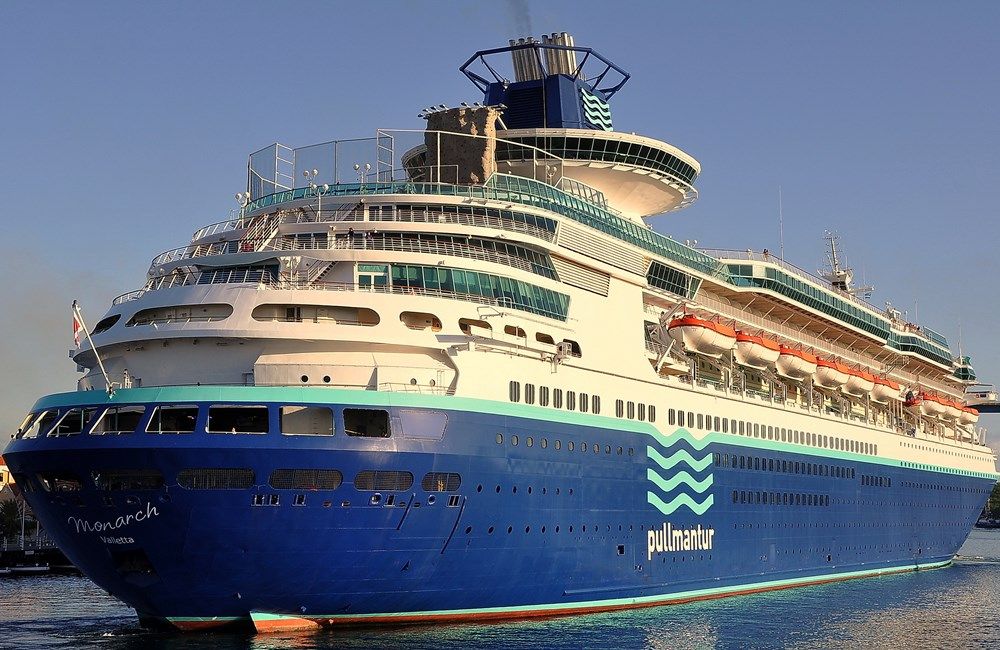
Cartagena is a popular destination for cruise lines. Consequently, many tourists get to know Cartagena for the first time on a cruise. There are also sailing trips between Cartagena and the San Blas Islands in Panama.
Cab
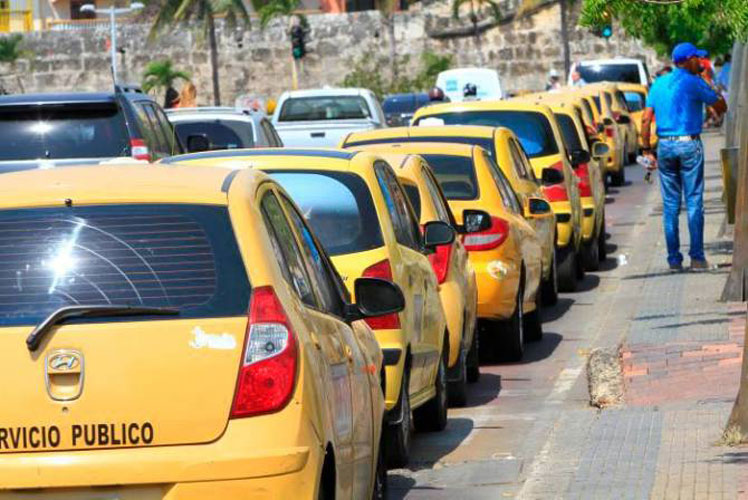
Grabbing a cab is easy. The yellow “servicio publico” cabs are the official cabs in Cartagena and there are many of them. Cabs do not run on meters, so agree on a price in advance.
The minimum price for a ride is COP7,000/€1.90. At night, a ride in Centro, San Diego and Getsemaní costs around COP10,000/€2.75.
Apps

Besides the Uber app, there are other cab apps in Colombia, such as Didi Rider and Easy Tappsi. These apps work like Uber; you sign up and can track the driver.
Hop-on-Hop-off bus
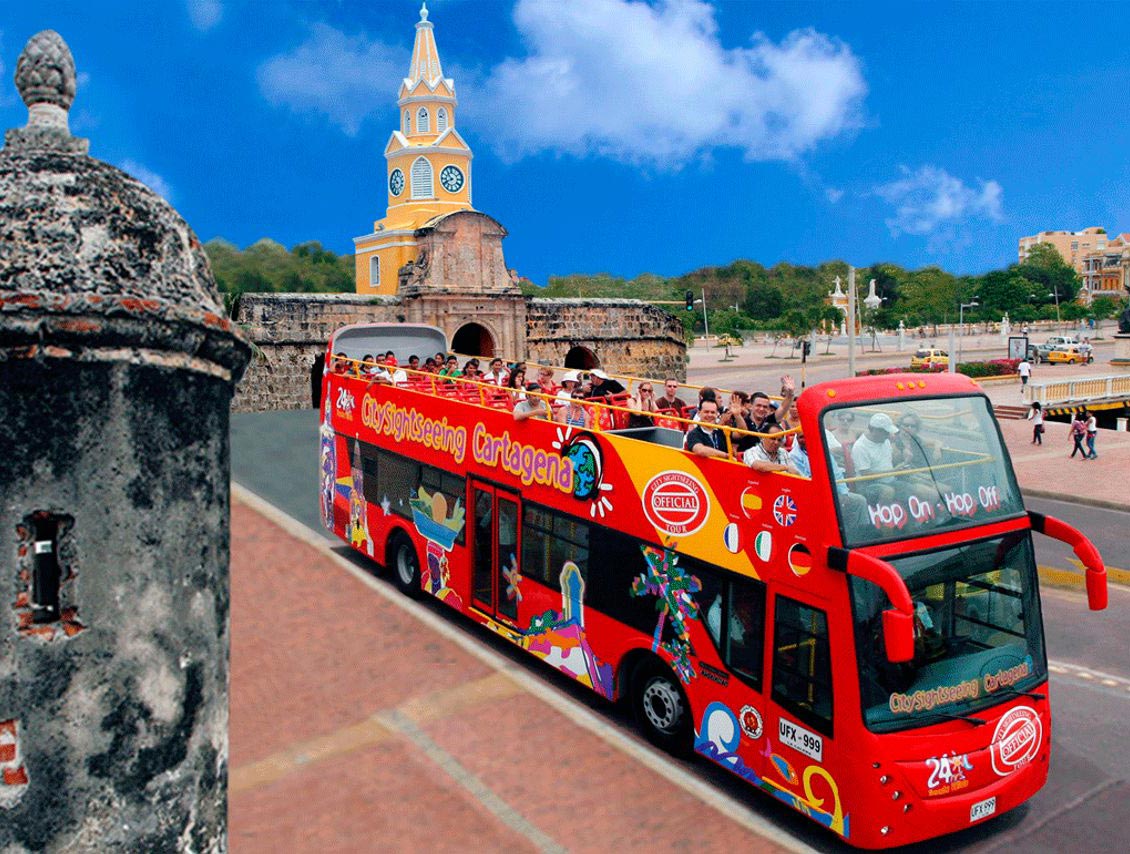
The distinctive red buses of Citysightseeing Cartagena, are especially popular with tourists who want to see the highlights of Cartagena in a short time. You can hop on and off at 14 stops as much as you want, during the duration of your ticket (24/48h). With English-language audio guide.
Bus transportation
Bus transportation to Medellín and Bogotá goes through the Terminal de Transportes, a 45-minute drive from downtown. From here, buses also go to other destinations such as St. Marta, Mompox, and Playa Blanca.
Tip: Puerta a Puerta service to St Marta
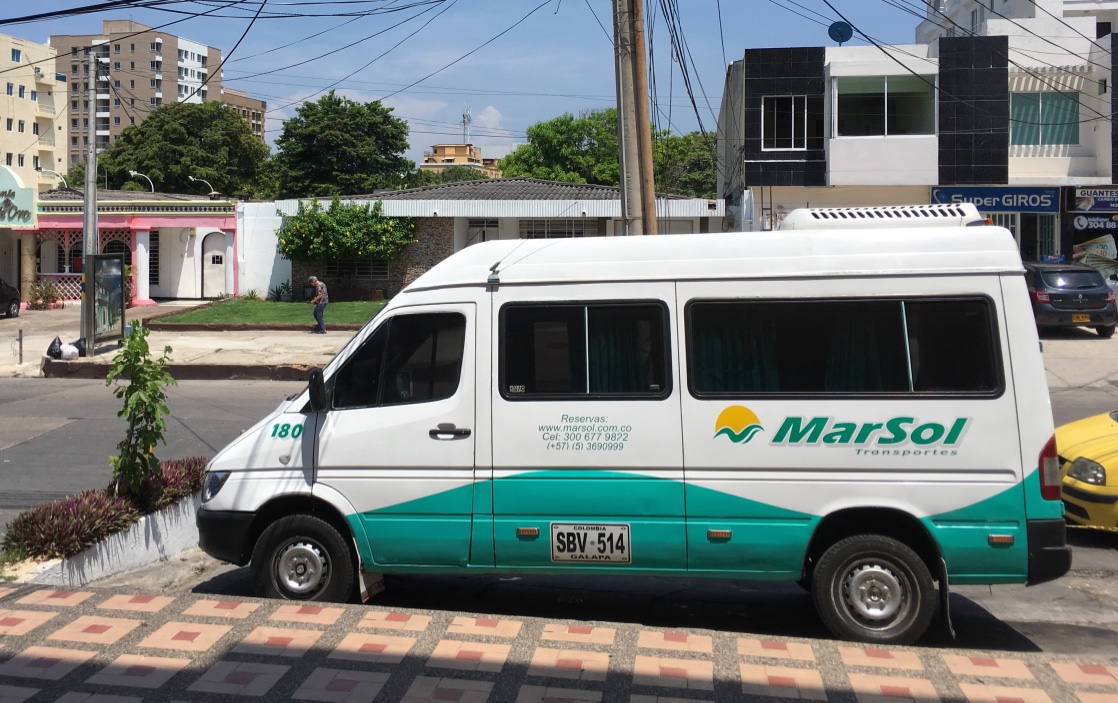
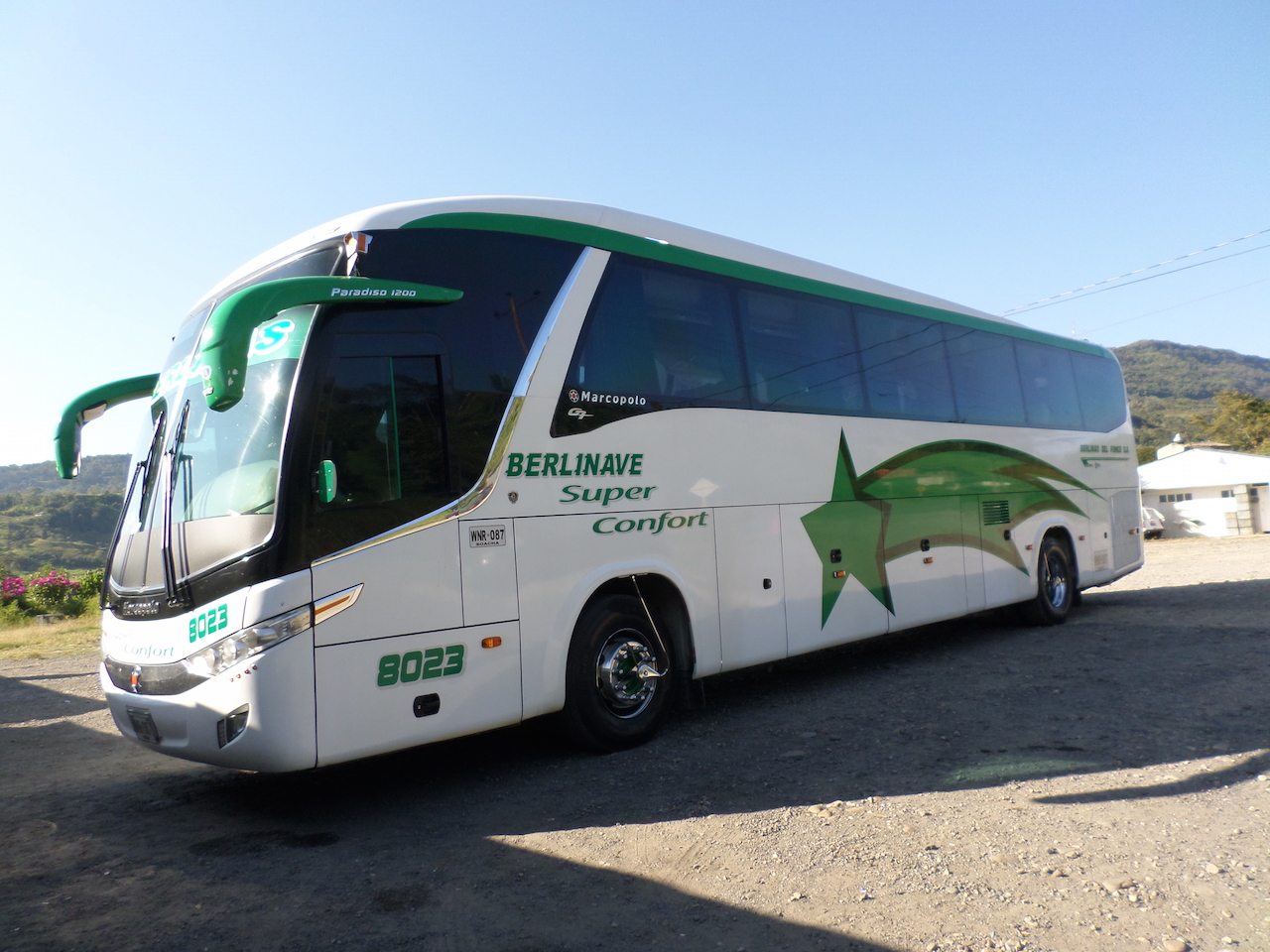
If you are traveling on from Cartagena to Barranquilla or St. Marta, the Puerta a Puerta service is a convenient option. Instead of taking a cab to the bus terminal, a minibus from Berlinas or Marsol will pick you up at your hostel and drop you off at the bus terminal in St Marta. The trip goes via Barranquilla. If you return to Cartagena after this, the minibus will drop you off as close to your hotel as possible.
Price indication
Cartagena-Santa Marta: COP52000/€14 (one way), 4.30 hours
Booking
There are fixed times, even on weekends there are several buses going every day. You can make reservations via WhatsApp, among other things.
Update May 2022: Marsol and Berlinas no longer do puerta a puerta transportation. You must now board at their Cartagena office and be dropped off at their Santa Marta office. Prices have been raised to COP70,000 pp.
Cartagena can be visited all year round
Even in the rainy season, you can just go out and it doesn’t rain every day.
Busiest and most expensive periods
December, January and Semana Santa (Easter week). Many Colombians then take their own vacations. Colombians also like to travel during the long weekends around the holidays (Puentes). September-November is quieter and there are often good deals to be had.
El Día de la Independencia de Cartagena
Cartagena’s Independence Day. Celebrations begin in October, last for 3 weeks and end on Nov. 11.
Hay Festival
January/February: literature and arts festival with international guests
Cartagena International Film Festival (CIFF)
February/March
Music Festival de Tambores y Expresiones Culturales|
October, in San Basilio de Palenque, 55 km from Cartagena.
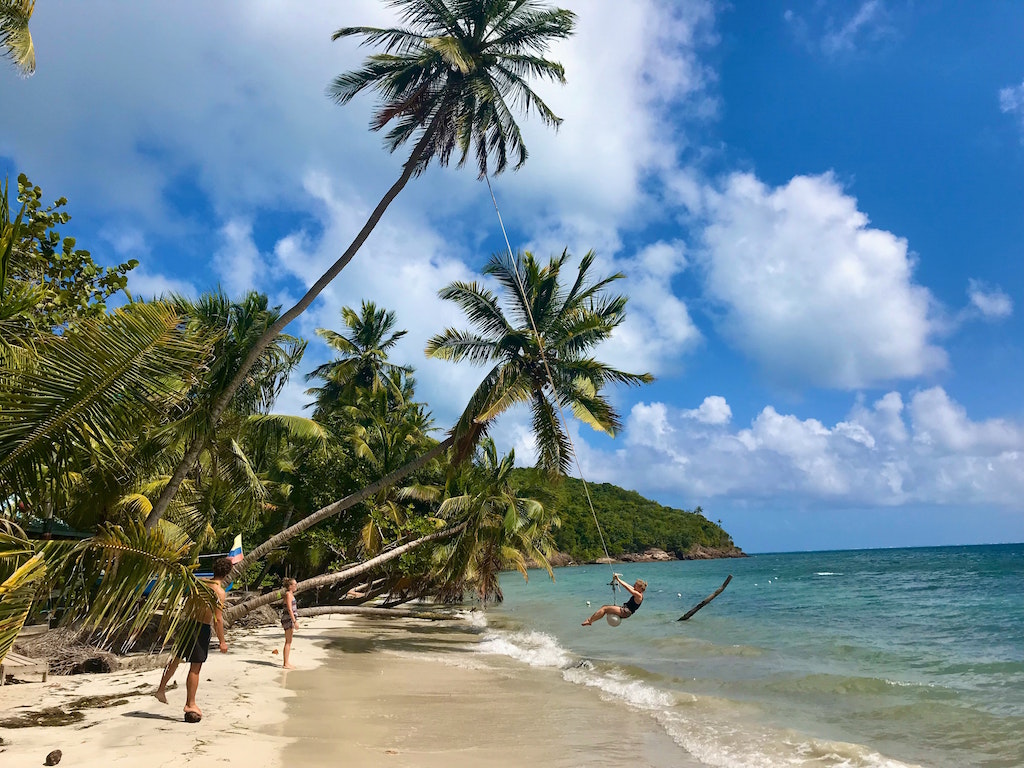

There is a lot to see in and around Cartagena, but where do you start? Here is some inspiration for a trip of 2 days and 3 days or more.
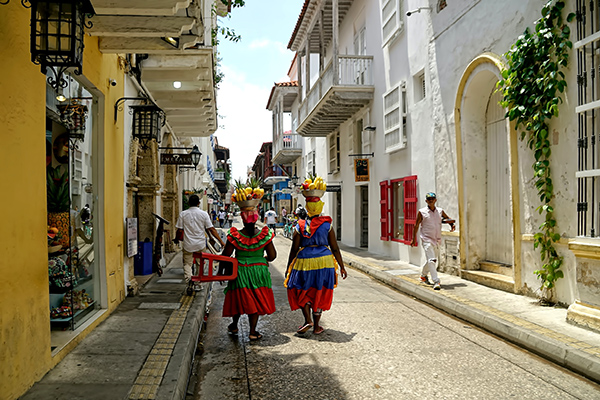
In 2 days you will have enough time to see the most famous sights, grab a museum and terrace and do a tour or workshop.
Do you do on day 1 a city tour, you will immediately have a handy introduction to the city. On day 2 you can then visit Castillo de San Felipe, stroll through the trendy Getsemaní district, or sign up for a chocolate or coffee workshop, for example.
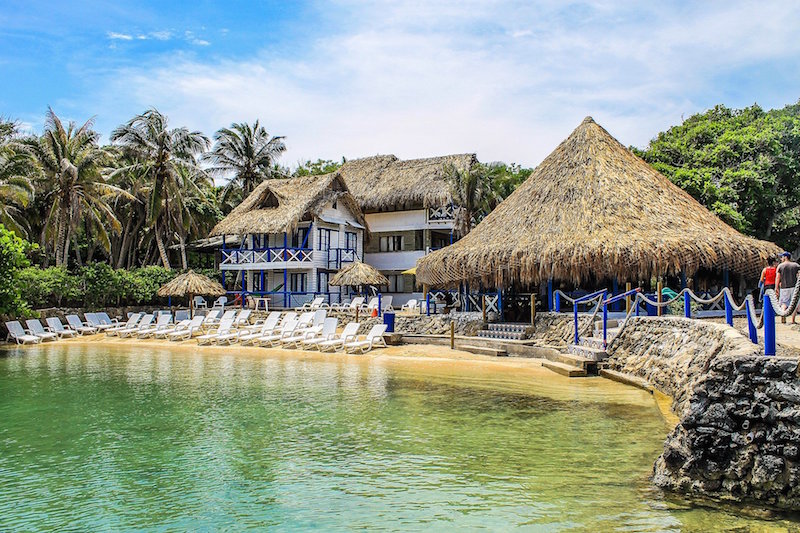
With a day or more added, you can take it completely easy and soak up the city. You can also take a cab to Bocagrande, to stroll along the modern boulevard, shop and see the contrast of “little Miami” with the old town.
With 3 days or more, you can do a trip to PNN Islas del Rosario y de San Bernardo or take the bus to the colonial town of Mompox inland.
€ price range up to €25
€€ price range €25 – €100
€€€ price range above €100
El Centro
San Diego
Getsemani
Vaccinations
No vaccinations are required for Cartagena. Only if you are entering Colombia from Brazil is a yellow fever vaccination required.
Doctor
Click here for more information:
Facebook Clínica Medihelp Services Cartagena
(also home visits)
MedicApp
An App service, where you can request a doctor’s consultation “at home” 24 hours a day.
Look here for more information and to download the App:
Website MedicApp
Hospital
Look here for more information:
Website Clinica Bocagrande
Dentist
Click here for more information:
Website Cartagena English speaking Dentist
Consul: Mauricio Villegas Gerdts
Callejon Santa Clara Calle 24A #19-64, Manga, Cartagena de Indias
Phone: +5756605610
E-mail: [email protected]
Opening hours: Monday through Friday: 8 a.m. – 1:30 p.m.
Opening hours
Supermarkets are generally open from 8 a.m. to 9 p.m. Some drugstores are open 24/7.
Well-known supermarkets in Cartagena
As in all tourist destinations, Cartagena has a police presence to ensure the safety of tourists. Therefore, you need not be afraid when walking the streets in downtown Cartagena. Nevertheless, do not walk around with your phone and other valuables and think logically during your stay in Cartagena.
Do not go into the suburbs
There is a lot of poverty in the “suburbs” and it is not safe for tourists. After sunset, avoid the neighborhoods outside the tourist center (Centro Histórico) of the city, Bocagrande and Manga.
Get advice from locals
If you want to go out at night, ask your hotel if it’s safe to walk. Otherwise, have them call a cab for you, or order one yourself through the App.
Go inside to withdraw money
Use ATMs in malls and supermarkets where you can safely withdraw money.
Be prepared for street vendors
In El Centro, near the tourist attractions and on the beaches, there are many street vendors. If you don’t fancy yet another vendor offering their wares, “No gracias” will suffice and you just walk on. That is usually enough for the street vendors not to bother you.
What to consider during a day at the beach
On the beaches, such as Playa Blanca and Bocagrande beach, the vendors can be very persistent. Keep a close eye on your belongings because sometimes the vendors tip off thieves. If you’re going to eat something at a beach shack, check the bill so they don’t have a chance to possibly rip you off.
Most hotels and hostels have wifi, at least in the common areas. There are also buses and minivans with wifi.



Providencia is a Caribbean island located some 800 km north of Colombia and 150 km east of Nicaragua. Where neighboring island San Andrés is a popular vacation island among Colombian tourists, Providencia is a lot quieter. The island, which has 5,000 inhabitants in an area of 17 km2, is mostly visited by travelers who come to dive, snorkel and relax at one of its beautiful beaches. Most locals live in the capital Santa Isabel in the north of the island. In Providencia, you can listen to reggae at one of the beach bars while enjoying a tropical cocktail and a freshly caught fish. In short; all the ingredients for a true island feeling are present on Providencia.
Afro-Caribbean culture
With a past as English colonies, Providencia and San Andrés are an “odd duck”. One of the population groups on the islands is the Afro-Caribbean “Raizal,” who speak an English-Creole language. The English influence is still very noticeable: the names of villages and beaches are mentioned in English, and Creole English is spoken alongside Spanish. Many locals feel more Caribbean than Colombian, and there are many Rastafari on the island.
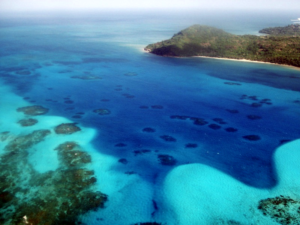
The sea of 7 colors
The sea around the islands is called the “Mar de los 7 colores,” because of the colors in all variations, from aqua to green. The coral reefs around Providencia are part of the 3rd longest coral reef in the world, part of which belongs to the Old Providence McBean Lagoon National Natural Park. Turtles, sharks and rays, among others, are found here.
In this travel guide we share information and tips for fun things to do in Providencia, the most beautiful beaches + the nicest hotels to stay in. You will also find practical information and useful tips for your stay on the still relatively unknown Caribbean island of Providencia. If you want to know more about other destinations on the Caribbean coast, read on here.
What to do in Providencia? From snorkeling, to climbing the island’s highest peak, here are our tips.
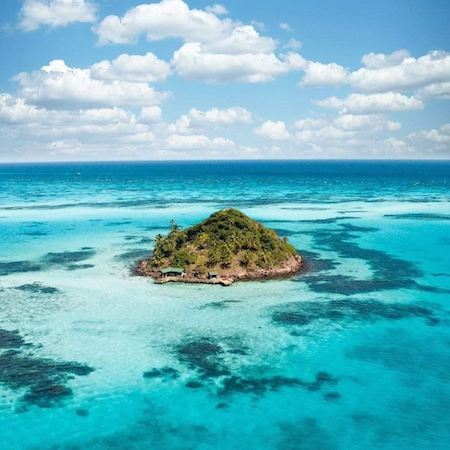
Crab Cay/Cayo Cangrejo is part of McBean Lagoon National Park, a 10km2 nature reserve. At this coral reef with its clear water, you can spot turtles, among other things. The island itself is 500m2 in size and from the highest point at 30 meters, you have a beautiful view. There is no beach, but you can buy a cold drink. Entrance fee is COP21,500 / €5 (2023) You can kayak to the park, catch the boat in Maracaibo bay or book a tour at Pelagic tours. Check their Instagram for more info. Tip: It can get very crowded, so go as early as possible.
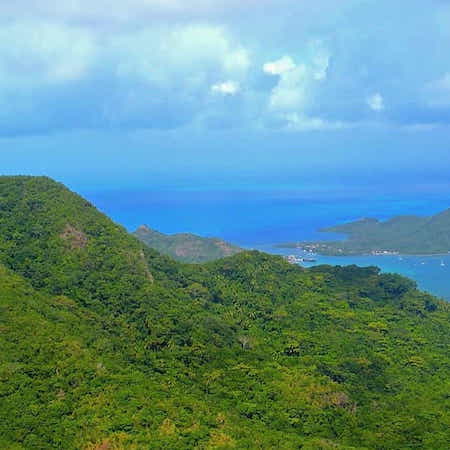
At 360 meters, The Peak/ El Pico is the highest point in Providencia. You walk through the rainforest until you reach the spot with the best view of the island. The trail starts in Bottom house (Casabaja) and takes about 2-3 hours in total (there and back). It is a steep climb, best done early in the morning because of the heat. A guide is mandatory and costs COP70,000 per person. Depending on your pace, the hike takes 3-4 hours. Bring plenty of water and a snack.
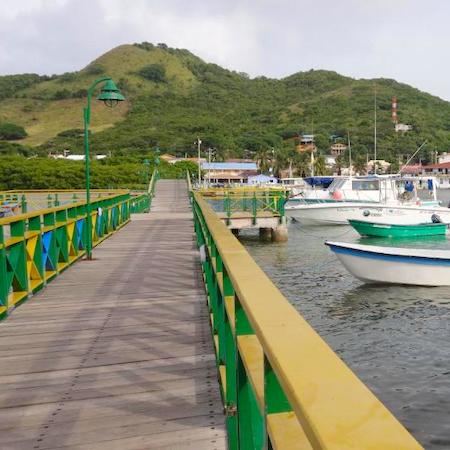
The bridge runs from Santa Isabel to Santa Catalina island. According to legend, walking with your lover across the “Puente de los Enamorados” guarantees eternal love! On Santa Catalina island you can rent a kayak, explore deserted coves and kayak to the popular snorkeling spot Morgan’s head. This is a rock in the shape of a face, named after English pirate Henry Morgan. You can also hike to Morgan’s head. The hike takes about half an hour and on the way you will pass Fort Bay Beach, a quiet beach and cool place to snorkel.
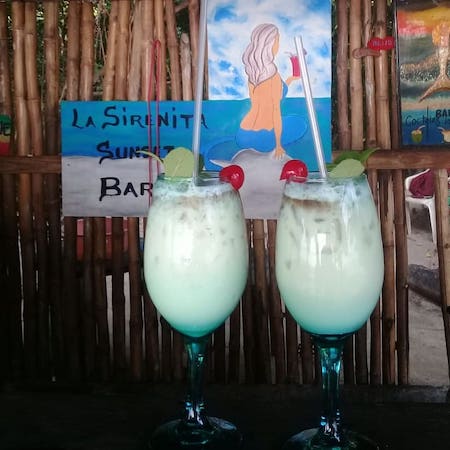
Two popular bars are Roland Roots bar (Manicheel Bay) and La Sirenita Sunset (South west bay). At Roland’s, the reggae music creates a nice Caribbean atmosphere. The popular Coco loco is served in a coconut. Each bartender makes their own version of the cocktail, but at least it contains: rum, lime juice, coconut milk and coconut water, possibly topped with tequila and vodka. La Sirenita’s specialty is the Mojito.
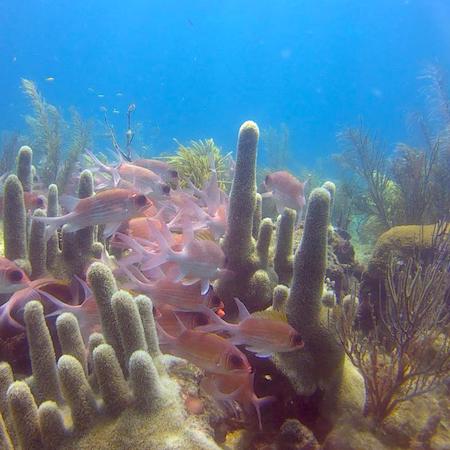
With warm water, little current and clear water, Providencia is a fine place to do your first dive. Even if you want to do the PADI Open Water Diver course, there are several diving schools that can certify you, such as the well-regarded Felipe Diving Center and Sirius Dive shop. Even if you have dived before, diving on Providencia is worthwhile. The coral reef is part of the third largest coral reef in the world and has been designated a Biosphere reserve by UNESCO. There is a great diversity of fish and other marine animals, such as sea turtles and stingrays. For an extra touch of adventure, you can dive to one of the shipwrecks. The price for an introductory dive, is around COP200,000/54€ For an PADI Open water certification you pay around COP1,000,000/€270. This is a 4-day course.
These are some of Providencia’s best dive sites:
Manta’s place
This dive site includes stingrays and sea snakes
Felipe’s Place.
Here you will find beautiful corals and many species of marine animals
The Spiral
Dive site with the greatest biodiversity in Providencia
Santa Catalina Slope
Santa Catalina island is known for shark spotting
How to get to Providencia?
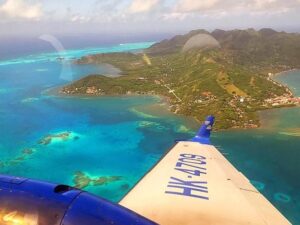
Providencia is much more isolated than San Andrés, 90km away, because there are no direct flights from mainland Colombia. Currently (July 2024), Satena is the only airline flying from San Andres to El Embrujo airport in Providencia. The flight takes about 20-30 minutes and is operated by small planes. Due to the limited number of seats, the flights fill up quickly and early reservations are necessary. You can buy a ticket from about 125 euros. (Satena) Note: You are only allowed 10 kg of luggage for free and 5 kg of hand luggage. airport tax is COP35,000 (2024). Flights to San Andres depart from Bogotá, Medellín, Cartagena, Barranquilla and Cali, among others. Flights to Andres can be booked from 90€ for a return ticket from Cartagena with low-cost airline Wingo.
Cab from the airport
A ride from the airport costs between COP25000/€6 and COP40,000/€10 depending on your destination
Tourist map
For San Andrés / Providencia, you need a tourist card, which you can buy at the airport gate where you board your flight to San Andrés. It costs COP124,000 / €31 (2024) and is valid for 3 months for both San Andrés and Providencia. You’ll also need the tourist card again when you leave the islands! Be sure to have this money cash on hand, as you can’t always pay by credit card
Catamaran
There is a catamaran crossing from San Andres 6 times a week. The trip takes about 3.5 hours and can be very rough. Check the Conocemos Navigndo website for more information. The price is between COP 300,000-COP400,000 / €75-€100 (return) Update 2024: the catamaran service is currently unavailable due to maintenance
Transportation in Providencia
There is only 1 major road on the island and a convenient way to explore the island is by scooter. Scooters and baby carriages can be rented at several hotels for about €20. In about 45 minutes you can drive around the entire island. You can also rent a baby carriage from about €35, or a bicycle. Here you have to take into account the heat and cycling uphill. If you don’t plan to arrange your own transportation, you can use moto-taxis. A ride costs between COP5000 and COP12000 / €1.35-€3.The hotels can help you arrange moto-taxis.
Climate
The island has a tropical climate with an average temperature between 25 and 30 degrees. There is high humidity. The best time to visit Providencia is from mid-January to April, the dry season. The period from May to October is the hottest and most humid. October and November see the most rainfall. The island is located in the southern part of the hurricane belt. Hurricane season runs from June to November, but hurricanes are most common beginning in August. Check the current weather forecast for Providencia at Windfinder Providencia.
*Hurricane Iota, update 2023:
On Nov. 17, 2020, Hurricane Iota destroyed 98% of Providencia’s infrastructure. It was one of the worst hurricanes Colombia has ever experienced. A lot has since been rebuilt and the roads are in good condition. If you drive across the island, you will probably still see places where construction is still going on, but you can travel to Providencia just fine. Besides, the locals live off tourism and you as a visitor are more than welcome!
High season
Semana Santa (Easter week), August and the Christmas period are favorite periods to travel for Colombian tourists. If you can, avoid this period as prices are higher. If you do travel during this period, book your hotel and flight well in advance.
Special Events
April-July:
Migration of the crabs
If you are in Providencia between April and July, you have a chance to see the migration of the crabs. During a two-week period, the adult black crabs migrate to the beach to lay their eggs. After this, they migrate back into the mountains. A few weeks after, the young crabs follow in their footsteps. During this period, roads are partially closed to traffic to protect the crabs.
June:
Cultural Festival
During the last week of June, Providencia’s most important cultural event takes place. It is a festival with music and dance, a beauty pageant and a parade of motorcycles.
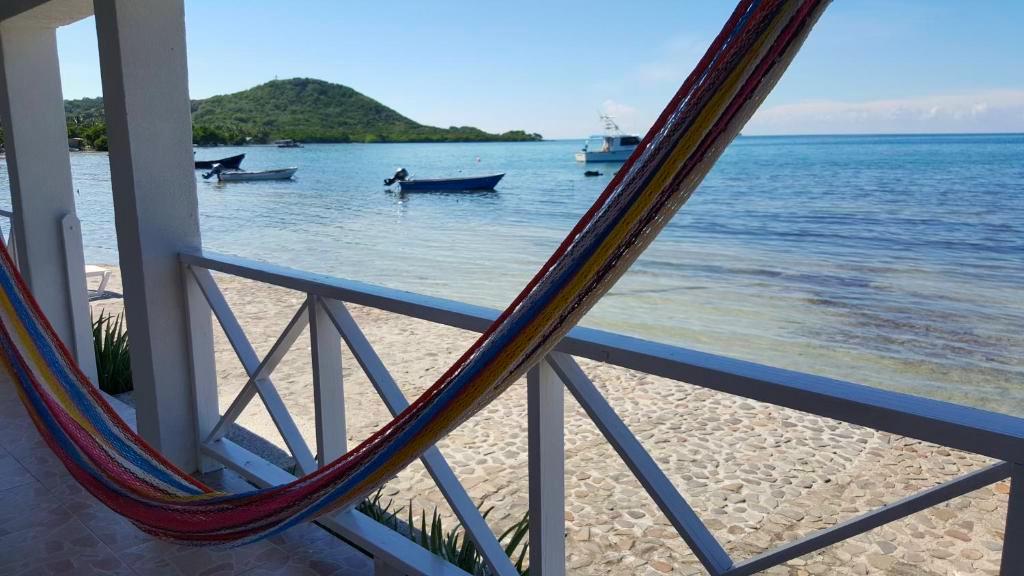
If you come to snorkel and enjoy the beautiful beaches, about 3-4 days is fine for Providencia. If you want to do a diving course, then you need a week.
Providencia’s most popular beaches are on the south coast of the island.
Southwest Bay is an elongated beach on the southwest side and one of Providencia’s most popular beaches. Horse races are held here on Saturday afternoons. You will find a number of restaurants serving delicious seafood and bars including El Divino Niño restaurant and la Sirenita cocktail bar.
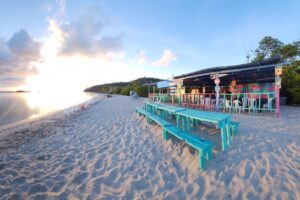
Freshwater Bay is located not far from Southwest Bay. Here you will find a number of popular restaurants such as Caribbean Place Donde Martin and Restaurante Miss Elma.
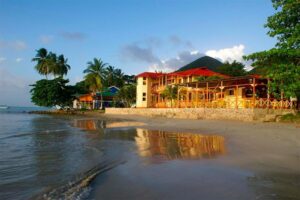
Almond Bay is a relaxed beach with calm and clear waters, which is located in the northwest. Because the beach is a 5-minute walk from the main road, there are not very many visitors. There is little shade on the beach. There are a few simple stalls selling drinks, such as the Coco loco.
Manicheel Bay is a somewhat rougher beach, with strong currents, on the south coast. The beach has become best known for Rolands Roots bar, where you can enjoy reggae music and Coco loco cocktails.
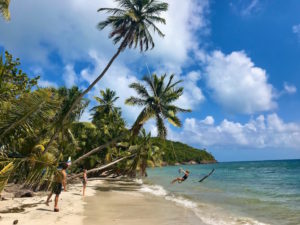
Where to stay in Providencia?
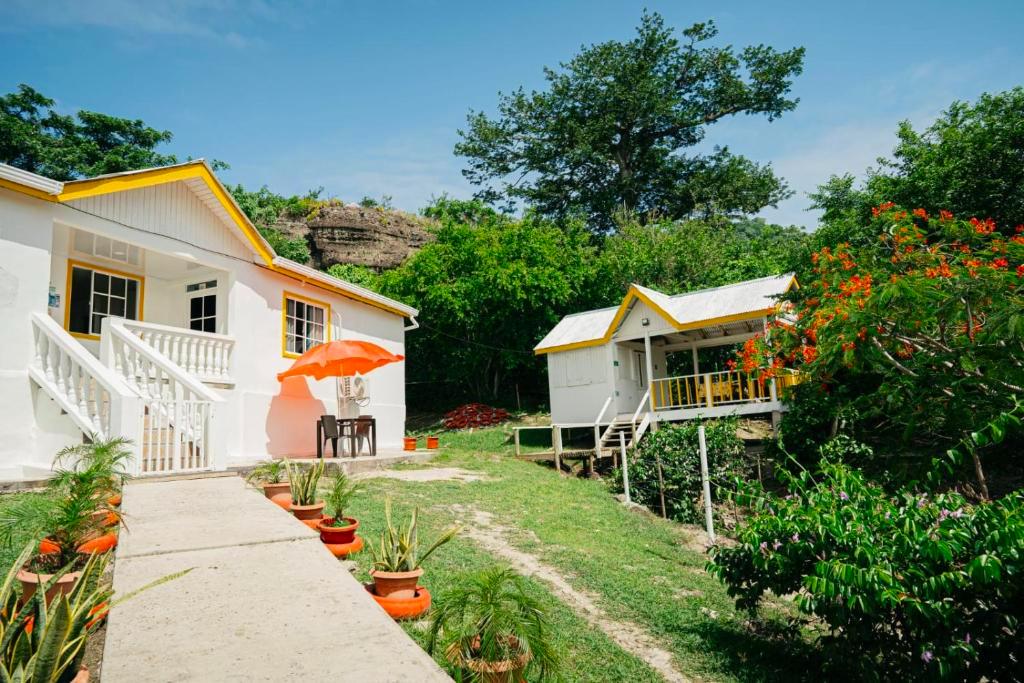
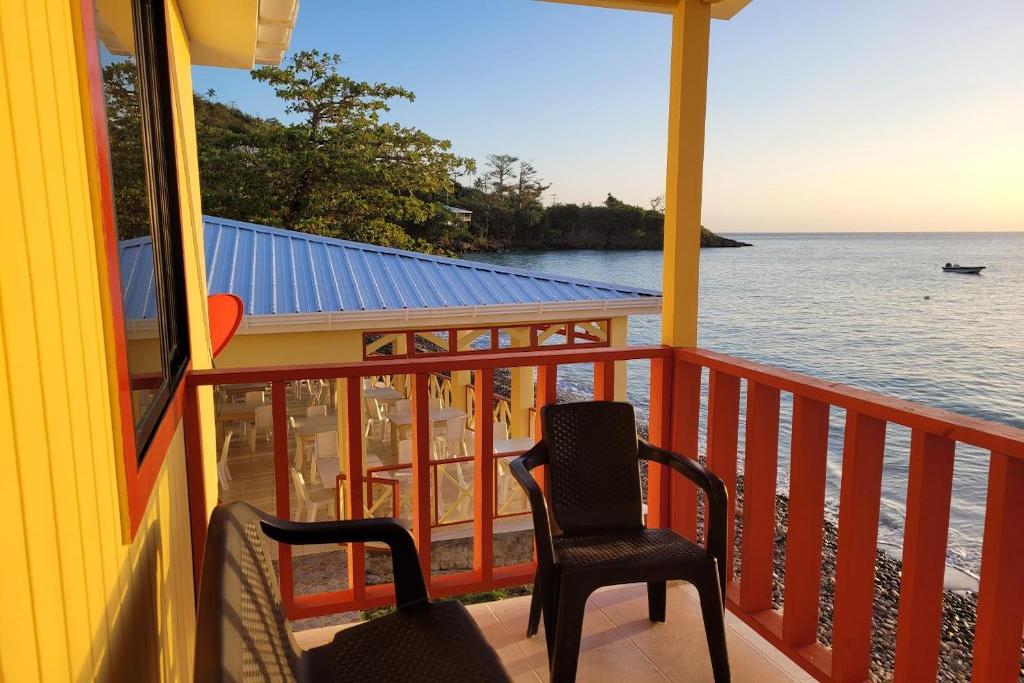
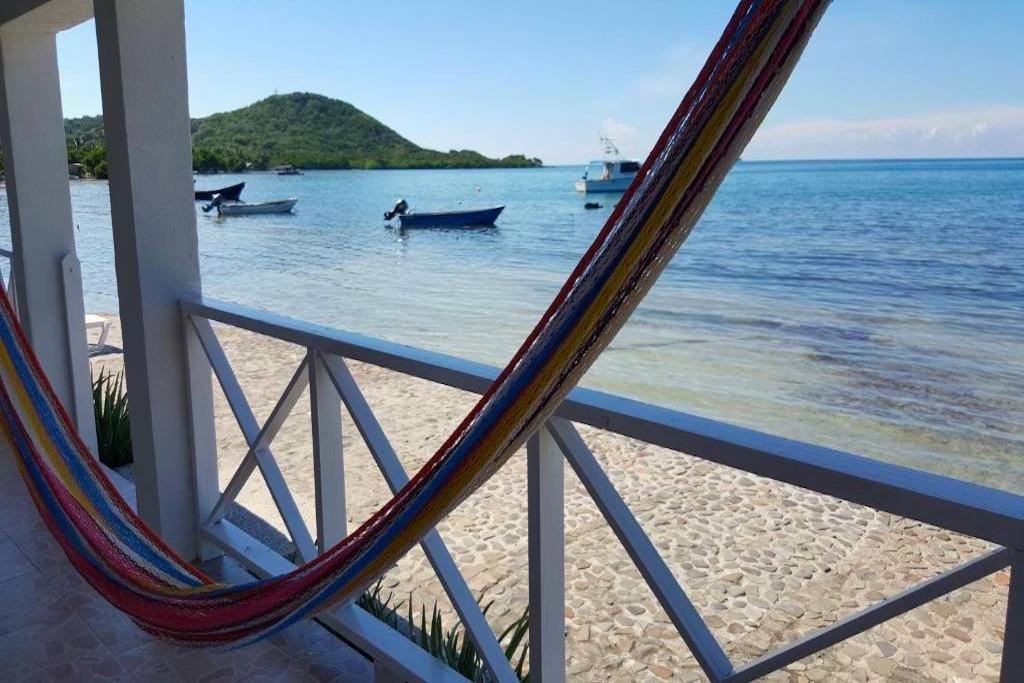
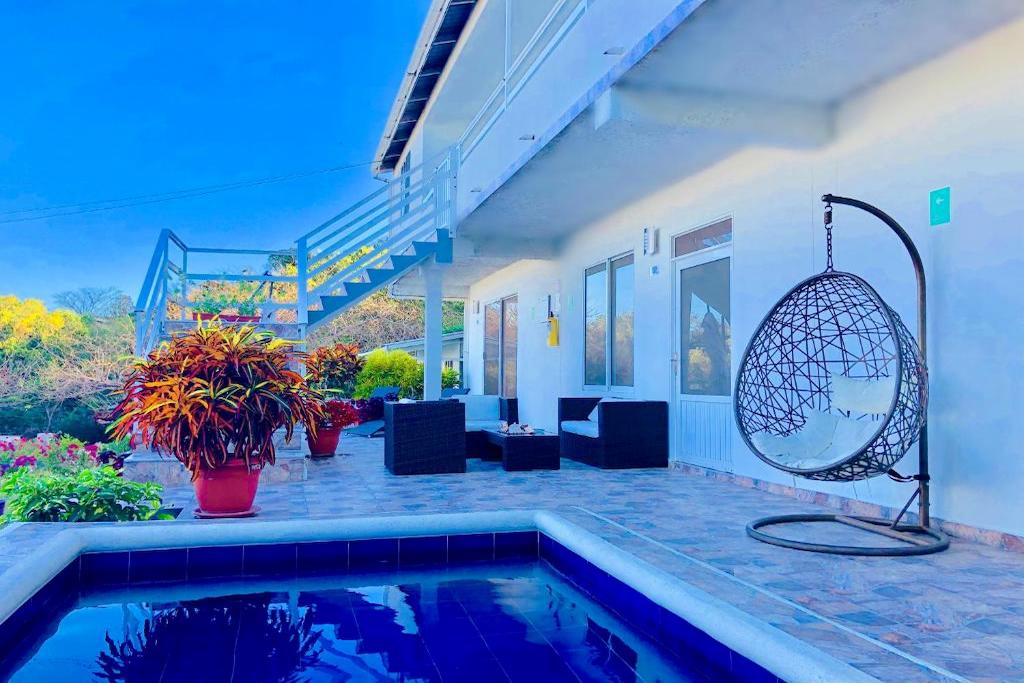
Don’t expect super-deluxe accommodations in Providencia. Many hotels are simple but comfortable posadas run by local families.
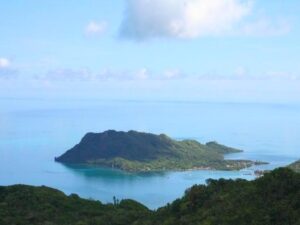
You can choose to stay in the quiet northern part of the island, near Mc Bean hill, Maracaibo Bay and the car-free Santa Catalina island. A wooden boardwalk takes you from the capital Santa Isabel, to the island.
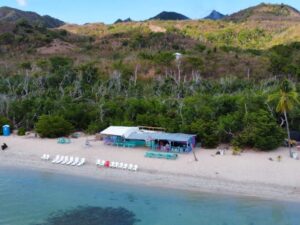
Most hotels are located in the south of the island on the main road along the coast, near the beaches of Southwest Bay and Freshwater Bay. This is also where most of the restaurants and bars are.
Much of the interior is undeveloped and is mostly nature reserve. There is 1 main road across the island and with a scooter or baby carriage you can drive around the whole island in about 45 minutes. So no matter where you stay, you are never really far away from the beach.
Read on here for our hotel tips in Southwest Bay, Freshwater Bay, Manicheel Bay, the north and Santa Catalina Island.
€ price range up to €50
€€ price range €50 – €75
€€€ price range above €75
Southwest Bay, Freshwater Bay, Manicheel Bay
North, northeast and Catalina island
Is Providencia safe? What should I bring with me? What about withdrawing money in Providencia? How exactly does the tourist card work? Is Providencia expensive? Check here for practical information and useful tips for your trip to Providencia.
It’s fish and seafood what counts in Providencia. A specialty of the islands is Rondón, “a coconut-based seafood stew. This is also the national dish of Providencia. For a quick snack, there is “pan de coco,” coconut bread; airy buns with shaved coconut. At Big Mama’s Sweet taste, on Santa Catalina island, eat breakfast and lunch on her porch. The favorite with locals is Steve’s Jerk Chicken, with chicken, spare ribs and potatoes from the BBQ.
Providencia is not a low-budget destination. You will spend more for hostels and hotels than on mainland Colombia, and because most items have to be imported, groceries and eating out are more expensive. Added to this is the extra flight or boat trip from San Andrés, which will cost you extra. A lunch of fish will cost you around €8. If you want to save money on groceries, you can bring some perishable items from the mainland.
The water from the tap is not drinkable
You can use debit cards in Santa Isabel, but to be safe, bring cash as well
The Hospital local de Providencia is located in Santa Isabel.
Afro-Caribbean culture
With a past as English colonies, Providencia and San Andrés are an “odd duck”. One of the population groups on the islands is the Afro-Caribbean “Raizal,” who speak an English-Creole language. The English influence is still very noticeable: the names of villages and beaches are mentioned in English, and Creole English is spoken alongside Spanish. Many locals feel more Caribbean than Colombian, and there are many Rastafari on the island.
For San Andrés / Providencia, you need a tourist card, which you can buy at the airport gate where you board your flight to San Andrés. It costs COP124,000 / €31 (2024) and is valid for 3 months for both San Andrés and Providencia. You’ll also need the tourist card again when you leave the islands. Without a tourist card you won’t get into the islands! Be sure to have this money cash on hand, as you can’t always pay by credit card
Yellow fever vaccination is not required for Providencia
Providencia is one of the safest destinations in Colombia.
There is only 1 major road on the island and a convenient way to explore the island is by scooter. Scooters and baby carriages can be rented at several hotels for about €20. In about 45 minutes you can drive around the entire island. You can also rent a baby carriage from about €35, or a bicycle. Here you have to take into account the heat and cycling uphill. If you don’t plan to arrange your own transportation, you can use moto cabs. A ride costs between COP5000 and COP10000 / €1.35-€2.70. The hotels can help you arrange moto cabs.
Most hotels have free wifi for their guests, but don’t expect high-speed Internet. For around 30,000COP you can buy a SIM card with data.