Caño Cristales: The most beautiful river in the world

Home 9 Author archive for J ( Page 6 )

The most beautiful river in the world?

Caño Cristales is also called “the most beautiful river in the world.” Its rivers, rapids and waterfalls stretch for 100 km and are part of the Serranía de la Macarena National Park in the region of Meta. The park is a “meeting point” of the Andes mountains, the Amazon rainforest and the plains of the Llanos. This makes it a perfect place to spot wildlife in the jungle, hike to rock formations and waterfalls, take boat trips and chill in natural pools.

Here you can read all about the Caño Cristales. Why does the river turn pink, how to get there and tips.

Why does the river turn pink?
Half the year, Caño Cristales looks like any other river in Colombia, but between June and November, red, purple, green, blue and yellow colors give the river the nickname “the liquid rainbow,” “the river of 5 colors” or simply the most beautiful river in the world. It is the aquatic plants “Macarenia Clavígera” that give the river its special pink-purple colors. The colors change under the influence of the sun.

How to get to Caño Cristales?
Access to Caño Cristales, is only possible from the town of la Macarena, south of Serranía de la Macarena National Park. The town is home to about 32,000 people and has a few hotels and restaurants. You cannot go to Caño Cristales on your own; you can only do so with an official guide approved by the park. Transportation to/in the park is by all-terrain vehicle and boat.

#ColombiaMyWay Tips

Tip #1
Book a package trip
A trip including flight to la Macarena, lodging and activities, can be booked departing from Bogotá (75 minutes). There are also flights from Medellín, Villavicencio and Cali. Check here the options for a package trip to Caño Cristales.

Tip #2
Arrange the flight and hotel yourself
If you don’t want to book a package tour, there are some hotels that can arrange the trip to Caño Cristales for you.  la Manigua lodge, is one of your best bets to do this. The resort is located on 9 km from Caño Cristales, 20 min. by boat from la Macarena. The location of the beautiful lodge -smack in the middle of nature- is  your home base for making trips to Caño Cristales and other natural attractions in the area. At the lodge itself, you don’t need to get bored. You can fill any free time easily with observing the nature and wildlife from your cabin, but if you would like to be entertained there are also plenty of options: the lodge can arrange activities such as a cacao workshop or a sunset serenade on the water, an experience that you not forget lightly!

Book other hotels in la Macarena here.

Tip #3
Arrange your trip ahead of time
To protect the ecosystem, a very limited number of visitors are admitted

Tip #4
Keep in mind that there are strict rules in the park

For example, plastic bottles are prohibited and swimming with sunscreen on is not allowed (it is harmful to aquatic plants).

The history of Serranía de la Macarana National Park
Caño Cristales was closed to the public and partially destroyed by the guerrillas, paramilitaries and the army between 1989 and 2009. After this, it gradually became safer and tour operators entered the area. Today, protection of the ecosystem of Serranía de la Macarena National Park a very high priority. Caño Cristales is a growing eco-tourism destination and the area is safe to travel with a tour operator.

Sustainable development
Cormacarena is the sustainable development institute responsible for protection in the Macarena area. Only about 200 visitors are allowed per day and visitors are assigned to different sections of the park. The local communities are very dedicated to protecting the area and making sure it does not get too crowded. Therefore, visitors must follow strict rules. In 2009, 700 visitors visited the area and that number grew to 16,000 visitors in 2018. Because of the strict measures, the effect on nature of ecotourism is minimal.

The social and economic impact of ecotourism is immense, as local families and communities organise and lead the trips. In the beginning, 35 families were involved in ecotourism; today there are as many as 650 families. Ecotourism not only raises awareness among the residents of la Macarena. The locals are also enormously proud of their nature and culture. During a cultural evening, they get a chance to share their culture and customs with the travellers.

Scientific research
In the province of Meta, 40% of its area is a protected natural area. In addition to Caño Cristales, Laguna de Loma linda, Piscinias del Güejar and Cañon del Güejar are also protected. In 2018, the flora and fauna of the Guayabero, Duda and Losada rivers were studied.

This research was conducted by Cormacarena in collaboration with the Alexander von Humboldt Institute. These are the results in number of species: 66 microalgae, 114 macroinvertebrates, 245 fish, 38 frogs and toads, 24 lizards, 33 snakes, 7 turtles, 4 crocodiles and 737 birds.

 

Chocó (Pacific)

Home 9 Author archive for J ( Page 6 )

Overview

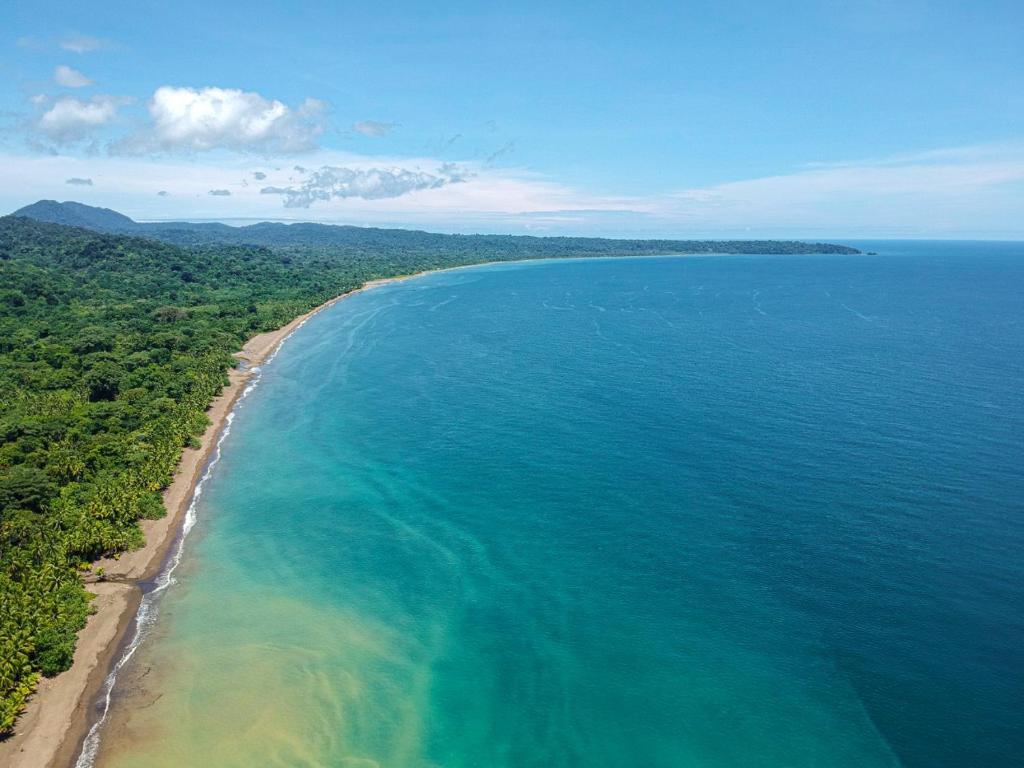
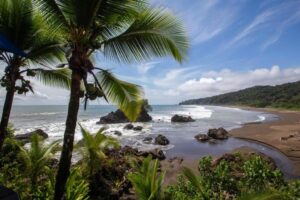
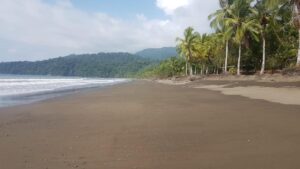
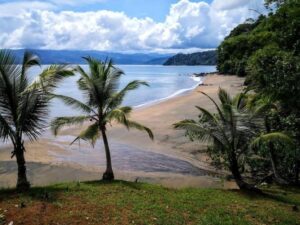
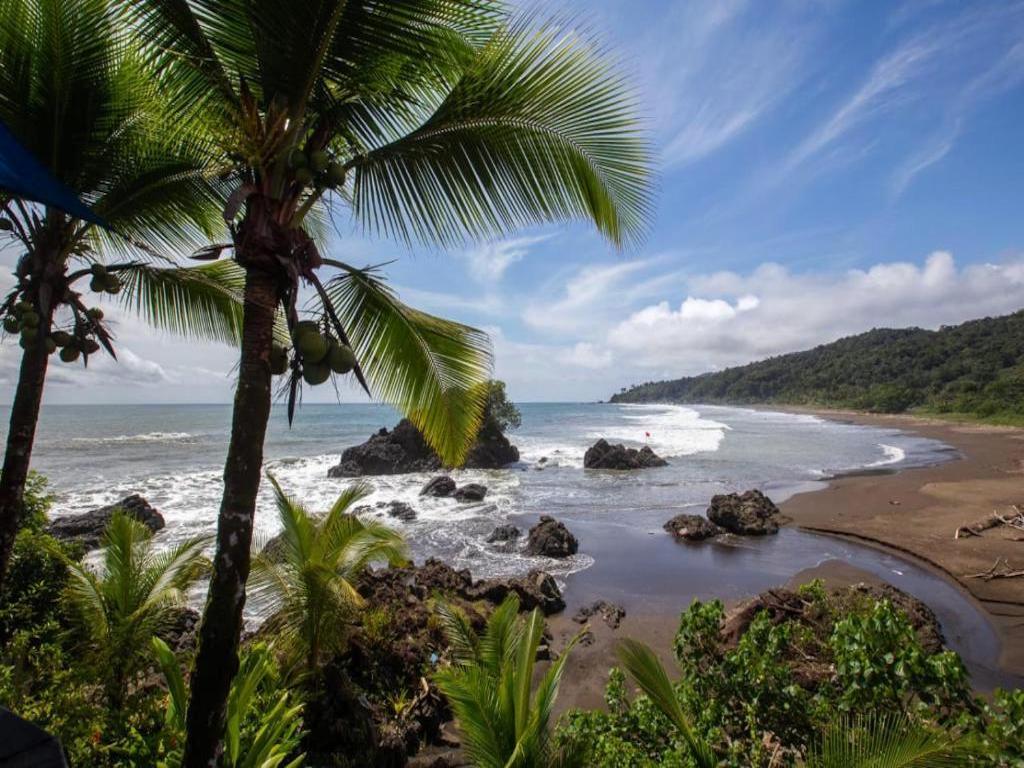
Chocó is one of the most authentic regions of Colombia’s and one of the wettest places in the world. Because of this, there is exuberant nature with dense jungle that ends on mile long beaches. This is Colombia’s best spot for whale watching and some of the best diving in the world can be found here. Because the jungle in Chocó was inhabited by guerrillas for many years, it was a “no-go area for a long time. Today Nuquí, Bahía Solano and El Valle are safe to visit.
Chocó is one of the poorest areas of Colombia, but locals have embraced tourism and are happy and proud to welcome travelers. Reason enough to be surprised by the overwhelming nature, wildlife and smiling faces of the largely Afro-Colombian inhabitants.

Highlights

  • Whale watching from July to mid-October
  • Turtle spotting from September to November
  • Surfing, from one of the cool hostels
  • Hiking in the jungle with waterfalls and natural thermal pools
  • Bird and wildlife spotting
  • Walking along miles of sandy beaches
  • Canoeing on the river
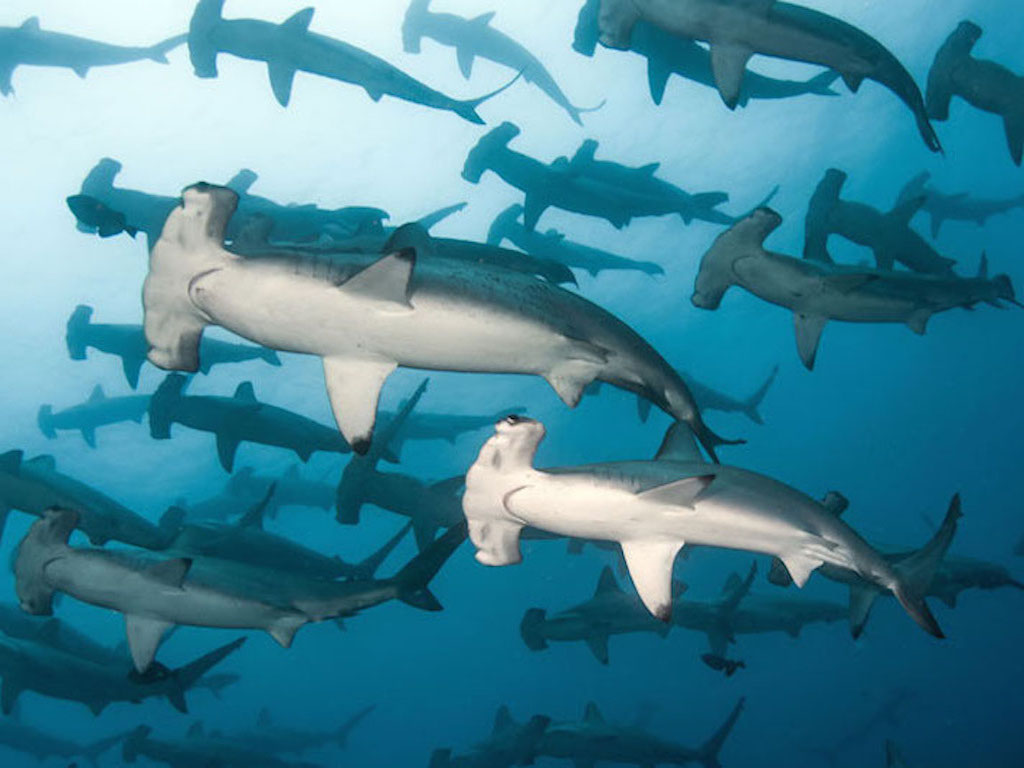
  • Diving on Isla Malpelo and Isla Gorgona

Places to visit in Chocó

Nuquí

Diving locations

All about Bahía Solano – What to do and tips

Home 9 Author archive for J ( Page 6 )

About Bahía Solano

With about 10,000 inhabitants, is Bahía Solano is the largest town on the coast of Chocó. The area is known for its dense jungle that ends in miles of sandy beaches, whale watching in season and the enormous diversity of flora and fauna. There is not a whole lot to do in Bahía Solano itself, which is why many travelers head straight to nearby beaches such as El Almejal near the village of El Valle, Playa Mecana and Playa Huína.

Adventurous destination
Bahía Solano / El Valle is an adventurous destination off the tourist route. You get there by flight from Medellín and then travel on by boat or tuk-tuk to your final destination. Moreover, tourism here is still just starting, because for a long time Chocó was a “no go” area, as the jungle was inhabited by guerrillas for many years. Nowadays, Bahía Solano and El Valle are safe to visit.

In this Bahía Solano travel guide, you will find everything about El Valle and Bahía Solano; What to do? How to get there. What are the nicest hotels and practical information and tips on pins, luggage, what to bring and what about safety in Bahía Solano and El Valle.

10 Tips

If you love nature, then you are in the right place in this part of the Colombian Pacific. There is plenty to do, both on the water and on land. So you can hike to waterfalls, spot wildlife in the jungle, dive, surf and much more. The hotels and hostels have good contacts with the locals and can arrange trips with a guide for you. By booking these trips, you immediately support the local community. Here are the best things to do in Bahía Solano and El Valle and an indication of the prices for the trips.

Must do’s in Bahía Solano

1. Spot whales

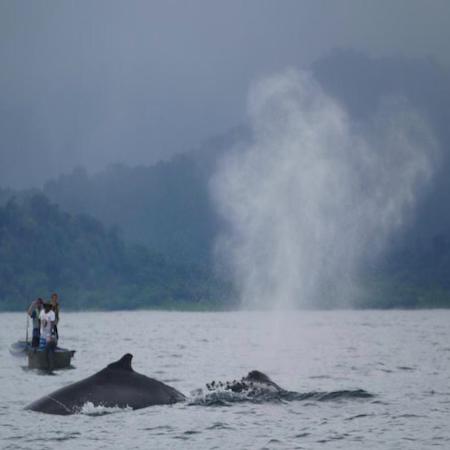
From July to mid-October, humpback whales (ballenas jorobadas) come from the South Pole to the warmer waters of the Colombian coast to give birth to their young. A journey of some 8000km! You can often see the whales from the hammock of your hotel. You can also take an organized boat trip to spot whales. Depending on the size of the group, you will pay around COP150,000($37.50), per person for this.

photo: Hotel Bahía Yubarta

2. Hike in a private nature and wildlife reserve

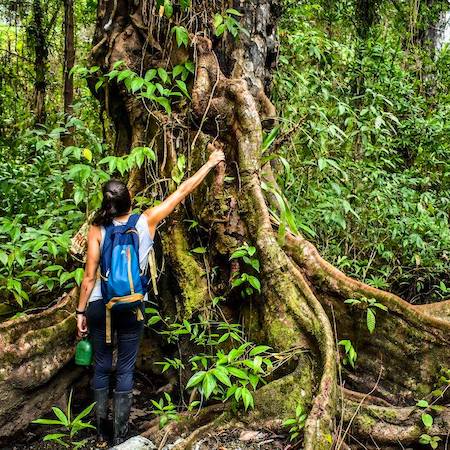
The Jardín botánico del Pacífico is the only botanical garden in the Colombian Pacific and is located on Playa Mecana, a 15-minute boat ride from Bahía Solano. It is a 170-hectare area with unique flora and fauna. Hikes are guided and must be booked in advance. Prices depend on the distance and difficulty and start at  COP60,000/$15 pp. 

#ColombiaMyWay tip: Book the hotel Paraiso Escondido near the botanical garden and stay a few nights to fully enjoy nature.

photo: Jardín botánico del Pacífico


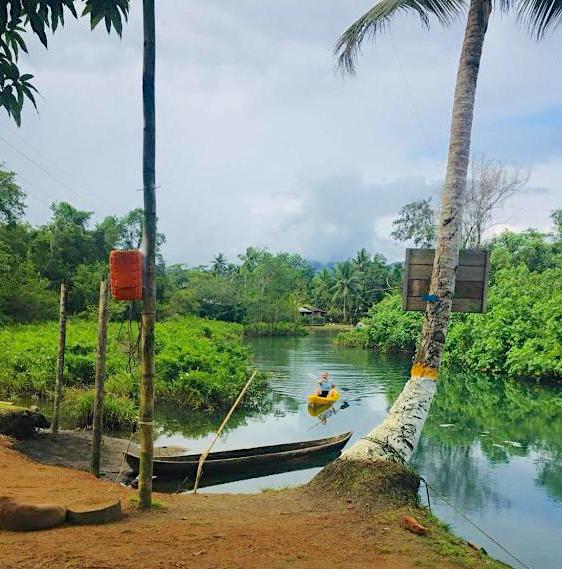
3. Kayak in the mangroves at Playa Mecana

Kayak rental starts around COP20,000/$5 pp or with a guide for COP60,000/$15 for 2 people.

photo: Paraiso Escondido

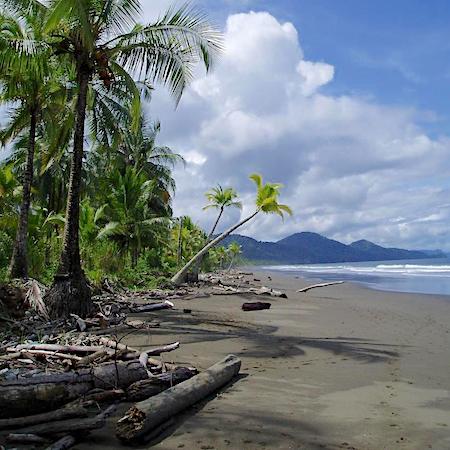
4. Chill on the beach at Playa el Almejal

Book a cozy hotel or hostel on the beach, take long beach walks or take surf lessons. Board rental costs around COP30,000/$7.50 per hour and surf lessons COP60,000/$15 per hour.

photo: The humpback turtle hostel

5.Take a boat trip to Cascada del Tigre

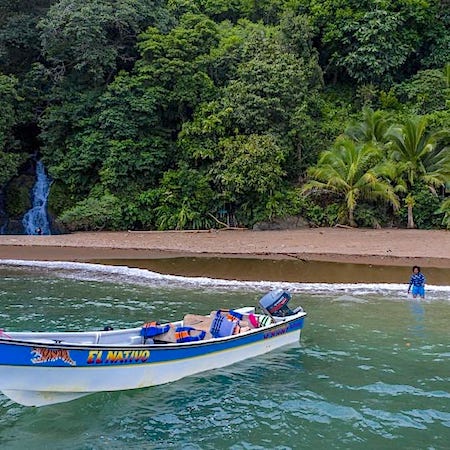
This waterfall bursts comes from the jungle and ends on Playa El Tigre. From El Valle, it’s a boat ride of about half an hour. You can climb along the waterfall and swim in the natural pools. One of the guides who does this trip is “El Nativo.” Everyone in El Valle knows him. Contact Posadas el Nativo for more info or book the trip through your hotel in El Valle. (around COP100,000/$25 pp).

6. Visit the turtle project at Playa Cuevita

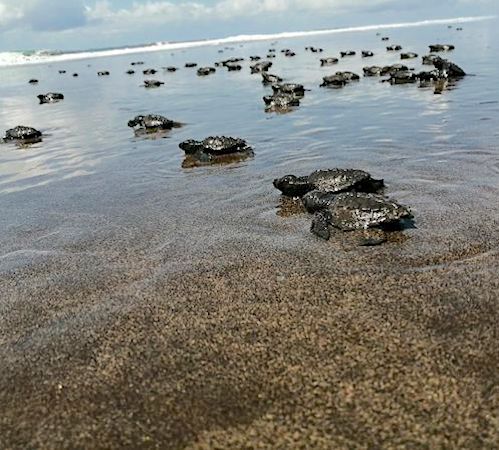
On this beach, the turtles come from June to December to lay their eggs. The eggs are protected here, as are the little turtles once they make their way to the sea. Take a tuk tuk from El Valle to to Tortugario Estación Septiembre, (5km/5 min across the beach). Or a walk on the beach for about 1.5 h. Here you get a tour of the turtle project and get to witness how the baby turtles are released. Costs are approx COP65,000/$16 per person (excluding tuk tuk). If you want to visit this project, look here for more information.

7. Meet the Native Indigenas community

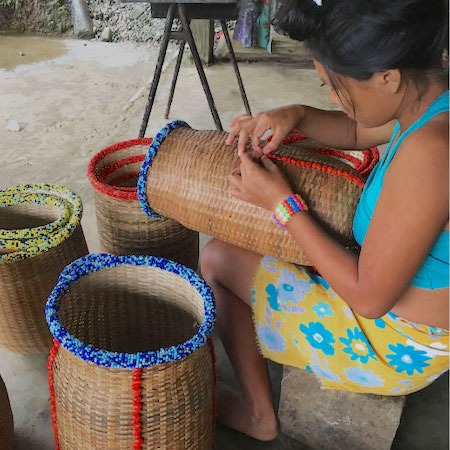
For example, visit the Nabugá community, where you can learn about their artesanía. Trips to the Nabugá community are combined with a visit to the Nabugá waterfall. A trip of 3-4h costs about COP500,000/$125, for 1-3 pax.


8. Take a tour to Utría National Park.

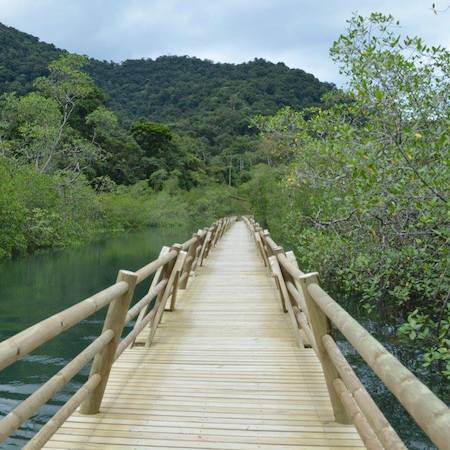
The 54,000-acre park is one of the best places to spot whales. The lagoon of the park, is used as a “baby room” by the whales, in the months of August-October. It is also home to turtles and several species of birds, among others. You can walk along the mangroves on the wooden boardwalk. Furthermore, you can snorkel there. Transportation from El Valle takes 40 minutes and costs around COP150,000/$37.50 pp. Entrance to the park is COP60,000/$15 and lunch costs around COP45,000/$12. (rates 2024)

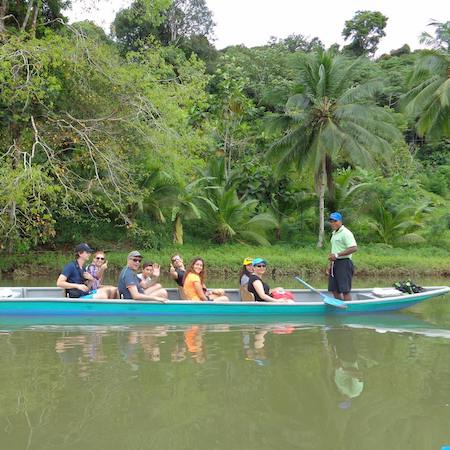
9. Take a boat ride on the rio Tundó

At a leisurely pace, the captain steers the boat across the water while the guide tells you all about the flora and fauna in the area. If you do the trip with Tundó tours, you will make a short hike to a waterfall at the end of the tour. There is a morning and afternoon tour. You can book this tour for around COP60,000/$15 pp.

10. Catch the catch of the day!

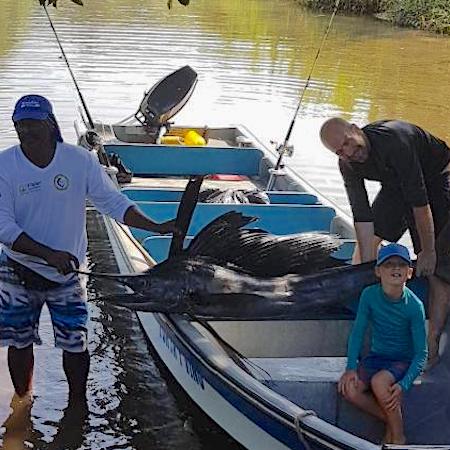
Fishing in Bahía Solano is world-class. Among anglers, Bahía Solano is  known as one of the best places in the world for deep-sea fishing. There is fishing for Red Snapper, Dorado, Marlin, Barracuda and Tuna, among others. Depending on the size of the group, you can book a fishing trip from COP150,000/$37.50 pp for half a day.

How to plan your trip to Bahía Solano

How to get there

There are no roads to Bahía Solano and the fastest way to get there is by plane. From José Celestino Mutis airport you can travel further To El Valle (45 min. by tuk-tuk), Playa Mecana (boat trip 15 min.) or Playa Huína (boat trip 20 min.)

Where do you start if you want to book a trip to Bahía Solano?

Check out our 4 step plan here and start planning your trip to Bahía Solano!


In these 4 steps, plan your trip to Bahía Solano!

1. Book a ticket Medellín -Bahía Solano

  • Direct flight of 45 min.
  • Price of a return ticket in high season is around COP600,000/$50, for a ticket in the “basic” price range. Check for specials in the low season 
  • San German Airlines and Satena Airlines
  • Departure from Olaya Herrera airport in Medellín (El Poblado)

Check out our #ColombiaMyWay hotel tips and book your accommodation

Once arrived at the airport in Bahía Solano:

3. Pay the tourist tax
The tourist tax costs COP45,000/$11 + airport tax COP8000/$2 (2024)

4. Take a tuk-tuk to your final destination or the Bahía Solano pier
A tuk-tuk ride to El Valle takes 45 min and costs around COP30,000/$7.50 for 1-2 pax. You can only get to Playa Huína and Playa Mecana by boat from Bahía Solano pier (if you opt for private boat transfer from your hotel in Playa Mecana, count on about  COP160,000/$40, up to 4pax, for the 15-minute trip).

Tip: You can also travel on to Nuquí from El Valle. There is a boat twice a week, on Mondays and Fridays. Boats leave Nuquí around 6am and return the same day around 11am. The trip takes about 2h and costs around COP80,000/$20 one way.

Climate and best travel period

Chocó is one of the wettest places in the world. At first glance not the most appealing thought, but on the other hand, that makes the jungle super exuberant! On a trip to Bahía Solano you have to be lucky with the weather. You can have beautiful days with blue skies, but it can also rain for long periods in a row. There is high humidity. The most sunshine and least rain is in the summer, from January to March.

The best time to go depends on what you want to do:

January through March
The best time for hikes in the jungle and trips on the river. The sea is calm and ideal for boat trips and for diving and snorkeling.

May
The best month for fishing. With the current, come schools of sardines, which attract big fish.

July- mid-October (especially from August)
The best months to spot whales. In
this period the whales come to the Colombian coast to give birth to their little ones.

September-November
The best months to see the release of baby turtles.

Surfing is possible-depending on your level-all year round.

High season
Prices increase in high season, during semana santa (Easter week) + 15/6-15/10 and 15/12-15/1.

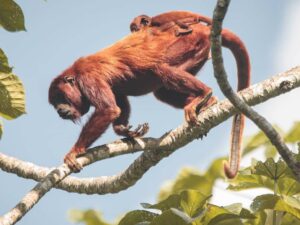
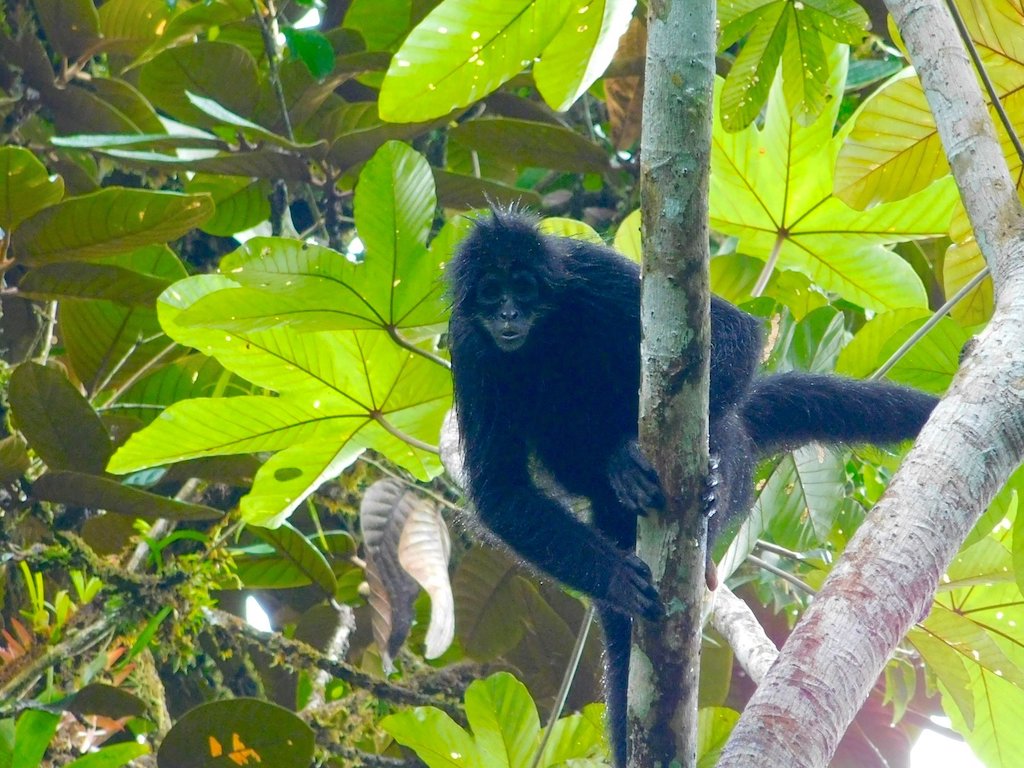
Photo: Mono Araña in the Jardín Botánico del Pacífico.


Hotels and hostels

#ColombiaMyWay tips for booking your hotel or hostel

If you go to Bahía Solano, you can stay overnight in Bahía Solano itself, in Playa Mecana, Playa Huína or at Playa El Almejal/El Valle.

Which place is convenient to do what?

#1 Bahía Solano
The town itself is convenient to stay overnight if you want to be close to the airport and have amenities such as restaurants and stores nearby.

#2 Playa El Almejal / El Valle
Want to surf and meet other travelers?
Then you will want to go to Playa Almejal near El Valle. Here there are some nice hostels like The Humpback Turtle and some eco lodges for when you want a little more peace and quiet. El Valle is also a convenient starting point for a trip to Utría national park and Playa Cuevita.

#3
Playa Mecana
Want to stay on a long, deserted sandy beach with the Pacific’s only botanical garden in the “backyard”? Then check out the ecolodges at Playa Mecana, such as
Paraiso Escondido.

#4 Playa Huína
Here you will find a few lodges on the quiet beach surrounded by the tropical rainforest, such as Choibana ecolodge.

Tip: If you are going to book a hotel, check if it is “bare” rental or an “all in” trip.
A package including 3 meals a day, is often offered at the lodges that are very remote with no stores or restaurants nearby.

$ price range up to $40

$$ price range $40 – $60

$$$ price range above $60

Bahía Solano

Booking.com

El Valle

Booking.com

Practical info A-Z

Luggage

Travel with as little luggage as possible. For the flight to Bahía Solano, small planes of up to about 20 passengers are used. Generally, 10kg is the maximum weight to check in and 5kg is the maximum for hand luggage. Moreover, you will travel further by boat, for which the rule is; the less luggage the better!

Budget

Bahía Solano is not a low budget destination. Because you can only get there by plane, transportation costs are already a big chunk of your budget. However, affordable hotels can be found and if you can share the cost of excursions such as hikes and boat trips with other travelers, you can still travel to Bahía Solano affordably.

#ColombiayMyWay tip
If you want to go to Chocó on a smaller budget, check out el Valle. Here you can book a dorm bed at hostels and the cost of tours is often lower because you can share it with more travelers.

Drinking water

The water is not drinkable

Food

Fish, fish and fish… That’s what’s on the menu every day! Fish is prepared in different variations, such as in fish soup. Crustacean lovers can try the Cambute, similar to the crown snail (Conch). Popular side dishes include “Arroz con Coco,” Yuka and “Patacones”: coconut rice, cassava and green banana “cookies”. Coconut is also liked in desserts and sweets such as Panelitas de coco. 

ATM?

There is 1 ATM in Bahía Solano, but it does not always have money. Therefore, bring all the money you think you will need.

How long should i stay?

With about 5 days, 4 nights, you have time to take long walks on the beach and do various activities at your leisure, such as visiting the botanical garden, doing whale spotting trips, hiking with a guide in the jungle and kayaking on the river. And then you still have time to read a book in the hammock -:)

Locals & language

The locals are a mix of Afro-Colombians and the Native American community, who live mostly in the interior. Very little English is spoken. A word of Spanish is certainly helpful and works wonders for getting in touch with the locals.

Packing List
  • Anti mosquito spray
  • Sunscreen
  • Backpack or gym bag instead of a suitcase
  • Waterproof bag or plastic bags to protect your belongings during the boat trip and from the rain
  • Due to high humidity, clothes dry poorly. Therefore, bring airy clothes that dry quickly
  • Swimwear, water shirt and/or wetsuit if you will be snorkeling/diving
  • Sandals
  • Water shoes
  • Hiking shoes
  • Hat or cap
  • Long-sleeved T-shirt and long pants for jungle walks
  • All the cash you think you need!
  • Snacks
  • Books
    Vaccinations

    For Chocó, a yellow fever injection is recommended. Tip: If you’re traveling around Colombia for longer, you can get a free yellow fever injection at Bogotá airport. The vaccination only works after 10 days, so get it in time!

    Safety

    For a long time Chocó was a “no go” area because the jungle was inhabited by guerrillas for many years. Bahía Solano and El Valle are safe to visit as well as Nuquí, Termales, Guachalito beach and Arusi, but don’t go on long hikes deep into the jungle on your own. This is because guerrillas are again active in certain areas of Chocó. If you want to plan a trip to an area other than those mentioned above, check with locals whether it is safe. In the jungle there are non poisonous and poisonous snakes and frogs, so make hikes with a guide who can recognize the species. Moreover the guides have a trained eye for wildlife and you will  make more out of your trip with a guide.

    Always check the current travel advice from your government before planning your trip.

    Wifi and phone

    Provider Claro has the best coverage in Chocó. It very much depends on the location of your hotel, whether you can use your phone because if the lodge is very remote, chances are there is no coverage and no wifi signal. 

    Bogotá attractions-our sightseeing tour

    Bogotá attractions-our sightseeing tour

    Our trip to Bogotá in September 2024, was a very special one. The purpose of the trip was to fulfill the biggest dream of the father of my (Colombian) travel partner to attend a concert by André Rieu and his orchestra in the Movistar Arena

    Because we live in Curaçao and father Antonio and his wife Alix live in the coastal city of Barranquilla, we flew separately to Bogotá. Besides the concert, we wanted to do some sightseeing in Bogotá, to make most of our trip. We planned several trips, such as a shopping day at the outlets on Avenida de las Americas.

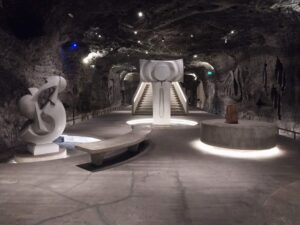
    As it has been a while that we visited the historic center La Candelaria, this was also on the planning during our stay, as well as the famouse Monserrate mountain and a day trip to Jaime Duque park + salt cathedral of Zipaquirá, where we wanted to visit the newest extension -the underground museum.

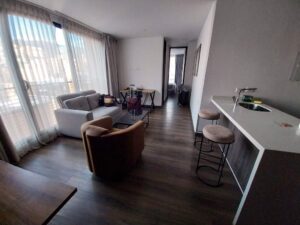
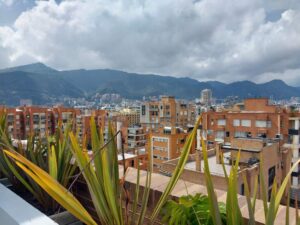
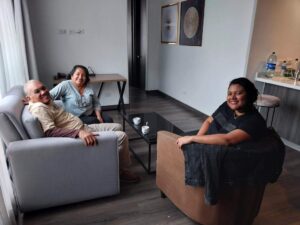
    As a central base for all our activities, we rented an apartment in the neighborhood Chico Norte. We arrived on Sunday and the family on Monday, so we had all the time to settle in the comfortable appartment, with a common roof terrace with cityview. 

    Next to the apartment complex is café Culto, a nice place for a good breakfast, lunch, dinner, fresh juices or a cappuccino with something tasty from the bakery. 

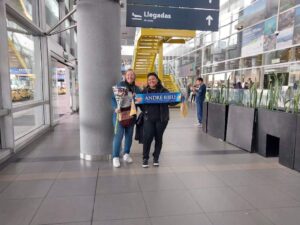
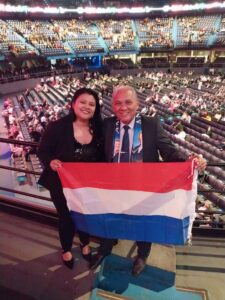
    On Monday, we went to pick up Antonio and Alix at El Dorado airport. With flowers and an André Rieu scarf, we were waiting for the family.  The reunion was priceless!

    Antonio couldn’t wait for the day of the concert to arrive! 

    On September 18, the time had finally come. The concert was scheduled to begin at 8 p.m. and the doors opened at 5 p.m., giving us the entire morning and afternoon for our sightseeing trip. We would then still have plenty of time to get ready for the concert and to be at the Movistar Arena at 6 p.m…..But that schedule didn’t work out at all!

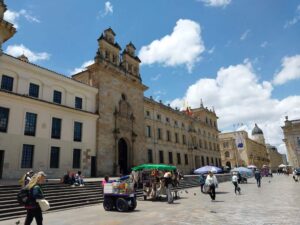
    Still fresh and full of energy, we began our city walk in the morning in La Candelaria. The first stop was Museo Botero.

    We are fans of Fernando Botero and had already seen his “oversized” sculptures in Medellín and this (free) museum was also worth seeing. After this we walked through the iconic restaurant La Puerta Falsa, Plaza de Bolívar and the busy Séptima to the Plaza del Chorro de Quevedo, the place where Bogotá was founded in 1538.

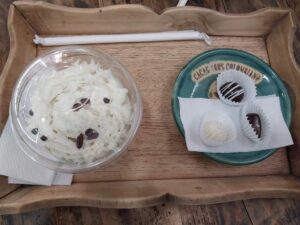
    The last part was uphill and we made a break to catch our breath at Cacao y Cacao.

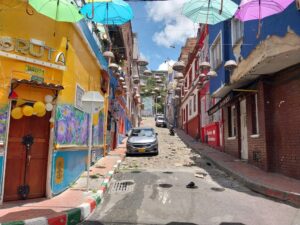
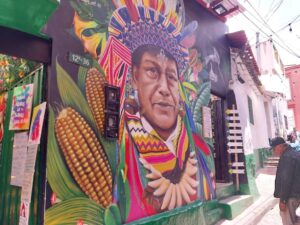
    Around Plaza del Chorro de Quevedo you can see lots of colorful street art.

    The objects of the murals range from early indigenous residents to the flora and fauna and social aspects of life in Colombia. You will also find cafes where you can try the traditional drink Chicha, a fermented drink made from corn. Calle del Embudo in particular is a fun and colorful street.

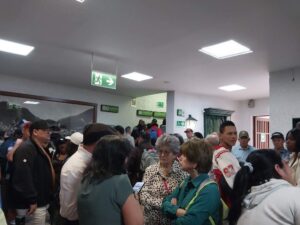
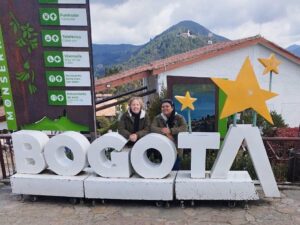
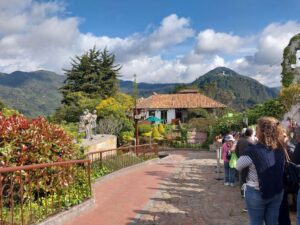
    Finally, we decided it was time to order an Uber, which picked us up at 12:30 p.m. at Calle del Embudo and dropped us off at the entrance to Monserrate. What we didn’t  count on was that there was a mega crowd at Monserrate, probably because the funicular (the little train) was under maintenance and everyone had to go by cable car. Both up and down there was a huge line.

    ColombiaMyWay tip:
    You can avoid the queue by buying a fast pass ticket for COP81,000/$20 instead of the regular tickets of COP29.500/$7.50.  We didn’t do that, because we thought that was a big difference for 4 people. Moreover, the line didn’t seem to be too bad from the outside. Being inside, we noticed it was also completely full inside. So if it fits your budget, then such a fast pass ticket is definitely worth it!
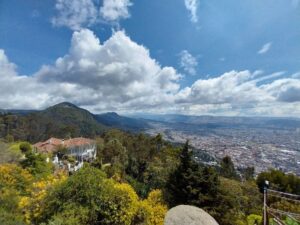
    When we finally got to the top, the view was amazing.


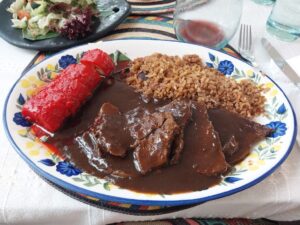
    We had lunch in Santa Clara restaurant, which serves specialties from the different regions of Colombia. We chose the Posta Negra Cartagenera, tender beef in a sauce of panela (cane sugar), coconut rice and stewed banana. This was delicious and we combined it with a glass of Sangria.

    After dinner we actually wanted to walk around for a while, but the line for the teleférico back was so long that we decided to get in line right away.

    At 4:30pm we began to pick up speed and were almost at the cable car. Finally, we were in the cab at 5:15pm and drove -in rush hour- to the hotel, where we arrived at 6pm. At 6:30pm we were picked up and taken to the Movistar Arena, where we finally arrived well ahead of time.

    The concert was beyond my expectations. I am not a real Andre Rieu fan myself, but the show was great and Father Antonio’s smiling face priceless!

    One of the highlights was the performance of Colombian boy Daniel Sanabria. He stole the show 5 years ago during André Rieu’s performance. As the power went out, Daniel spontaneously started playing on a plastic flute, surprising the audience as well as the orchestra! André Rieu then bought him a real flute, on which he began practicing fanatically. Now Andre Rieu asked him to perform for the home audience and he would continue doing so on the other 3 nights in Bogotá. Daniel became a full member of the Johan Strauss Orchestra! You can check the video of Daniel’s performance here.

    The next day was our last day in Bogotá, before the family returned to Barranquilla. We stayed another week to tour the Quindío region in the Colombian coffee triangle. That’s why we decided to end our last day with a day trip to the Cathedral de Sal in Zipaquirá and Jaime Duque Park, which is 9 kilometers from Zipaquirá.

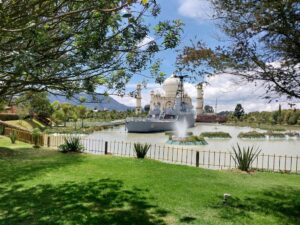
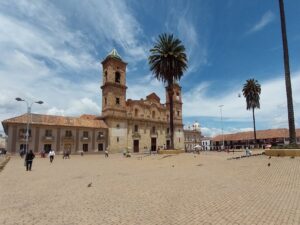
    We had been to Zipaquirá before, but since the new underground museum opened this year, we wanted to go there again. Therefore we hired a taxi driver for the day. We had taken this taxi before and the driver was well prepared. In his (comfortable) taxi we could hear a concert of André Rieu in Vienna -:) The ride took about 45 minutes and it was a relief to walk in the spacious park, with its beautiful gardens and spacious habitats for the animals. The most striking building in the park was a replica of the Taj Mahal from India! After Jaime Duque park, we left for the town of Zipaquirá, where we stopped at the beautiful square.

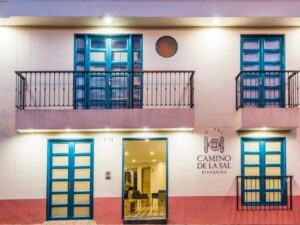
    Zipaquirá seems like a nice town to stay in during a round trip through Colombia. We saw a few hotels in the historic center that looked nice, such as  hotel Camino de la Sal.

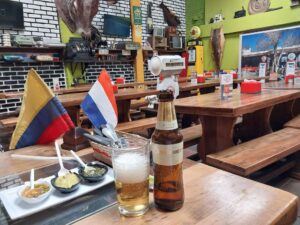
    We decided to follow our driver’s advice and have lunch at a restaurant near the salt cathedral: Alma Llanera. We did not regret this, because the restaurant was nice to see with all kinds of fun decorations and live music, which quickly set the mood. The food was very good, we had ordered several dishes, from avocado salad, to Aijaco (soup) and grilled meat.

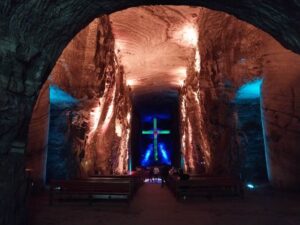
    Tip: if you go there for lunch and then to the salt cathedral, you can buy the tickets at the restaurant. With the tickets already in our pockets, we left for the salt cathedral of Zipaquirá. The cathedral was -also the second time- impressive.

    After a long but wonderful day with many impressions, it was time to pack our bags for our flight the next day to Armenia in the coffee region. The last night with the family we talked a lot about the special trip and we were invited to visit the family next year in Barranquilla.


    Written by Jeanette
    Travel period: September 2024

    Information and tips (updated September 2025)

    **For 2025, the prices for regular tickets are COP32,000/$8 per person and fast pass tickets costs COP87.500/$22 per person.

    Check here for more info on Bogotá and surroundings and other destinations in Colombia.

    Here you can read our other travel stories about Bogotá. Check here the options if you want to do an organized tour or private trip to Catedral de Sal in Zipaquirá , Parque Jaime Duque or Guatavita.

    ColombiaMyWay

    We do not accept direct payments from touroperators or hotels for our reviews and we pay for our own stay and tours. Every recommendation is based solely on our own experiences and honest opinions. However, some of our links are affiliate links, which means we earn a small commission if you book through them. This commission comes at no extra cost to you and helps us maintain our website.

    Jeanette and Shelly

    Writers and Travelers, Colombia My Way