All about Pijao-What to do and tips

Home 9 Category: Travel guide Coffee Triangle ( Page 2 )

About Pijao

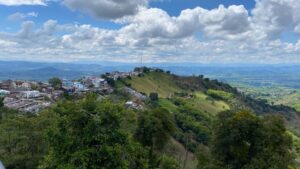
Pijao is an authentic coffee village in the Colombian coffee region, an hour’s drive from Armenia in the district of Quindío. The colorful village was founded in 1902 and is home to over 7,000 people, some 4,000 of whom live in the countryside. Pijao is at an altitude of 2,600 meters and the air is pure and fresh.

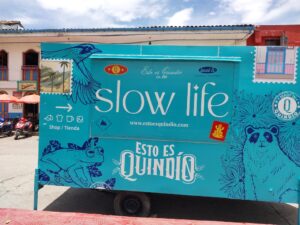
Pijao is a UNESCO World Heritage Site and has another special title in addition to this status. The village has been recognized by the ” Cittaslow” organization namely designated a “slow village.” In a slow village, the local government and the community work together to promote sustainability and quality of life. And with the quality of life, we believe there is nothing wrong with Pijao.

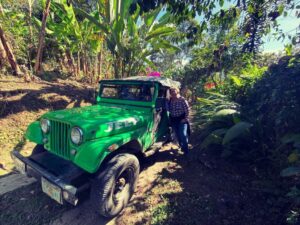
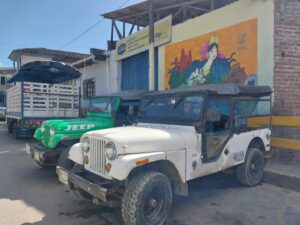
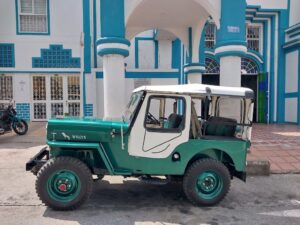
This is a village where you can enjoy the tranquility and observe local life, without the crowds of villages on the tourist route such as Salento and to a lesser extent Filandia. So if you love nature and traditional villages, this village is definitely worth a detour. It is also one of the best places in the coffee region for bird watching. Special accommodation can be found on one of the fincas outside the village. In the village itself there are a few hostels and hotels. Transportation between Pijao and the fincas is by Willy Jeep “taxi.”

Can you see yourself chilling out in this traditional coffee village? Then read our travel guide with information and tips on activities and fun things to do, transportation, restaurants and the best hotels in Pijao.

Our tips

What to do in and outside of Pijao

Pijao is off the beaten track and so are some of the activities you can do around Pijao, such as hiking in the paramo scenery, on high altitudes. There are also a number of fun things to do in the village itself and in nearby Buenavista. Here are our tips for the best things to do in Pijao.

1. Explore the colorful city center

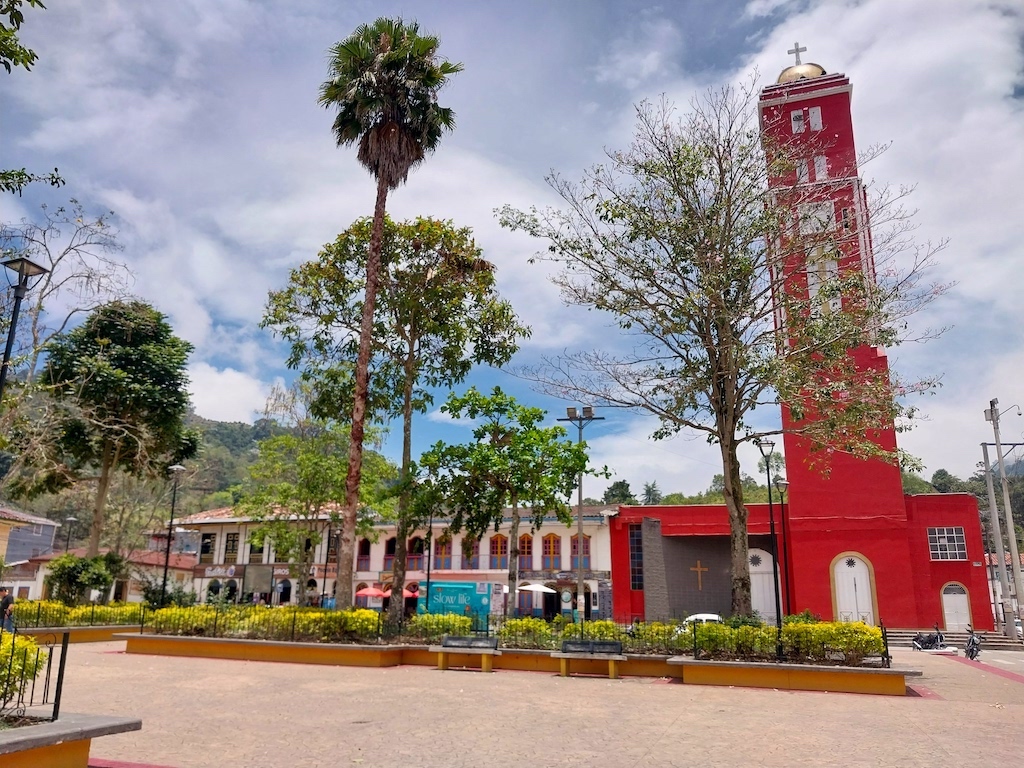
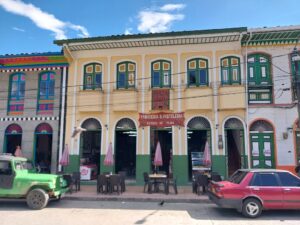
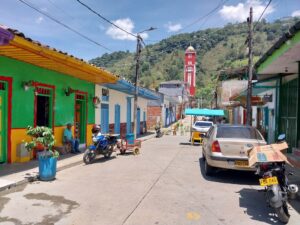
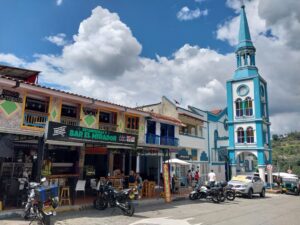
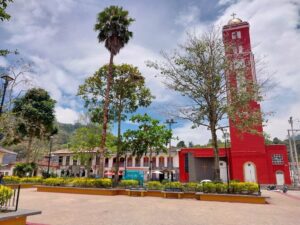
It’s great fun to take your time exploring the village, starting with the Plaza Principal. The red church San José de Pijao is the focal point of the central plaza and around the plaza you will see beautifully renovated houses in colonial style.

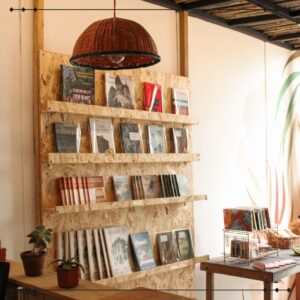
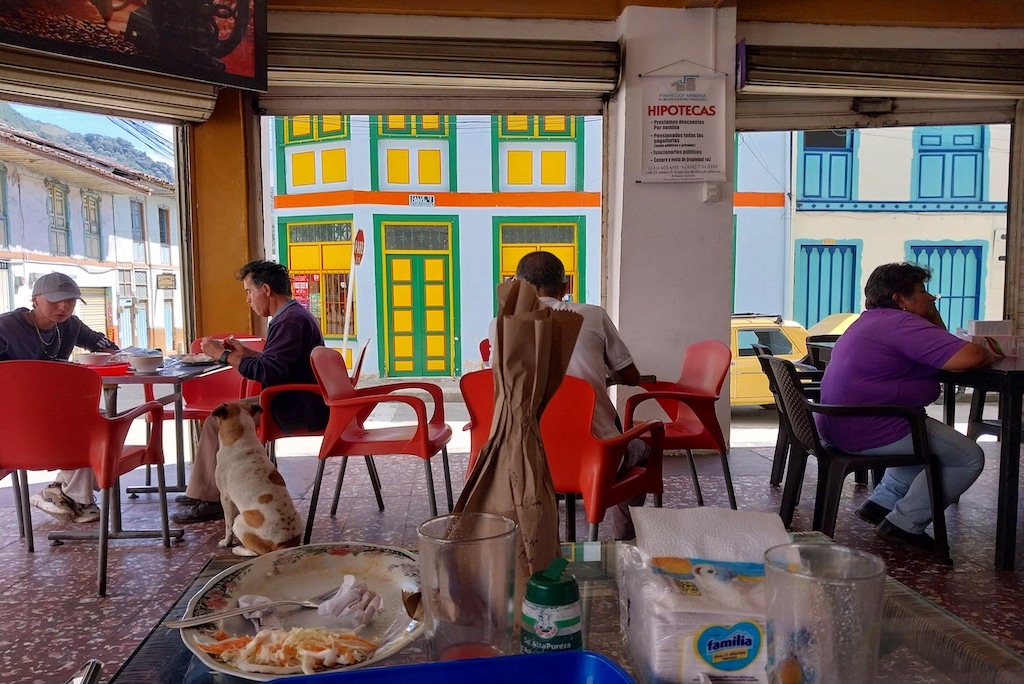
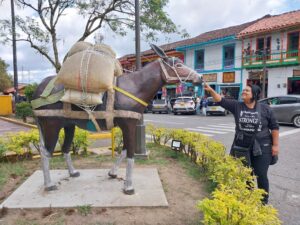
From a terrace you can best observe local life: jeeps and trucks passing with bags of coffee beans and “campesinos” who come there to eat or drink after hard work in the fields. In the side streets you will find quaint stores and businesses where you can have a cup of coffee, fresh juice or craft beer. A nice little store to look around is El Portón on Calle 11 #5-42. Here you will find beautiful books and natural products produced locally.

It also sells clothing by local designers. Tip: head to the village during the morning and stay for lunch. Check here the nicest restaurants and cafes in Pijao.

2. Stroll down the Calle del Cafe

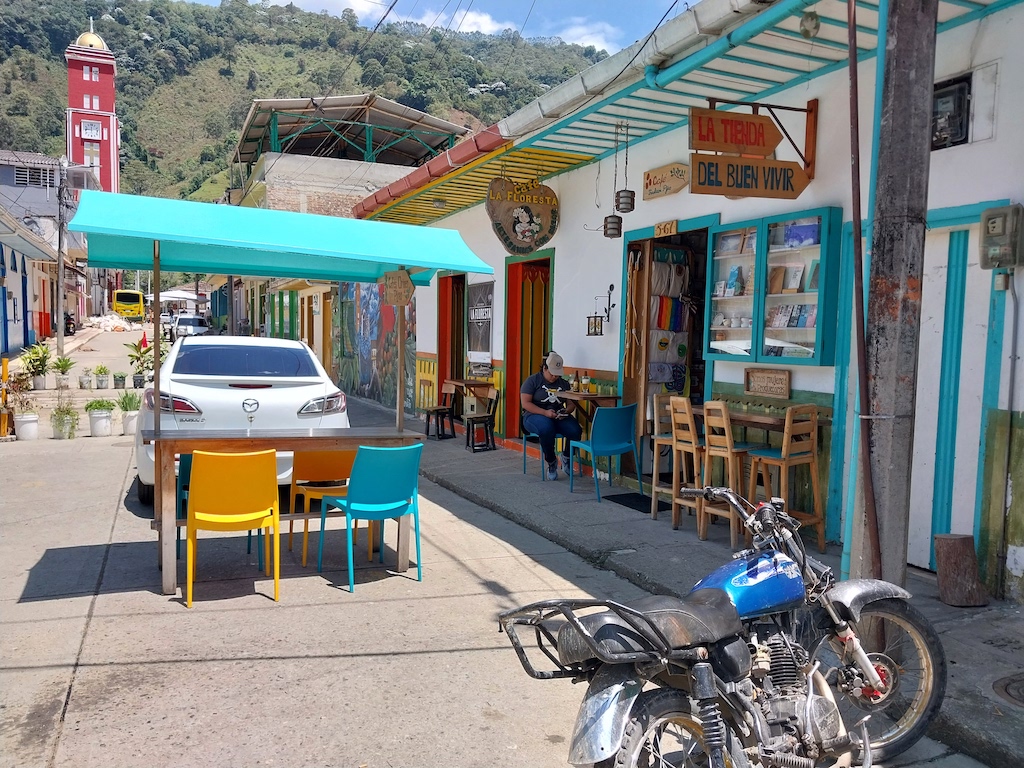
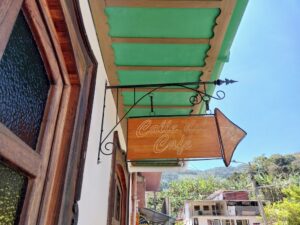
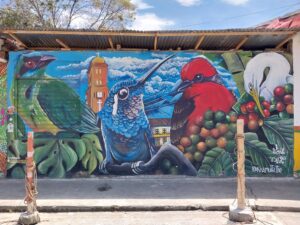
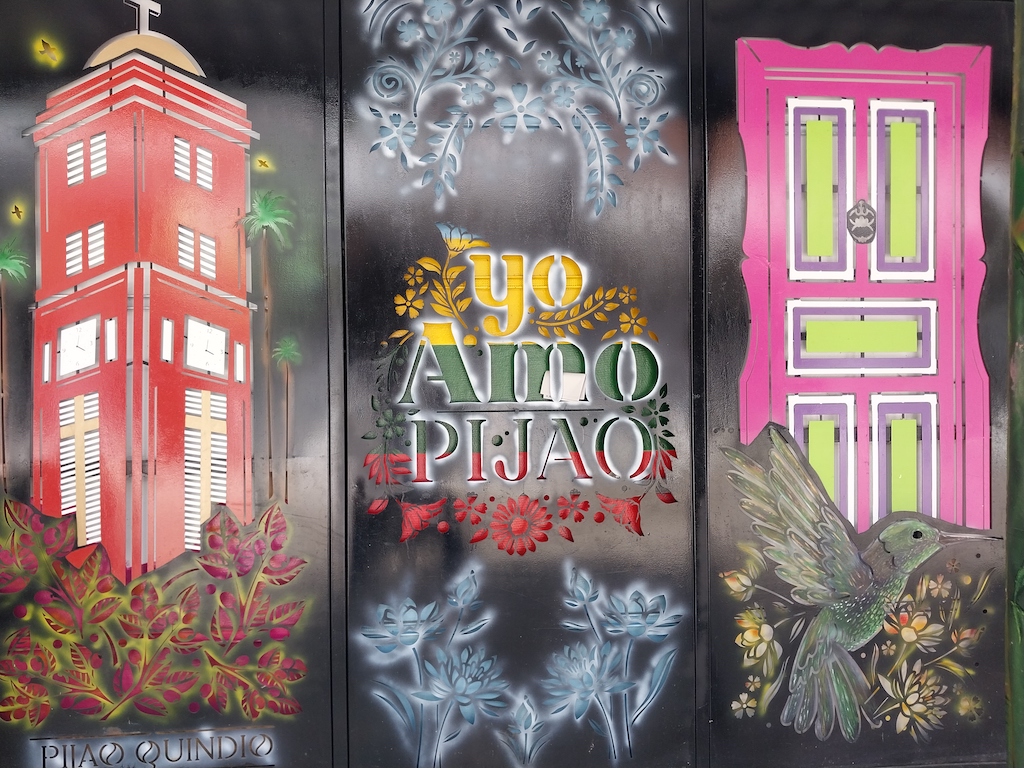
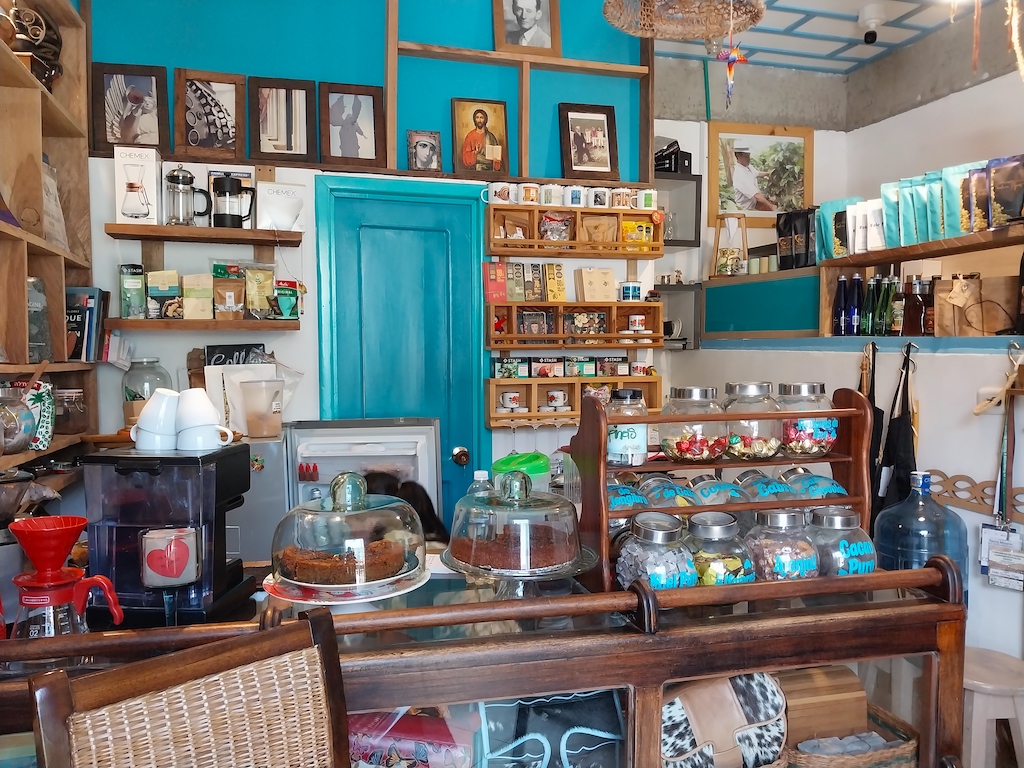
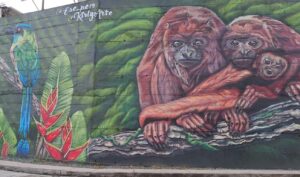
Pijao “breathes” coffee and at the cafes you can order a cup of coffee, made with care. In the Calle del Café (Calle 11) you can find café La Floresta. Local, organic coffee has been produced here for 30 years. La Tienda del buen vivir is next to La Floresta and here they sell coffee produced exclusively by women. The Calle del Café is a cozy little street, full of color and beautiful murals.

If you want to know more about coffee -from bean to cup-, do a coffee tour in the village of Buenavista which is near Pijao (see tip 7)

3. Take a walk in the forest around Pijao

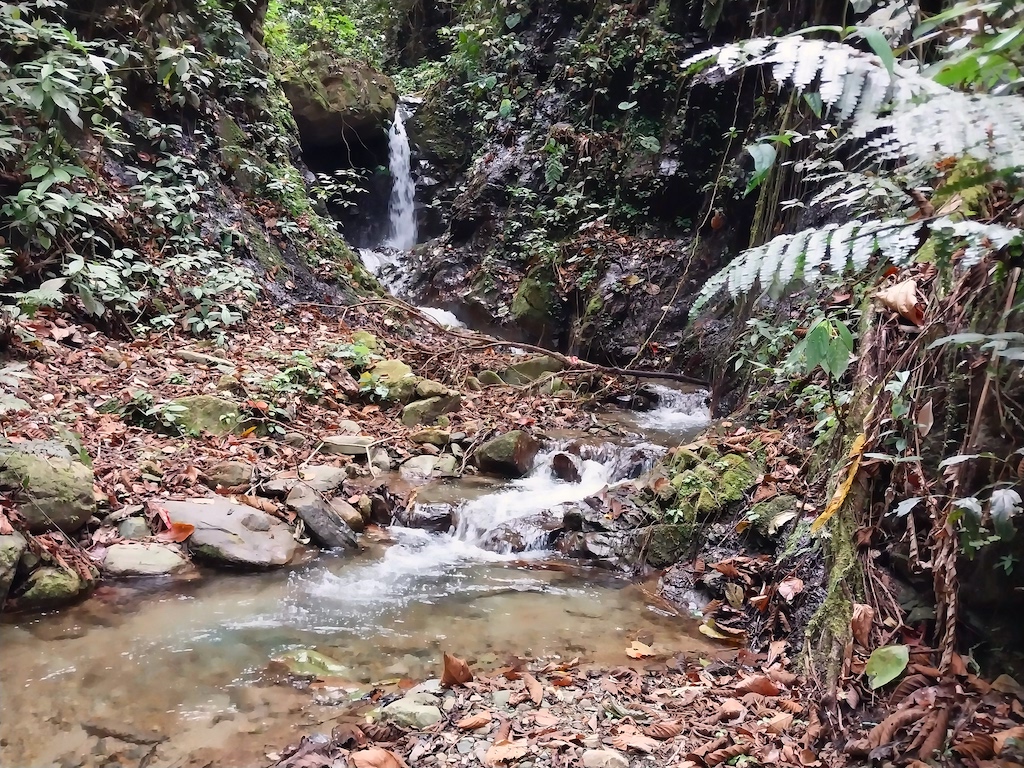
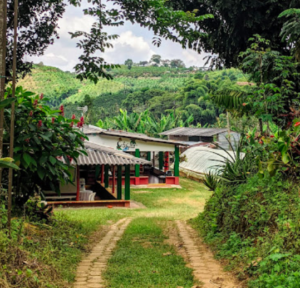
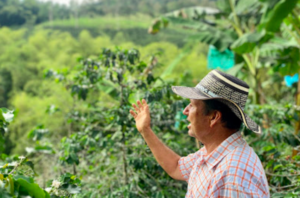
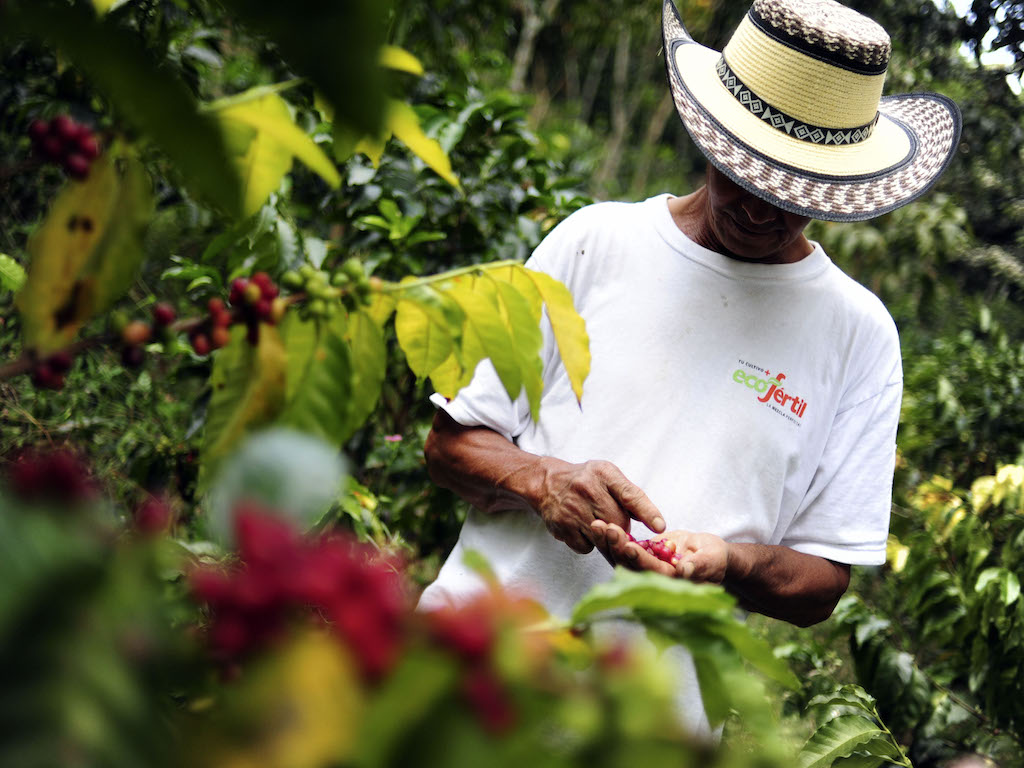
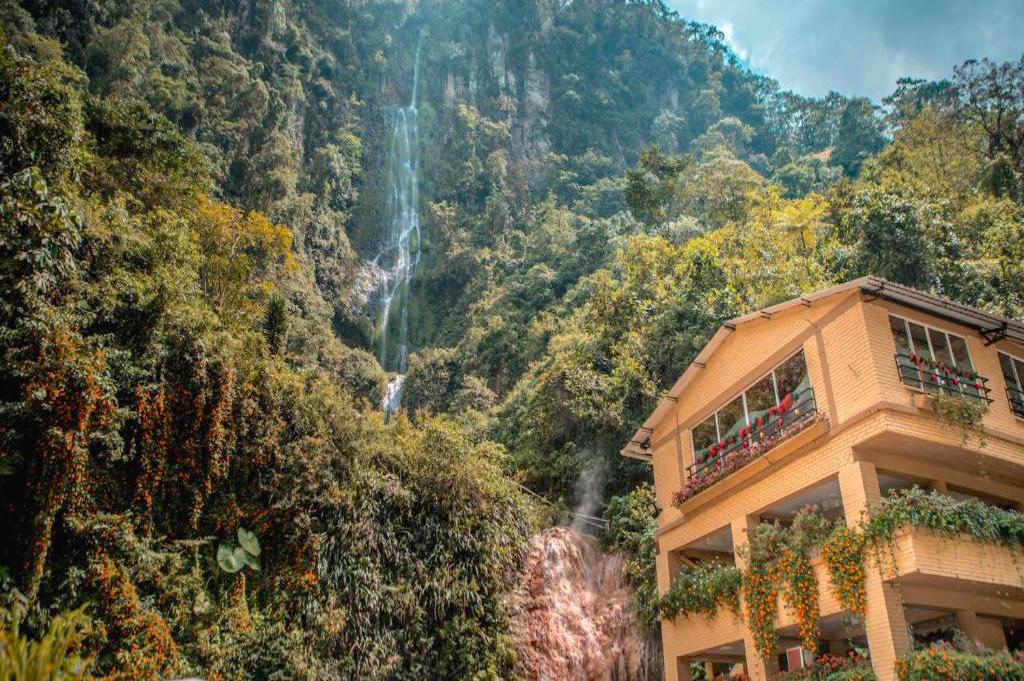
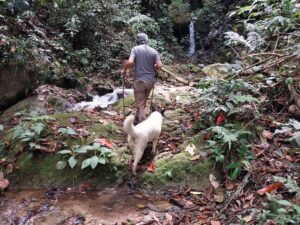
From our hotel Finca Tradicional El Otoño we made a short hike to a small waterfall in the tropical rainforest. The first part of the hike was over the plantation with coffee plants and banana trees, then the landscape changed to tropical rainforest. Nature was beautiful: huge ferns, meter-long lianas and ancient trees. If you want to do more extensive hikes, check tips 9 and 10.

4. Spot the colorful birds

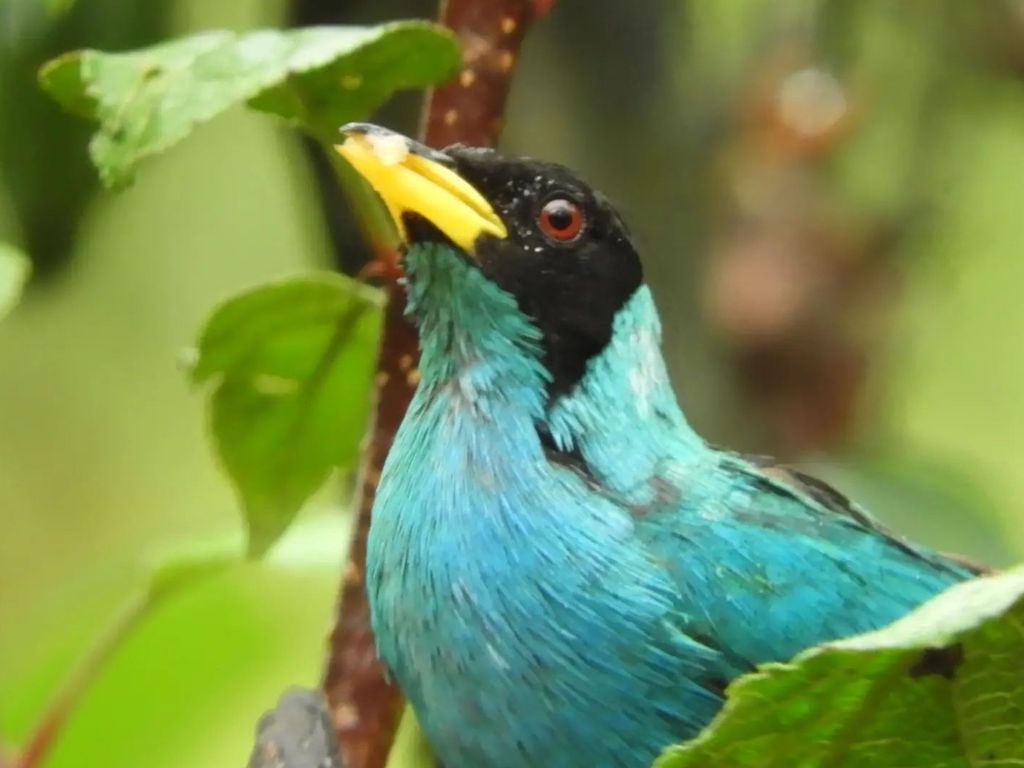
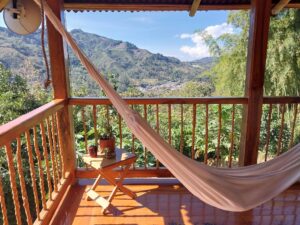
From the hammock of our finca, we could already spot many beautiful birds, but with a tour with a specialized guide you have the best chance to spot birds. Tour operator Bio-Onda tours is an expert in this field. Check their Instagram for more info. A good place in Pijao for bird watching is Casa Solaz, see tip 5.

5. Pay a visit to Doña Olga at Casa Solaz

Cra. 4 #9-15

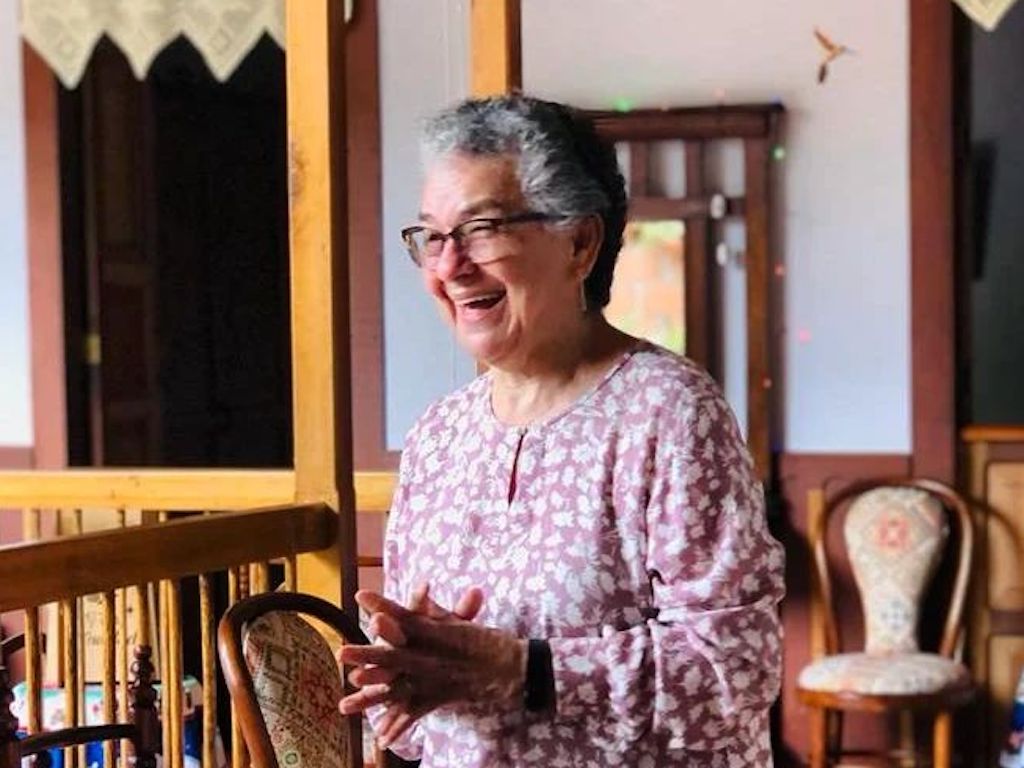
Here you can discover a whole other world without leaving Pijao. Owner Olga welcomes you with open arms in her traditional -more than 100 years old- house, which she has restored. Each room in the house has its own story, which the owner is happy to tell you. Besides learning about local traditions and culture, you can also enjoy the beautiful garden, which is home to 70 different species of birds. Reservations are necessary and can be made by calling +573108491829. More info can be found on Casa Solaz’s Instagram page or Bio-Onda tours.

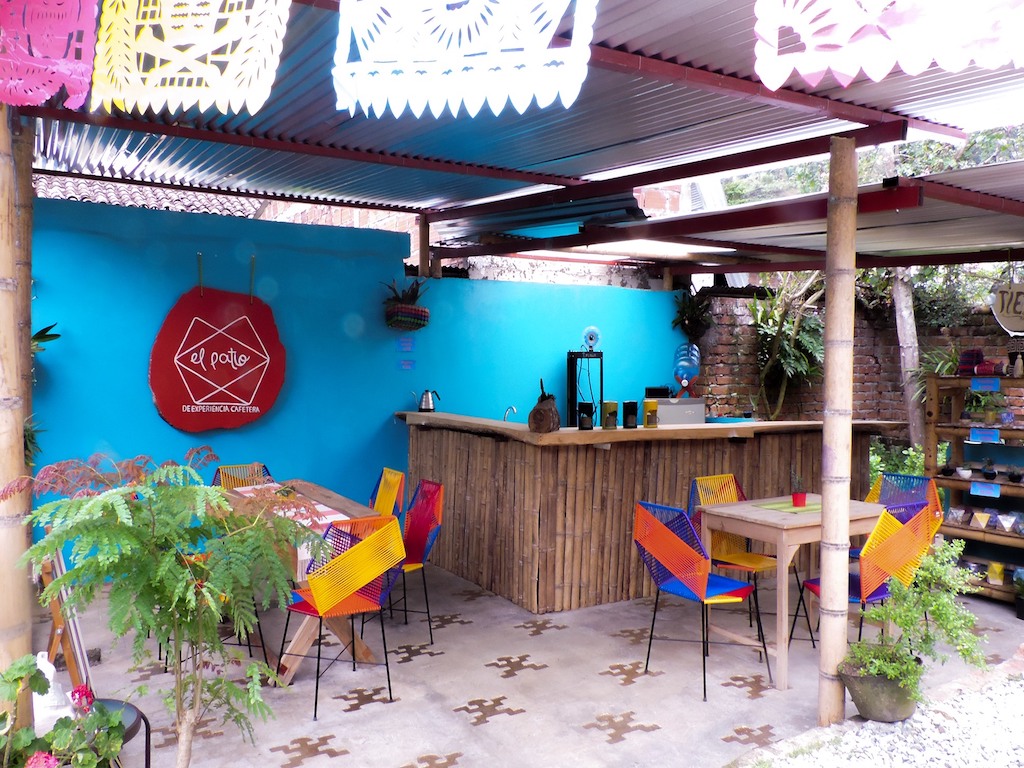
6. Learn all about medicinal plants at El Patio

At Vivero El Patio on Cl. 10#10-22 Doña Ligia grows and sells medicinal plants and herbs and she is happy to tell you all about their use. On the cozy terrace you can taste one of the different kinds of herbal teas that are prepared for you with love.

7. Take a side trip to Buenavista

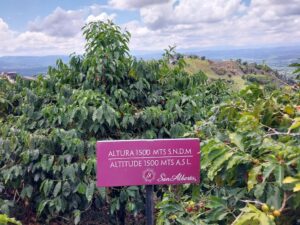
Buenavista is a small traditional village located 12 kilometers from Pijao. A Willy Jeep will get you there in half an hour. Buenavista is mainly put on the map by Hacienda San Alberto. The coffee beans from their plantation are among the best in Colombia, which is why many coffee lovers like to make a detour to Buenavista. Here find more information about Buenavista and Terraza San Alberto.

9. Visit a palm grove (without the many tourists)


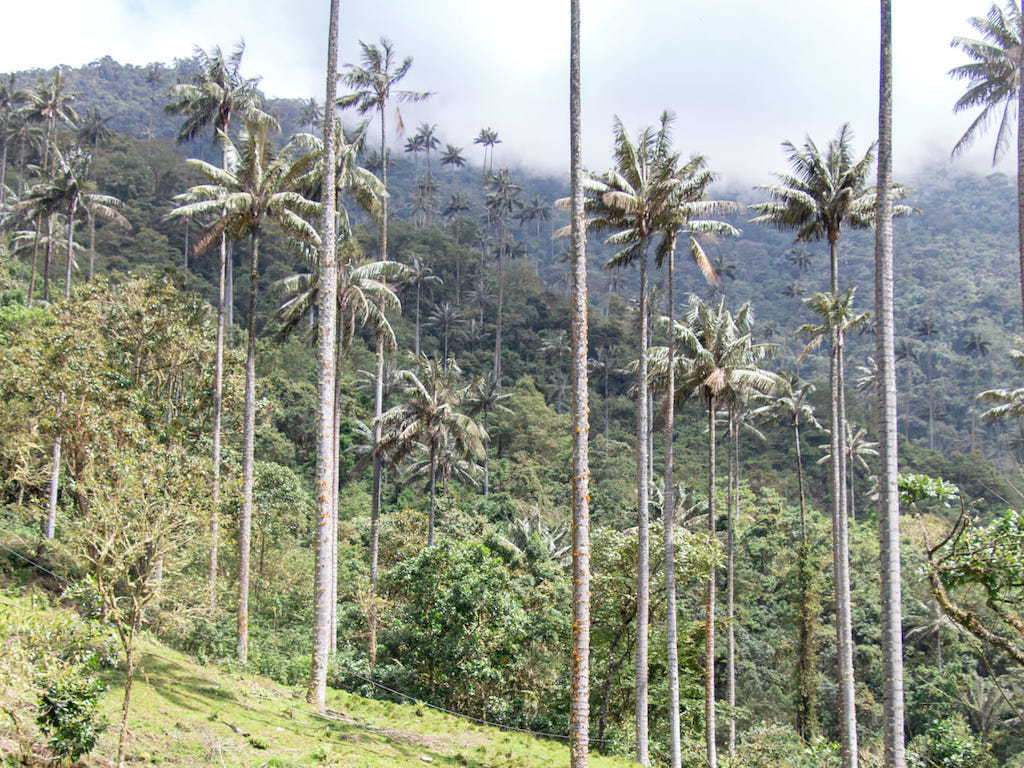
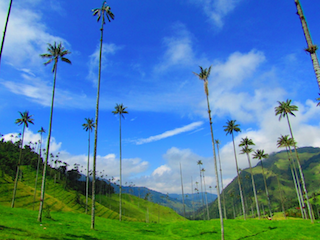
Almost everyone who goes to the coffee region knows the Valle Cocora, the valley with the famous palmas de cera, the national tree of Colombia. Pijao has its own palm forest, which you can visit with a guide, including Kevin, of ecotours Pijao. Kevin can be reached at +573197750694.
8. Go paragliding

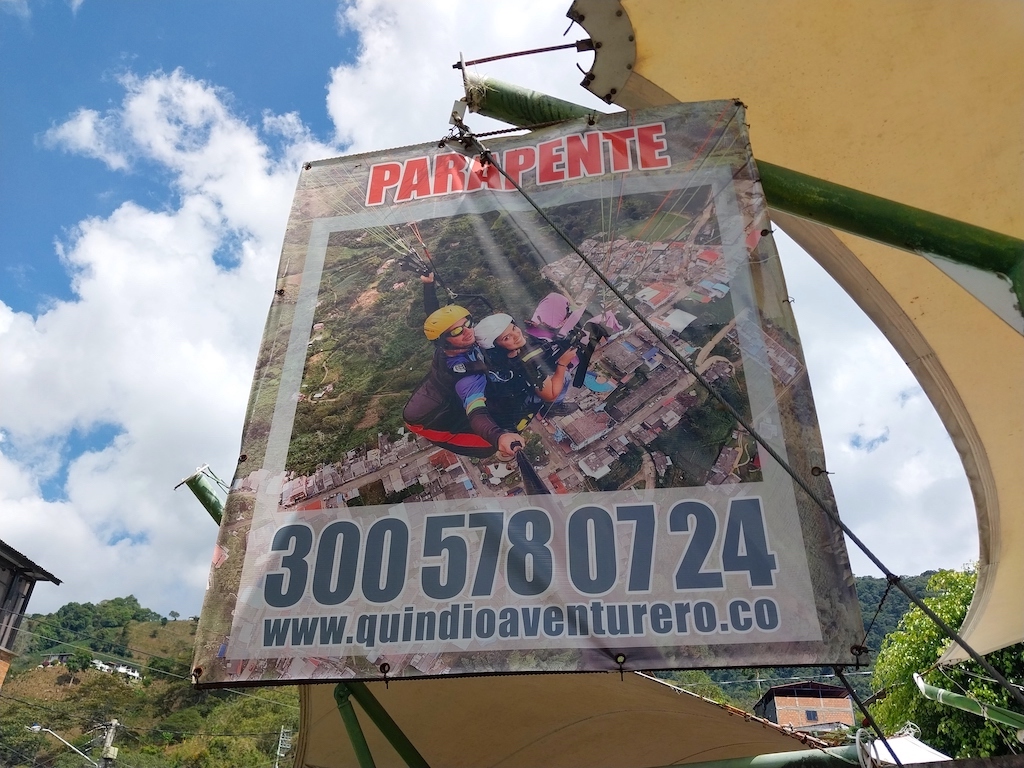
It’s not just coffee that rings the bell in Buenavista. You can also paraglide there, for example. We did not do this, but the driver who took us to Buenavista could heartily recommend this tour operator.

10.Hike to the Paramo de Chile


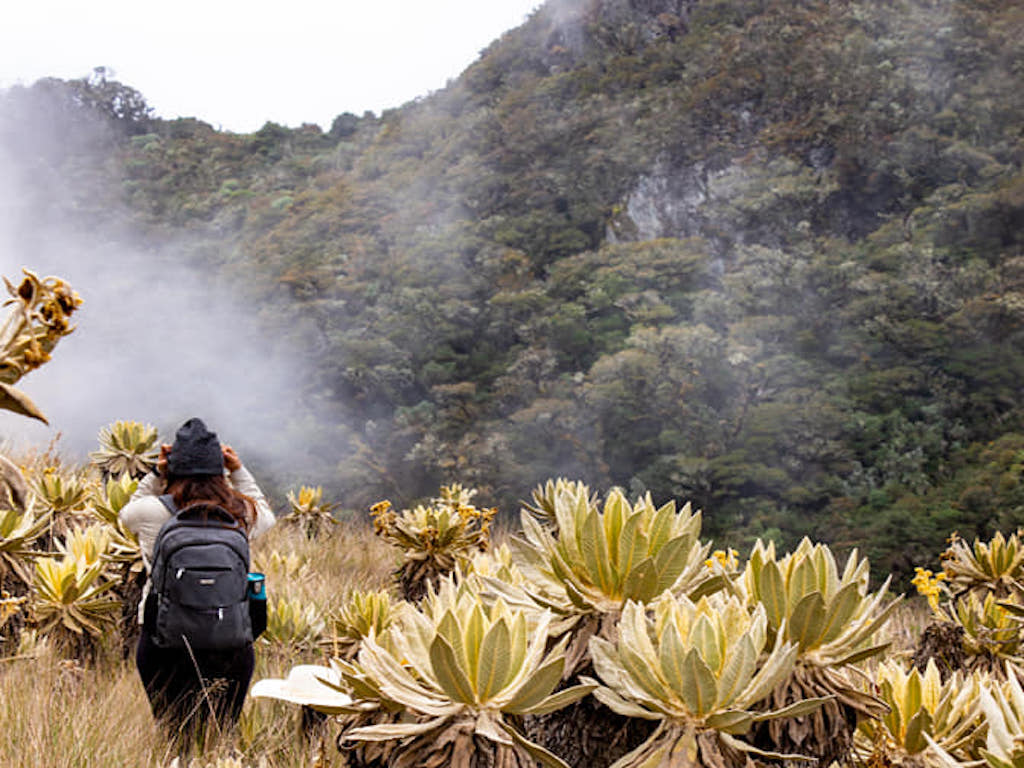
This paramo is located above Pijao, at an altitude of 3,700 meters. At this altitude you will find a special landscape, with the iconic Frailejones trees. You can also do a tour to the paramo de Chile -Tierra Fría as the locals call it-, with Kevin. Check out Kevin’s Instagram for more information.

Here’s how to plan your trip to Pijao

How to get there.

How to get to Pijoa?

1) The cheapest way: by bus
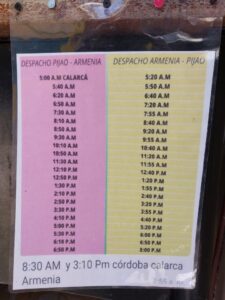
There is a direct bus from Armenia to Pijao. The ride takes over 1 hour. (COP10,000/$2.50).

If you’re staying in Salento or Filandia, you’ll catch 2 buses: first the bus to Armenia 50 min / COP6800/€$.170, then the bus to Pijao. If you arrive in Pijao, you can catch a Willy Jeep for transportation to your hotel if you stay outside the village. The trip from Salento/Filandia takes a total of about 3 hours including transfers.

2) The most luxurious way: a car with a private driver
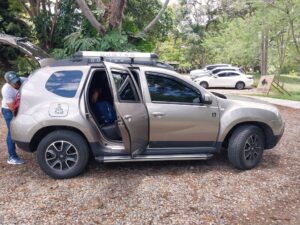
Even though bus transportation is well arranged to and from Pijao, it can also be convenient to hire a car with a private driver, especially if you want to take a different route and stop in the village of Buenavista, for example. We also did this when we went from our prior accommodation –Glamping Entre Rios in Calarcá –  to Pijao via Buenavista. This was ideal because the driver stopped where and how long we wanted. Also, the car was very comfortable, a spacious “Duster”.

We paid COP250,000/$62 for this service for two people. If you are interested in this, then driver Angelo is recommended. He is a reliable driver who comes from the region and knows a lot about it. Knowledge of Spanish is handy to communicate with him though, as his knowledge of English is basic. Angelo can be reached via WhatsApp number +573127287120. He can also pick you up from Armenia airport.

3) The most flexible way: eand car hire from the airport in Armenia.
The main roads are good in this region. We do recommend a sturdy, higher
car to rent such as a Jeep, due to the steep inclines and potholes in the road off the main roads.

4) With an organized tour
During this tour of a full day, you can visit the villages of Pijao and Buenavista. The tour includes a visit to a coffee plantation.

How many days of Pijao?

Pijao is a lot quieter than Salento and Filandia and there is not much to do in the village itself. In 1 day you can explore the village and take a Willy jeep to Buenavista. If you want to do the hike on the paramo and the palm grove, stay an extra day for this.

Where to stay in Pijao?

Pijao has a modest choice of hotels and hostels, but there are some nice accommodations to stay a few nights.

#ColombiaMyWay hotel tip

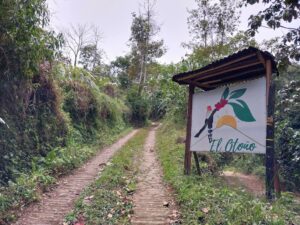
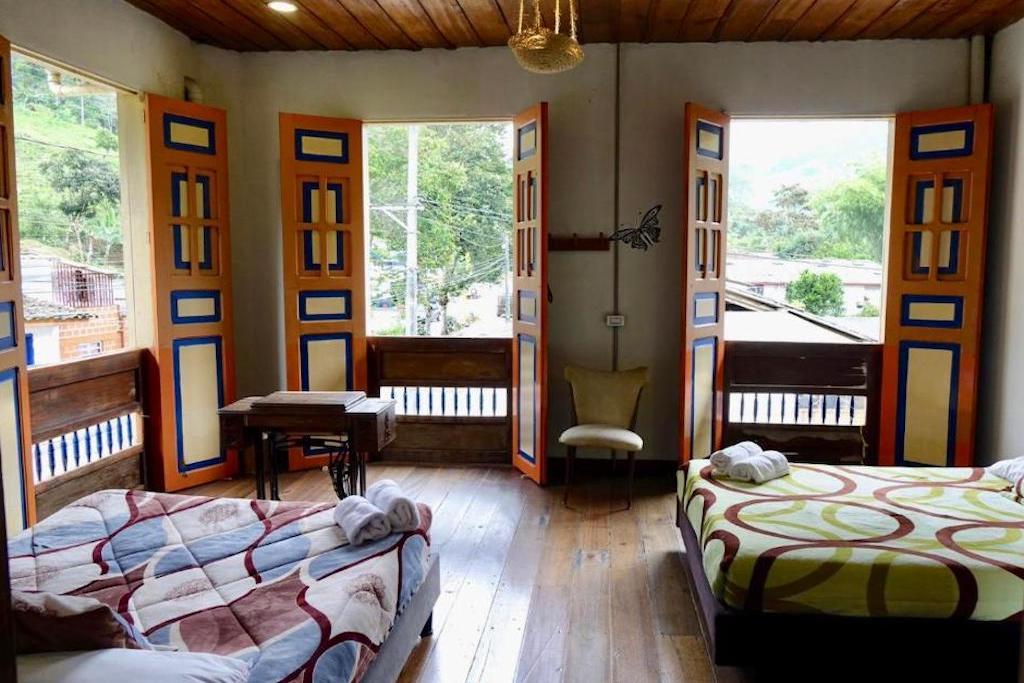
We stayed at Finca Tradicional El Otoño

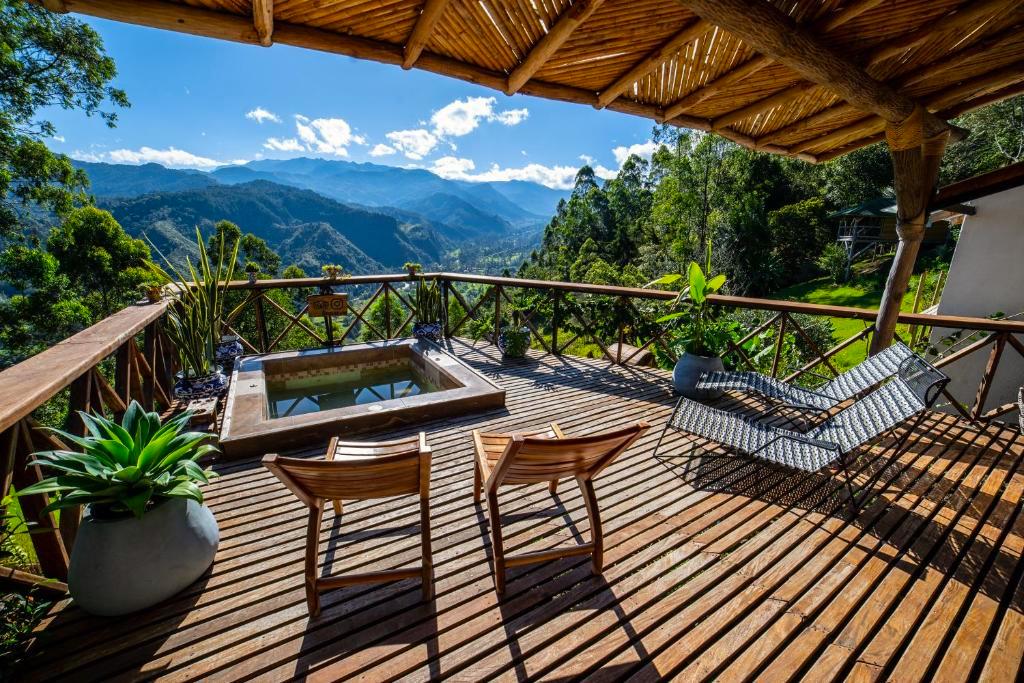
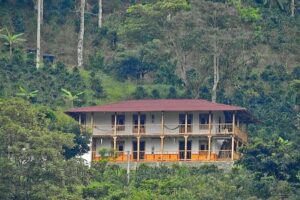
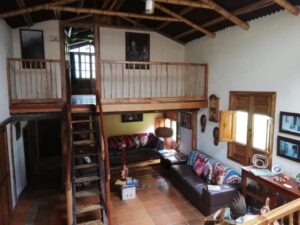
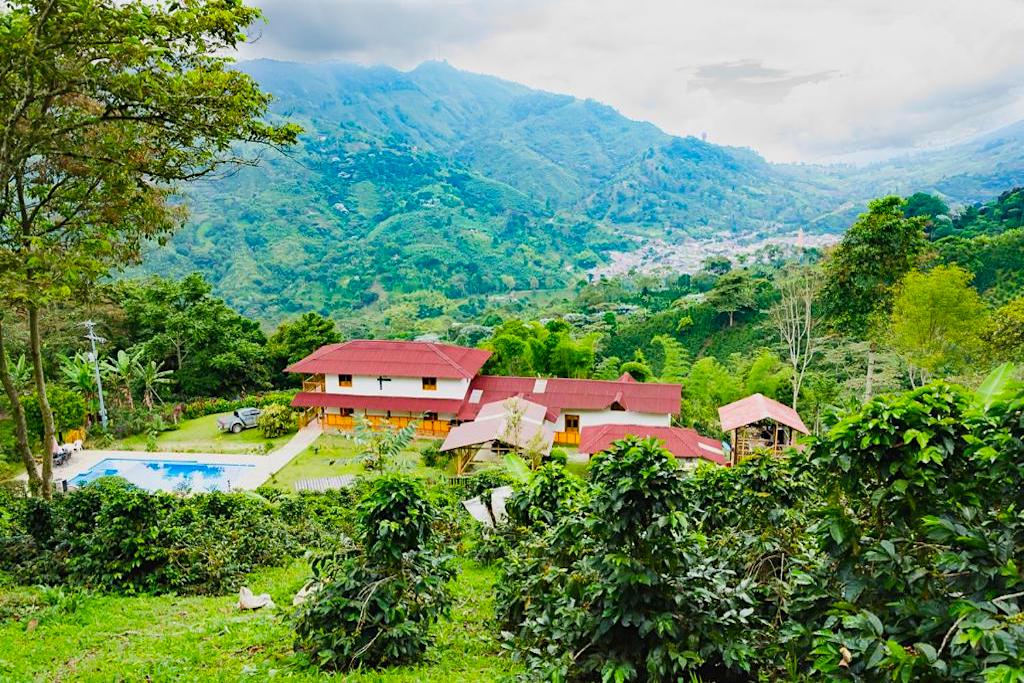
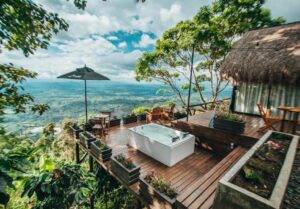
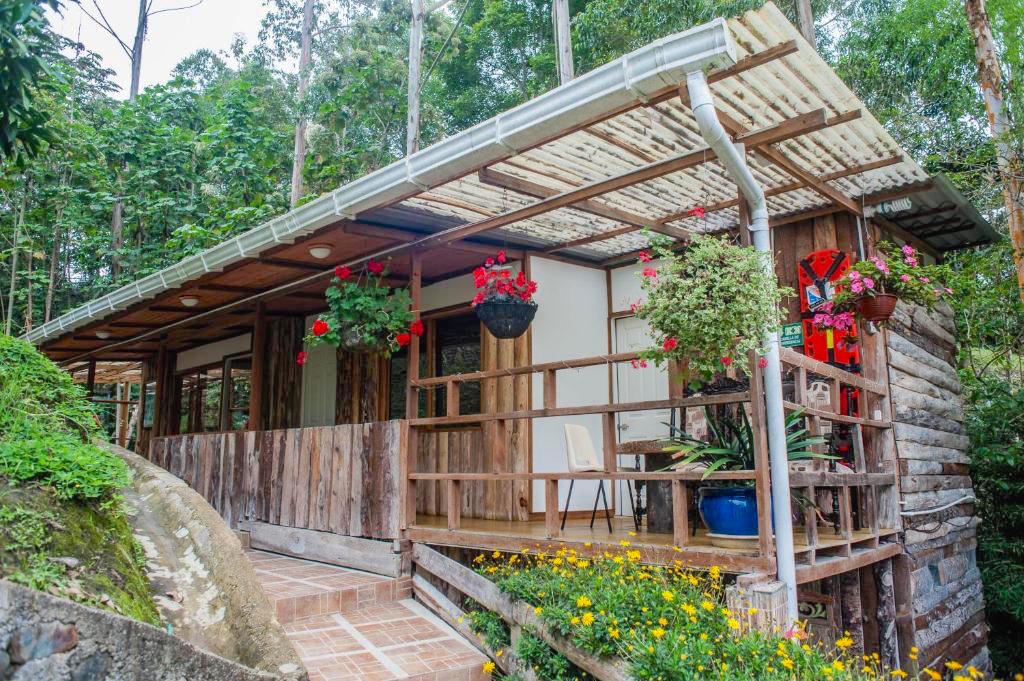
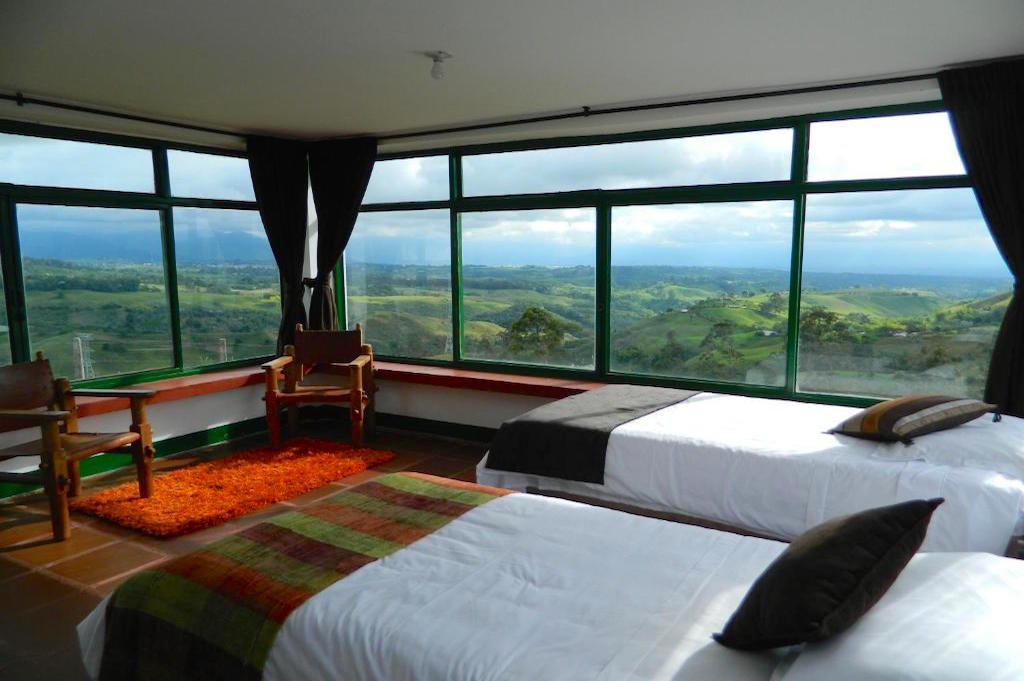
This finca is located in a natural reserve in the mountains one kilometer from Pijao. The finca is beautifully situated and you look out on the village of Pijao from the terrace and the room.

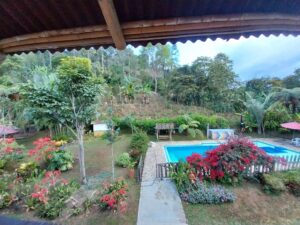
There is a beautiful garden where you can see birds and in the backyard there is a heated pool with jacuzzi. We did not use that because we were too cold -:)

The delicious breakfast was served at the communal dining table and Don Diego -retired doctor and owner of the finca- joined us in the morning.

We exchanged stories about his hometown of Medellín, our hometown of Curaçao and Europe. Breakfast was included in the price (65$ per night for a double room) and for a reasonable amount we could order lunch (COP35,000/$8.75) or or a light dinner (COP25,000/$6.25).

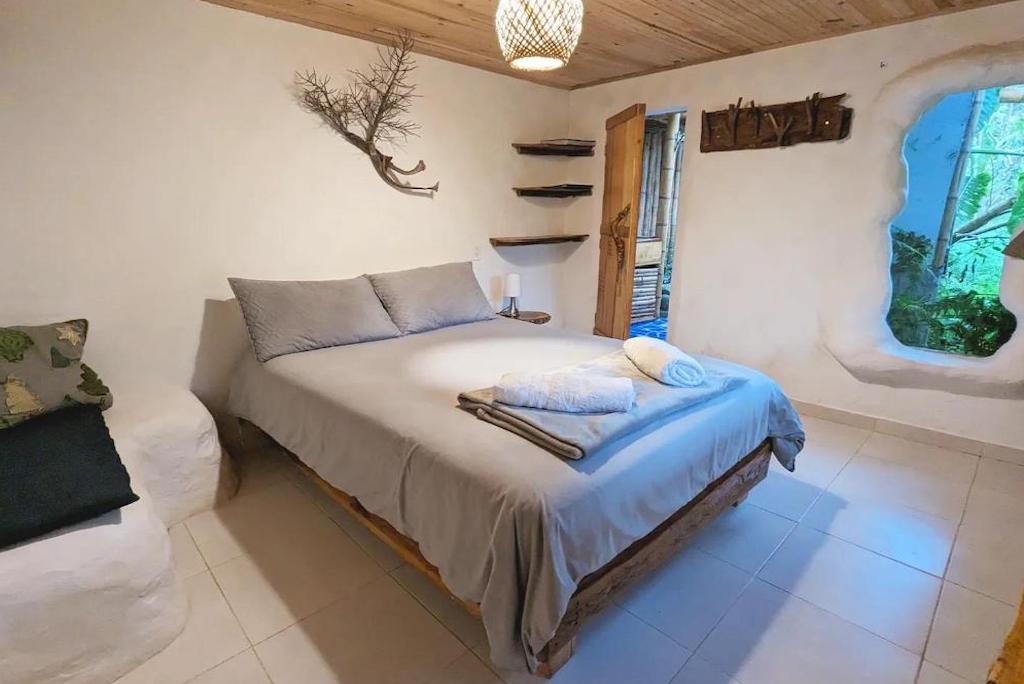
This is not a luxury accommodation, but the room was comfortable and spacious.

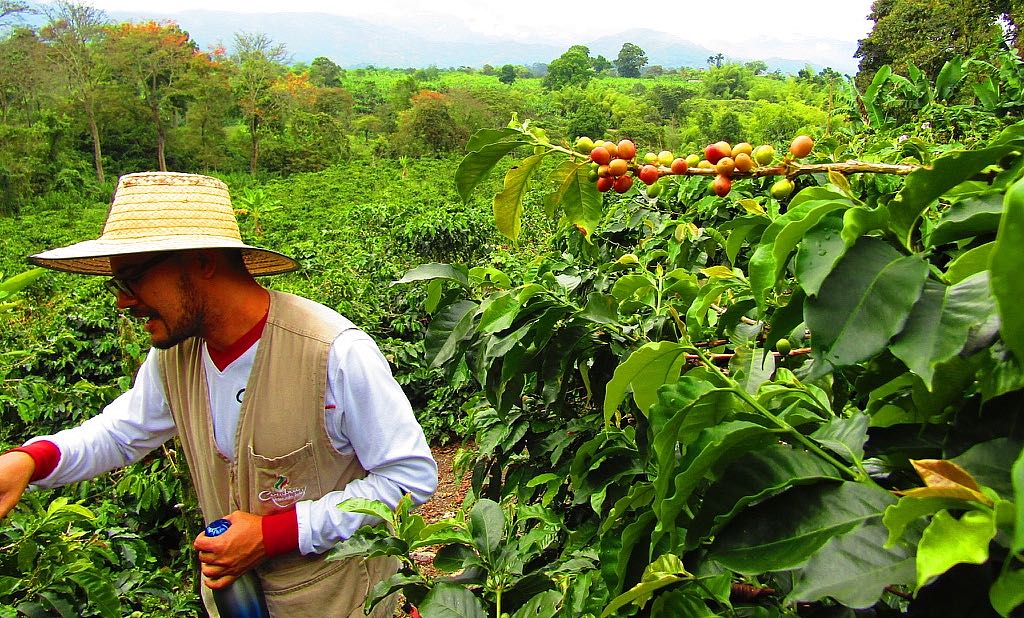
We were the only guests and got a lot of attention from Diego. When he heard me sneezing from a bad cold, he rushed to his room and came back with medicine . He also took us on a walk to a small waterfall. The first part of the hike was over the plantation, where Diego gave a passionate explanation of the coffee plants. After this, the landscape changed to tropical rainforest, where we clambered over the rocks to the small waterfall.

At times it was quite slippery and we held on to the vines and trees. Dog Kiri joined us for the guide and showed us the way!

Hike from Finca el Otońo to Pijao
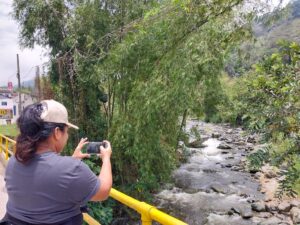
From the finca to the village, it’s an easy, fun walk down past pastures with horses and cows. It was wonderfully quiet! We passed a small river and saw beautiful butterflies and flowers.

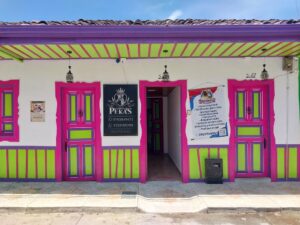
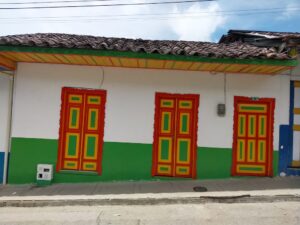
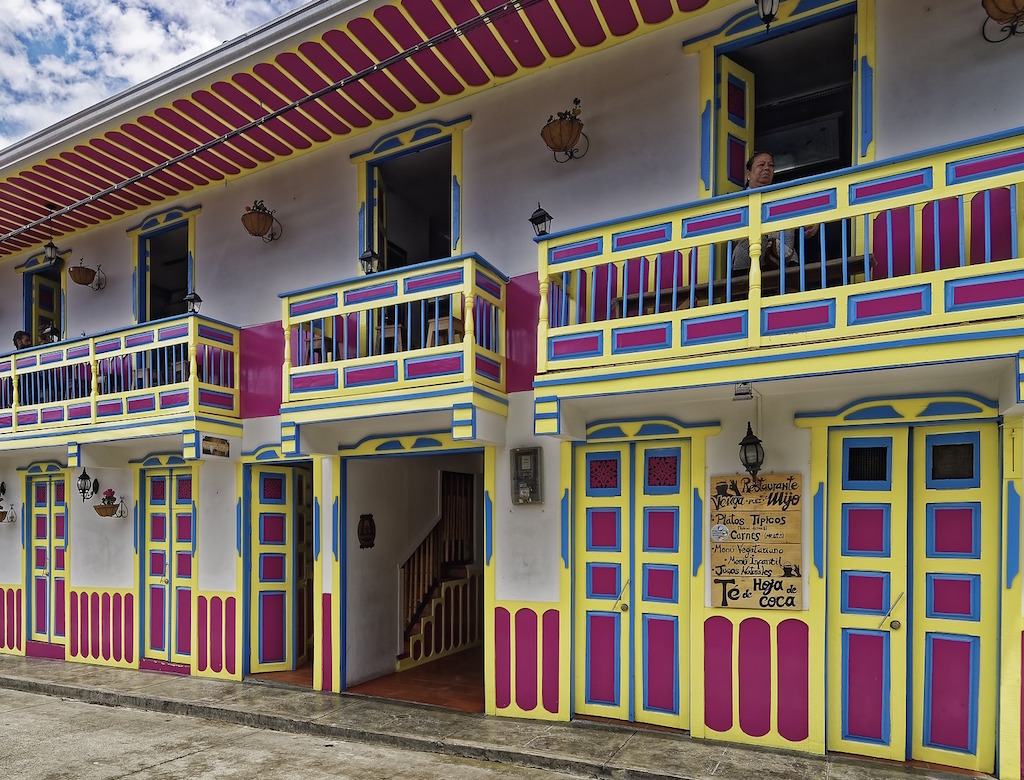
Including occasional stops, it took us half an hour. The houses with their many colors in the traditional architectural style were fun to see and people were obviously very creative with the different color combinations.

Upon arriving in the village, we immediately saw the contrast with villages like Salento and Filandia. There was activity in Pijao, but we saw only locals: school children followed by loyal dogs and people on their way to work or the square. When we returned to the finca in the afternoon, we took a Willy Jeep, to avoid the uphill hike. The Willy cost us COP30,000/$7.50. Tip: Are you going to rent a car and want to stay overnight at Finca El Otoño? Then rent a 4 WD. The driver who took us to Pijao had an SUV but no 4WD and he did not manage to get up the little hill to the Finca, after which Don Diego came to pick us up -:)

If you prefer to stay in the village, there are also a number of hostals you can go to, such as Hostal Casa Victoria Pijao. From the hostal you look out on the beautiful nature of Pijao.


$ price range up to $35

$$ price range $35 – $60

$$$ price range above $60

$$$

Eating and drinking in Pijao

At the Plaza Principal de Pijao are several cafes, bars and restaurants. You can also find nice places in the side streets. For example, we previously mentioned Calle 11 (Calle del café), where two nice coffee shops sit next to each other: La Tienda del buen vivir and Café La Floresta. Here are our tips for the best places for drinks and snacks in Pijao.

Our tips

La Tienda del buen vivir

Calle 11 #5-67

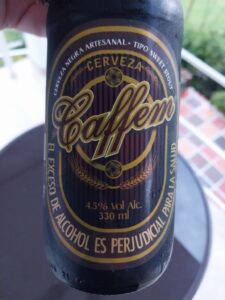
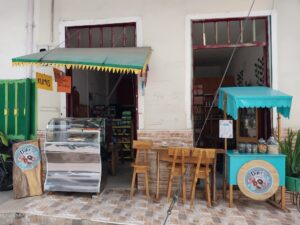
Here you can not only drink or buy coffee, they also sell cakes and craft brewed beers. We wanted to try the coffee-flavored beer, but we were advised to have a lighter beer and take the heavier coffee-flavored beer for the evening.

Looking back, we were glad we took this advice, because the “coffee beer” was tasty but heavy. Too heavy at the beginning of our “sightseeing” trip through Pijao -:)

Cafe Dimonte

# a 11-29 Carrera 4, #111

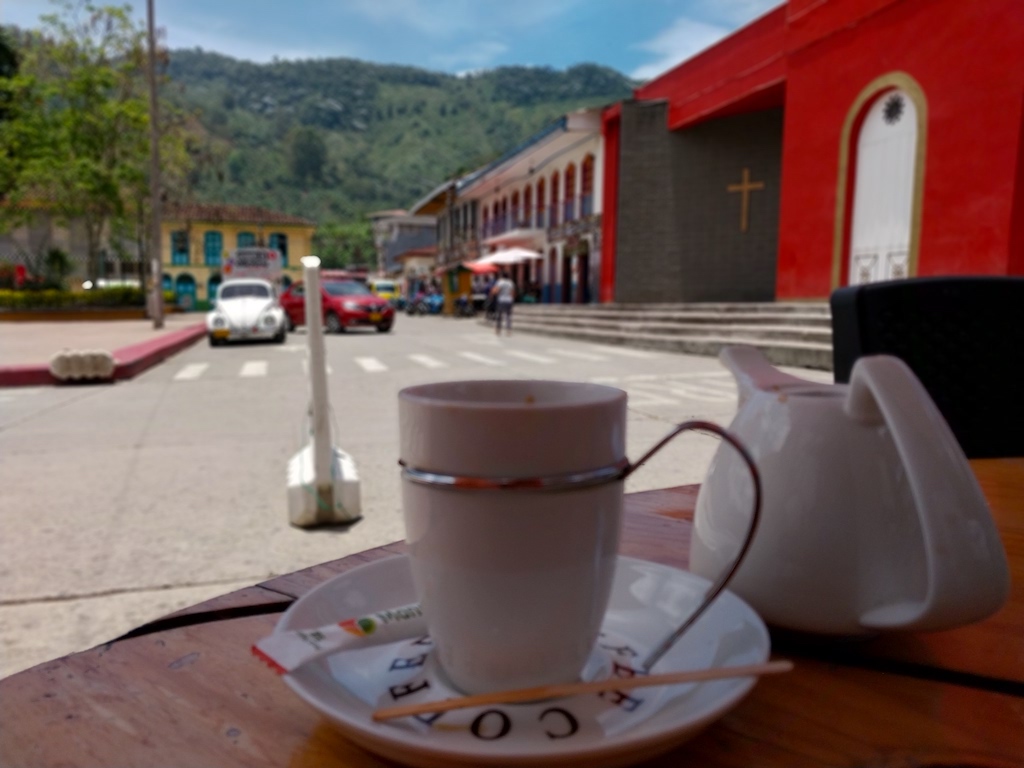
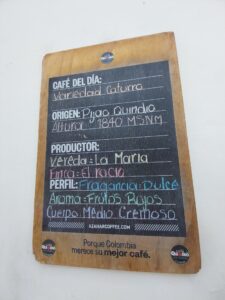
Perfect spot on the square for “people watching,” on the corner opposite the church. This cafe has a special “coffee of the day” every day, which is written on a board, with all the specifications of the coffee bean.

You get a cup that is one-quarter full of coffee, with a jug of water next to it, so you can make the coffee as weak or strong as you like.


Bodega Pijao

Plaza principal Pijao

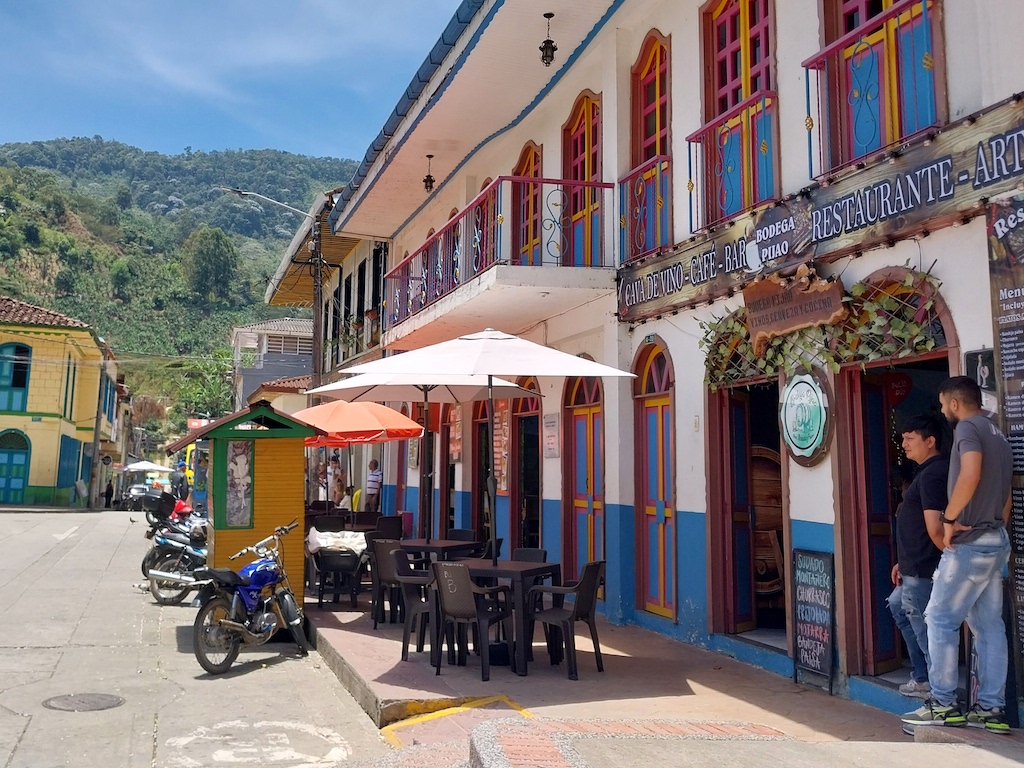
Want to escape the bright afternoon sun and have lunch or a drink inside? Then Bodega Pijao is a nice place. The bodega sits on the central square and is tastefully decorated with wine bottles and coffee props.

Here you can go for a traditional Colombian meal, a burger, pasta, a cup of coffee or a cheese board with a glass of wine. There are also vegan and vegetarian options.


Bar Social

Cl. 12 #41
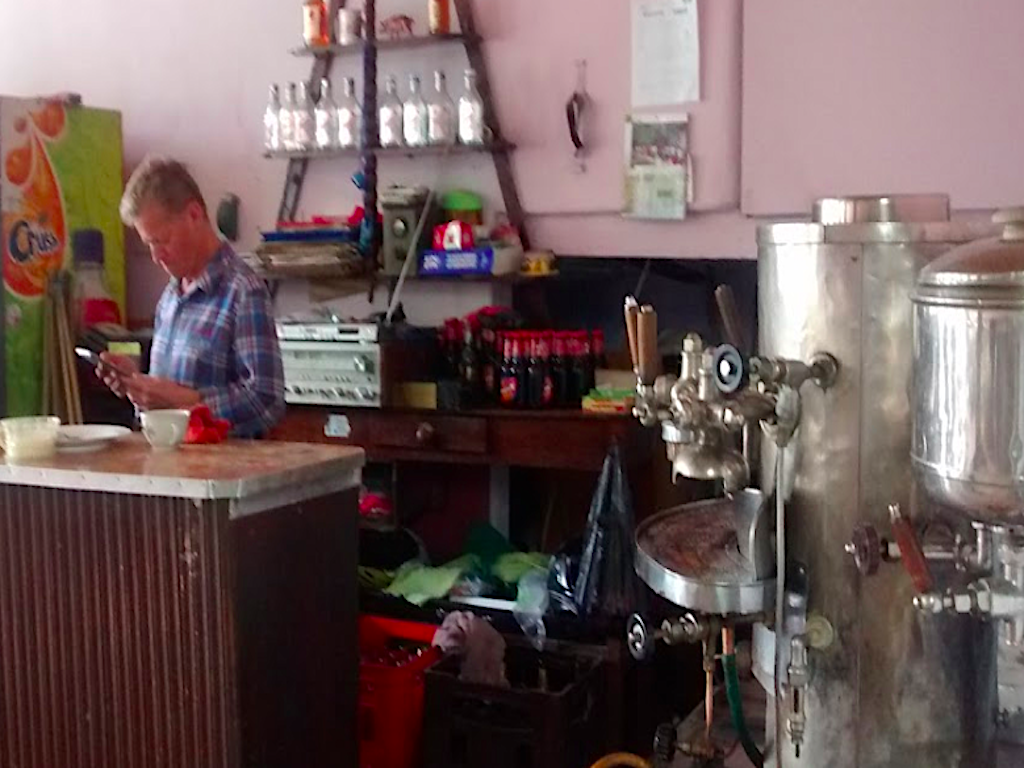
This cafe is a favorite with locals, who come there to drink coffee or play billiards. It is a good place to have a chat and listen to locals’ anecdotes about this historic bar. The coffee is made with a more than 100-year-old coffee machine!

Bar los Recuerdos

Cra. 4 #11-9

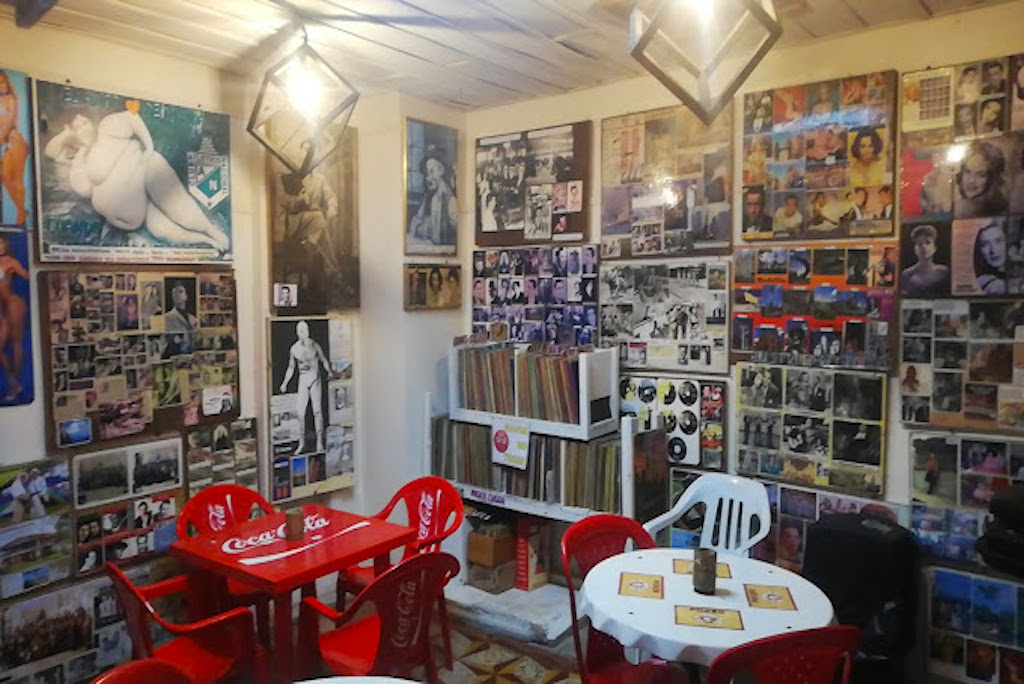
This bar was recommended to us, but when we were there on a Monday afternoon, the bar was closed. The owner of the bar, is a fan of movies and old LPs, which shows in the interior.

Asadero El Mana

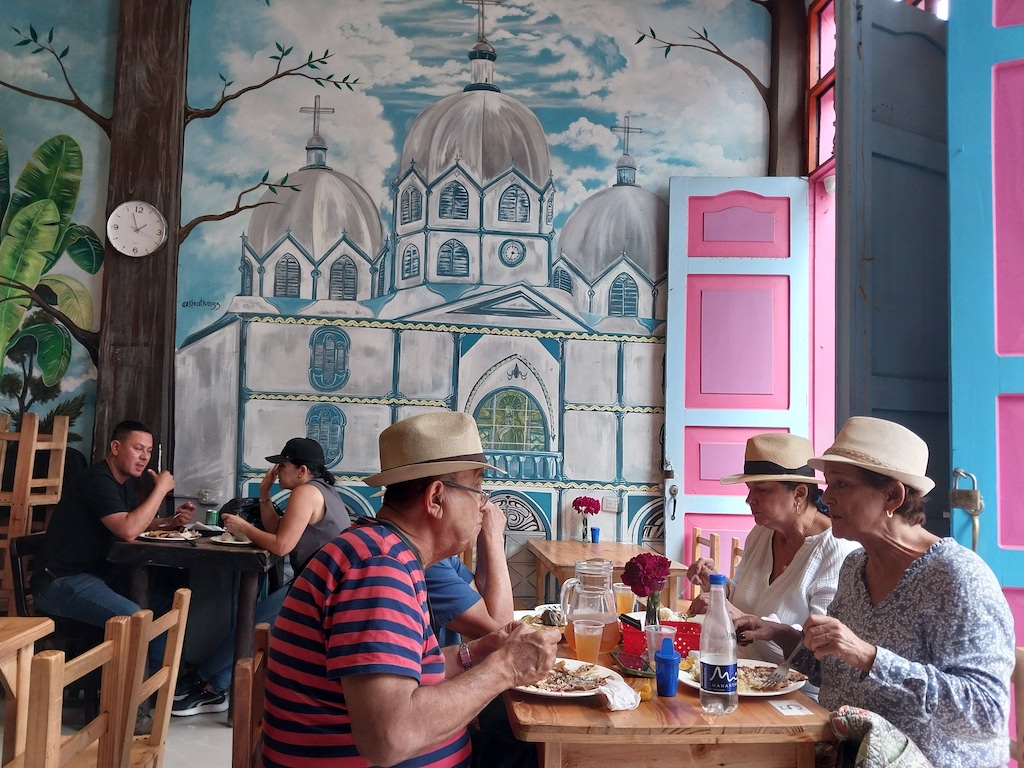
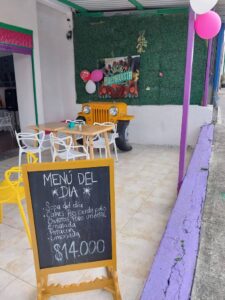
Insiders tip! You’ll find this restaurant just off the square. It was packed with locals when we were there. Among other things, you can get a cheap menú del día order. Toen wij er waren bestond het dagmenu uit soep met kip, banaan en ei. Het hoofdgerecht was gegrilde kip met spaghetti, rijst, banaan en koolsalade. We kregen een grote portie en de maaltijd smaakte prima!

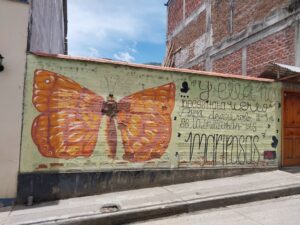
Including a guava fruit juice, we paid only COP24000/$6 for 2 people! This restaurant is on the little street opposite the Banco Agrario de Colombia, near the mural of the butterfly.


Practical info A-Z

Is Pijao safe? What is the weather and temperature like? What should I bring with me? What about how to withdraw money in Pijao? Check here for practical information and useful tips for your stay in Pijao.

Drinking water

The water from the tap is not drinkable

Cash withdrawals

There are two banks in Pijao, Servibanca and Banco Agrario de Colombia, but we did not see an ATM machine.

Climate

The temperature in Pijao ranges from 12 to 20 degrees. We did find the wind a bit chilly in the evening. We found it colder at  night than in Filandia/Salento, especially since our accommodation was in the mountains.

Packing List
  • Thermos for water
  • Hiking shoes
  • Sunscreen
  • Hat or cap
  • Light clothes
  • Rain jacket
  • Sweater
Vaccinations

No vaccinations are required for Pijao.

Safety

Pijao is a small and friendly village and it is very peaceful and safe. This has not always been so, because In 2001 there was an invasion by the guerrillas which caused the residents to live in fear for 10 years. Fortunately, Pijao has been a peaceful village for years now, where the residents do not have to live in fear and which is also for travelers, very safe. As our Willy jeep took us to the finca, we noticed a police officer on a motorcycle stopping us. He was asked where he was going and it was actually a very friendly conversation. In such a small village like Pijao, we didn’t really expect this, but it was also kind of a good feeling to have a police presence.

Wifi and telephone

At the finca where we stayed, we had good internet. If your accommodation is further into the mountains, coverage may be worse. If you want a data package for your phone, provider Claro has the best coverage in Colombia.

Stores

We did not see large supermarkets, but we did see small stores selling all sorts of things.

Buenavista Quindío

Home 9 Category: Travel guide Coffee Triangle ( Page 2 )

Buenavista and Terraza San Alberto

Updated August 2025

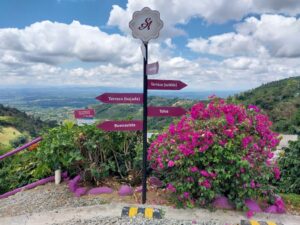
Buenavista is a small traditional village of about 3,000 inhabitants in the Quindío region of Colombia’s Coffee Triangle, the Eje Cafetero / Zona Cafetera. Armenia is 33km away and Salento is 60km away. It is one of those places we have wanted to visit for years. Now, Buenavista is not on the beaten path and is a detour if you are going to villages like Salento and Filandia travel. So why this detour you might think? The reason we were curious about Buenavista is that Colombia’s most awarded coffee beans are grown here, at the Hacienda San Alberto coffee plantation.

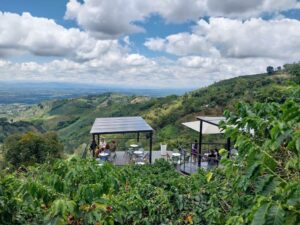
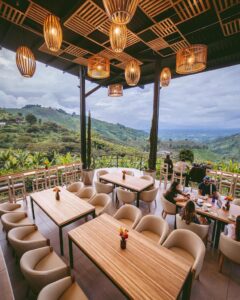
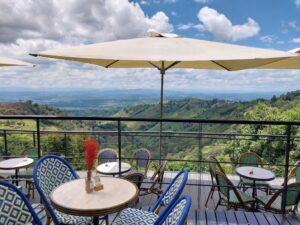
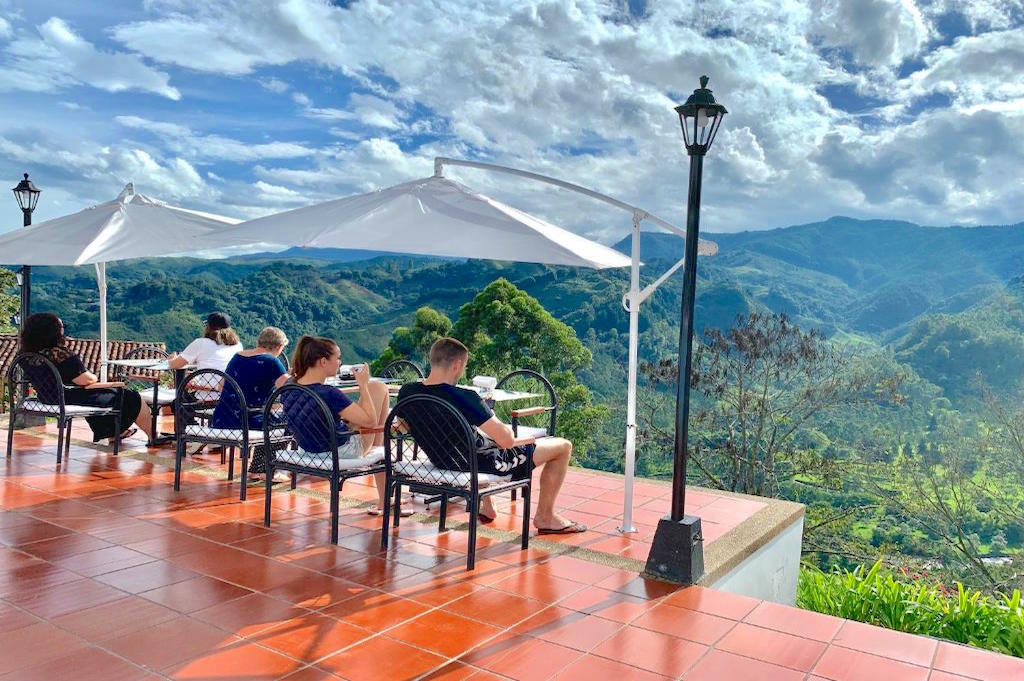
This of course made us -being coffee “addicts” very curious. However, the coffee was certainly not the only reason for us to be curious. We were especially curious about the terrace of the Hacienda: Terrazza San Alberto. This terrace is known as one of the most beautiful places in the entire coffee region to enjoy a cup of coffee, with sweeping views of the landscape with coffee plantations.

Therefore, Buenavista was included in the itinerary of our tour of the Colombian coffee region in September 2024, from Armenia to Calarcá, Pijao, Filandia and Salento. On the way from Glamping Entre Rios in Calarcá to Pijao, Buenavista was a perfect stopover.

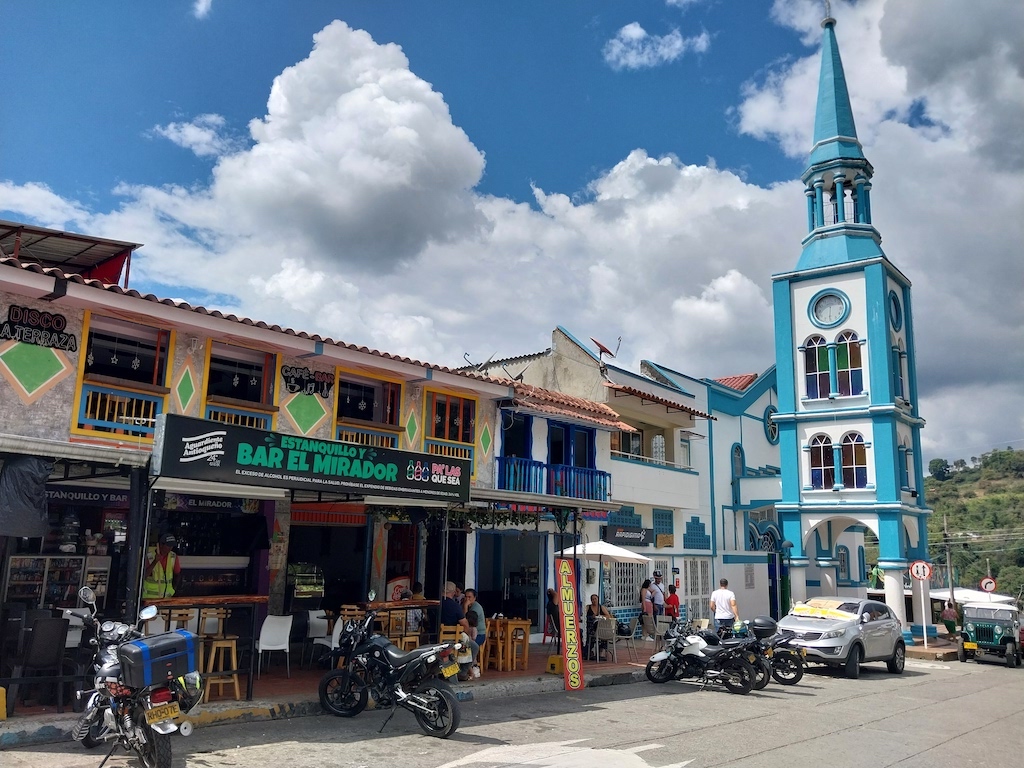
It was Sunday and it was a lively crowd, especially around bar El Mirador.

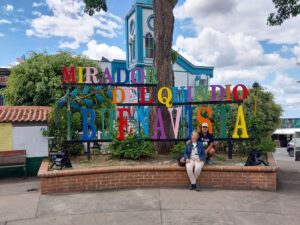
We stopped to take a look around the square. In the middle of a square are the colorful letters “Mirador del Quindío Buenavista.” Also there is the beautiful -white and blue- Iglesia Nuestra Señora del Carmen.

We also saw restaurants offering a cheap daily menu, such as El Social Buenavista Restaurante Bar.

Several people had recommended we have lunch at Restaurante Concorde, which is located between Pijao and Buenavista. Not only for the good food but also for the beautiful view over the green hills.

photo @ Restaurant Concorde

But…we had set our sights on a cup of coffee and -after our brief stop in the village-, we continued the ride to Terazza San Alberto.

When we got there, the view was indeed beautiful and we chose a table with the best view.


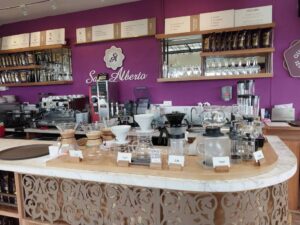
Meanwhile, we were given the menu and could choose from different methods of preparing coffee, using different filters.

We kept it simple because we were in the mood for a cappuccino. Our cappuccino was ok but could have been a little stronger as far as we were concerned.

We stayed a while to enjoy the view before getting back into the car.

#ColombiaMyWay tip: You can also do a coffee tour or workshop at Terrazza San Alberto. You have to book this in advance, though.

How to get to Buenavista?
We arrived by car with driver Angelo, who took us from our glamping in Calarcá to Buenavista and Pijao, where we would stay 2 nights. The drive took about 45 minutes. If you come from Salento or Filandia, first catch the bus to Armenia and from there travel on to Buenavista. You can walk to Terrazza San Alberto, but this is steep uphill. You can also take an iconic Willy Jeep, for a short ride.

The bus tickets to Buenavista can also be ordered online from the Coomoquin bus company, using this link.

#ColombiaMyWay Tips

Tip #1
If you have a little longer, you could also stay overnight in Buenavista and take day trips to Pijao and other villages in the area.

At Alojamiento Rural Café Yarumo you can stay overnight and do a coffee tour with Don Leo. Don Leo is a colorful, interesting man and a local celebrity! You can find more info about the coffee tour on his Instagram.

Near Buenavista, you will also find accommodations in a higher price range, such as La Cima Eco Hotel, La Font Ecolodge, Finca Tradicional El Balcón, Casamalva villas and Eco glamping Cordillera.

Tip #2
Want to grab lunch or a drink at Terrazza San Alberto and Café Concorde? Then keep in mind that Sunday is a popular day among locals for visiting Buenavista. If you go early in the morning, it’s usually still quiet.

Tip #3
It’s not just coffee that rings the bell in Buenavista. You can also paraglide there, for example. We did not do this, but the driver who took us to Buenavista could heartily recommend this tour operator.

You can also book a paragliding trip from Salento, with transportation there and back to Buenavista. Check the link for more info.

Tip #4
From Buenavista, you can easily travel on to Pijao, which is 12 kilometers away. Explore the colorful town center and observe village life from the square. You get there by Willy jeep (approx. 30 min.).

Colombia My Way

Travel Guide Filandia

Home 9 Category: Travel guide Coffee Triangle ( Page 2 )

About Filandia

In this travel guide Filandia, you will find everything you need to know about this authentic village in the Colombian coffee region, 20 km from the popular Salento. Filandia is easily accessible by Willy Jeep from Salento or by bus from Armenia or Pereira. The village is located on an altitude of 1900 meters and has about 12,000 inhabitants. The name Filandia translates as “daughter of the Andes.” It is a Unesco World Heritage Site with a rich tradition.

Although the village is a lot less famous than Salento, it has built its own reputation, especially in the gastronomic field. Indeed, with a number of excellent restaurants, Filandia is known as the gastronomic hotspot of the Colombian coffee triangle.

Despite Filandia being known as the “less popular sister of Salento,” it is certainly not a sleepy village like, for example Pijao. Especially on weekends it is crowded with Colombian tourists.

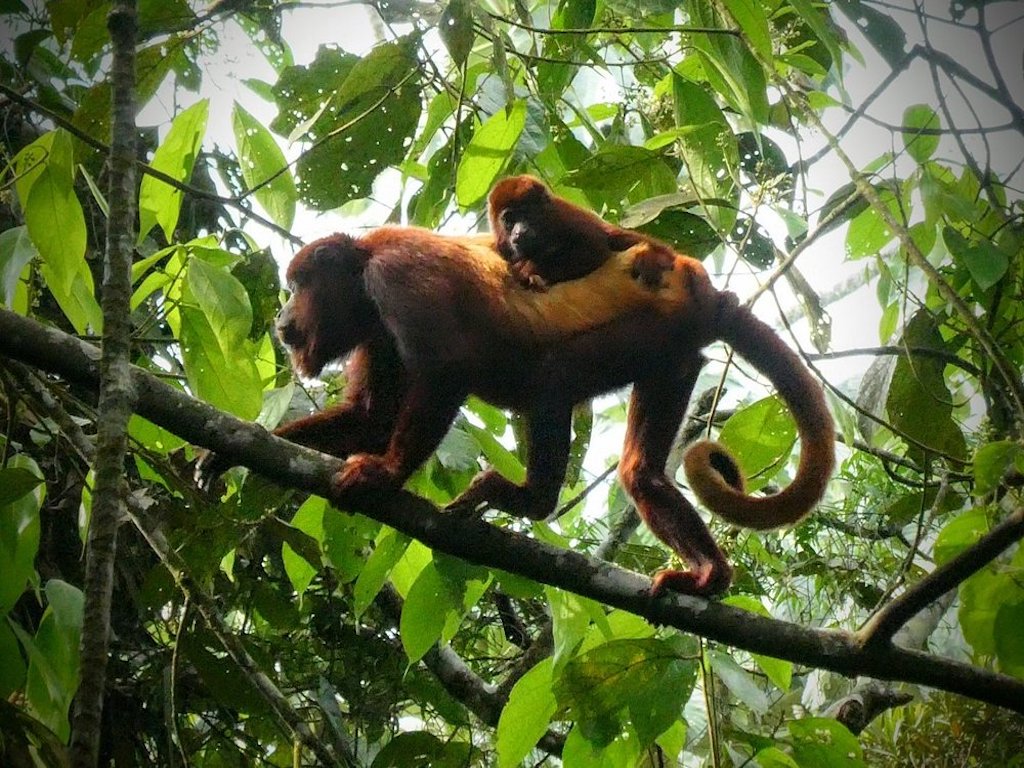
Filandia has a lively coffee culture, there are a number of small museums and also in terms of nature, there is much to enjoy in the area around Filandia. For example, the village is close to Barbas Bremen Nature Reserve, home to 200 different species of birds and howler monkeys.

Our Travel Guide Filandia tells you how to get to Filandia, what is there to do and what are the best areas to stay in Filandia. We also include tips for the best hostels and hotels, cafes and restaurants and useful practical information and tips for your trip. If after reading this travel guide you are in doubt whether to go to Filandia or Salento, read this article comparing the two villages and see which one suits you best.

All about Filandia

How to get to Filandia


What to do in and outside Filandia
Where to stay in Filandia?
The best restaurants in Filandia
Practical information about Filandia

Practical information about the coffee triangle

Home 9 Category: Travel guide Coffee Triangle ( Page 2 )

In this guide you will find practical information about the coffee region: how is the climate, how do you pay, what is the best time to travel, how many days do you need and how is the safety in the Colombia’s coffee region. Keep on reading for useful tips about a stay in the coffee triangle.

Climate

The coffee triangle is a hilly to mountainous region, with towns that are more than 2,000 meters above sea level, such as Manizales in Caldas. The climate is tropical, with warm days and nights that can cool off considerably. The average temperature there is around 22 degrees. Caldas is more mountainous, making it colder there than in lower-lying Quindío.

Best travel period

The coffee triangle can be visited year-round. It rains a lot, especially in the months of April/May and September through November. We have been to the Zona Cafetera twice, the first time in March 2019 and the second time in late September 2024. In the month of March, there were brief showers in the afternoon hours. In late September it also rained mostly in the afternoon, but the showers were heavier and lasted longer. We also had conversations with locals about the weather and they told us that the rainy season in Salento is actually no longer a rainy season and the dry season is no longer a dry season. Because of El Niño, everything has changed and the weather is no longer really predictable. Around Christmas and New Year’s period is the high season, from mid-December to mid-January. Easter week and (long) weekends are also very busy in villages like Salento and Filandia, so if possible, avoid these periods. Harvest times for coffee beans are April/May and Oct/Dec. For most action on the coffee plantations, that is the best time to visit the coffee triangle.

Events:

  • January: Carnival of Riosucio/Caldas
  • March: Risaralda bird festival in Pereira
  • June: Fiesta Internacional del café in Calarcá (Quindío).
  • October: Fiestas Cuyabras de Armenia, celebration of the anniversary of the city of Armenia

How many days do you need?

This depends entirely on what you want to do. If you are only going to Salento and the Valle de Cocora, then 3-4 days is perfect. If you want to see more of the coffee triangle and maybe also do a multi-day trek in Los Nevados National Park, then you can easily entertain yourself for 2 weeks. Read on for sample itineraries and more information about the coffee triangle.

#ColombiaMyWay tips
#Tip 1
Fly from Bogotá to Armenia and start your journey in the coffee triangle in Quindío, in the south of the coffee triangle. After this, climb up through Risaraldas to Manizales, where you end your journey in the coffee triangle. From here fly back to Bogotá or continue by bus to Medellín
#Tip 2
Click here for a sample route in the coffee triangle

Important info A-Z

Can you use ATMs in the coffee triangle? Are credit cards accepted, is the coffee triangle safe, where can I find a doctor or dentist and what should I bring with me to the Zona Cafetara? You can find this and other useful information about the coffee triangle here.

Drinking water

Water from the tap is not drinkable. If you don’t trust the hygiene anywhere, watch out for ice cubes, salads and uncooked vegetables.

Money
  • You can safely use debit cards. In the larger cities, it is best to use (safe) ATMs in shopping malls. Banks all have their own rates for ATM transactions
  • Credit and debit cards are accepted in most larger stores and restaurants in the cities. If you travel off the beaten track, you can often only pay in cash
  • We could not pay with US$ anywhere. In Salento we exchanged some dollars (at an unfavorable rate). If you withdraw larger amounts, it is more favourable to go to an ATM than exchange dollars or euros
  • $1=about 4000COP. Check here for the current exchange rate: exchange rate Colombian peso
Locals & language

Little English is spoken in the coffee triangle, so a basic knowledge of Spanish is very helpful. Still, you can usually get by even if you don’t get beyond a few words of Spanish. The locals are generally very helpful and patient and ready to help you, even if it is in sign language -:)

Medical

Vaccinations

There is no yellow fever or other vaccination required for the coffee triangle. Click here for general medical information in Colombia.

Medical aid
There are services such as Angeles Al Llamado that can come to you if you need a doctor’s consultation in the coffee triangle. Want to know more about this service? Then read here about our own experience with the Angeles Al Llamado.

Hospitals

  • Armenia: Hospital San Juan de Dios
  • Pereira: Hospital Universitario San Jorge
  • Manizales: Hospital Universitario de Caldas

Dentists

  • Armenia: Dentisalud Armenia
  • Pereira: Sonrident 160
  • Manizales: Vive Dental


What to bring
  • Clothes in layers! It’s warm during the day, but it can cool off considerably at night. If you are going to Los Nevados National Park, prepare for low temperatures anyway. Bring clothes that you can combine with each other; a t-shirt short sleeve, t-shirt long sleeve, thin sweater and a fleece jacket.
  • It rains frequently (especially in the afternoon), so bring a rain jacket or poncho
  • Hiking shoes
  • Flip flops and possibly a bathrobe for the thermal baths


Supermarkets and drugstores

Opening hours
Supermarkets are generally open from 8 a.m. to 9 p.m. Some drugstores are open 24/7.

Supermarkets

  • Éxito, Jumbo and Carulla are popular supermarkets. Carulla is a more expensive supermarket that sells many imported products. In Pereira you will also find the Supermercado Surtifamiliar and in Manizales Mercaldas. Super Inter has several supermarkets in the coffee triangle.
  • At the larger supermarkets such as Éxito, medicines are also sold.
  • Tienda Olímpica; medicines are also sold here in the Drogerias Olímpica 24/7
Safety

The Coffee Triangle is one of the safest regions of Colombia. In the larger cities, you  need to be more cautious, especially in Pereira.
ATM’s
Use ATMs in shopping centers and supermarkets where you can safely withdraw cash


Wifi

Most larger hotels and hostels have wifi, at least in the common areas. If you travel off the beaten track, there is often no or unstable internet.

Best hotels for your trip to the coffee region

Best hotels for your trip to the coffee region

Home 9 Category: Travel guide Coffee Triangle ( Page 2 )

Where to spend the night?

The best hotels in the coffee region can be found here. Whether you’re looking for a tree house hostel or finca in Salento, Filandia or Armenia; a spa hotel near Termales Santa Rosa de Cabal; a luxury lodge in the middle of nature in Pereira or a coffee hacienda in Manizales. Keep on reading for our tips for the best hotels in the coffee region for every budget.

$ price range up to $35

$$ price range $35 – $60

$$$ price range above $60

Armenia

$$$

Salento

Find a hotel on the map

Transportation in the Colombian coffee triangle

Home 9 Category: Travel guide Coffee Triangle ( Page 2 )

How to get there

How to get to the Colombian coffee triangle? Transportation to and in the coffee triangle is well organized. The major cities are easily accessible by plane and the smaller cities such as Salento and Filandia and villages such as Pijao and Buenavista are easily accessible by bus. The public transportation network is extensive, with several buses daily. Air travel is the most comfortable way to travel from Bogotá to the Coffee Triangle. Tickets are relatively cheap and you avoid the winding roads through the mountains. Also check here for different modes of transportation once you are in the coffee region.

(updated November 2024)


By plane

Airports

  • Pereira (Risaralda) : Matecaña airport (PEI)
  • Armenia (Quindío) : El Eden airport (AXM)
  • Manizales (Caldas): La Nubia airport (MZL).

Flights

  • Bogotá – Pereira (55 min), including Latam, Easyfly and Avianca
  • Bogotá – Armenia (1h), including Latam, Easyfly, Avianca and low cost airline Wingo
  • Bogotá – Manizales (1h), including Easyfly, Avianca.
  • Medellín – Armenia (50 min) o.a. Avianca
  • Cartagena – Pereira (1.25h), including Avianca

#ColombiaMyWay tips

From Armenia, Pereira and Manizales you can travel further to Salento and the other villages in the coffee region. Check the links below for more information:

How to get to Salento?
How to get to Filandia?

    By bus / car

    Bus

    • Shortest route: Cali – Pereira – COP 56,000/€15 (3.30h)
    • Popular route: Medellín – Manizales -COP 70,000/€19 (5-6h)
    • Longer route Bogotá – Armenia COP 75,000/19€ (9h).

    Car
    Driving yourself to the Coffee Triangle is of course also possible, only the road through the mountains from Bogotá is a challenge, especially if you have no experience with traffic in Colombia. In the Coffee Triangle itself, the roads are generally good. Alternative to driving yourself to the Coffee Triangle is to rent a car at your destination.


    Transportation in the Coffee region

    Once you arrive in the Coffee Triangle, there are several (fun) options for getting around. The Coffee Triangle is not a mega large area, yet you are often on the road longer than you think in advance when you look on Google Maps. Because of the many mountainous roads, you won’t get from A to B very quickly.

    Bus, Willy Jeep, Chiva

    Bus

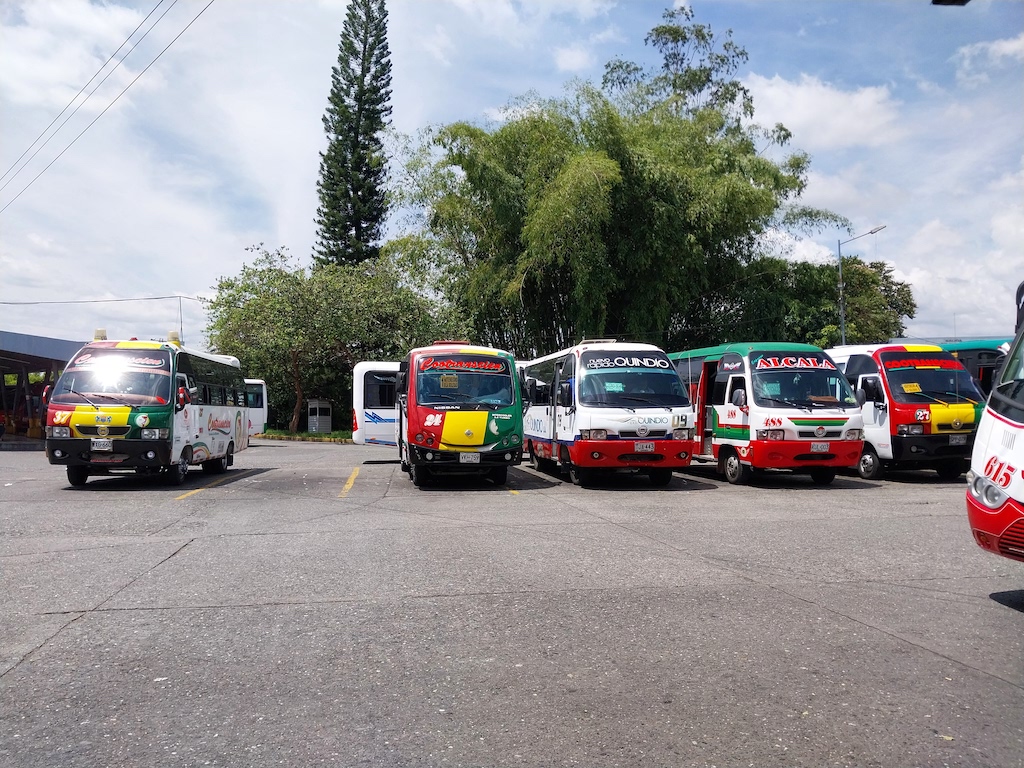
    Buses run very frequently in the coffee triangle and are an inexpensive way to get to your destination. Depending on traffic, you can get to most places in the coffee triangle in 1-2 hours.
    Average travel time/price:

    • Pereira-Salento 1h. COP 8,800/€2.40
    • Armenia-Salento: 45 min. COP 5,300/€1.45
    • Manizales-Pereira: 1¼ h COP 15000/€4
    • Manizales-Armenia: 2 ¼ h COP25000/€6.75
    • Pereira-Armenia: 1 h COP9000/€2.45
    • Pereira-St.Rosa de Cabal: 45 min.COP3000/€0.85

    Willy Jeep

    You can’t avoid it; the Willy Jeep, the main means of transportation in the coffee triangle. The Willy Jeep is a popular way to get to the Valle de Cocora, among other places. Price Indication

    • Salento-Valle de Cocora: 8000COP return
    • Salento-Filandia: 5500COP, you pay for Filandia 2x one-way ticket
    • The jeeps go about every hour and only leave when they are full!
    • Prices may vary with the season

    Chiva

    Chivas are often used as a means of transportation in the more remote areas. The buses are easy to recognize; colorful and painted in cheerful colors, especially yellow, blue and red. Each Chiva is a work of art in itself.

    Partybus At night, some Chivas are transformed into “Partybus” and you can take a ride on them, with music on board, lots of ambiente and Aguardiente!

    Rental car, Uber, taxi, private transfer

    Uber
    Uber is available in the larger cities like Pereira, Armenia and Manizales. If you want a taxi serice in smaller cities like Salento, you can take a taxi (or the popular Willy jeep) from the central Plaza.
    Taxi’s
    For short trips around town and to and from the airport, taxi’s (or Ubers and other Apps) are a great option. For longer trips, a car with a private driver is more common.
    If you travel off the beaten track in the Coffee Triangle, public transportation is sometimes limited. A rental car, private transport or taxi is then often the only way to get to your destination.

    Car rental
    The roads are generally good. There are special coffee car routes, which you can download into Google maps via the website Rutas del Paisaje.  If you drive a lot on unpaved roads, a higher car is recommended.

    Private transfer
    Don’t feel like driving yourself or taking the bus? Then private transportation is an option for longer trips. This can often be arranged through your hotel. The drivers are usually excellent guides, adding a personal touch to the trip. Also, if you want to take a moment to withdraw money, have a cup of coffee or run an errand, this is usually no problem. If you can share the cost with a travel partner, then private transportation is affordable. If you travel alone, the costs can add up quite a bit. Prices are around 150,000 COP (37.50€) for a 1.5h ride and around 250,000 COP (62.50€) for a 2.5h ride.