Carnival in Barranquilla

carnival in barranquilla

Partying with the locals at Colombia’s biggest party

Home 9 Author archive for J ( Page 17 )
The carnival in Barranquilla is the second largest carnival in the world. Rio de Janeiro may host the largest carnival, but in Barranquilla it is also a mega event. The streets are transformed into a huge street party for locals and tourists, with live bands, parades and traditional Colombian music and dance (Cumbia, Merengue, Mapalé, Salsa, among others). The city revolves around carnival for 4 days and many businesses are closed . With the pre-carnival events included, the carnival lasts an entire month. In 2003, the carnival of Barranquilla became recognized by UNESCO as a World Cultural Heritage Site.

Quien lo vive, es quien lo goza; is the slogan of the Carnival of Barranquilla or: Live it and enjoy it……and enjoy it the Barranquilleros can enjoy it like the best!

Here you will read everything you need to know about carnival in Barranquilla, what are the most beautiful parades and what are the best parties before and after carnival. You will also find tips and tricks and useful information for planning your trip to Barranquilla carnival.

The program

This is the program of the main events in 2026. (updated in July 2025)

Saturday, Feb. 14:
Batalla de Flores (flower parade) 1 p.m. / Via 40
The opening parade with floats, folklore and dance groups and many beautiful costumes. Radiant centerpiece is the queen of the carnival. There is a theme/parody during the parade every year; politicians and celebrities are popular subjects of ridicule among the groups.

Sunday, Feb. 15:
Gran Parada de Tradición y Folklore (grand parade): 1 p.m. / Via 40.
A parade with dance groups and the most beautiful folklore groups, without floats. More than 300 groups participate in this parade every year.

Monday, Feb. 16:
Gran Parada de Comparsas (big parade for groups) : 1 p.m. / Via 40.
Also called the “big fantasy parade.” This is a more international version of the great
parade featuring traditional, local and international music, such as the Cumbia, Salsa, Samba and Reggaetón.

Tuesday, Feb. 17: Joselito se va con las Cenizas (Joselito leaves in ashes): Calle 84
On the last day of Carnival, the death and burial of “Joselito” takes center stage. Joselito symbolizes the joy of carnival. Thousands of people go through the streets carrying Joselitos, transported on stretchers or in coffins. If you want to experience Carnival in Barranquilla from A-Z, this is an absolute must!

Prior to the carnival parades, there are many events, such as the popular evening parade La Guacherna, on the Friday before Carnival. There is also the Carnaval de Los Niños (children’s parade) and the coronation of the Reina del Carnaval (Queen of Carnival). As of Jan. 17 already begins the pre-carnival program. Read on below for the best pre-carnival events.

Pre carnival events-the highlights

Dates/prices to be confirmed
Guacherna, 8 p.m. Cathedral Metropolitana, Cra 45
Evening party with lots of dancing, cumbias, groups and lights.
You can buy a ticket to the Palco Guacherna from COP90,300 /$23

Dates/prices to be confirmed:
Noche del Río, 6 p.m., Carrera 50
An evening with lots of music and dancing on the Río Magdalena
You can buy a ticket for the Noche del Río from COP17,000/$4

Dates/prices to be confirmed:
Coronation of the kings and queens of the carnival, 20.00u.
Grand event that takes place at the Estadio Romelio Martinez, featuring famous artists such as Carlos Vives. Tickets can be purchased from COP 109,500/$27

Dates/prices to be confirmed:
Baila la Calle, 8 p.m., Carrera 50 con Calle Murillo. Dancing on the largest dance floor in the world.
Buy a ticket for any of the evenings from COP27,000/$7

Here you buy the tickets online, using an international credit card. For more details, including ticket information and updated event schedules, you can visit the official Carnival website.

ColombiaMyWay Tips

How do you plan your trip to Barranquilla’s carnival?

Read our 5 tips here!

Tip #1
Book your hotel well in advance!
Carnival in Barranquilla is very popular, also among Colombian tourists. Hotel prices go up tremendously with Carnival and rooms are quickly booked. Check here for our tips for hotels near the carnival route and more tips for booking the nicest hotels in Barranquilla.

Tip #2
Buy a ticket for the covered grandstand (palco)

  • At the palcos you can sit -for the most part- in the shade. Other services at the palcos are: food and beverage sales, restrooms and music. There are large palcos like this one:

And small -mini- palcos like this one:


  • Tickets are usually sold in a 3-day package. Prices range from COP 99,000/25$) for the minipalcos up to COP 400,000/100$ for the most expensive package at the palcos. The large palcos offer more comfort, better views and more shade than the small palcos. You can book tickets online with tuboleta where you can pay with an international credit card.
  • When purchasing your ticket, check what exactly is included with your ticket. Seats are not reserved, so you should arrive early anyway for a good spot. You are not allowed to bring your own food to the palcos.
  • If you prefer not to buy tickets online, you can also buy tickets locally, but keep in mind that last minute prices are higher. Beware of fake tickets offered on the street. Hotels sometimes also have some tickets available at the last minute
  • If you are only in Barranquilla for 1 day for carnival, go to the Batalla de Flores

Tip#3
Practical tips for the parades

  • Be open to interacting with the locals; they are friendly and want to have fun just like you. It helps if you speak a word of Spanish. You’ll probably have to get used to the Costeños’ pronunciation, which is different than in cities like Bogotá and Medellín.
  • Bring a hat/cap and sunscreen
  • Hats and colorful accessories can be purchased at stalls along the parade route
  • The weather is hot and humid, so drink plenty of water
  • Bring an extra shirt and prepare to be sprayed with foam and powder, the “weapons” of carnival. Tourists are sought-after objects!
  • Bring tissues and hand sanitizer
  • After the parades, you can continue partying at the street parties on Calle 70 and Calle 84. The parties start around sunset and continue until early morning. la Troja, is a popular place to continue partying after carnival.
  • The carnival parades, unfortunately also attract thieves, who sometimes use the sprays to distract tourists while they steal their belongings. Be careful with your valuables, take as little as possible and store your money in a thin belt under your pants.

Tip #4
What to do after carnival?
It’s worth spending a few more days in Barranquilla after Carnival. There is plenty to do and the Costeños (locals) are hospitable and proud of their culture. They are only too happy to tell you about it. Check out our travel guide Barranquilla for tips on what to do in Barranquilla, where you can enjoy good food, transportation and much more. The carnival museum is worth a visit if you want to stay a little longer in the carnival atmosphere. Also nice to visit before carnival so you already know e.g. about the history of carnival in Barranquilla and the origin of the costumes. In short: be surprised by one of Colombia’s less touristy cities!

Tip #5
Check out this round trip from Barranquilla to Santa Marta
Are you traveling further along the North Coast after your stay in Barranquilla? Then check out our tips for a round trip from Barranquilla to Santa Marta.

Travel Guide Barranquilla

Home 9 Author archive for J ( Page 17 )

Barranquilla

In this travel guide Barranquilla you will find everything you need to know for your trip to Barranquilla: what are the best neighborhoods to stay in, what to do, where to celebrate carnival, what about safety and other practical information: you can read it here.

The golden gate of Colombia
Barranquilla, with 1.2 million inhabitants, is the 4th largest city in Colombia. The city on the Caribbean coast is located on the Magdalena River and has the largest port in Colombia. Due to its strategic location, Barranquilla is also known as the Puerta de Oro (Golden Gate).

2nd Largest Carnival in the World
Most people know Barranquilla for its carnival, the largest carnival in the world after Rio de Janeiro. Barranquilla does not have the tourist attractions of Cartagena, or the beaches of Santa Marta, yet the city has enough to do to keep you entertained for a few days, even if you don’t come for the carnival. For example, there are excellent restaurants and lively bars and interesting museums. In 2020, Barranquilla won the World Travel Award for best new cultural destination in South America. If you are not in Barranquilla during carnival, at least visit the carnival museum to get into the carnival atmosphere!

Shopping city for every budget
The modern shopping malls in Barranquilla, are generally a lot cheaper than the more touristy cities like Cartagena, Medellín and Bogotá.

Do you want to visit this lively city? Than check out our Barranquilla travel guide with handy tips & tricks for your trip to Barranquilla!

All about Barranquilla

How to get to Barranquilla?
What to do in Barranquilla?
Hotels and hostels in Barranquilla
Restaurants in Barranquilla
Transportation in Barranquilla
Cheap Flight Tickets
Practical info about Barranquilla
Shopping in Barranquilla
Carnival in Barranquilla

Hikes Tayrona National Park

Home 9 Author archive for J ( Page 17 )

There are several hikes to do in Tayrona National Park. The hiking trails run through the jungle to some spectacular beaches , where you can enjoy nature, wild monkeys and beautiful views. The hike most travelers do is from Zaino -thru Arrecife- to the most beautiful (and busiest) beach Cabo San Juan. The hike from Calabazo to Playa Brava is a lot less popular. Here you hike off the beaten track and won’t encounter many tourists.

In this article you will find information and tips on these and other hiking trails from the Zaino and Calabazo entrance to Tayrona National Park. This will help you know which hike suits you best!

Trails – ZAINO ENTRANCE

Zaino (40 km. from Santa Marta)

Opening hours of the main entrance of Tayrona National park are from 7 a.m.-5 p.m., you can enter until noon. From Zaino, you can access the beaches Cañaveral, Castilletes, Arrecife, La Piscinita, Cabo San Juan, Arenilla, La Piscina, Playa Nudista and Boca del Saco

Cañaveral is the starting point of two trails: the hike to Cabo San Juan via Arrecife (around 2h one way) and the -not popular- 9 Piedras Trail (1h). From the Zaino entrance, you can start hiking right away (about 4 km) to Cañaveral, or take the shuttle (around COP5000).

The shuttle buses leave when full and you usually don’t have to wait long. The shuttle bus is recommended, because the path to the beginning of the trail is not spectacular. From here you can continue walking or horseback riding.
We ourselves had doubts about horseback riding and we ended up not doing it because we did not want to miss the experience of the hike and we doubted whether we would do any good for the well-being of the horses.

Cabo San Juan Trail via Arrecife
The trail to Playa Arrecife/Cabo San Juan is a well-maintained path that alternates between jungle and beach, over a wooden boardwalk and boulders. The path goes up and down but is not steep and is well manageable.


Several times we saw cute monkeys that we could observe very quietly up close.

Playa Arrecife can be reached (depending on your pace) in an hour.

Just before Playa Arrecife you will find vendors selling ice creams and coco frio.

At Playa Arrecife you can have some food and drinks in the restaurant.

Here you can find more info about staying near Arrecife. Just past Arrecife you will find Bera bakery, where you can buy delicious chocolate caliente (and go to the toilet!). From here it’s about an hour’s walk to Cabo San Juan, where you can swim and snorkel and enjoy the view of the bay.

At Cabo San Juan you will find a restaurant and a store. Here find more info about staying overnight at Cabo San Juan.

The 9 Piedras trail is located near Cañavaral and leads through some large boulders to a lookout point, from which you have a nice view of the park. The large stones are of cultural significance to local indigenous communities and offers scenic views of the jungle and coastline.

Since most people do the Cabo San Juan trail, this trail is generally very quiet.

On this trail, you can camp at Playa Arrecife, Castilletes, Cañaveral and Cabo San Juan. Hotel Ecohabs Tayrona is located in Cañaveral at the beginning of the trail. You can also stay spend the night at cabañas Arrecifes and Ecohabs Cañaveral.

    Trails – CALABAZO ENTRANCE

    Hike to Playa Brava

    The Calabazo entrance (25 km. from Santa Marta) is a 10-minute drive before the Zaino entrance. Opening hours are from 7 a.m. – 3 p.m. You can enter until 11 a.m. There are mototaxis in Calabazo, if you don’t want to walk the first 3 km. A mototaxi costs arout COP20,000/$5.

    Calabazo is the entrance for the hike to Pueblito (approx. 2h) and Playa Brava (approx. 3.5h). From Playa Brava you can continue to Cabo San Juan (approx. 2h).  (update 2023: Pueblito is closed to the public, but you can pass it to go to Playa Nudista, about 4h from Calabazo). 

    The closure of El Pueblito has been in effect since 2019 at the request of the indigenous communities, particularly the Kogi people. With the closure, the indigenous community can protect this sacred site and allow for traditional rituals and environmental preservation.

    Because this hiking trail is much quieter than the hiking trail to Cabo San Juan from the Zaino entrance, you are more likely to spot wildlife here.

    You can stay at hotel Playa Brava Teyumakke in a cabana or tent.

    ColombiaMyWay tips

    Tip #1
    If you’re still not sure which hike is best for you, check out our additional tips here:

    Hike from Zaino if you…
    Want to do a hike that is not too intense, on a well-established trail where you can visit several beaches. The trail from the main entrance to Cabo San Juan del Guía is very doable. The trail alternates between wooden decks and rocks and boulders.

    The trail does go up and down but is not steep. You cannot get lost as the trail is very well marked. This is the most popular entrance to the park so it can get very crowded on this trail. It takes you about 2 hours to get to Cabo San Juan. Tip: If you do not want to do the whole route to Cabo San Juan, walk in about an hour to Playa Arrecifes, which is in the middle of the park.

    Even if you don’t walk the entire trail to Cabo San Juan, you can enjoy beautiful views of the coast and have a good chance of seeing monkeys up close.

    At Playa Arrecifes, you can have a drink and eat at the restaurant before walking back to the park entrance.

    Another option is to spend the night in a cabaña or tent/hammock in Playa Arrecife, so you can do the hike to Cabo San Juan the next day, splitting the hike into two parts.

    Hike from Calabazo if you….
    Have a good level of fitness and want to do a challenging hike, then spend the night on an isolated beach away from the many tourists. This is a steep, more difficult hike on a more challenging trail. Especially the first hour is steep. On this trail you will encounter far fewer hikers than from Zaino. This gives you a better chance of seeing wildlife along the way. The trails to Playa Brava and to Boca San Juan take about 3.5-4 hours. If you have the time, you can spend 1 or 2 nights at Playa Brava and then hike to Cabo San Juan and the Zaino exit in 1 day. This will take about 4.5 hours including a stop for a swim at La Piscina. Tip: Want to do this long route Calabazo-Zaino? Then start in Calabazo and not at el Zaino. The climb from Calabazo to Playa Brava is steep and then you have already had the most difficult part of the trip at the beginning. In Playa Brava there is nothing else, (not even a first aid post) but it is a cool place to chill.

    Tip #2
    Check out these itineraries for a multi-day stay in Tayrona National Park here

    Continue reading our Tayrona National Park Travel Guide for more information about  beaches, the best places to stay in and around Tayrona National Park, camping and more.

    Read about our own experience, during our first trip where we did the intense hike from Calabazo to Zaino (and got lost) and our second trip, that was part of our trip along the North Coast from Barranquilla to Santa Marta.

    Travel Guide Tayrona National Park

    Home 9 Author archive for J ( Page 17 )

    All about The Tayrona National Park

    In this travel guide Tayrona National Park, you’ll find everything you need to know for your trip to one of Colombia’s most popular national parks.

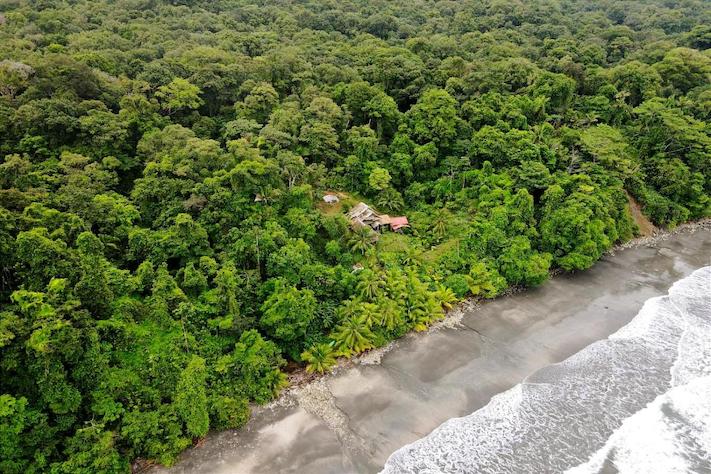
    Tayrona National Park covers 150km2 and is located between Santa Marta and Palomino. Its location is spectacular, between the Caribbean Sea and the mountains of the Sierra Nevada de St. Marta. In Tayrona national park you can make beautiful hikes on hiking trails that lead through the jungle to some spectacular beaches. On these trails you can spot wildlife, such as monkeys. At a number of beaches you can swim and snorkel, and there are several beautiful places to spend the night in the middle of nature. Also, you can chill in an ecolodge, camp in a tent and sleep in a hammock at Cabo San Juan. Just outside the park there is also a wide choice of cozy hotels and hostels.

    Tairona Indigenous communities
    Long ago, the Tairona Indigenous communities lived in Tayrona National Park and today their descendants, the Kogui, live in the Sierra Nevada. Along with other indigenous groups, they are closely associated with the park.

    Closing dates
    Tayrona is closed 3 times a year so that the indigenous groups can perform spiritual rituals and the ecosystem can recover.

    Closing dates for 2026 are:.

    • Feb. 1 to Feb. 15
    • June 1 through June 15
    • October 19 to November 2

    !!Update March 5 2026: Tayrona National Park re-opened for visitors. After a closure of 5 weeks to strengthen security and environmental protection, travelers can enjoy one of the most beautiful areas on the Caribbean coast again. New surveillance measures are in place. Some areas might still have limited access while environmental restoration continues. 

    ⚠️ Tayrona National Park CLOSED — Travel Update (February 19, 2026)

    Colombia has temporarily closed Tayrona National Park due to security concerns in the region, including road blocks and safety risks affecting visitors and staff.

    Although some local Indigenous communities have indicated limited reopening, this access is not officially authorized by Colombia’s National Parks authority. Tourism operations and guided visits remain suspended until further notice, so be aware of any people offering any services for Tayrona National Park.

    This is not one of the usual ecological closures, authorities say the park will remain closed until security conditions improve, and no reopening date has been confirmed yet.

    👉 If you’re traveling to Colombia soon, check official updates before planning your visit.

    On a tour, Tayrona combines well with other places on the Caribbean coast, such as Minca, Palomino, La Guajira, Ciudad Perdida and Cartagena. Check this link for the trip we took along the North Coast of Colombia.

    In this travel guide you will read everything you need to know to plan a visit to Tayrona National Park: what is the best time to travel, how to get there, prices, what are the best hotels and hostels in Tayrona National Park and beyond, what are the best hikes and the best beaches in Tayrona National Park.

    All about Tayrona National Park

    How to get to Tayrona National Park?
    Prices and check-in procedure
    Hotels and hostels in Tayrona National Park
    Hiking trails – hiking in Tayrona National Park
    Best travel time Tayrona National Park
    How many days in Tayrona National Park?
    Practical info about Tayrona National Park
    Beaches
    Camping

    Camping in Tayrona National Park

    Home 9 Author archive for J ( Page 17 )

    Camping in Tayrona National Park can be done at campsites in various locations on/ near the beaches in the park. For example, you can camp or sleep in a hammock at the popular Cabo San Juan beach, the quieter Playa Arrecife or near the Zaino entrance at Cañaveral or Castilletes. Prefer to camp off the beaten track? Then book a tent at the isolated Playa Brava beach, reached via the Calabazo entrance. “Wild” camping is not allowed; you must use one of the campsites in Tayrona National Park. In some places you can bring your own tent and only use the facilities, or rent a tent or sleep in a hammock. Here are tips for camping and sleeping in a hammock at campsites in Tayrona National Park.

    ColombiaMyWay tips

    Tip #1
    Come early and reserve your tent or hammock at the Zaino entrance; it’s first come first served. You can’t reserve your spot online, except for Playa Arrecifes and Playa Brava.

    Tip #2
    Before visiting Tayrona National Park, book a night in a hostel or hotel near the park (El Zaino)
    or Calabazo so you can be at the entrance early the next day to reserve your campsite. Due to the heat and high humidity, it is recommended that you hike as light as possible and leave your large backpack at the hostel. Continue reading for more information on camping in Tayrona National Park.

    Below is a list of campsites in the park.

    Campsites – ZAINO ENTRANCE

    Cañaveral

    • Location: the campground is a 10-minute walk from the spot where the shuttle drops you off, at the beginning of the hiking trail
    • Swimming is not allowed
    • From here you can do the 9 piedras hike. This is a trail which most visitors skip, as they usually walk straight through to Playa Arrecife and Boca San Juan. When we visited the park in Sept. 2023, the 9 piedras hike was closed due to maintenance.
    • Prices from COP40,000 ($10) for a tent


    Castilletes

    • Location: near where the shuttle drops you off, on the right side
    • Swimming is not allowed
    • Prices from COP40,000/$10 for a tent on a large finca. There are also a few private rooms.

    Playa Arrecife

    • Location: Arrecife is in the middle of the park about 50-60 min. hike from Cañaveral (the start of the trail) and 50-60 min. from Cabo San Juan
    • Swimming is not allowed at Playa Arrecife, but you can swim at Playa la Piscina, a 20-minute walk away.
    • Tip: Camping at Playa Arrecife is a good alternative to camping at Cabo San Juan. This is as “back to basics” as Cabo San Juan, but a lot quieter and less rush to get a hammock in time. Prices are a bit lower than at the popular Cabo San Juan. Just keep in mind that you are camping in the jungle and not at the beach
    • Prices: from around COP15,000/$4 for a hammock and from COP40,000/$10 for a tent. There are several campsites such as camping y cabanas Don Pedro, where you can book a hammock, tent, room or cabaña. Camping Tequendama Playa Arrecifes is on a spacious site, with plenty of space between tents for plenty of privacy. Facilities of this campground: hammocks, tents up to 4 people, toilets, showers, restaurant, laundry service, mosquito nets, safety deposit boxes, phone charging stations and wifi in common areas.
    • How do you book a hammock or tent?
      At the Zaino entrance (you can’t do this from the Calabazo entrance). Since Arrecife is a lot quieter than Cabo San Juan, you can probably still get a spot on site outside of busy periods as well.
    • Online via Camping Tequendama Playa Arrecifes. You can book a 2-person tent from $35 per night or a hammock (with mosquito net) for $15 pp.

        Cabo San Juan del Guía

        • Campsite near the most beautiful and busiest beach in Tayrona
        • Location: 2-hour walk from the El Zaino entrance
        • Hammocks cost around COP 40,000–60,000 per night. The hammocks at the Mirador are more expensive. You pay around COP30,000/$7.50 if you bring your own tent. 
        • Tent rentals cost about COP 140,000 for a double tent.
        • Prices may change and depend on the season and spot. The hammocks at the most beautiful spot near the watchtower (mirador) are the most expensive and the most quickly fully booked. Keep in mind that it can be quite windy at the Mirador!
        • Private cabañas: Approximately COP 250,000–400,000 per night, depending on the season and amenities.

        • Facilities: toilets, showers, restaurant, store, phone charging points, lockers, 24h electricity, snorkeling/masks available. A simple breakfast starts at COP8000/$2 and prices for lunch and dinner start at COP18,000/$4.50.
        • How do you book this campground?
          Book a hammock or tent at the Zaino entrance. The hammocks and tents are on the most beautiful beach in Tayrona, but this also means that most people go here and you have to rush for a spot. To get a spot, you need to be at the entrance early. You cannot book this campground from the Calabazo entrance. The tents and hammocks cannot be booked online. However, you can contact the operator for information by WhatsApp, number +573112589907. You can also contact them through the Instagram page of Cabosanjuandelguia. Booking in advance is tricky because it can only be done 1 day in advance and the reservation is only guaranteed with a 50% deposit through a Colombian bank account. Therefore, make sure you get to the entrance on time to make your reservation for Cabo San Juan.


        Campsite – CALABAZO entrance

        Playa Brava

        • Location: approx. 3h walk from the Calabazo entrance
        • Ecolodge Playa Brava Teyumakke is in an isolated location, which makes the experience of staying overnight in this accommodation extra special.
        • Swimming is allowed, but only if the sea is calm
        • Prices: you can rent a hammock or bring your own tent for COP25,000/$6. The price for a 2-person “safari tent” is around $60 per night.
        • Facilities: restaurant, wifi in common areas (at limited hours of the day)
        • How do you book your tent or hammock?
          You can make a reservation online at Ecolodge Playa Brava Teyumakke

        Continue reading our Tayrona National Park Travel Guide for information about beaches and more. Follow the link for an article about our trip along the North coast which we made from Barranquilla to Santa Marta.