Prices Tayrona National Park

Home 9 Author archive for J ( Page 18 )

Prices and check-in procedure Tayrona National Park

How much does an entrance ticket cost and what are the opening hours for Tayrona National Park? What are the prices for shuttle buses and mototaxis to the starting point of the trail? What do you need to bring with you? Why do I have to pay insurance and can I use debit cards at the ticket office? Here you will find answers to all your questions about visiting Tayrona National Park.

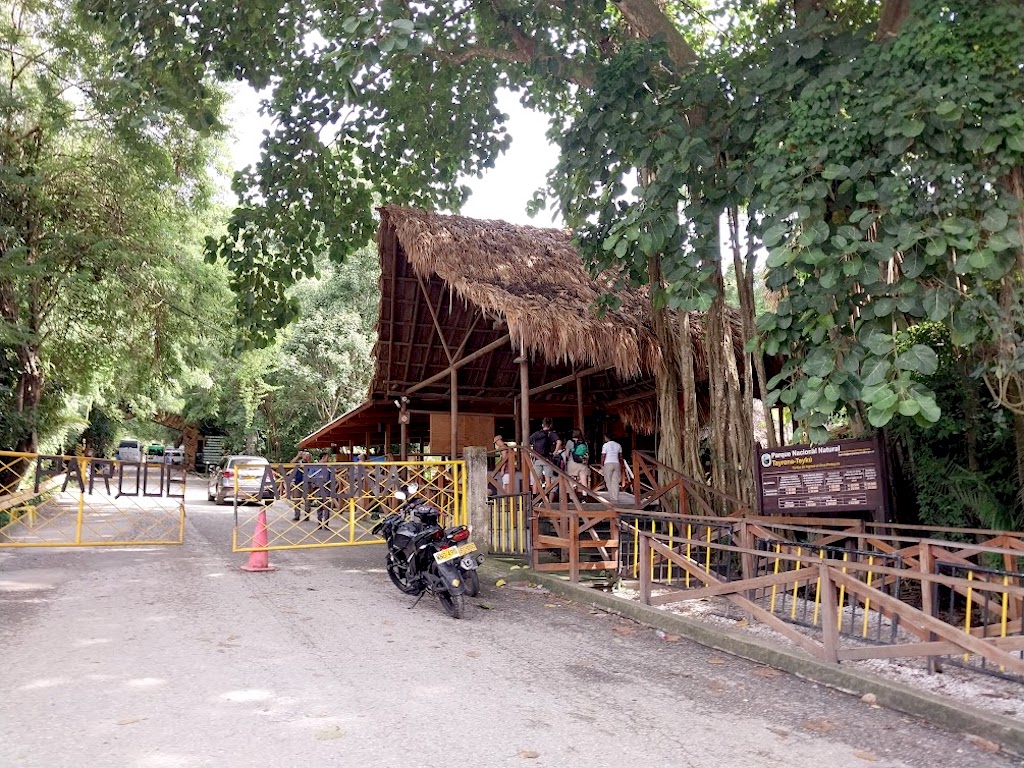
There are two main entrances where you can buy a ticket, at the Calabazo entrance and at the popular El Zaino entrance. The prices are the same.

Ticket and insurance payment (rates 2025).
Upon arrival, you must first pay the mandatory insurance of COP 7000/$1.75 (for each day you are in the park), after which you will receive a green wristband.

After this, you must go to the box office to pay the entrance fee. Prices are increased every year and depend on the season. In low season, you pay COP 77,500/$19.50. In high season* you pay COP 92,000/$23. The ticket has no time limit and you can use the ticket for several days. but not out and in, then you have to stay in park. We paid cash, but you can use debit cards at the ticket office, even though we heard from other travellers that the ATM machines don’t always work.

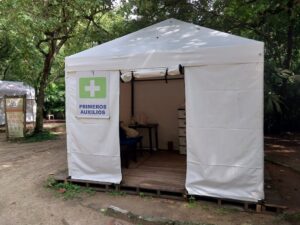
Honestly, we wondered at first if the mandatory insurance wasn’t nonsense. However, when we saw a first-aid post at the starting point of the hike and another one in Arrecife, we thought it was understandable that the insurance is mandatory. Good to know: there is no first- aid post on the hike from Calabazo to Playa Brava.
*High season:
June 15-July 15,
December 15-January 30, long Easter weekend and puentes (extended weekends during holidays)

Copy of passport
At the entrance they ask for a copy of your passport. We wanted to show our passport on our phone, but at our hotel they told us that sometimes the staff can act difficult about it and it is better to bring a copy. We heard from other travelers that a photo on the phone was also accepted. We were not asked for proof of yellow fever vaccination. We had heard in advance that you are required to watch a movie about Tayrona. There was a movie playing about the park but nothing was said to us about it. Payment went smoothly. 

ZAINO ENTRANCE
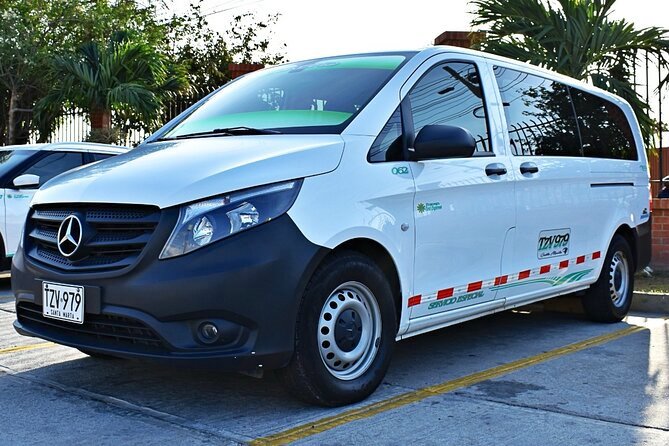
At the ticket office you will be asked if you want transportation to the beginning of the trail. If you want, you can show the receipt to the driver and for around COP 5000 you will then be taken by shuttle bus to the beginning of the trail, the sendero Arrecifes. (cash only) The vans to and from the trailhead, run every 10 min or when full.
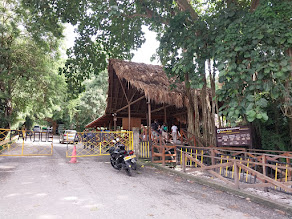
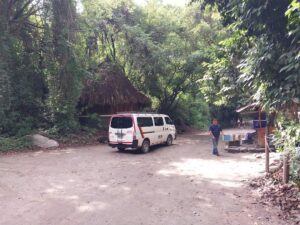
The path to the start of the trail is not very attractive to walk (see photo below), so we thought it was well worth taking the van.
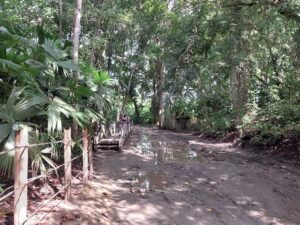
There are also motorcycles that can take you.
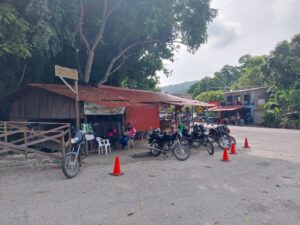
There are also horses at the beginning of the trail, with which you can ride to Cabo San Juan in 1.15h. You can also ride horses on part of the trail. See entrances and hiking trails for more info.

CALABAZO ENTRANCE
For around COP20,000/$5 you can take a mototaxi for the first 3 kilometers of the trail.

Continue reading here for more information about Tayrona National park; beaches, camping, the best places to stay in Tayrona National Park, what is the best travel period, how many nights to stay and other practical information for your visit to Tayrona National Park. Are you going on a tour of Colombia’s north coast? Then read here about the roundtrip which we made from Barranquilla to Santa Marta.

Where to stay in and around Tayrona National Park

Home 9 Author archive for J ( Page 18 )

Stay inside or outside the Tayrona National Park?

There are a lot of  accommodations in and around Tayrona national park. Whether you should stay in the park or outside, depends very much on what you want to do and what your budget is. Accommodations (and food and drink) inside the park are usually very basic and a lot more expensive than (just) outside the park, while from a hotel or hostel just outside the park you can still be in the park in 5 minutes.

Check here our tips For where to stay in Tayrona National Park: the best hotels and hostels in and near Tayrona National Park. Would you rather camp in the park ? Then continue reading here for information about the best campsites in Tayrona National Park.

Tips for booking your hotel or hostel

Check here our tips on where to stay in Tayrona National Park

Tip #1
Do you have the time and want to do several hikes in the park?
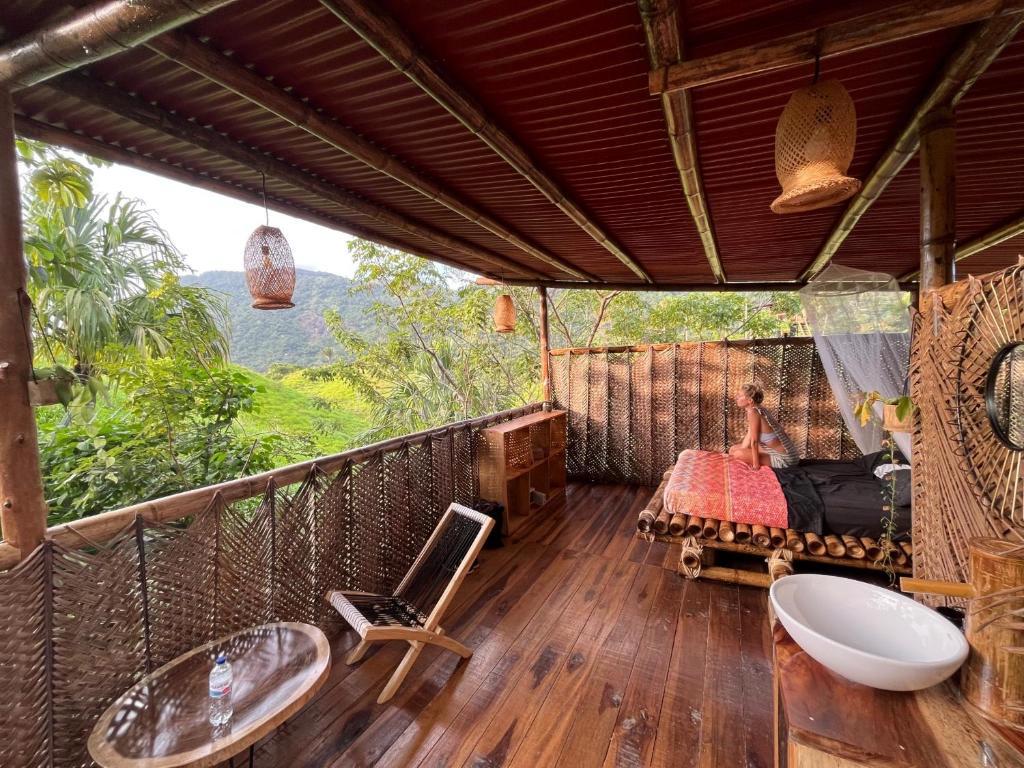
Then spend 1 or 2 nights in a hotel inside the park. You’ll experience the park without the crowds of many day-trippers, and you can head out early in the morning for a hike. Overnight stays in the park range from budget options like hammocks or tents to luxury ecohabs. There are also several mid-range hotels.
We recommend choosing a hotel or campsite that is not too close to the main entrance at El Zaino, where it tends to be busier, noisier, and further from the beaches.
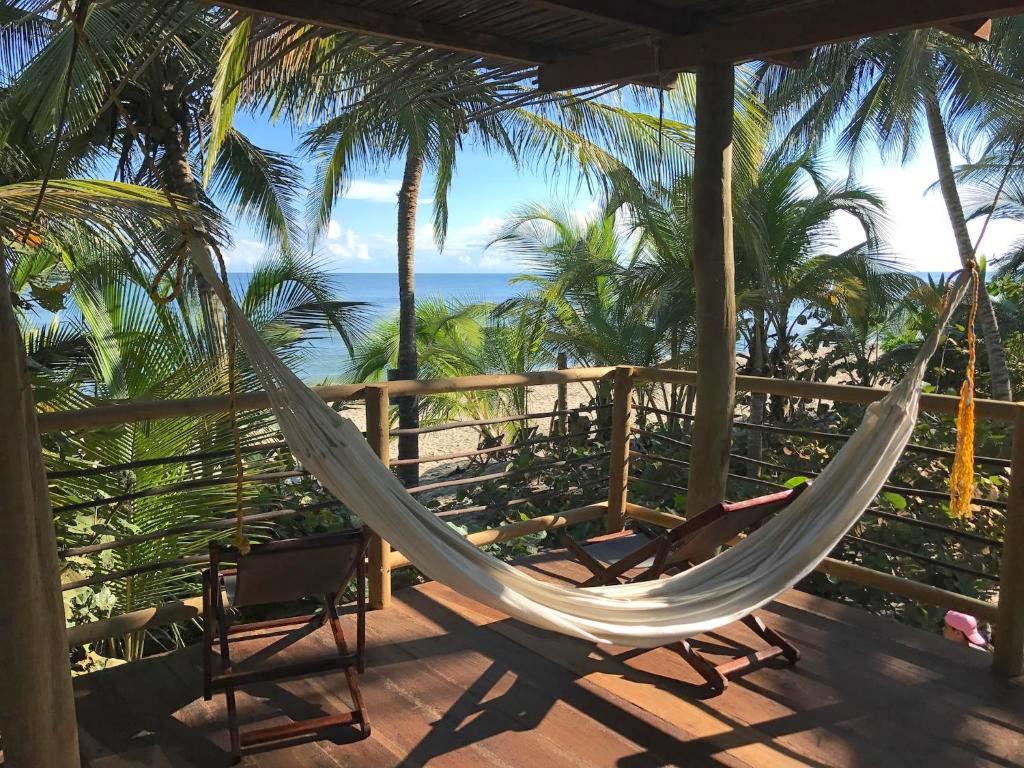
Tip: Cabañas Tequendama Playa Arrecifes Parque Tayrona is centrally located in the park and closer to the beaches.

Tip #2
Do you want to stay in an adventurous location, far away from most tourists?
Then Ecolodge Playa Brava Teyumakke (Calabazo) is probably more your thing.

Tip #3
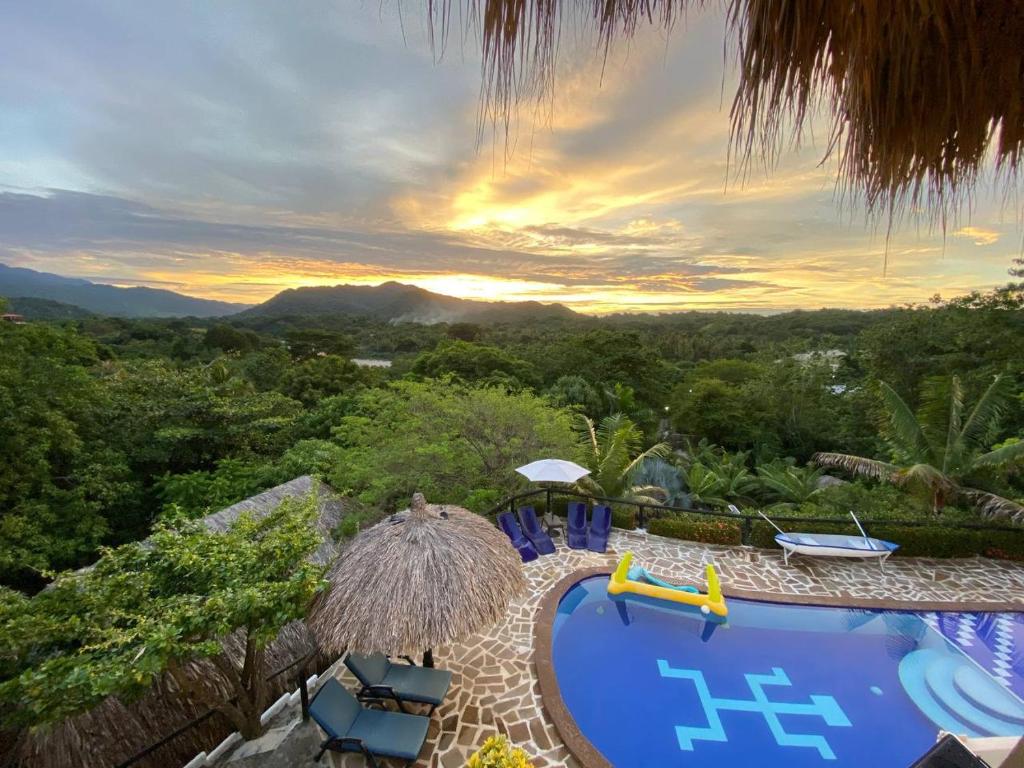
Do you want to relax after your hike in a comfortable hotel with a pool and/or spa facilities?
Then book one of the hostels or hotels just outside the park, such as Kantawa Eco Spa Hotel. This hotel is located in Calabazo, about a 15-minute taxi ride from the El Zaino entrance. We loved enjoying the pool with hydromassages, the jacuzzi, sauna, and Turkish steam bath after our hike in the park.
Another great option is the Senda Koguiwa Hotel, located right across from the El Zaino entrance.

Tip #4
If you prefer staying a bit farther away at the beach, there are several options within 10–25 minutes’ drive from Tayrona.
In Los Naranjos, Costeño Beach, and Taganga, you’ll find various beachside hotels within 10–25 minutes of the park.
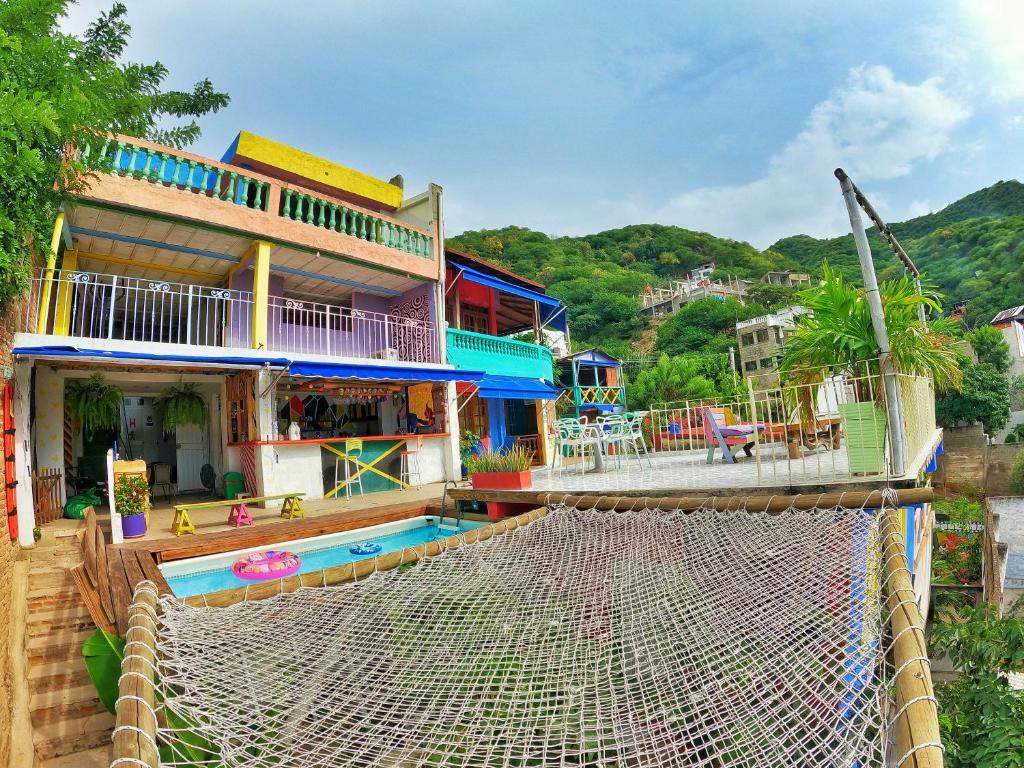
Just outside Tayrona in Los Naranjos, you’ll find a number of mainly luxury accommodations. Costeño Beach is a bit further and is a popular beach among backpackers, with many affordable hostels and cabañas.
Taganga is located about 5 km from Tayrona National Park and offers many budget-friendly hostels. You could stay here and take the boat to Cabo San Juan del Guía, if weather and sea conditions allow it.

Tip #5
Keep reading for even more tips for hotels and hostels inside and outside the park.
Would you rather sleep in a hammock or tent? Check our tips here


Hotels in Tayrona National Park

Hotels near Zaino entrance

Hotels near Zalabazo entrance

Beachfront hotels

Practical information about Tayrona National Park

Home 9 Author archive for J ( Page 18 )

Here you will find essential and practical information for your trip to Tayrona National Park. What about food and drink? Can you withdraw cash at an ATM? Is there wifi? Are there any mandatory vaccinations and what should I bring with me to Tayrona National Park? Can I do the hike with my small children? You can find all this info and more here.

ColombiaMyWay

Alcohol
You are not allowed to bring alcohol into the park. It is for sale in restaurants, though. Your bag may be checked at the entrance
Packing List

We recommend that you bring as little as possible. Leave your large backpack at the hostel and only bring a small backpack if you are going to spend the night in the park. We saw backpackers hiking with big backpacks and they looked pretty exhausted. With the high humidity, you want to carry as little as possible anyway.

Bring:

  • Enough water and possibly a snack for the first part of the trail, from El Zaino to Arrecifes. At Arrecifes you can buy more water and also have lunch at the restaurant. Along the way (near Arrecifes) there are also vendors of coco frio (coconut water) and ice creams. Tip: Between Cabo San Juan and Playa Brava there are no vendors, so make sure you have plenty of water for that part of the hike.
  • Anti mosquito spray
  • Sunscreen
  • Cap/hat
  • Good hiking shoes, it can be slippery on the rocks
  • Airy clothing
  • Raincoat or poncho in rainy season
  • Towel
  • Cash money, ATM is not always working
  • Change for ice cream etc.
  • Copy of passport
  • Proof of Yellow fever vaccination (FYI: we brought it, but were not asked to show it)
  • Flashlight if you stay overnight
  • Locks for lockers if you stay overnight at camp sites
Food and drink

Near Arrecifes, there are vendors selling ice creams and coco frio (coconut water). At Arrecifes, Cabo San Juan and Playa Brava you can buy more water and eat at the restaurant. A little past Playa Arrecifes is a bakery (Bera) where you can also buy chocolate caliente. Between Cabo San Juan and Playa Brava, there are no vendors. Food and drink in the park is expensive by Colombian standards. Expect to pay around COP20,000-50,000 for lunch/dinner and COP 7,500-10,000 for breakfast. For a 1.5-liter bottle of water you pay about COP8,000 and for a beer about COP7,000

Yellow fever vaccination

A yellow fever vaccination is not mandatory, but is recommended for Tayrona. Officially, you have to be able to show your vaccination booklet at the entrance, but we and other travellers we talked to, were not asked for it. Here you can read more about vaccinations and medical care in Colombia.

Malaria tablets

We did not take malaria tablets. Many travelers take an emergency supply of malaria tablets with them so that they can take it at the time of symptoms and not have to take them unnecessarily when there are no symptoms. Here you can read more about malaria tablets and medical care in Colombia.

Going to Tayrona with small children?

We were not travelling with children ourselves, but we were talking to a family with 2 small children ages 3 and 4. They had stayed overnight outside the park and did the hike from Zaino to Cabo San Juan del Guía. They gave us the following feedback about the hike with the kids:
– It is a tough hike with the kids, due to the hot weather and high humidity
– The hotel with pool was wonderful for the kids after this hike!”

ATM machine?

There is no ATM machine to withdrauw cash inside Tayrona National Park. You can pay your entrance ticket with your debit card at the entrances, but we were told by other travellers that the ATM machine does not always work. Therefore, it is convenient to bring cash. Also, payment for the shuttle bus, bottled water, ice creams, soft drinks etc is cash, so we recommend bringing plenty of cash.

Wifi

In Tayrona National Park there is only wifi (limited) at campsites in Tayrona National Park. In case there is wifi, it is often only in the common areas. At the hotels, there is usually a better internet connection.

How to get to Tayrona National Park

Home 9 Author archive for J ( Page 18 )

How to get to Tayrona National Park, Santa Marta?

Here you can read about the different modes of transportation to Tayrona National Park.

Most visitors of Tayrona National Park, travel from Santa Marta, which is 35 km away. This is also where the nearest airport is located. There are flights to Santa Marta from Bogotá (1.35min) and Medellín (1.15 min). If you fly to Cartagena or Barranquilla, you can catch a bus or colectivo to Santa Marta and there you can take the bus to Tayrona. You can also get to Tayrona National Park from Palomino.

If you’d rather not visit the park on your own, you can check out options for a guided tour to Tayrona National Park.

Transportation by bus

From Santa Marta
Buses depart every 30 minutes from the Mercado Público, at the corner of Calle 11 and Carrera 11. Tayrona National Park has two entrances, the main entrance El Zaino (the most used entrance) and the Calabazo entrance, which is 10 minutes before the Zaino entrance. Take the bus toward Palomino and tell the driver at which entrance you want to be dropped off, The trip takes over an hour and costs about COP10,000 /$2.50.

From Palomino
The ride takes around about an hour and costs about COP8000/$2

From Cartagena, Barranquilla or Minca
Coming from these destinations, you must first go to Santa Marta and catch the bus there. Tickets for Cartagena-Santa Marta cost around COP45,000/$11, Barranquilla-Santa Marta COP26,000/$6.50 , Minca-Santa Marta COP9000/$2.25 (colectivo).


Private transport

If you want to travel comfortably and/or save time, you can arrange private transportation, that drops you at your hotel near Tayrona. Stopping along the way to withdraw money at an ATM or running an errand is usually no problem. A private transfer from Santa Marta costs around 150$ (up to 6 people) and a private transfer from Cartagena costs about 200$ with 2 people. For private transport from Barranquilla to your hotel near Tayrona, you should count on a minimum of COP 420,000/$105 for 2 people.

By car

If you come to Tayrona National Park by car, you can go to the main entrance (Zaino). You can drive to Cañaveral and park the car there. Parking costs COP20.000 per day for cars and COP14.500 for motor bikes (rates 2025).

There is another entrance you can go to by car, which is the Palangana (Neguanje) entrance. This is the first entrance from Santa Marta, about a 20-minute drive. From here you do not have access to beaches like Playa Arrecife and Cabo San Juan, but you can go to Playa Neguanje and take a boat to the beautiful beach Playa Cristal. There are no hotels or camping spots here so you have to leave the park the same day.

By boat

The popular Cabo San Juan beach del Guía can be reached by a boat trip from Tatanga. The boat leaves around 9:30am, or when the boat is full. The boat returns at 4 p.m. The trip takes about an hour. Agree clearly where the captain will pick you up for the return trip. The ride can be very rough and is not recommended for everyone. Price indication is around COP80,000 /20$ one way. From December to the end of March, the sea is extra rough and the boat trip can even be dangerous and take over 2 hours instead of 1 hour. Therefore, check the forecast for wind and waves before you decide to book the boat trip.

Continue reading here for more information about Tayrona National park; beaches and hikes, staying in the nicest hostels and hotels in Tayrona National Park, what is the best travel period, how much does an entrance ticket cost and other practical information for your visit to Tayrona National Park. Are you going to take a tour of Colombia’s north coast? Then read here about the trip we made from Barranquilla to Santa Marta.
What to do in Barranquilla? How to book excursions safely + bonus tips

What to do
in Barranquilla

Home 9 Author archive for J ( Page 18 )

What to do in Barranquilla? Barranquilla lacks the many tourist attractions of Cartagena, but there are still many fun things to do. We give you tips for the best (free) things to do, the best places to celebrate carnival, the best city tours and the best excursions from Barranquilla. This way you will get the most out of your trip!

ColombiaMyWay

Fun things to do

10 tips + bonus tips

1. Dive into the carnival

The second largest carnival in the world is famous in Colombia and far beyond. In 2003, the carnival of Barranquilla was recognized by Unesco as a World Cultural Heritage Site. During Carnival, most of the rest of life in Barranquilla shuts down. Many businesses are closed and life revolves around carnival for 4 days. The streets are transformed into 1 big street party for locals and tourists, with live bands, parades and traditional Colombian music and dance (including Cumbia, Merengue, Mapalé, Salsa) Quien lo vive, es quien lo goza; is the slogan of the Carnival of Barranquilla or: Live it and enjoy it……and enjoy it the Barranquilleros can enjoy it like the best! Look here for more information about carnival in Barranquilla and hotels near the carnival route.

2. Have a drink at La Troja

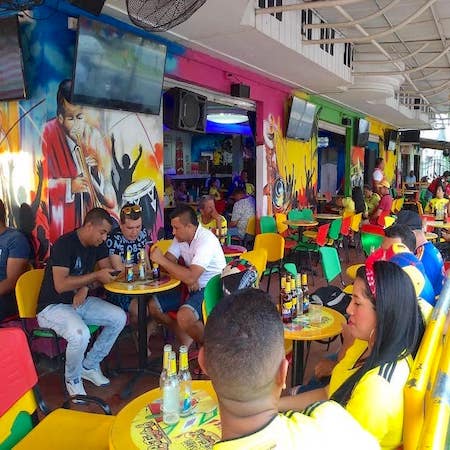
La Troja has been around for 50 years and has been named Barranquilla’s cultural and musical heritage and it is the #1 nightlife hotspot for locals and tourists alike…. Salsa is the order of the day here and it is a fun place to “mingle” with the locals and have a dance…in short “the ultimate local experience in Barranquilla”. It is particularly lively on Friday nights and Sunday afternoons. Also a fun place to be when matches of the Colombian soccer team are broadcasted. During carnival,  la Troja is a hot spot where you can dance until the early hours!


3. See colonial architecture at El Prado

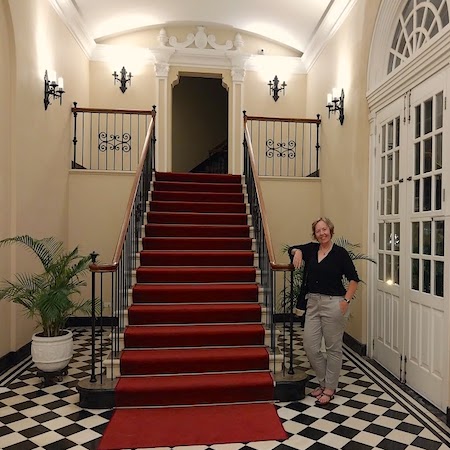
El Prado (Viejo Prado) is the cultural heart of Barranquilla and one of the city’s oldest neighborhoods. It is a centrally located, green district with parks, such as Parque Santander. There are still many colonial buildings, which were inhabited by Jewish, Arab, German and Italian immigrants in the beginning of the 20th century. The atmosphere of earlier days is still noticeable in the wide streets with tall trees and interesting architecture, which are perfect for a walk or a guided tour. In the old quarter you can find several universities and beautiful white houses with large gardens. Hotel El Prado is an iconic hotel that was built in the 1930s. The hotel is located on spacious fenced-off grounds on the busy 54th avenue road and is recognizable by its many palm trees. El Prado is also home to the white church Iglesia de la Inmaculada Concepción. While in El Prado, be sure to make a lunch stop at Pescayé, one of the city’s best (and affordable) seafood restaurants.


4. Stroll down the Malecón during sunset

Barranquilla has a beautiful modern promenade, which makes a great stoll. You can walk along the boulevard, where locals recreate and children play in the playground. Meanwhile, you can look out over Parque Isla Salamanca and pick a nice restaurant to eat. The most famous restaurant is Caimán del Río, at the beginning of the Malecón. At the beginning you will find the most expensive restaurants. If you walk further, you will get to the cheaper establishments. When we were there in September 2023, locals told us that boat tours on the Magdalena River will soon be offered by RioBús. There was no further information about it at the time. There was already a RioBús kiosk, but we could not get tickets or information. When checking this information in July 2025, no information can be found about boat tours, but you can always check when you’re in Barranquilla. Safety: There is a lot of police presence at Avenido del Río and we felt very safe here.

5. Visit the city's colorful modern monuments

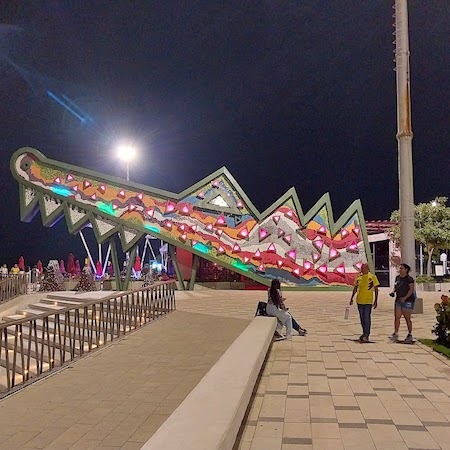
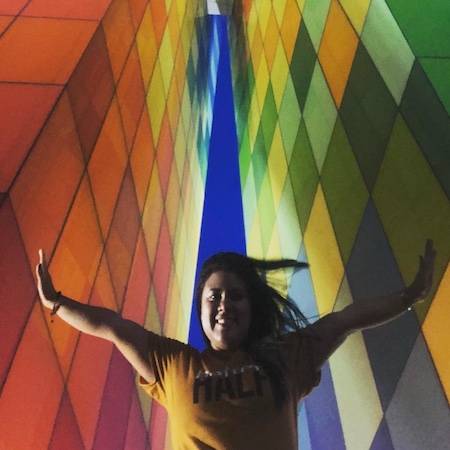
A visit to the Malecón is great to combine with a photo shoot at Aleta del Tiburón and/or Ventana al Mundo. At Ventana al Mundo, you can read the history of Barranquilla on the inside of the monument. The Aleta del Tiburon is a tribute to the soccer club Junior de Barranquilla. Insider’s Tip: At the monuments there are guys who offer to  take pictures of you with your phone (for a small fee). They are very good at it and take beautiful pictures. I didn’t feel comfortable handing over my phone, but a Colombian travel companion of mine did. The (unofficial) photographer did not charge a flat fee for this. My travel companion gave him COP10,000.

6. Take a trip to Bocas de Cenizas, where the river meets the sea

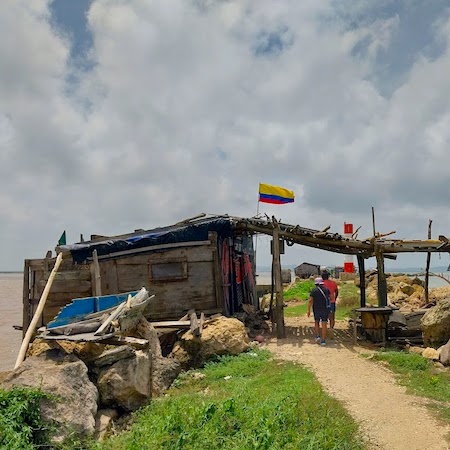
The phrase “it’s not about the final destination but the journey to it,” certainly applies to a trip to Bocas de Ceniza. First you catch a taxi to Las Flores, then you take a motorcycle with driver. He will take you for a bumpy ride over the old railroad tracks to the point where the bike can’t go any further. Then you hike over rocks, driftwood and other debris to the lookout point. Once we reached the lookout point, we were able to take a break and enjoy the nice breeze. Years ago, you could see the separation between the river and the sea very well (and close up). Now you can only see the meeting point of the river and sea in the distance. Nevertheless, it was a nice walk past huts of friendly fishermen working, mending their nets, or preparing a meal on the fire. Afterwards, you can have a cold coke at the restaurant and eat fresh fish if you like. On weekends, the trip combines well with the Cienaga de Mallorquín, a mangrove park with a beach, which is open on weekends. Note: the little train that normally travels the route is under maintenance (2025). The trip by mototaxi costs around COP25,000/$6 per person. The drivers will wait for you until you are ready.

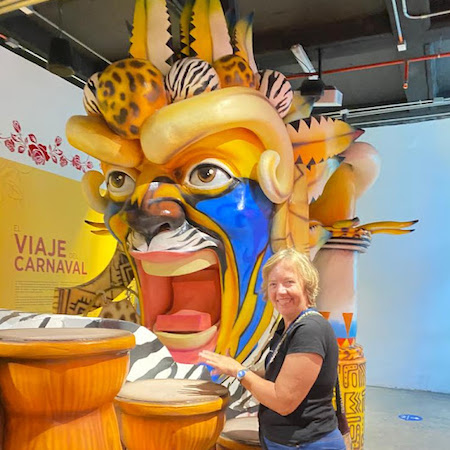
7.Taste the carnival atmosphere at the Museo del Carnaval

If you’re not in Barranquilla during carnival, you can still soak up the carnival atmosphere at the Museo del Carnaval. The exhibition is a journey through the history of the different carnival celebrations, the costumes and lots of music of course, including videos of the carnival parade, the Mapale dance and much more. Furthermore, you can see the beautiful clothes worn by the carnival queens over the years. 

Entrance fees (July 2025)
Adults: COP 15,000/$3.75
Children under 12 and seniors over 60: COP 10,000/$2.50

You can enter on the whole hour, from 9am to 4pm. The museum closes at 5 p.m. They are strict about this and you will not be admitted at a quarter past, you will have to wait until the next hour. The museum is closed on Mondays. The Museo del Carnaval is located in the Barrio Abajo neighborhood, a cultural heritage. A visit to the Carnival Museum can be combined very well with a guided walk through the neighborhood. Barrio Abajo is a traditional neighborhood with colorful houses and murals. The guide will introduce you to artists and performers behind Barranquilla’s carnival.

8. Shop till you drop!

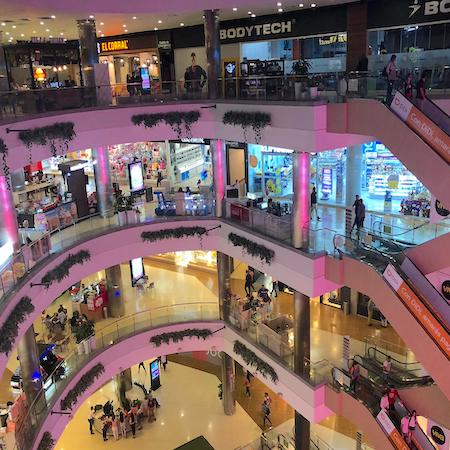
Barranquilla is a very good city for shopping. There are large, modern malls and prices are generally lower than in cities like Bogotá, Medellín and Cartagena. The large malls are in the newer Riomar district, but you’ll also find malls in El Prado, Alto Prado and Norte Centro Histórico. Each large mall has a food court, supermarket, playground, stores and American and European brands. The largest malls also have a department store / supermarket such as Exito or Jumbo. The smaller malls like Country and Unico have a supermarket like Carulla, Ara or D1. Which shopping mall is best for your visit to Barranquilla depends mainly on which location is most convenient for you. Check here for our tips for the best shopping in Barranquilla.


9. Visit the historic heart of Barranquilla

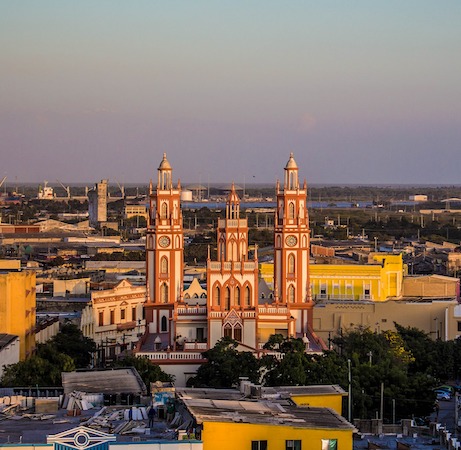
Iglesia de San Nicolas de Tolentino -built in the 17th century- is the focal point of Paseo Bolivar, Barranquilla’s main road. Here you will also find several official buildings such as de Alcaldía (town hall). In El Centro you can see the daily life of the city. There are many street food vendors and restaurants for a traditional meal and there is a lot of commerce. You can really buy anything in the historic center of Barranquilla. Centro is also crowded and chaotic and there is a lot of poverty. We therefore recommend avoiding the center at night and watching your belongings carefully. If you want to see the center with a guide, you can book a city tour, which combines a visit to the center with other highlights of Barranquilla.

10. Taste the local -Costeño food

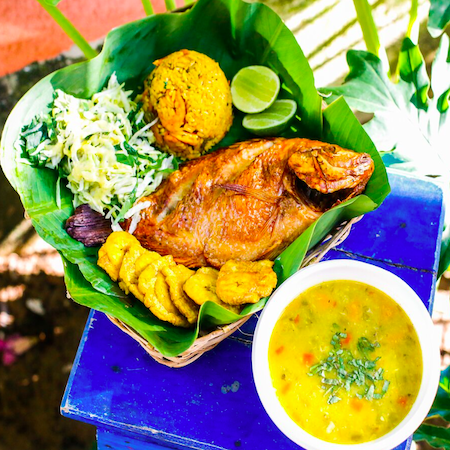
Barranquilleros love food and there is a restaurant on almost every street corner! Taking into account that Barranquilla is the place where the first immigrants set foot in Colombia, you won’t be surprised that the different cultures have influenced the food immensely. In addition to traditional north coast food, you’ll find food for every taste and budget in Barranquilla. For more information on local specialties and the best restaurants of Barranquilla.

Bonus tips

1. Take a side trip to Puerto Colombia

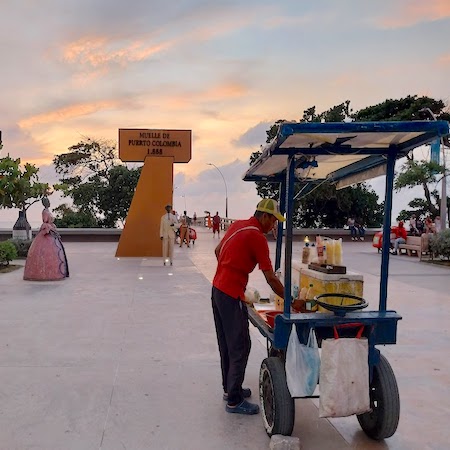
Puerto Colombia is located 20km from Barranquilla, a drive of about 30 minutes. The city is famous for its long pier, which was once the longest pier in the world. It also has a beautiful square, which was completely renovated after the Corona epidemic. The square is a meeting place where families gather, stroll the pier and enjoy the sunset. In the history of Colombia, Puerto Colombia has an important significance because it is here that the first immigrants set foot in Colombia. Eye-catchers of the square are the statues depicting former immigrants. In the old train station you can find information boards about the history of Puerto Colombia and also listed here are some of the names of the families who emigrated to Colombia from America, Syria, Curaçao and Germany, among others. Along the way, you can also visit the Salgar Castle.

2. Check out the murals in the village of Usiacurí

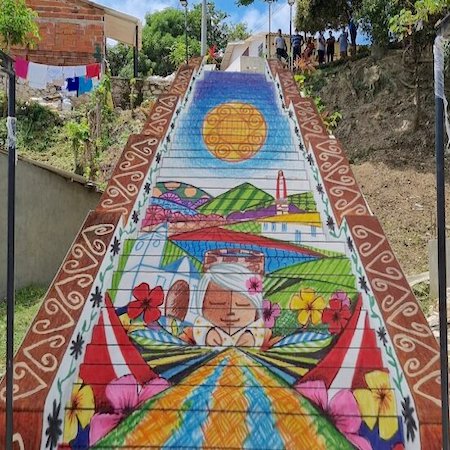
Usiacurí is a village about 50 km. (1h drive) from Barranquilla. The village is (still) unknown to tourists, but among Colombians, the colorful village is known for its many murals and the longest “roof mural” of Colombia. The village is also known for its many craftsmen who make bags and other products of very good quality. The famous poet Julio Flórez once moved to this part of Colombia for its medicinal baths (which have since dried up). You can catch a bus to the village for approx. COP6000/$1.50. By cab it costs COP200,000/$50 for 4 people. If you have the time, you can also stay overnight at one of the relaxing ecolodges in the area. Do you prefer to go to Usiacurí with an organized trip? Then you can take this tour .

POPULAR DESTINATIONS

TIPS

  • Safety
  • Money Matters
  • Consulates

ABOUT

“Wherever you go, go with all your heart” – Confucius – Colombia is our passion and our Dutch-Colombian team would like to share that passion with you.

Follow Us

Copyright © 2019 – 2022 NAARCOLOMBIA.COM. All Rights Reserved.