No Results Found
The page you requested could not be found. Try refining your search, or use the navigation above to locate the post.
What is Ciudad Perdida in Colombia on the Caribbean Coast? The Ciudad Perdida is better known as The “Lost City”. It is one of the largest pre-Columbian villages that were discovered in the “Americas.” Over 1,000 years ago, this village was built by the Tairona Indigenous community and nowadays, the ruins ca be visited with a multi-day trek from Santa Marta. The ruins are located between 900 and 1200 high in an area of about 2 km2 in the dense jungle of the Sierra Nevada de Santa Marta. During the trek, you will cover about 45 km and climb the final 1,200 steps to the entrance.
According to the history, the “Lost City” is called Teyuna by the indigenous communities. According to them, the city was the center of a whole network of villages of their ancestors, the Tairona. During the Spanish conquest, the Tairona left the Lost City and went deep into the Sierra Nevada. The Wiwa, Kogi, Kankuamo and Arhuacos are the direct descendants of the Tairona.
Treasure Hunters
In 1972, Ciudad Perdida was rediscovered by treasure hunters. Indigenous communities knew of the existence of the Lost City but did not talk about it for fear of many visitors. After the Lost City was opened to tourists, the hike closed in late 2003 through 2004. It became unsafe during the drug conflict. In 2005, the hike was reopened and the Colombian military began patrolling the area, which has been safe ever since.
Archaeological excavations
The “Teyuna Archaeological Park” is managed by ICANH, the Colombian Institute of Anthropology and History. According to archaeologists, only 10% of the city has been excavated and this remains the case. In fact, it was decided by the indigenous community that no more excavation would take place. The Gold Museum in Santa Marta and Bogotá, display some of the archaeological excavations, such as pottery, gold and necklaces.
The Ciudad Perdida trek, one of Colombia’s great adventures
As with many adventures, the way there is the biggest adventure. During a trekking of 4/5 days, you will swim under waterfalls, spot birds and wildlife and enjoy the sounds of the jungle. You will meet people from the Indigenous communities and can see how they live in the primitive villages. During the hike, you will have to cross the Buritaca River several times, with or without the help of ropes. The guide shares his insider knowledge with you, which makes the whole experience extra special.
Program 4 days 3 nights
This program looks something like this with each tour operator:
Day 1: You will be picked up in Santa Marta. From here, the drive to Mamey, where the trail begins. From here begins the hike to Camp #1. (approx. 4h)
Day 2: Hiking to Camp #2, not far from Ciudad Perdida. The trail passes Kogi and Arhuaco villages. This is the longest hiking day. (approx. 8h)
Day 3: Early start of the hike to Ciudad Perdida and climbing the 1,200 steps. (Approx. 5h hiking on this day and approx. 3h free time at Ciudad Perdida)
Day 4: Return to Mamey. The last kilometers are downhill. (approx. 6h)
Difficulty level
Medium to high
Distance
Approximately 45 km
Book now the Viator 5-star guided tour to the Lost City (Ciudad Perdida).
Pick-up service, meals and accommodation during the tour are included.
Duration: 4 days. Language: English.
From Santa Marta (40 km), you can go to Ciudad Perdida with an official tour operator. You cannot do the trek on your own; it must be done with a certified guide. Only guides who hold the OPT certificate (Operación de Programas Turísticos) are allowed to take guests to Ciudad Perdida. Check out the different tours you can do to the Lost City in the Sierra Nevada.
From Santa Marta, a 4WD will take you to the park entrance in an hour. From there it continues on an unpaved road to the village of Mamey (also called Machete Pelao), where the hiking trail begins. Accommodation is in hammocks or beds.
The Colombian government has set a fixed price of COP2,150,000/$38 for the trip of 4 or 5 days (2024). You can also do a 3-day trip COP2,700,000/$675, 5 days 2,500,000/$625 or 6 days 2,750,000/$688. This includes all food, lodging and guide. Most touroperators also include a travel insurance. Check the tour description for this before booking your adventure.
Here you can check the current exchange rate
Climate
It is hot and humid in the Sierra Nevada de Santa Marta. The maximum temperature is 40 degrees. At night it cools down and the minimum temperature is 16 degrees. The dry season is from December to March.
Best time to travel
You can do the trek to Ciudad Perdida all year round, except for the month of September. The trail is closed for a month each year so that the Indigenous communities can hold ceremonies and nature can recover. The hike is best done in the dry season from December through March, when the trails are not muddy and the water in the river is lower. This makes it easier to cross the river.
If you are used to long hikes, you can do the 4-day trip. If you want to take it a little easier and hike fewer hours a day, then you can do the 5-day trip. The price is the same no matter how many days you choose.
$ price range up to $35
$$ price range $35 – $60
$$$ price range above $60
Santa Marta
Check with the tour operator if you can leave your backpack in the office in Santa Marta. Then you will only have to carry a small backpack during the trip. You have to carry the luggage yourself, so bring as little as possible.
If you want to take a picture of the people of the indigenous community, it is customary to ask permission. It is considered disrespectful to take pictures without permission
Unsure if the hike is suitable for your kids?
Then read this article with tips from an official tour operator.
If you do not speak Spanish, ask the touroperator in advance for an English-speaking guide or translator. An English-speaking guide can often be booked on request.
There is no phone/wifi coverage anywhere on the trail.
Yellow fever vaccination is recommended
Beaches on the Caribbean coast of Colombia come in all shapes and sizes: idyllic white sandy beaches on a tropical island, deserted beaches in the “desert“, dream beaches with the jungle as a backdrop and city beaches with highrise hotels. Here you will find information about beaches in the area of Cartagena and Barranquilla, Santa Marta, Tayrona National Park, San Andrés and Providencia Islands and the beaches on the northernmost part of Chocó.
Barranquilla and Cartagena themselves have few beaches. In Barranquilla, locals like to go the beach of Puerto Colombia, especially in the weekends. In Cartagena, you can catch a taxi from the center to Bocagrande, also called “Little Miami beach.” (10 minutes). From the Muelle Turistíco de la Bodeguita in Cartagena you can also catch a boat to the Rosario Islands, Colombia’s most visited national park, with 27 islands (boat trip 1hour). At this pier you can also catch a speedboat to Playa Blanca, a white-sand beach on Isla Barú, a peninsula south of Cartagena (30 min.).
Photo: Beach in Bocagrande – Cartagena

Costeño Beach and Guachaca are relaxing beaches on a 15-minute drive from Tayrona. This makes them a convenient spot to chill before or after a trip to Tayrona or Ciudad Perdida.

Favorite vacation spot among Colombians. Here you will find highrise hotels and all kinds of activities such as boat trips, diving and other water sports.

Santa Marta-Riohacha
Village at the foot of the Sierra Nevada Mountains. Convenient beach stop before or after a trip to la Guajira. Check our travel guide Palomino for practical information and tips.

San Andrés and Providencia islands
The archipelago-a former English colony-is located 800km north of Colombia and 150km east of Nicaragua. San Andrés is very popular with Colombian tourists. Neighboring island Providencia is quieter and, in addition to its beautiful beaches, is known for good diving and snorkelling.

Chocó– near Panama
Capurganá is located in the northernmost part of the Chocó region. This is an “off the beaten track” destination, reachable only by plane or speedboat. Here you can enjoy white sand beaches in a beautiful setting, with the jungle as a backdrop. Capurganá is also an excellent spot for diving. Check more info in this article about the best diving spots of Colombia.
#ColombiaMyWay tips
Tip #1
Some of the most beautiful beaches in Colombia, are located in Tayrona National Park. such as Bahía Concha, Playa Cristal, Playa Cinto, Playa Cabo San Juan and Playa Brava. A fun way to visit Bahia Concha is with a sailing trip to Bahia Concha, Tip: From December to April there is a lot of wind, so check the forecast for wind and waves before booking the tour.
Tip #2
Beaches such as Playa Blanca, Bocagrande, Rodadero and Palomino can be very crowded, especially on weekends and holidays. There are also many beach vendors, looking to sell their items and services (very persistently). These range from souvenirs to food and drinks to massages. For a more relaxed beach experience, go early in the morning, during the week.
Tip #3
Check out our Top 5 – Beaches of Colombia, including 4 beaches on the Caribbean coast.
Largest port in Colombia
Barranquilla is with 1.2 million inhabitants, the 4th largest city in Colombia. The city on the Caribbean coast is located on the Magdalena River and has Colombia’s largest port. Due to its strategic location, Barranquilla is also known as the Puerta de Oro (Golden Gate).
2nd Largest Carnival in the World
Most people know Barranquilla for its carnival, the largest carnival in the world after Rio de Janeiro. Barranquilla does not have the tourist attractions of Cartagena, or the beaches of Santa Marta, yet the city has enough to do to keep you entertained for a few days. For example, there are excellent restaurants and lively bars and interesting museums. In 2020, Barranquilla won the World Travel Award for best new cultural destination in South America. If you are not in Barranquilla during Carnival, at least visit the carnival museum to get into the carnival atmosphere!
Shopping city for every budget
The modern shopping malls in Barranquilla, are generally a lot kinder to your wallet than the more touristy cities like Cartagena (and Medellín and Bogotá).
Read all about Barranquilla here. Plan your trip, book the best accommodations and check out the best things to do.
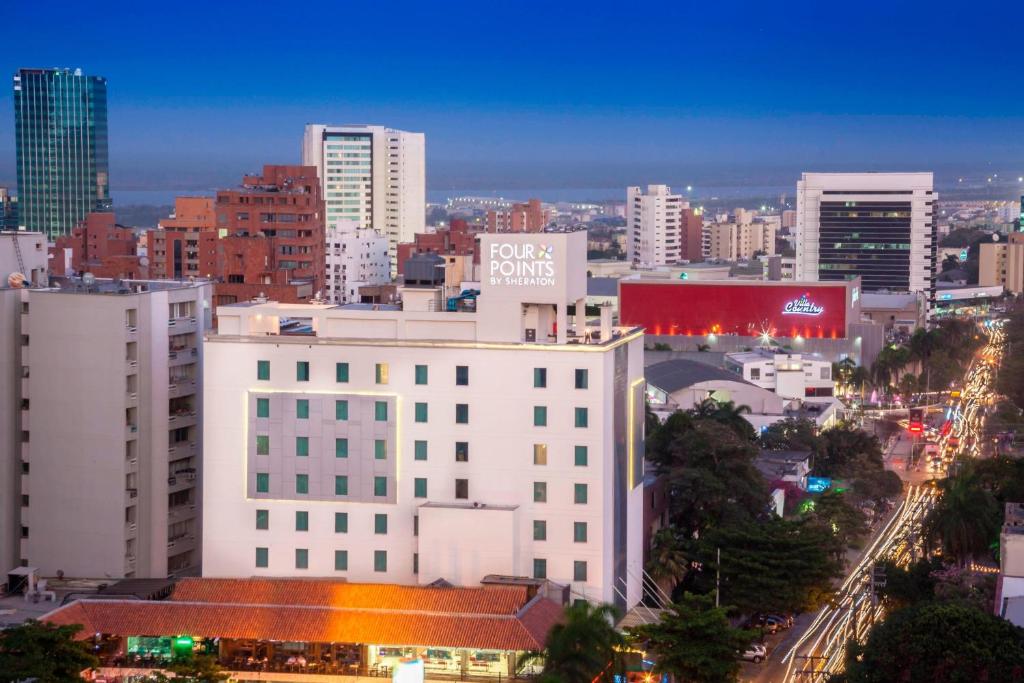
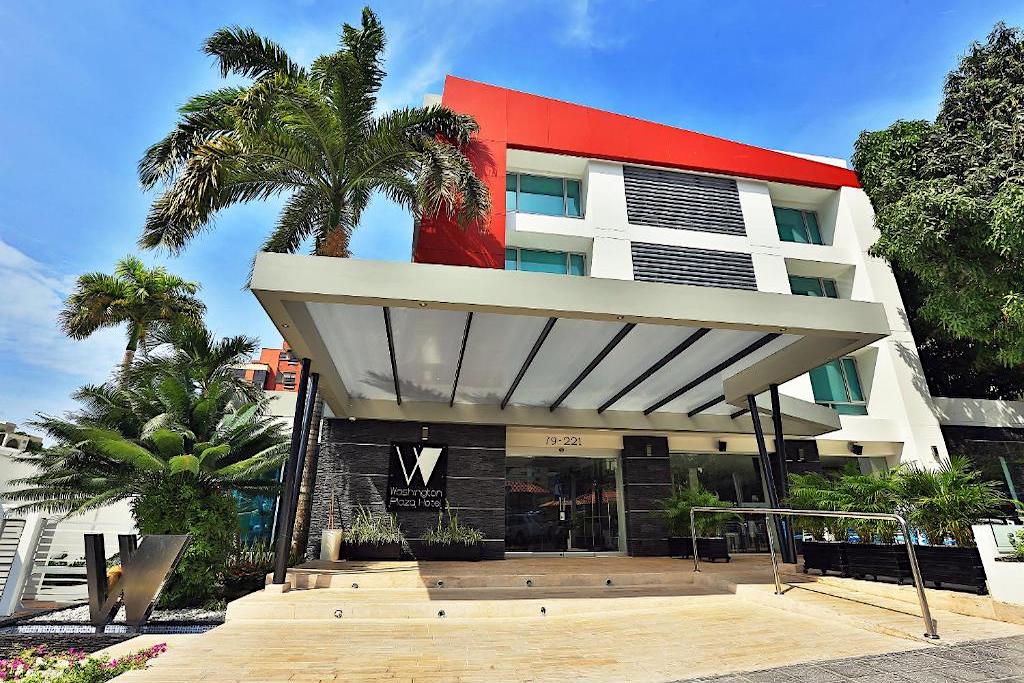
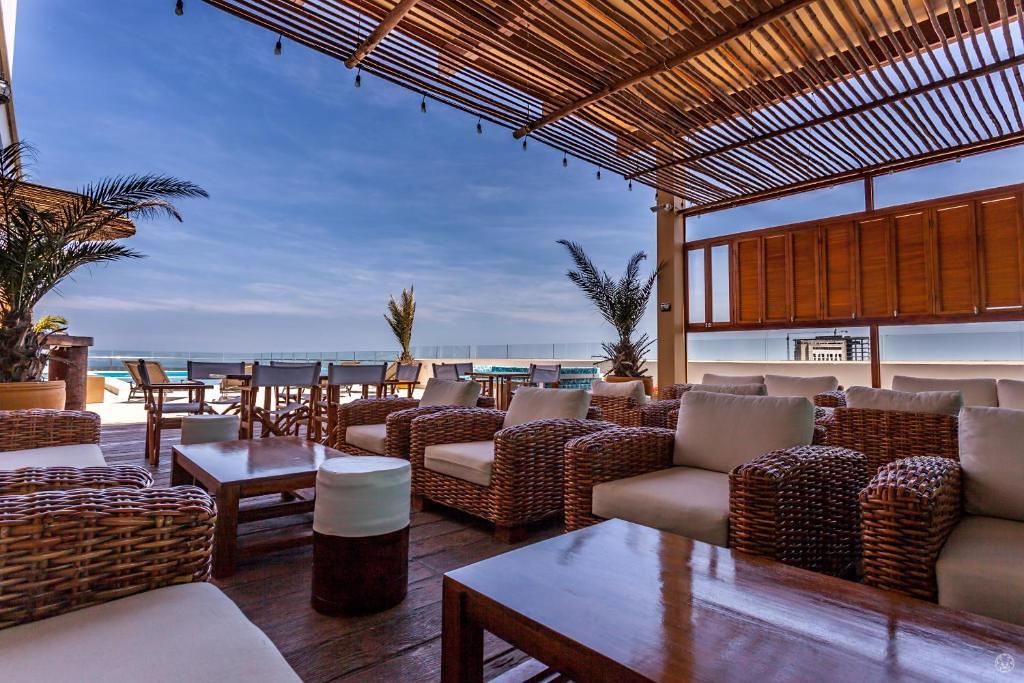
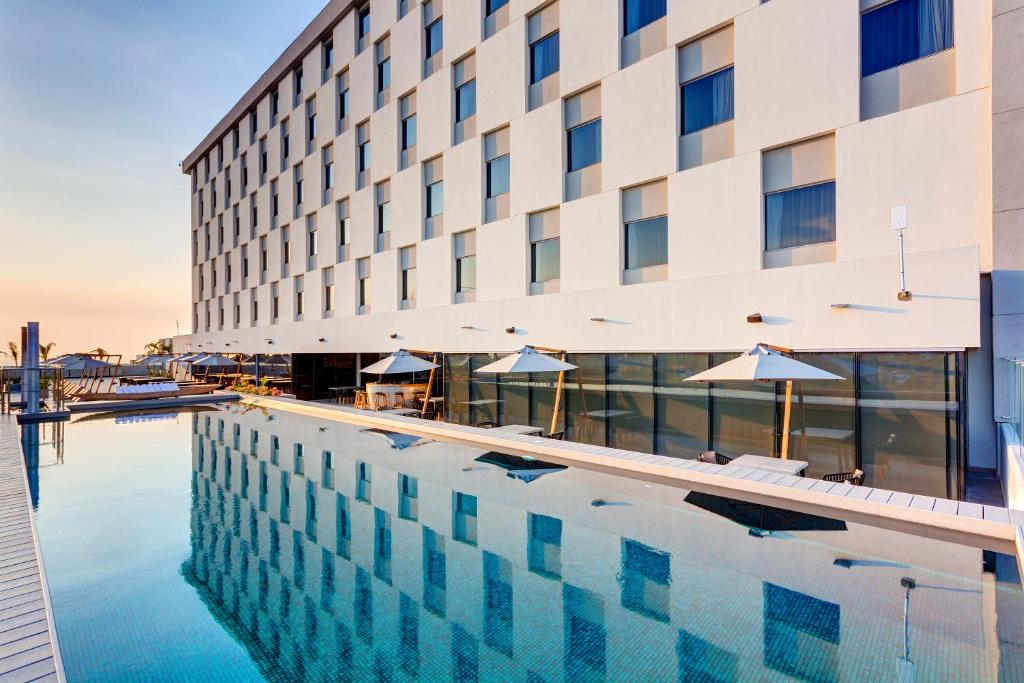
Barranquilla is one of the 3 largest cities in Colombia. It is no surprise that you can find a wide range of accommodations there. Which accommodation to choose depends on your plans during your visit and also on the safety factor.
Here are our recommended neighborhoods and accommodations:
# To Colombia tips
Tip #1
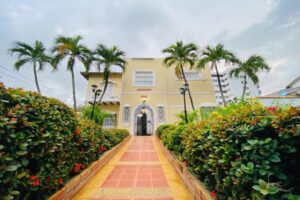
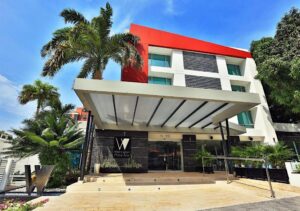
Planning to shop in Barranquilla? Then stay overnight at the Movich Buro 51 Barranquilla . Shopping center Viva Centro Comercial is just around the corner, so the perfect location for your shopping trip! If you want to shop in Buenavista, then Hotel Dann Carlton is the ideal hotel, just across the road.
Tip #2
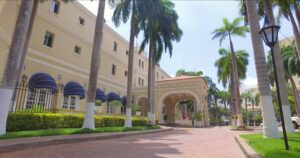
Want to taste the atmosphere of yesteryear in Barranquilla? Book an overnight stay in hotel El Prado, Latin America’s first luxury hotel. Also nice for a drink and to look around the hotel.
Tip #3
Fun side trips from Barranquilla include Bocas de Ceniza, where the Magdalena River meets the Caribbean Sea and Puerto Colombia, where the first immigrants in Colombia set foot.
Tip #4
If you are traveling from the Caribbean and want to explore Colombia’s north coast, Barranquilla can be a convenient “hub.” With about 2h you are in Santa Marta, with 2.5h in Cartagena and Tayrona national park is a drive of about 3h. Among others, there are direct flights to Barranquilla from Curaçao and Aruba with EZ air. Check here the round trip we made along the north coast of Colombia, from Barranquilla to Santa Marta.
Cali is the city of salsa and there is no better place in Colombia, to dance on late into the night in the many salsa bars and clubs. Check out the best salsa clubs in Cali here.
The salsa club where we ourselves had our first salsa club experience in Cali, and what a one! A night of dancing at La Topa Tolondra guarantees an unforgettable experience. The club is within walking distance of most of the hostels in San Antonio, so you will always run into backpackers here.Especially cozy on Wednesdays. Read about our own salsa adventure in Cali here.
Zaperoco bar in the Granada neighborhood, is one of the hot spots in the salsa scene, which celebrated its 30th anniversary in 2023. Talented salsa dancers can be found here almost every day. If you don’t want to dance yourself, it’s still great fun to admire the dancing couples. On Thursdays, there is live music.
It doesn’t get more local than this! A small bar across from shopping center Centro Comercial Roosevelt con Quinta. A hot spot with locals, where friends gather for a beer and dance to their favorite music. On Thursdays, in addition to salsa, bachata and kizomba.
Carpa Delirio is not a club, but a monthly salsa show in the Parque del Amor. The event takes place every last Friday of the month and is still best described as a combination of a salsa show and “circus act.” More than 120 artists and a live orchestra participate. The show guarantees a lot of spectacle. Tickets can be purchased through this site.
Every Sunday at the Domingo Social, you can attend El Mulato Cabaret in the San Fernando neighborhood. Via this site you can buy tickets.
Ready to book your trip to Cali? Then check out our travel guide Cali, with tips on what to do in Cali, tips for the best neighborhoods to spend the night, how to get to Cali, transportation in Cali, restaurants in Cali, shopping and practical information about Cali.
Minca is located in the Sierra Nevada, 15 kilometers from Santa Marta. The mountain village is surrounded by tropical rainforest, waterfalls, coffee and cocoa plantations. Due to its great biodiversity, Minca has been named a biosphere reserve by UNESCO and the village is also called the “ecological capital” of Colombia. There are many fun things to do and no shortage of cozy hotels . The village itself is small, but geared to the tourist with restaurants for every taste. In short: a relaxing place to spend a few nights during a tour of the Caribbean coast for example after a trip to Tayrona or Ciudad Perdida.
in this guide, you can find all you want to know about Minca. Tips for what to do, transportation in Minca, the best areas to stay, the tastiest restaurants and practical information about Minca, Colombia
The page you requested could not be found. Try refining your search, or use the navigation above to locate the post.